
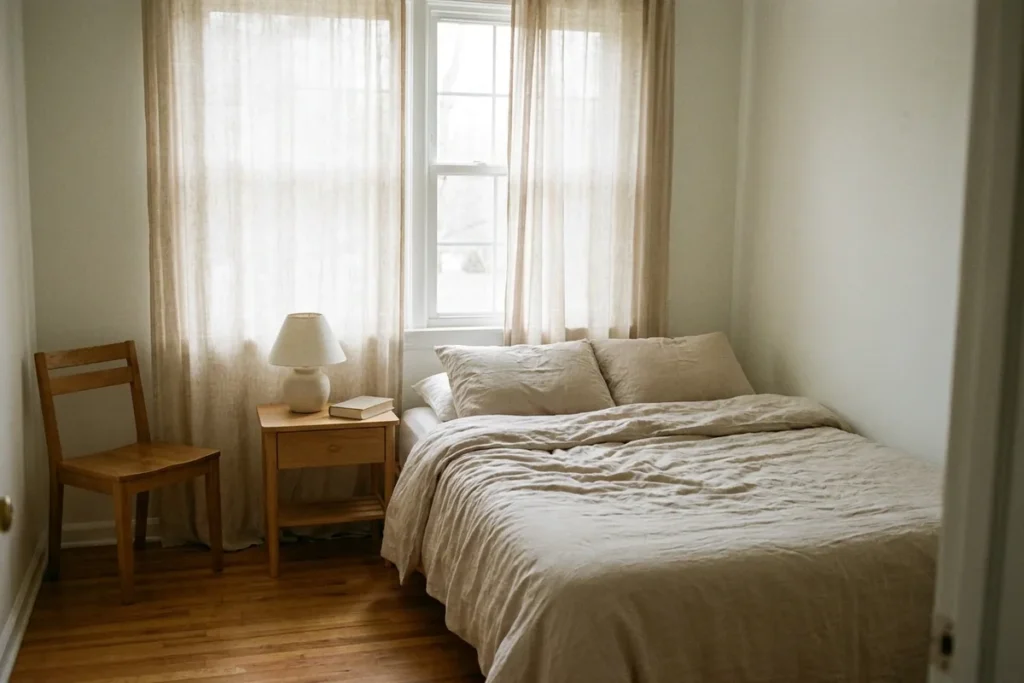
One practical way to declutter a bedroom is to work in zones, not piles. Start with the surfaces you see from bed, move to the floor, then tackle closets and drawers last. Visible progress keeps motivation high, and each finished zone makes the next decision easier and faster.
Clear what you see from the bed first, and the rest of the room follows.
Key takeawaysFour rules for a bedroom that stays clear
- Surfaces first: nightstands, dresser tops, and chairs set the mood of the room.
- One zone at a time: finish a zone completely before starting another.
- Choose what belongs: give shared-use items a home and relocate other items when practical.
- Nightly reset: five minutes before bed keeps clutter from returning.
A bedroom should be the calmest room in the home. In small apartments and shared houses, though, it often becomes overflow storage for laundry, paperwork, hobby supplies, and anything without another place to go.
That clutter has a real cost. A crowded room feels stressful, makes cleaning harder, and can turn getting ready each morning into a hunt for missing items.
Decluttering does not require a full empty room or a week off work. A clear order of operations, a few bags and boxes, and steady decisions can transform the space over a single weekend.
This guide follows the SetsQuick method, Sort, Edit, Type, Store. It explains where to begin, how to handle clothes and keepsakes, what to do with items that leave, and how to keep the room clear afterward.
Why does a bedroom collect so much clutter?
Bedrooms are private spaces, so clutter hides there. Guests rarely see them, and when the rest of the home needs tidying fast, items often get carried into the bedroom and left behind the closed door.
Clothing is the largest source. Worn but not dirty clothes land on chairs, clean laundry waits in baskets, and seasonal items spill out of closets that are already full.
Nightstands collect small objects quickly. Books, chargers, glasses, receipts, and water cups gather within arm’s reach of the bed, and few of them leave on their own.
Bedrooms also absorb unfinished projects. Craft supplies, paperwork, and items waiting to be returned all end up in a corner, slowly building into a pile that feels overwhelming.
Small homes intensify every one of these patterns. When a bedroom doubles as an office, a closet, or a storage room, it holds more categories than it was designed for.
Recognizing these sources helps you plan. Once you know where clutter comes from, you can decide which habits to change and which zones need the most attention.
What should you gather before you start?
Preparation saves time and prevents half finished piles. Gather a few simple supplies before touching anything, so decisions move quickly and nothing gets set down without a destination.
Use containers or clearly marked areas for keep, donate, discard, and relocate. Set batteries, medicines, electronics, and other potentially hazardous items apart for the correct local disposal route.
Add a few practical tools. A trash bag, a laundry basket, a cleaning cloth, and a timer help you work in focused bursts and clean surfaces as soon as they are clear.
Choose a realistic time block for your space and energy. A weekend can be a useful starting plan, but a full room may take several shorter sessions.
Open the curtains and turn on good light. Bright conditions make it easier to see dust, judge clothing condition, and notice items hiding under furniture.
Put on music or a podcast if it helps. Decluttering involves many small decisions, and a pleasant background makes the session feel less like a chore.
Prepare your sorting containers: Use separate places for items to keep, donate, relocate, and discard. Set batteries, electronics, medicines and other potentially hazardous items aside for the appropriate local disposal route rather than putting them automatically in the trash.
How do you declutter a bedroom step by step?
Start with the surfaces visible from the bed. Clear the nightstands, dresser top, and any chairs first, because these areas shape how the room feels when you wake up and fall asleep.
Pick up every item on one surface, decide its fate, and place it in the right container. Wipe the clean surface before returning only the few items that truly belong there.
Move next to the floor. Collect clothing, shoes, bags, and stray objects, working around the room. Keep doors, escape paths, and access to windows clear throughout the process.
Check under the bed after the open floor is clear. Pull out everything stored there, remove dust, and keep only items that fit in labeled containers.
Leave the closet and dresser for last if that order suits you. Anchor dressers according to the manufacturer’s instructions and open only one drawer at a time to reduce tip-over risk.
The steps below apply the SetsQuick method to each bedroom zone.
- Sort: gather items from one zone and group them by type.
- Edit: remove trash, donations, and items that belong elsewhere.
- Type: label what remains as daily, weekly, or seasonal.
- Store: return daily items to the easiest spots and store the rest.
Many people who declutter a bedroom stall at this point, because the relocate box fills faster than expected. Take the relocate box out of the room after each zone. Delivering items to the kitchen, bathroom, or office right away prevents the box from becoming another pile.
How do you declutter clothes in the bedroom?
Clothing decisions are easier with clear questions. Ask whether each piece fits, whether you wore it in the past year, and whether you would buy it again today.
Work through one category at a time. Start with tops, then pants, then dresses, sweaters, and outerwear, so you can compare similar items and spot duplicates quickly.
Pay attention to the chair pile. Clothes worn once but not ready for the wash need a home, such as a single hook or a small basket, rather than a growing heap.
Set aside items that need repair. Missing buttons and small tears are easy to fix, but if a piece has waited for repair longer than a few months, consider letting it go.
Store off-season clothing only when clean and fully dry, using a location and container suited to the garment’s care instructions. Vacuum compression is not suitable for every fabric, filling or long-term storage period. Do not compress delicate, structured or filled items unless their manufacturer permits it; a folded, breathable storage option may be more appropriate.
Keep the hamper visible and easy to use. A laundry basket placed where clothes come off makes it simple to drop items in rather than on the floor.
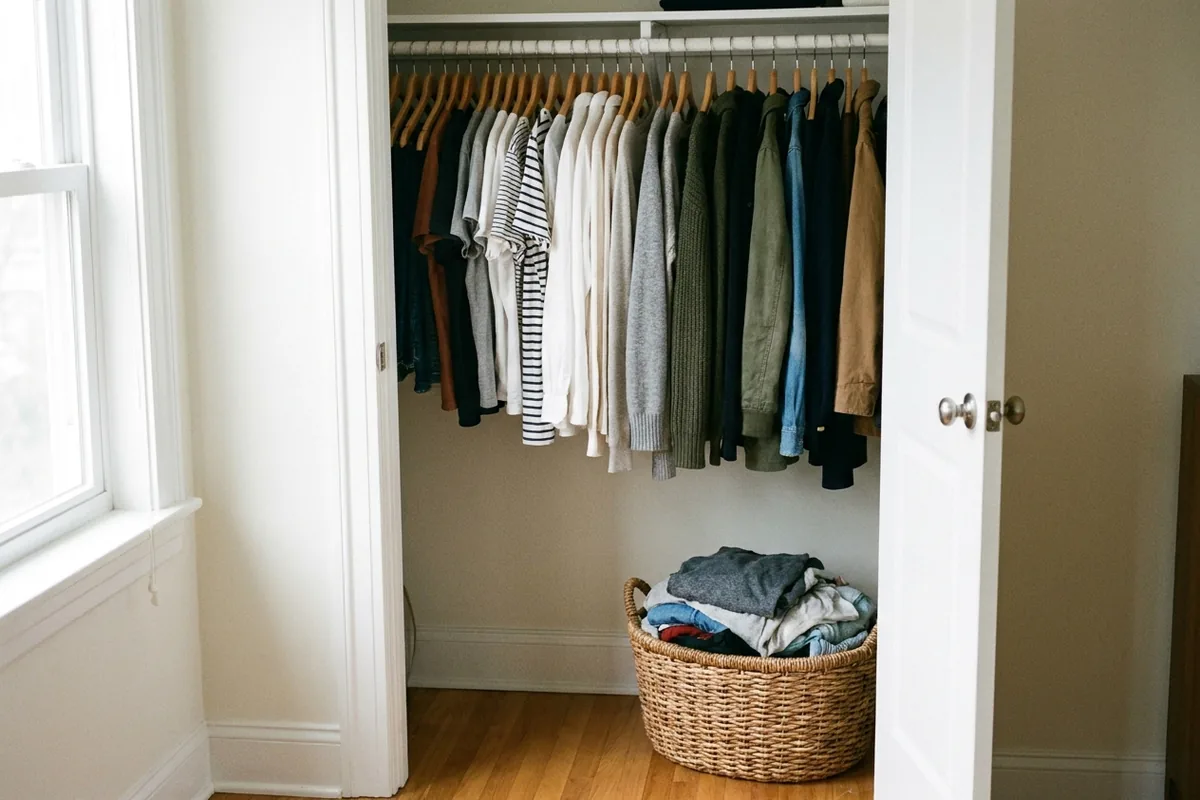
When you declutter a bedroom closet, aim for a little empty space. A few inches between hangers makes clothes easier to see and return, which keeps the system working.
What should you do with sentimental items?
Sentimental objects are often the hardest to sort. Letters, photos, gifts, and childhood items carry memories, so decisions feel heavier than choosing between two shirts.
Save these items for last. By the end of the session, you have practiced many decisions, and that momentum makes emotional choices feel more manageable.
Give keepsakes a defined limit. One memory box per person sets a clear boundary, and anything that fits in the box stays, while the rest gets reconsidered.
Photograph items you want to remember but not keep. A digital photo preserves the memory without taking up space, which works well for bulky gifts or old school projects.
Display a few meaningful pieces with intention. A framed photo or a single treasured object on the dresser adds personality, while a crowded shelf hides each piece’s value.
Allow yourself extra time. There is no need to rush these choices, and it is perfectly fine to revisit the memory box in a few months with fresh eyes.
Where should items that leave the bedroom go?
Decide destinations before the session ends. Bags left by the front door tend to stay for weeks, so plan exactly when donations and trash will leave the home.
Take donations out the same day if possible. Load bags into the car immediately, and schedule a drop off at a local charity or thrift store within the week.
Check the receiving organization’s current acceptance rules before packing or traveling. Accepted materials and conditions vary; arrange another lawful route for anything it does not accept rather than leaving unwanted items at a collection point.
Check local textile collection rules for items that cannot be donated. Some programs accept selected worn fabrics, while others do not accept socks, damaged textiles or contaminated items. Keep materials clean and dry and do not put them in ordinary recycling unless the local service explicitly allows it.
Use a local electronics or hazardous-waste collection route that accepts the exact device or accessory. Follow battery-handling instructions and local disposal rules; lithium batteries must not go in ordinary household trash or curbside recycling. The EPA explains safe handling and collection options.
Return borrowed items promptly. Books, dishes, and tools that belong to friends or family should go back during the week, freeing space and closing an open loop.
Plan where items go: Check donation and textile-collection rules first, return borrowed items, and find a suitable local collection route for electronics and batteries. Acceptance and disposal requirements vary by location and material.
Selling items can work for valuable pieces, but set a deadline. If something has not sold within a month, donate it so it does not linger in a corner.
How do you organize the bedroom after decluttering?
Organizing comes after editing, never before. Once only the items you want remain, give each category a fixed home that matches how often you use it.
Keep nightstands simple. A lamp, a book, a phone charger, and a small dish for jewelry or glasses cover most needs, and a drawer can hold a few extras.
Use the dresser for daily clothing. Fold items to fit the drawer height and file them upright, so every piece is visible when the drawer opens.
Store seasonal and backup items out of the main path. Under bed containers, high closet shelves, and lidded bins keep these items accessible without crowding daily space.
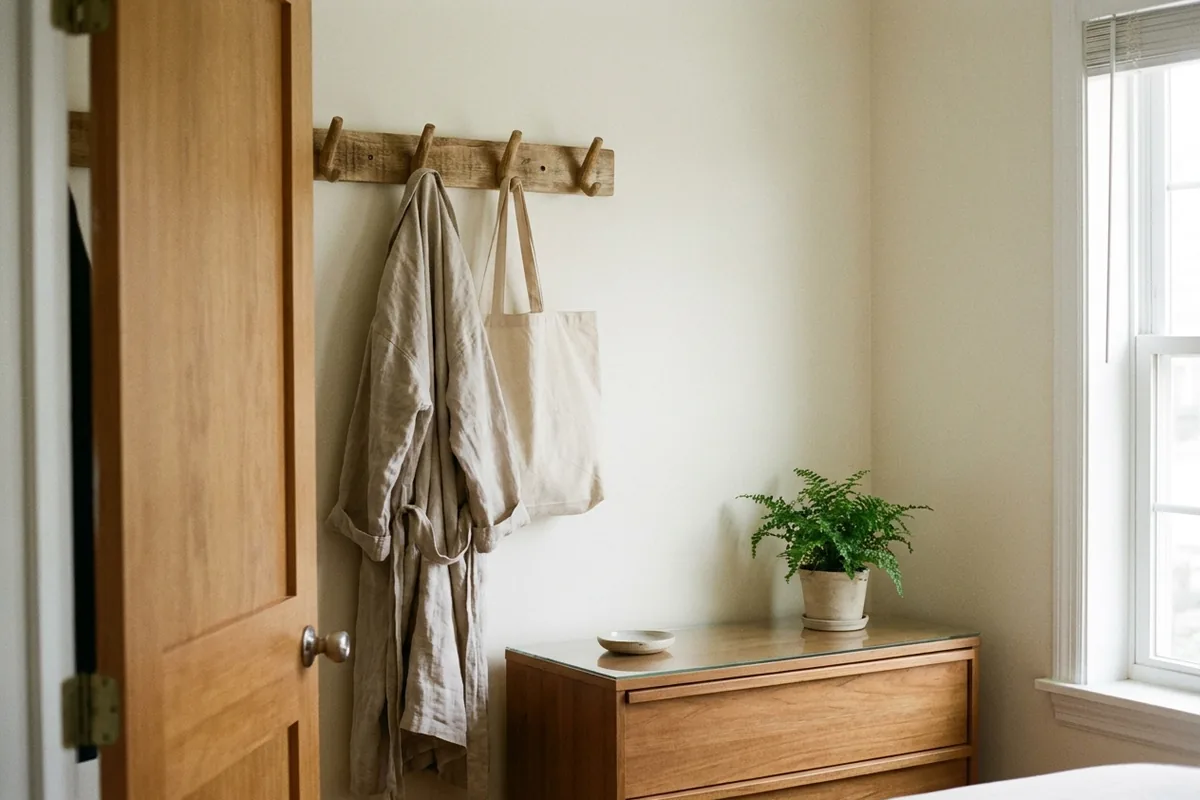
Add hooks for transitional items. A row of hooks behind the door can hold tomorrow’s outfit, a robe, or a bag, keeping these things off chairs and beds.
Leave some surfaces clear. Empty space on a dresser or nightstand makes the room feel calmer and gives you room to set something down temporarily.
Match storage to the room, not the other way around. After you declutter a bedroom, measure the remaining items before buying bins, so every container has a clear purpose and fits its spot.
Shared bedrooms benefit from equal zones. Give each person a nightstand, a dresser section, and half the closet rod, so belongings stay separate and each person owns the upkeep of their side.
How do you keep a bedroom clutter free?
A short nightly reset protects your work. Spend five minutes before bed returning clothes, clearing the nightstand, and putting away anything that wandered in during the day.
Make the bed every morning. A made bed instantly makes the room look tidy, and it discourages tossing clothes or bags onto the mattress.
Follow a one in, one out rule. When a new shirt, book, or decor item enters the bedroom, choose an older one to donate, keeping the total steady.
Keep a donation bag in the closet. When you notice something you no longer want, drop it in right away, and take the bag out when it fills.
Schedule a quick seasonal review. Swap seasonal clothing, check under the bed, and edit the nightstand drawer, so small piles never build into a major project.
When you declutter a bedroom regularly, each session gets shorter. Habits matter more than any single cleanup, and small daily choices keep the room restful.
For more ideas in tight spaces, browse the small space guides, explore the closet guides, or start with the free reset checklist.
Frequently asked questions
Where should you start when decluttering a bedroom?
Start with the surfaces you see from the bed, such as nightstands, the dresser top, and chairs. Clearing these areas creates fast, visible progress. Move next to the floor and under the bed, and leave the closet and dresser for last, since they hold the most decisions.
How long does it take to declutter a bedroom?
The time varies with the size of the room, the amount of clutter, available help, and your energy. Start with a manageable session and take breaks; a full room may need several sessions.
What should you remove from your bedroom first?
Remove trash and items that belong in other rooms first. Move dishes, mail, tools, and hobby supplies when they belong elsewhere; keep the things you need for a shared-use bedroom. Next, collect clothes from the floor and chairs. These quick removals clear space fast and make the remaining decisions feel easier to manage.
What is the 3-3-3 rule for decluttering?
There is no single official version. Most variations use the number three to keep a session small, such as choosing three items to remove from three areas. Treat it as a quick starting push, then follow a full zone order to finish the room.
How do you keep a bedroom from getting cluttered again?
Spend five minutes each night returning clothes and clearing the nightstand. Make the bed each morning, follow a one in, one out rule for new items, and keep a donation bag in the closet. A quick seasonal review prevents small piles from building again.
Written by the SetsQuick Team. First published · Last updated .
© SetsQuick. This article and its images may not be copied or republished without permission. To report reuse, see our DMCA page.
Was this guide helpful?
Save it for later or send it to someone