
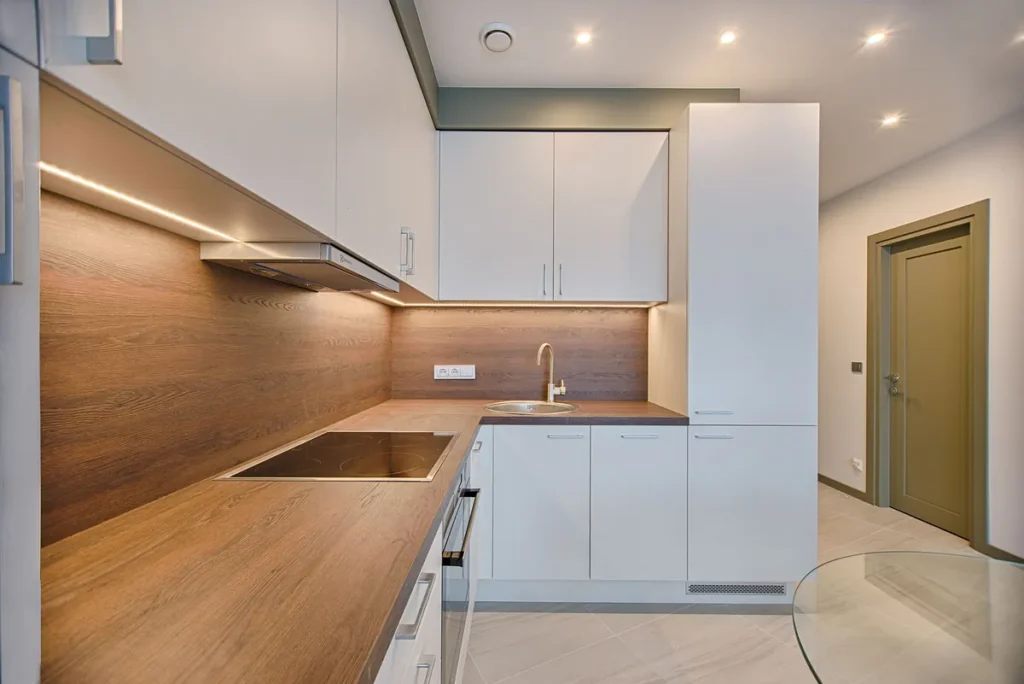
To declutter kitchen counters, start with one manageable area, identify the tasks it needs to support and find suitable homes for items that obstruct those tasks. Optional use notes can help, but frequency alone does not decide what stays. Preserve safe appliance operation, comfortable access and space for food preparation.
Make room for the task, not a target number of empty inches.
Key takeawaysFour checks before moving counter items
- Note actual needs: include accessibility, shared use and occasional tasks, not only daily frequency.
- Plan prep space: allow for the board, ingredients, tools and comfortable handling on a suitable surface.
- Keep combustibles away: follow cooking and exact appliance safety instructions, not an invented buffer distance.
- Check heat and cords: keep hot items out of children’s reach and cords from hanging over edges; follow the appliance manual.
Counter clutter rarely arrives all at once. A blender comes out for a recipe and never goes back. A stack of mail waits for a free evening, and a bowl of keys and chargers fills up next to the fruit.
Together, items can leave too little usable space for preparing food. What needs to move depends on your tasks and household, not whether the counter looks like a stock photo.
This guide follows a flexible order: check conditions, clear a manageable area, note use, assign suitable homes and review the arrangement. You can pause between steps.
How to declutter kitchen counters, step by step
Choose a small section and a session you can manage. A pencil, paper and tape measure may help. Keep temporary storage out of walking routes and away from children, food contamination and heat. No one-hour completion target is required.
Step 1: Clear a manageable area safely
Move only items you can handle safely to a stable suitable temporary surface. Switch off, unplug and allow appliances to cool as directed before moving or cleaning them. Keep hot and sharp items out of children’s reach, and do not leave hot, sharp, heavy or fragile items on the floor or in walkways. Get help with an awkward appliance.
Clean the cleared area according to the surface and appliance instructions. Do not spray or wipe electrical parts with a wet cloth. If you find a damaged cord, moisture near electrical components or an unstable surface, stop and address the concern before returning items.
Ready to continue: the chosen area is suitable to use and displaced items remain safely supported and accessible. Other counters do not need to be empty.
Step 2: Note use without setting a pass score
List what uses this space and why. If useful, note occasions of use over a period that represents your household; a week can be a starting sample, not a test everyone must complete. Keep notes somewhere suitable rather than assuming tape is safe for a cabinet finish.
Record where each item is used, whether moving it is difficult and what else must share the surface.
A frequently used appliance can still obstruct a task or be unsafe in a particular spot. An occasional item may need easy access for a specific user. Discuss shared belongings before moving or discarding them.
Ready to continue: you have enough information to try a suitable arrangement. Missing a day or encountering an unusual week is not failure.
Record what matters
Note the item, task, handling needs and suitable home, including occasional and accessibility-related needs.
Step 3: Sort by task, access and suitable storage
Use the notes to choose among keeping an item on the counter, placing it in nearby suitable storage or finding another appropriate location. Consider safe handling and the space needed to use it; frequency is only one input.
Do not send heavy or awkward seasonal appliances to a high cabinet merely because they are seldom used. Check support, comfortable lifting, storage conditions and each item’s instructions. Give paper, keys and chargers an agreed location away from food, heat and water without blocking access.
Ready to continue: each moved item has a suitable proposed home, and other users know what changed. Nothing has to be discarded because of a use count.
Step 4: Give the nearby items a real home
Check the proposed cabinet or drawer before moving items into it. It needs suitable support, usable space and a comfortable retrieval path. A packed shelf or an overloaded drawer is not a solution to a crowded counter.
Store appliances only as their instructions permit, unplugged and cooled where required. A cabinet near an outlet is not permission to run a toaster or another heat-producing appliance inside it. Use appliances on an approved surface with the required clearances, ventilation and electrical supply. For dry goods that need a home, pantry container sets are one option after checking food suitability, labels and usable storage space.
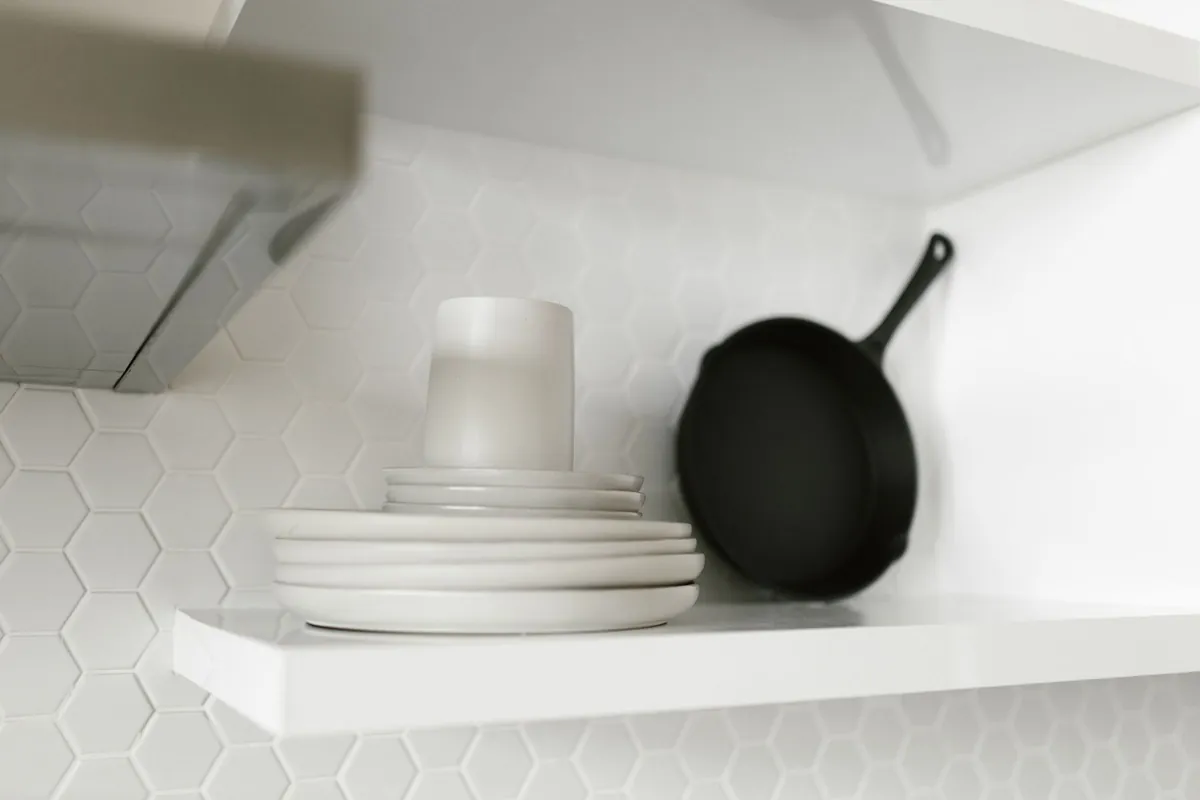
Ready to continue: each item has a supported, reachable place and can be returned to its appropriate operating location when needed.
Step 5: Map the counter into zones and protect the prep stretch
Identify the actual tasks: food preparation, cooking, drinks and setting down groceries may need different spaces or may share one at different times. A small kitchen does not need four permanent zones.
Plan a stable, clean prep area for the board, ingredients, tools and hand movements you actually need. Board width plus a hand on each side is not a universal minimum or safety standard. A location between the sink and stove is optional; it must not crowd heat, water, cords or another user’s route.
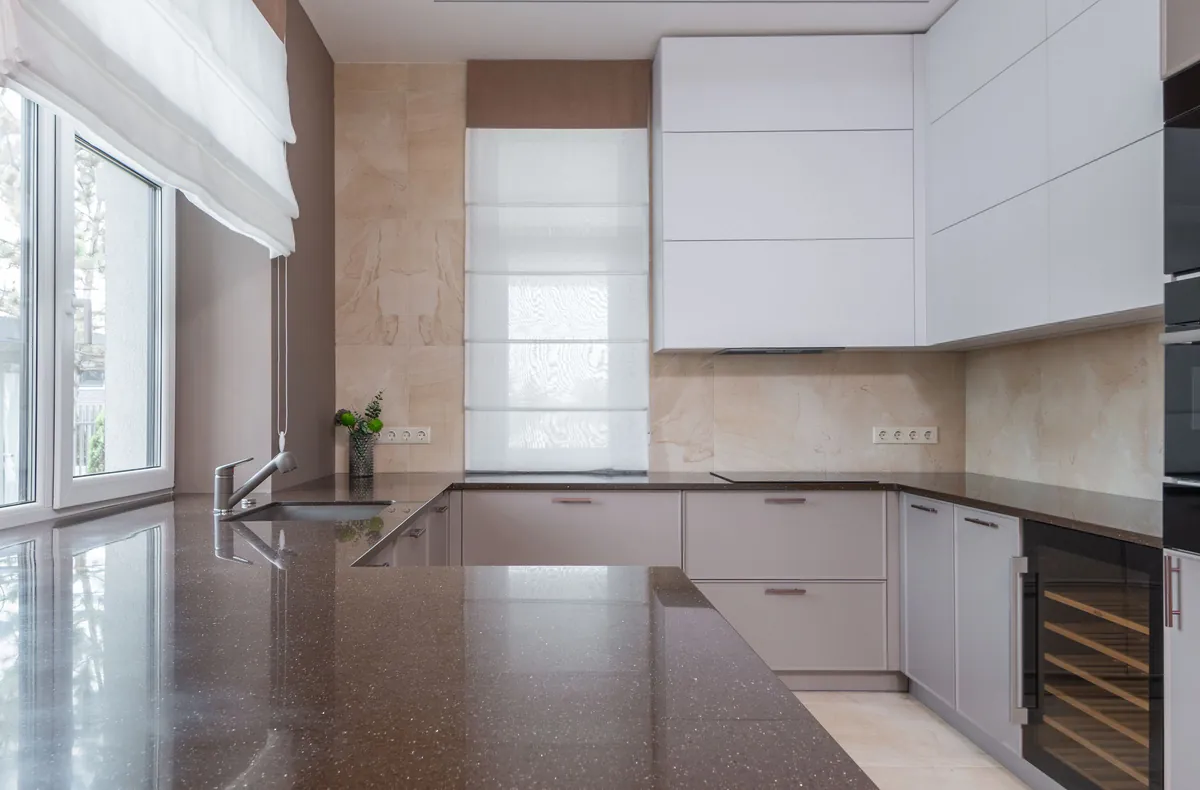
Ready to continue: the task has usable space and necessary access remains clear. Do not test a cramped layout with hot cookware or a live cutting task.
Step 6: Check heat, child access and appliance instructions
NFPA’s cooking guidance says to keep anything that can catch fire, including oven mitts, wooden utensils, food packaging, towels and curtains, away from the stovetop. It does not supply a universal counter-zoning distance.
Move combustible storage away from the stovetop and follow the exact cooking-appliance instructions. A wall-side spot or a nearby shelf is not automatically outside heat, steam or splatter. Do not improvise a shelf, appliance garage or cord arrangement to make the plan fit.
Safe Kids Worldwide advises keeping hot foods and liquids away from counter and table edges and hot objects out of children’s reach. Children’s National also advises keeping coffee pots and slow cookers out of children’s reach and tucking appliance cords away. Route cords as the appliance instructions allow, without hanging loops, pinching or contact with heat or water.
Ready to continue: the proposed locations meet the relevant safety and operating requirements. Looking tidy or sitting back from the edge alone does not establish safe use.
What usually goes wrong after you declutter kitchen counters?
Items may return as tasks and household needs change. Look at what is getting in the way before rearranging again.
When preparation becomes cramped or belongings lack a usable home, check whether the problem is space, access or a storage location that does not suit the routine. Adjust one issue at a time.
Avoid moving clutter into an overloaded or hard-to-reach cabinet. Check support, capacity and access before moving an item.
Mail and receipts may need a dry, agreed place and a review routine that respects privacy and retention needs. A tray outside the kitchen is optional, not a guarantee that papers cannot be lost. Do not discard important records merely to clear a surface.
What can a manageable counter reset include?
Choose a convenient moment to return a few items and check space for the next task. Five minutes is an optional time limit, not a tested completion promise. Stop for an unresolved safety concern rather than rushing through it.
- Return only cooled, safely handled items to their suitable assigned storage.
- Move paper, keys and idle chargers to the agreed suitable location, preserving privacy and safe charging conditions.
- Check the working area against the next actual task, not a fixed board-width allowance.
- Check that combustible belongings remain away from the stovetop and appliance clearances are preserved.
- Clean suitable surfaces as directed, without wetting electrical parts or moving hot appliances.
If you share the kitchen, agree on locations and access together. If items return, ask what made their assigned homes difficult rather than treating it as someone failing a rule.
Adapt the arrangement to the household’s real tasks and handling needs. An empty-counter appearance is not the goal for every user.
Plan the actual counter task
Record the surface, board, tools, ingredients and handling space, plus appliance clearances and child access. A board-width allowance or four-zone sketch cannot establish safety.
Review when cooking, equipment, access or household needs change. A seasonal reminder is optional and cannot replace appliance care or prompt attention to a hazard. For suitable rental pantry storage, see stackable pantry bins for a rental; a no-tools product still needs compatible support and use.
How did SetsQuick put this method together?
This guide links NFPA for keeping combustibles away from the stovetop, Safe Kids Worldwide for child scald prevention and Children’s National for hot appliances and cord access. Their advice supports those points, not a tested decluttering system.
The method combines task planning, access and suitable storage; the linked safety advice does not test the organizing method.
SetsQuick did not buy or physically test appliances, storage products or this arrangement for the guide. Read how SetsQuick tests and reviews for the research-based approach. Exact appliance and surface instructions remain necessary.
Use notes and resets are optional organizing prompts, not safety assessments. The paid planner below does not assess electrical, fire or child safety.
Frequently asked questions
What should stay on kitchen counters?
Keep items that support the household’s tasks in locations with suitable support, comfortable access and safe operating conditions. Daily use alone does not approve a location; occasional or accessibility-related needs may also justify easy access. Preserve usable preparation space and required appliance clearances.
Where do you put small appliances when you declutter the counter?
Choose storage that supports the item and allows comfortable retrieval, following its care and storage instructions. Do not automatically put a heavy seasonal appliance overhead. Store heat-producing appliances cooled and unplugged as directed, and move them to an approved operating location before use; a nearby outlet does not approve operation inside a cabinet.
How do you keep kitchen counters clear every day?
Use a manageable reset to return safely handled items, protect space for the next task and move papers to an agreed suitable location. Review the arrangement when needs change; there is no fixed daily duration required. Stop for damage, unsafe cords or another unresolved concern.
Is it okay to keep a knife block on the counter?
Daily use does not make a knife block safe. Choose a stable storage method that protects blades and keeps knives away from children. University of Missouri Extension recommends keeping knives away from children and using safety latches on drawers and cabinets. An ordinary drawer or moving the block back from an edge is not automatically secure. Follow the knife-storage product’s instructions and the household’s access needs.
Written by the SetsQuick Team. First published .
© SetsQuick. This article and its images may not be copied or republished without permission. To report reuse, see our DMCA page.
Was this guide helpful?
Save it for later or send it to someone