
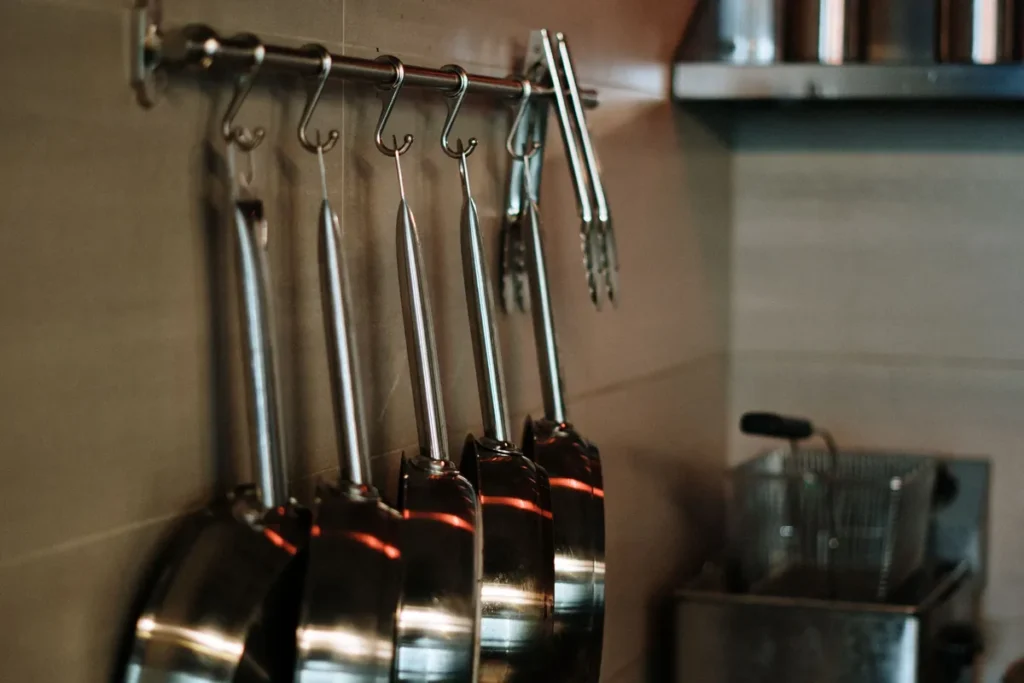
To organize pots and pans in kitchen cabinets, record the cookware you need, its dimensions and weight, and how you can handle it. Compare those notes with usable cabinet space, support limits and the cookware’s care instructions before choosing racks, nesting or drawers.
Aim for controlled retrieval and return, not a universal one-lift rule.
Key takeawaysFour decisions before you buy a cookware organizer
- Plan for actual use: include regular, seasonal, specialty and shared cookware—not just the last seven days.
- Check load and handling: lower placement can reduce top-heavy storage but does not establish shelf or drawer capacity.
- Measure the whole arrangement: include handles, lids, openings, loaded movement and comfortable lifting space.
- Follow material-specific care: seasoned iron, enameled iron and nonstick coatings do not share one storage recipe.
Cookware collections can include daily pans, occasional stockpots and pieces used for particular meals. How often each piece is used differs by household.
An inconvenient stack is a reason to inspect access and support, not proof that rarely used cookware is unnecessary or that there is one cause of cabinet clutter.
Work with cool, clean, dry cookware and no active cooking. Identify the intended pieces, measure usable space, check support and care requirements, then choose a suitable arrangement.
How to organize pots and pans in kitchen cabinets, step by step
Choose a manageable session and a stable clear work area. Gather a tape measure and notes, but do not empty more heavy cookware than you can handle or create a precarious temporary pile.
Step 1: Empty the cabinet and edit the collection
Move a manageable number of cool pieces with controlled handling. Clean shelves according to their finish instructions and inspect for damage. Grease or crumbs do not by themselves diagnose a storage problem or load capacity.
Discuss duplicates and unused pieces with their owners. A year of non-use is not a disposal rule. Set aside damaged, loose-handled or unstable cookware for assessment under its maker’s instructions; difficulty cleaning or sticking does not by itself prove a pan should be discarded.
Ready to continue: the pieces you intend to store are identified, ownership decisions are agreed and damage concerns are addressed.
Step 2: Identify use and handling needs
Note which pieces need convenient access, including occasional dishes you expect to cook. Recent use can help describe the routine, but a seven-day or month-long window should not determine the whole plan.
Record individual weights, material, handle shape and whether one or two hands are needed. The person’s comfortable handling matters more than assigning every item to a fixed frequency category.
Ready to continue: the notes describe intended use and handling needs without a mandatory keep-or-remove threshold.
Step 3: Measure the cabinet and your largest pans
Measure usable shelf or drawer width, depth and height, plus the access opening, hardware and door travel. Include any organizer’s footprint and the path through which it is installed and used.
Measure every relevant cookware shape, including handles, knobs and lids in the permitted storage orientation. A widest skillet and tallest pot may not capture every awkward item. Check handles through the full retrieval and door motion; pointing them away from a hinge is not a universal fix.
Ready to continue: the notes cover the intended pieces, usable storage area, opening and complete handling path.
Record support and handling, not a fixed reach map
Note the intended cookware, individual weights, usable spaces, shelf/drawer limits and a comfortable retrieval path. Rare use is not a reason to put an awkward or heavy piece overhead.
Step 4: Map the cabinet by reach and weight
Choose placement by the actual user’s reach, each item’s weight and support requirements. Lower does not automatically mean easiest: a heavy pot deep near the floor can still be awkward. Do not apply a fixed four-zone map to every cabinet.
UC San Diego’s workplace earthquake-hazard guidance advises storing heavy items on lower shelves to reduce top-heavy cabinets and potential falling damage. That is useful general context, not a cookware-specific load rating, household ergonomic rule or proof that a particular shelf can carry a Dutch oven.
A rarely used piece still needs suitable support, care conditions and safe retrieval. Do not automatically move it overhead, to a closet or out of the kitchen based only on frequency. If a location requires straining or climbing shelving, choose another suitable place.
Ready to continue: placement meets the cabinet/organizer instructions and the user can handle the intended cookware without unstable loads or an awkward overhead lift.
Step 5: Compare support and retrieval options
Easy access is a planning goal, not a one-lift safety standard. A suitable arrangement may involve more than one controlled action. Do not choose an unsupported rack or unsafe orientation merely to avoid moving another pan.
- A vertical pan rack. Check that the exact rack supports the intended rim/profile, weight, handles and orientation, with enough removal space. A row of slots does not establish compatibility with every skillet or baking sheet.
- Permitted nesting. Follow the cookware maker’s storage directions for the particular materials and pieces. Do not rest a pot on an unsupported lid knob or assume any smaller pot can sit safely inside a larger one.
- A suitable shelf riser. Verify its intended support surface, loading, footprint and clearances, including the underlying shelf’s combined load. A riser does not increase the cabinet’s load capacity or become stackable without instructions.
- A compatible pull-out system. Check required fixings, cabinet construction, load distribution and fully extended stability. Do not substitute a freestanding no-screw basket for a system that requires mounting. If required attachment is not permitted, choose another suitable arrangement.
- A compatible lid location. Follow the pot and lid maker’s permitted orientation and support. Separate lid storage can help some layouts but does not automatically make a stack stable.
For a drawer, follow the cabinet and runner instructions for total weight, distribution, attachment and movement. The front is not universally where runners carry weight best. Do not stand pans on edge without a compatible support system or assume drawer capacity from appearance.
If your cabinet also holds food containers, the guide to organizing food storage lids in a deep drawer explains how to keep them from spreading into the cookware zone.
Ready to continue: mounting, loads, cookware support and controlled retrieval work for the exact arrangement, with no forced door or drawer movement.
Step 6: Match storage care to the cookware
For its ceramic nonstick cookware, Our Place recommends protecting surfaces and using a protector, soft cloth or towel between pieces when stacking or nesting is needed. Its guide also notes that the 7 qt. Essentials Stock Pot and nesting strainer do not fit the modular organizer. These are brand/product-family instructions, not approval for every nonstick pan, rack or a universal three-piece stack.
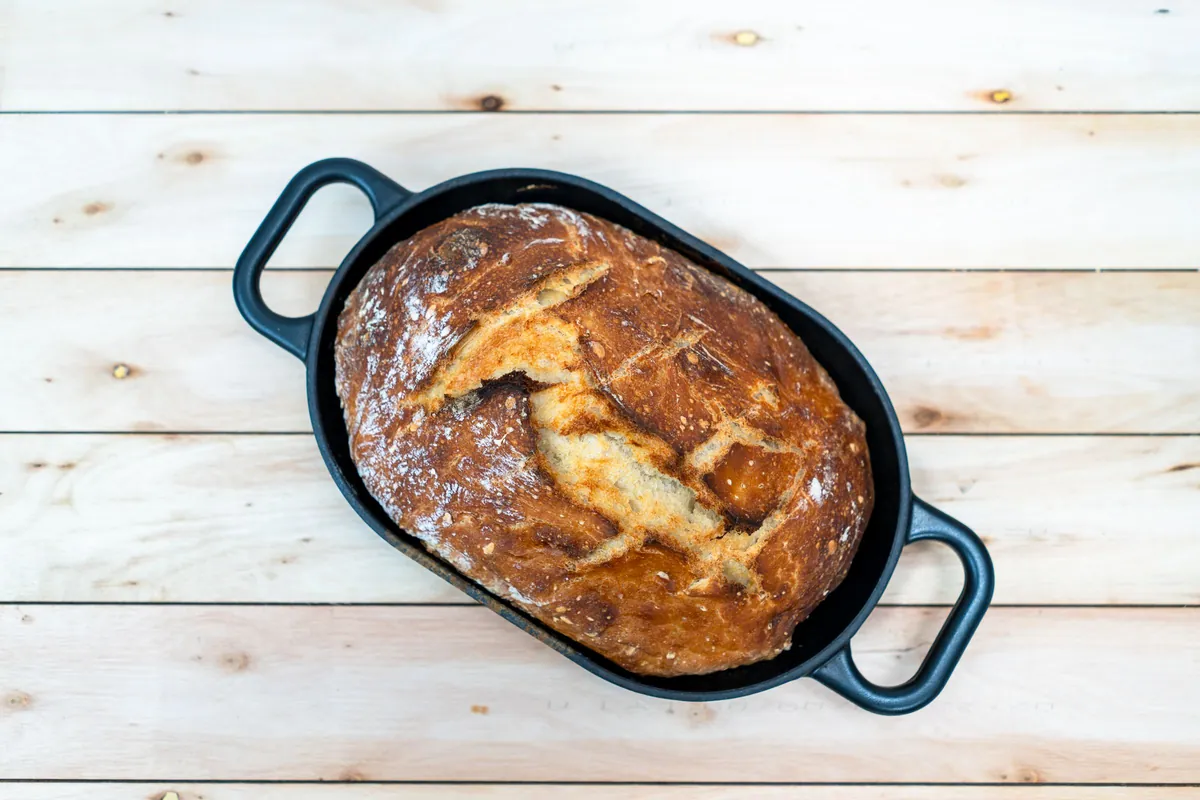
Illinois Extension’s cast-iron guide advises thorough drying because remaining moisture can cause rust. This discussion concerns seasoned cast iron, not a license to scrub, season or oil every enameled or coated piece. Follow the actual maker’s care instructions.
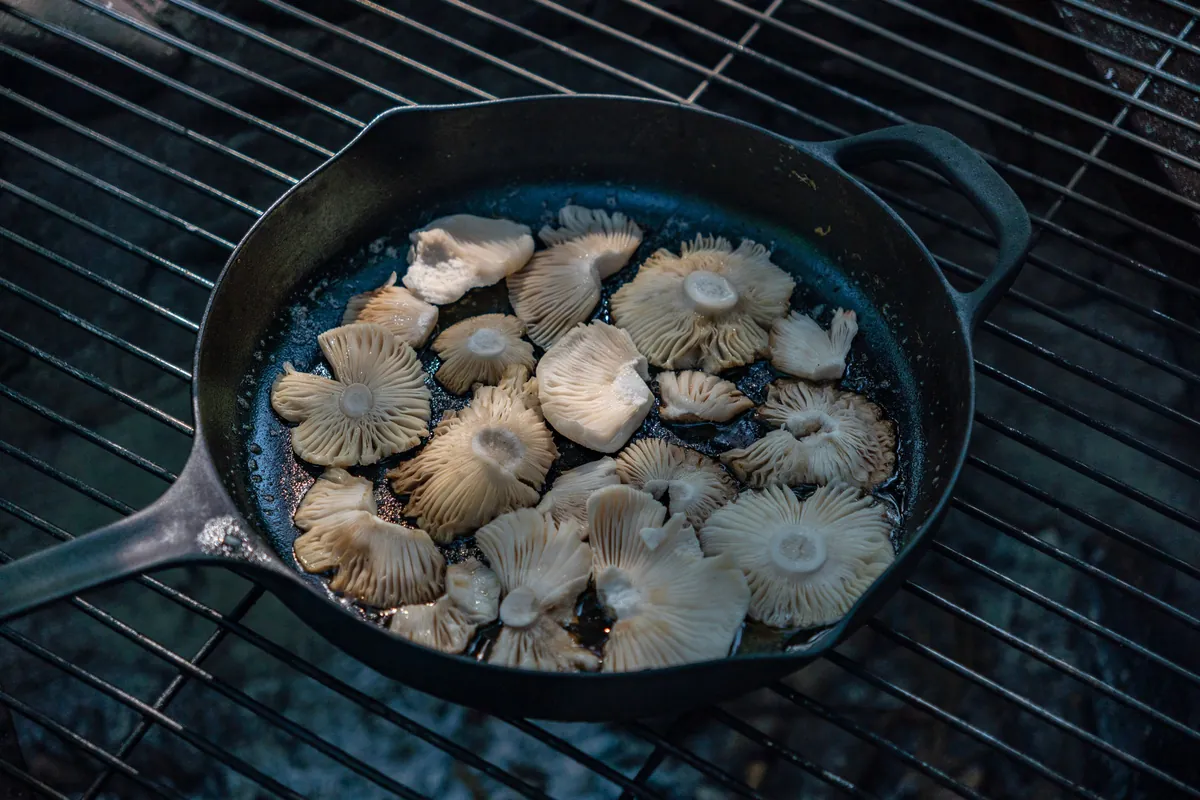
For its cast-iron lids, Lodge recommends cleaning, drying and oiling, and storing lids separately to avoid moisture building in a closed vessel. By contrast, Le Creuset’s storage guide prefers a dry cupboard/drawer and lids right-side up or stored separately; it also discusses protectors and lid spacers. Do not replace these differences with one universal lid-off, ajar or inverted rule.
Ready to continue: cookware is cool, clean and dry as directed, with the permitted orientation and surface protection for each material and product.
What usually goes wrong when you organize pots and pans?
One possible issue is a stack that makes the intended pan difficult to retrieve. It is not a measured “most common” failure or proof that every stack needs a vertical-rack replacement.
If retrieval shifts other pieces or requires holding an unstable stack, stop using the arrangement that way. Compare suitable separate support, permitted nesting or another reachable location. A rack is an option only if its exact support and load requirements are met.
A catching handle or resisting door needs reassessment of the entire path. Do not force closure or automatically turn handles away from the hinge or stand pans upright. Confirm the intended orientation and compatible support before changing the layout.
Straining to lift cookware is a reason to change the task or seek help, not simply swap shelves. Check the support limits and handling path of a proposed lower position too. Do not add heavy cookware to an unverified shelf or drawer.
What can you check during a small reset?
With cookware cool and the cooking area inactive, check one part of the arrangement that has changed. This is an optional review, not a promised five-minute weekly fix or proof the system will stay organized.
- Return a misplaced piece only when its intended support and handling remain suitable.
- Check any surface protection required by the exact cookware instructions.
- Follow the correct drying, lid and care directions for seasoned, enameled or coated cookware separately.
- Check that doors and drawers move freely without contact or instability; do not force them.
- Review access when use changes, without automatically moving a month-unused pan to the back or overhead.
A fixed annual sorting schedule does not prevent new stock or guarantee continued fit. For a different storage task, see stackable pantry bins for a rental. Those food-storage containers are not evidence of cookware load capacity or approval for a pull-out installation.
How did SetsQuick put this method together?
This guide uses the linked UC San Diego earthquake-hazard guidance, Illinois Extension cast-iron discussion and manufacturer storage-care pages from Our Place, Lodge and Le Creuset. Their scopes differ; none supplies a universal cabinet, runner or rack load limit.
Compare the whole retrieval task
Check permitted nesting, individual support, complete handle/lid clearances, loaded movement and exact mounting requirements. More than one controlled action can be suitable; a one-lift goal cannot approve an unsupported rack.
The practical contribution is a record of the actual cookware, usable dimensions, support limits, care requirements and retrieval path. It does not rely on a fixed reach map, one-lift test or three-piece stacking limit.
SetsQuick did not buy or physically test cookware, racks, drawers or cabinet installations for this guide. Read how SetsQuick tests and reviews for the research-based approach.
Recheck the exact current product instructions before buying or changing an arrangement. Missing load, support or installation information remains unresolved; a tidy photo, trial load or paid planner does not fill that gap.
Frequently asked questions
Should you stack pots and pans?
Only when the particular cookware’s directions permit the arrangement and the supports and loads are suitable. Protect surfaces as directed, avoid unstable contact and compare the whole retrieval task. Frequency of use, a short-looking stack or a generic three-pan limit does not establish suitability.
Where should pots and pans go in the kitchen?
Choose suitable supported space with a comfortable controlled handling path for the actual user. Lower placement can help avoid top-heavy storage, but check shelf/drawer limits and access. Rarely used pieces do not automatically belong overhead or outside the kitchen.
How do you store pots and pans with little cabinet space?
Try a suitable existing arrangement first. If considering a rack, nesting, riser or pull-out, verify exact cookware compatibility, support, dimensions, load and installation requirements. Do not remove needed specialty pieces solely for non-use or assume a no-drill label proves safety.
How do you store cast iron pans in a cabinet?
Identify whether the piece is seasoned or enameled and follow its own care directions. Dry thoroughly as directed and use suitable support with controlled retrieval. Lodge’s separate-lid guidance and Le Creuset’s lid/protector advice have different scopes; do not apply a blanket cloth, oiling or lid-ajar rule to all cast iron.
Written by the SetsQuick Team. First published .
© SetsQuick. This article and its images may not be copied or republished without permission. To report reuse, see our DMCA page.
Was this guide helpful?
Save it for later or send it to someone