
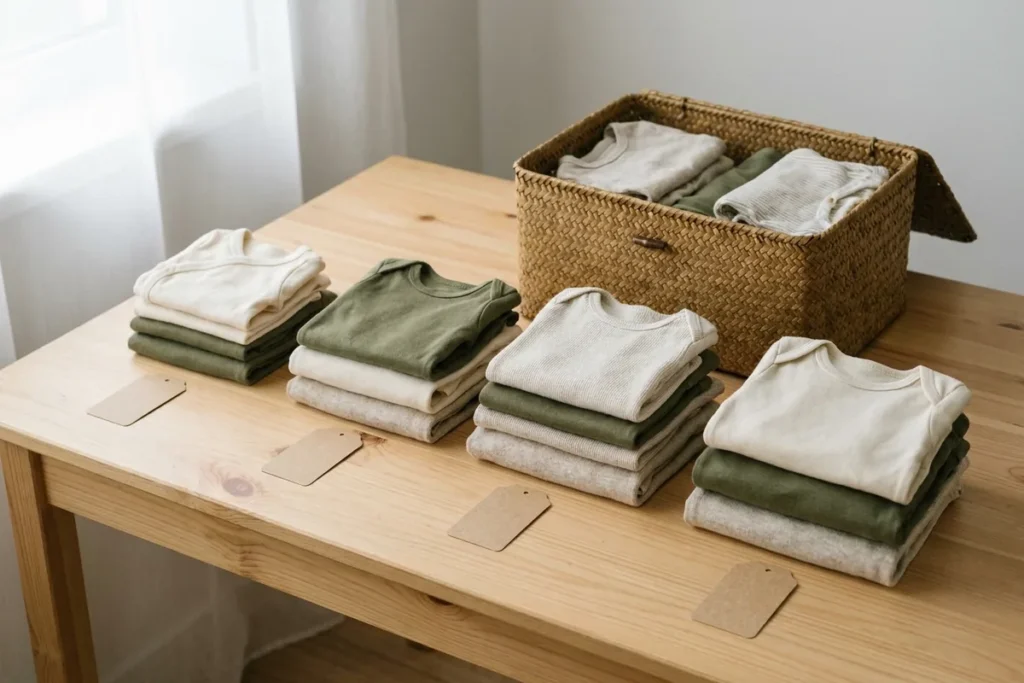
Baby clothes pile up in sizes you cannot use yet, so many drawers hold newborn and toddler items side by side. Learning how to organize baby clothes by size turns that chaos into a pipeline, with the current size in reach and future sizes in labeled bins.
Organizing by approximate fit makes it easier to find clothes your baby can wear now.
Key takeawaysFour rules that keep sizes from mixing
- Separate size groups: use individual bins or dividers within a shared drawer or container.
- Label clearly: note the size or range and add the garment type if helpful.
- Keep useful sizes close: place clothes that fit and the next size where you can reach them easily.
- Rotate by fit: move each garment out when it becomes snug, regardless of the tag.
Sizes mix because clothes arrive out of order. Gifts come in sizes a year away, hand-me-downs show up in random batches, and the current size cycles through the wash. Without a system, all of it lands in the same drawer at once.
The result is a wardrobe that looks full yet hides the clothes that fit. You dig past 12-month rompers to find a newborn sleeper, and half the drawer is clothes the baby cannot wear for months.
So the goal is a pipeline. Current size in front, next size staged nearby, and everything else sorted into labeled bins that wait quietly until their turn arrives.
Why is sorting baby clothes by size so hard?
The sizes themselves fight you. Baby labels jump from newborn to 0-3 months to 3-6 months, and brands rarely agree, so a 6-month shirt from one maker can fit like a 9-month from another. Two items with different tags can be the same real size.
Volume is the second problem. New parents often receive far more clothing than a single baby can realistically wear before outgrowing it, so bins quickly fill with pieces that never get used. Sorting therefore has to include honest editing, not merely stacking garments away.
Timing is the third. A baby outgrows a size with little warning, usually between laundry cycles. If the next size is buried, you scramble, and the outgrown size lingers in the drawer long after it stopped fitting.
A size pipeline answers all three. You group by real fit rather than tag, you edit as you sort, and you stage the next size so the switch takes minutes instead of a frantic search.
How to organize baby clothes by size, step by step?
Gather clothes from the closet, dresser, laundry, and gift bags. If a full sort is too much, work through one group at a time and keep the baby safely supervised.
Use the SetsQuick sequence—Sort, Edit, Type, Store—as a repeatable starting point, and adapt it to your space and schedule.
Four practical passes: Sort by approximate fit, edit for condition and need, choose storage, and label each group.
Sort first into one stack per size, grouping by how items actually fit rather than trusting every tag. Compare a questionable piece with one that fits as a rough guide; check its actual fit before use.
Edit each stack while the clothes are in your hands. Set aside outgrown or surplus pieces for storage or donation. Donate only clean, usable items; handle damaged items according to local recycling or disposal guidance.
Typing the storage comes next, once the wearable clothes are grouped. Knowing how to organize baby clothes by size also means deciding which sizes hang, which ones fold, and which can wait sealed away until much later.
- Sort by real size: build one stack per size, checking fit rather than trusting the tag alone.
- Edit each stack: set aside outgrown or surplus items; donate only clean, usable pieces.
- Type the storage: decide which sizes hang, which fold, and which wait in sealed bins.
- Store by label: give each size or size range a clearly labeled bin or separated zone.
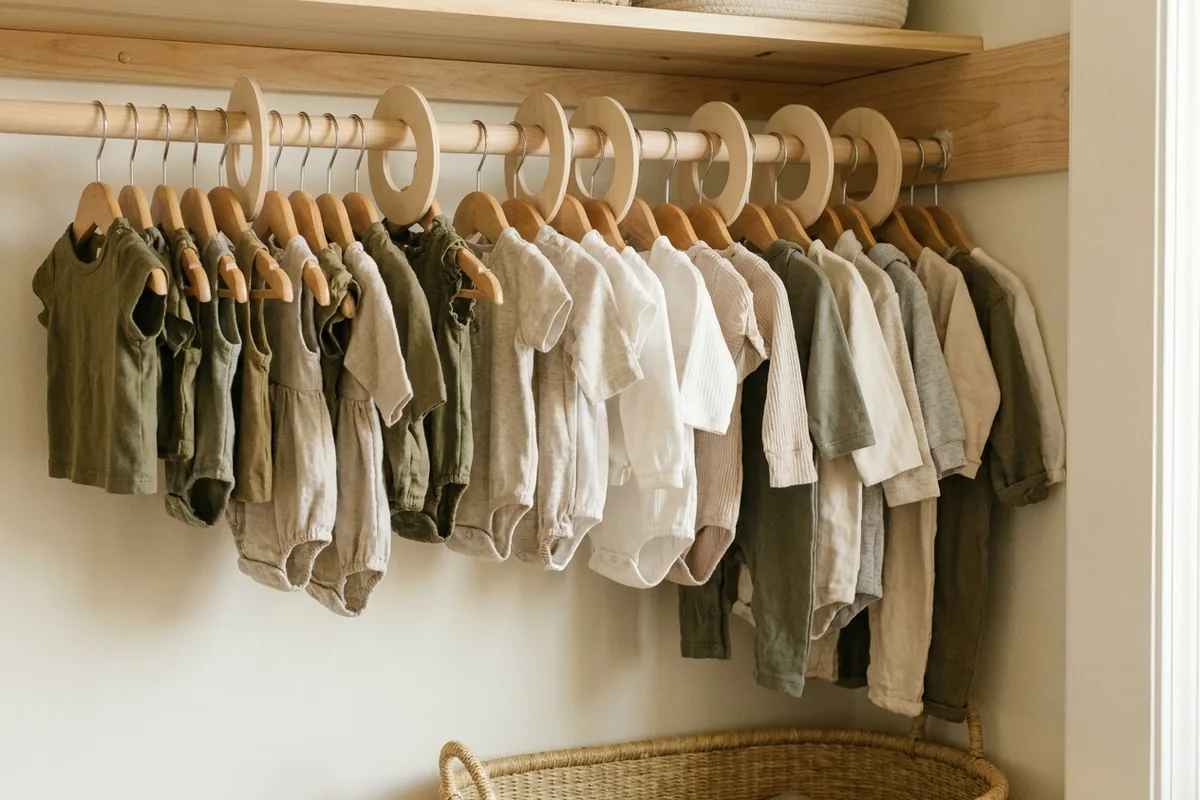
Choose a labeling method you can read fast. A bold size on the front of each bin, or a divider between hanging sizes, lets you find a size without opening or lifting anything.
Keep the current size and the very next size easy to reach. Store far-off sizes in a secure closet or another room. Use under-crib storage only if it is a manufacturer-designed or expressly permitted configuration for the exact crib; otherwise leave that space clear.
Where should each size live?
Reach should match how soon you need a size. The current size deserves the best spot, the next size sits close behind, and distant sizes can take the hardest-to-reach storage in the house.
Give the current size the prime zone, whether that is a dresser drawer at waist height or the easy end of the closet rod. This is the size you handle every day, so it earns the shortest reach.
A flexible size pipeline: Keep clothes that fit close at hand, stage the next size nearby, and store later sizes securely. Move individual garments out as they stop fitting.
Stage the next size nearby and label it clearly, so larger pieces are ready when you need them.
Send far-future sizes out of the daily path in labeled bins. Make sure clothing is clean and fully dry before sealing it, and keep heavy bins low on stable storage. Do not improvise under-crib storage or change the crib’s clearance or structure; follow the exact crib’s instructions. Keep the sleep space bare as described in CPSC safe sleep guidance.
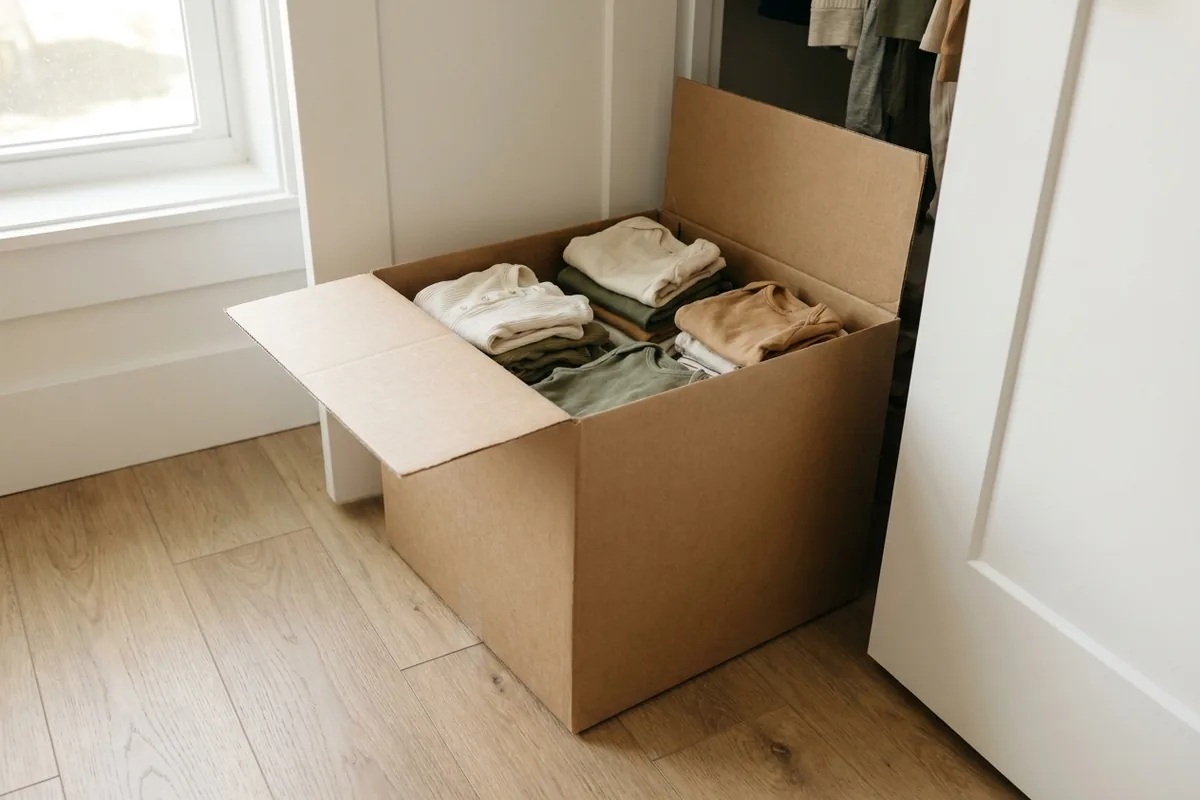
Keep an outgrown box nearby. Set aside clean, usable pieces to donate or store, and handle damaged items separately.
This arrangement rewards the reach you actually use. The clothes needed daily sit closest, and the clothes untouched for months sit farthest away.
As a result, the wardrobe matches the genuine rhythm of a growing baby instead of working against it. Mornings with a baby move fast, and a layout that truly fits that pace saves real time and effort.
How do you rotate to the next size smoothly?
Rotation works best by checking fit rather than relying on age alone. When an outfit feels snug, set that piece aside and try a better-fitting one.
A snug garment signals that the piece no longer fits comfortably; it does not establish whether a growth spurt is occurring. Items with different labels can fit at the same time.
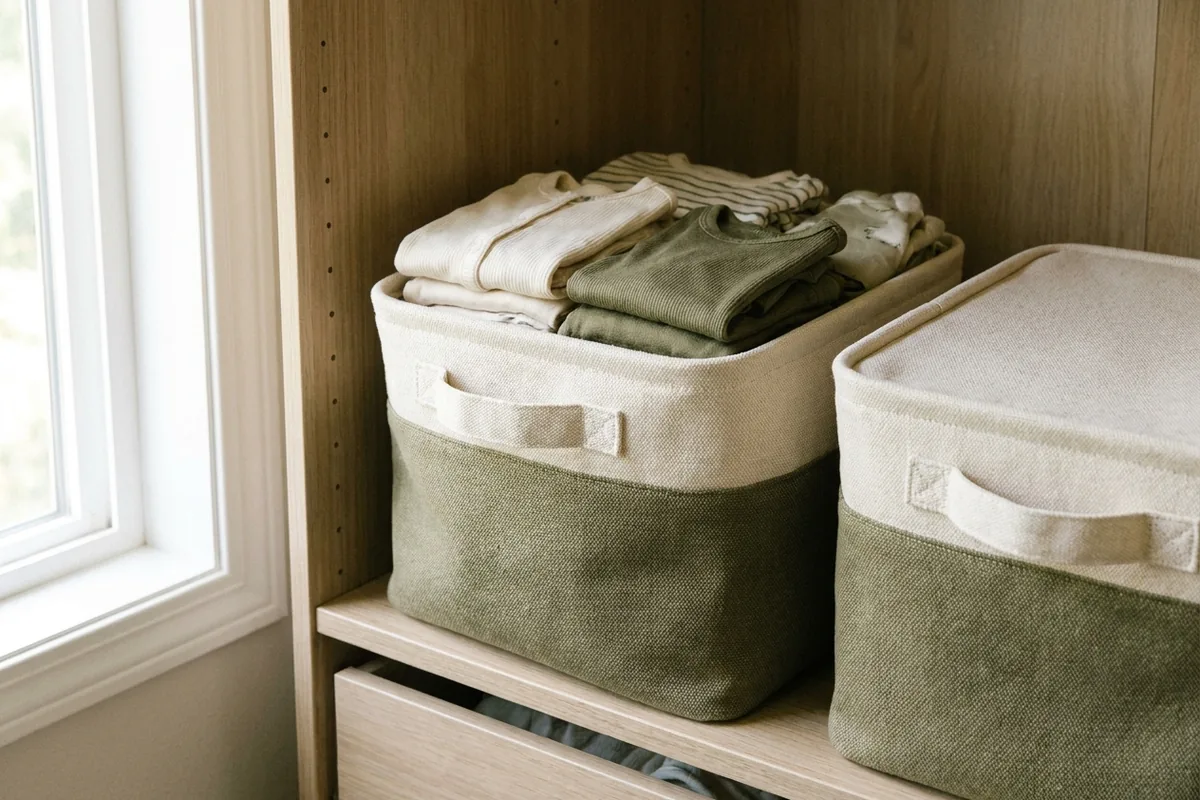
As individual pieces become too small, move them to the outgrown bin and bring better-fitting pieces into the active zone. Keep the next group nearby and adjust gradually, since fit varies by brand and garment.
Decide on each outgrown bin as it fills. Store it for a future sibling or donate it now, so finished sizes never pile up and crowd the clothes that actually fit today.
Keep the labels moving with the clothes. When a bin changes from staged to current, update its label, so the system always tells the truth about what is inside each container.
What goes wrong when you organize baby clothes by size?
A mixed, unlabeled bin can make fitting clothes harder to find. Separate size groups with dividers or smaller bags, or use separate containers if space allows.
A second failure is the unworn gift problem, where clothes stay boxed until they are outgrown. The sign is tags still attached in a size the baby has passed. Sort gifts into the pipeline the day they arrive so they get worn in time.
A third failure is the stalled outgrown bin that never gets emptied. Finished sizes build up, and the active drawers shrink. A quick decision each time a bin fills, store or donate, keeps the whole pipeline flowing.
A size system lasts because it is tested against real growth and real laundry, not a tidy photo. Label each size group clearly and rotate individual pieces as their fit changes.
For more tight-space systems, browse the small space organizing guides. You can also run the free reset checklist before you sort the whole wardrobe.
How do you handle gifts and hand-me-downs?
Gifts and hand-me-downs arrive in waves, and they rarely match the size your baby wears today. A single bag from a friend can hold three sizes, two seasons, and a few pieces with stains. Without a plan, that bag sits on the floor for weeks.
When you have time, sort incoming clothes by approximate size and check their condition. Set aside items with loose or missing fasteners or other damage; check CPSC recalls before using or passing items on. Wash usable pieces according to their care labels, and follow local guidance for damaged textiles.
Consider the season, but remember that growth and fit are unpredictable. Keep a flexible selection and reassess seasonal pieces as your baby grows.
Tags can mislead you, because brands size very differently. A 6 month top from one brand may fit like a 9 month top from another. When you organize baby clothes by size, hold questionable pieces against something that fits now and file them by real fit, not by the label.
Set a storage limit that suits your space and laundry routine. A shared bin with dividers or several smaller containers can work; reassess extras without assuming one bin is enough for every family.
Finally, write a short thank you note or text when you open the bag, then let the extras go. The kindness was in the offer, and you are free to keep only what your baby will actually wear.
Keep a short list on your phone of what each future bin already holds. A quick note such as “12 months: 6 sleepers, 2 jackets” stops you from buying more of the same. It also helps when relatives ask what the baby needs next, since you can point them to real gaps.
Bring that list to every sorting session, and update it when a bin changes. Detailed inventory notes also make seasonal transitions considerably easier, because you can immediately identify which categories need attention. Accurate notes take a minute, and they save you from opening every box to check what is inside.
Frequently asked questions
How do you organize baby clothes by size?
Sort in manageable batches by approximate fit, not just the tag. Set aside damaged or surplus items, label each group, and keep clothes that fit and the next size easy to reach. Move individual pieces out when they become snug.
How should you label baby clothes bins?
Label each bin by size on the front edge, where you can read it without lifting the lid. Use large, clear text; if a bin holds multiple sizes, label the range and separate the groups. When a bin changes role from staged to current, update the label so it always matches the contents inside.
What do you do with baby clothes that are too big?
Sort clothes that are too big into labeled bins and store them securely outside the daily path. A closet or another room is a simple option; use high shelves only within their load limits and place the baby safely down before retrieving bins. Under-crib storage is an option only where the crib manufacturer expressly permits that exact configuration.
When should you move up a clothing size?
Check each garment for comfortable fit rather than relying only on the age on its tag. Set aside pieces that feel snug and bring out larger pieces as needed; sizes can overlap.
How do you store outgrown baby clothes?
Place outgrown clothes in a labeled bin as soon as they stop fitting, then decide quickly. Store the bin for a future sibling or donate it, so finished sizes do not crowd active drawers. Clean and fully dry clothes before storage; choose a suitable lidded container and a dry location.
How often should you sort baby clothes by size?
Plan a quick sort whenever clothes start feeling snug or your storage needs a reset; the interval varies by child. Each pass goes quickly once bins are labeled. Between sorts, drop new gifts straight into the right size bin so nothing drifts out of place.
Written by the SetsQuick Team. First published · Last updated .
© SetsQuick. This article and its images may not be copied or republished without permission. To report reuse, see our DMCA page.
Was this guide helpful?
Save it for later or send it to someone