
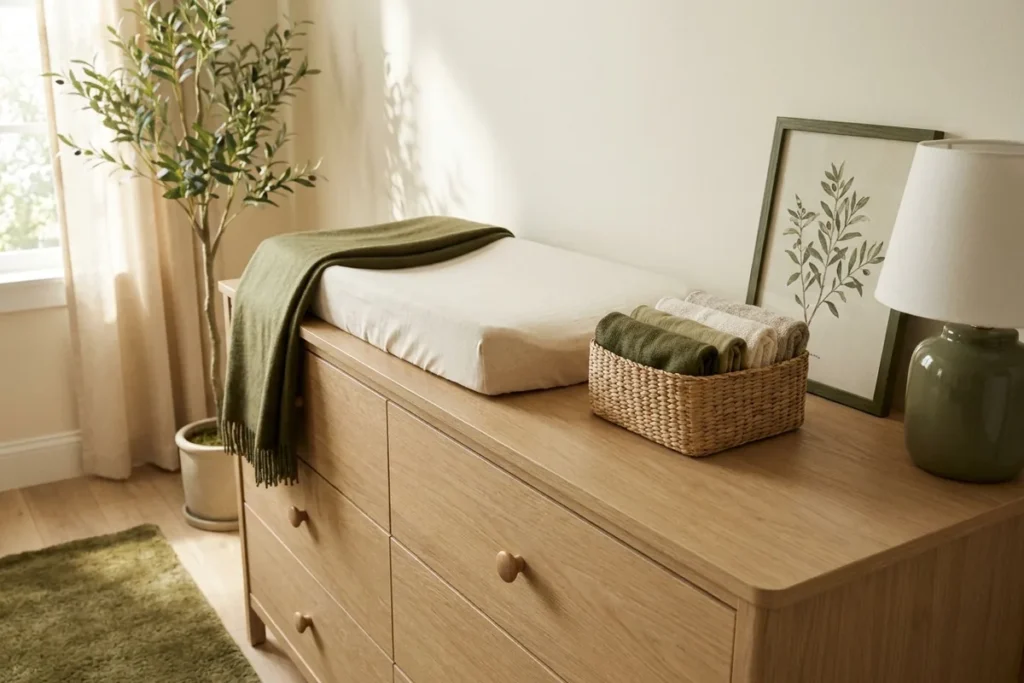
A nursery dresser can store clothes and supplies. Use it for changing only if the dresser and changing-unit manufacturers permit that exact combination. Thoughtful nursery dresser organization keeps every drawer honest, so you can reach the right item without waking the baby.
A dresser works when every drawer answers one clear question instead of holding a little of everything.
Key takeawaysFour decisions before you load a single drawer
- Use dividers where they help keep small items easy to find.
- Try file-folding or another arrangement that fits the drawer and your routine.
- Assign drawers by reach: daily items go at waist height, rare items go low.
- Anchor the dresser first: secure it to the wall before it holds anything at all.
A drawer can hide items beneath a stack. Dividers or a different fold can make clothes easier to see and retrieve.
Small clothes can shift as a drawer moves. Choose a layout that keeps them accessible without overfilling.
The goal is a layout that makes useful items easy to find; dividers, folding and drawer labels are optional tools.
Why does a nursery dresser get messy so fast?
Two forces work against a baby dresser from the very first day. Clothes arrive constantly, in sizes and seasons that rarely match the current moment. And the items themselves are simply too small to hold their own shape once they are stacked in a flat pile.
Flat stacks can make lower items less visible, while file-folded rows may make them easier to scan. Use whichever approach works for your household.
The second issue is drift. Without a rule for each drawer, outfits land wherever there is a gap. Socks migrate into the pajama drawer, the current size mixes with the next size, and no drawer has a job you can trust.
The fix behind lasting nursery dresser organization pairs structure with a rule. Dividers give every category a wall. File-folding keeps items upright and visible, and a simple drawer map tells you exactly where each thing belongs before it goes in the drawer.
How do you set up nursery dresser organization?
Place the baby in a safe, supervised location before organizing. Empty and clean one drawer at a time, keeping items away from the sleep space and walking paths.
Work the setup in a fixed order so nothing slips through. This sequence follows the SetsQuick method, Sort, Edit, Type, Store, adapted to changing needs and clothing sizes.
Before loading: Anchor the dresser using the manufacturer’s instructions and suitable wall hardware. Sort and edit clothes, group what you keep, then store it within the drawer limits.
Sorting comes first, because grouping by size and category reveals what you truly have. Editing comes next, while each item is already in your hands and easy to judge. Only then do you decide the fold and the drawer map, and finally load everything in.
Keep that order on every pass through the dresser. A familiar sequence can make it easier to resume if the baby needs attention.
The payoff of real nursery dresser organization shows up at the worst moments. When you are tired and the room stays dark, a mapped drawer means your hand finds the right item on the very first reach.
- Sort by category and size: build stacks for bodysuits, pajamas, pants, and the rest, split by size.
- Edit each stack: separate outgrown or unneeded pieces for appropriate donation, recycling, disposal or keepsakes; donate only clean, usable items.
- Type the fold: choose a fold or grouping that works for the clothes and drawer.
- Store by drawer map: assign each drawer one category, divide it, and label the front edge.
File-folding is one way to make clothes visible. Instead of stacking flat, you fold each item into a small rectangle and stand it on edge, so the whole drawer reads like a row of files you can scan.
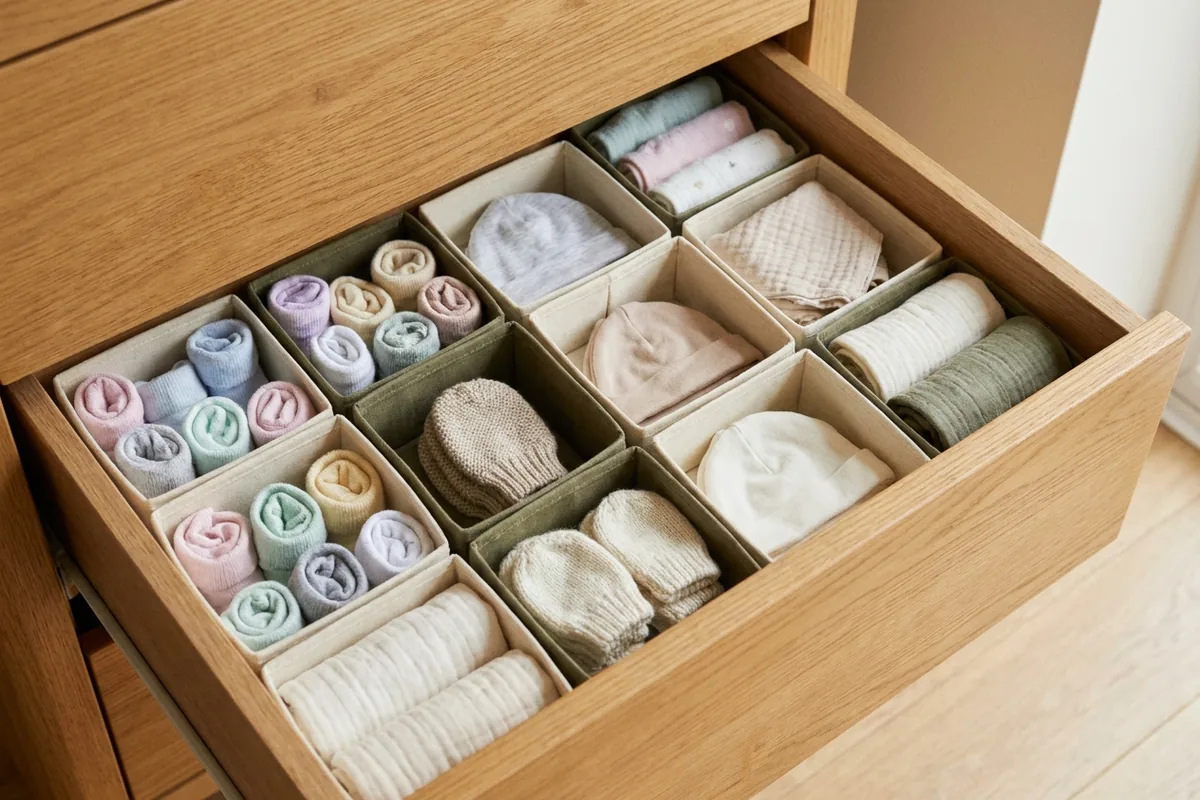
Dividers can help support upright rows. Drawer organizers, small bins, or even sturdy boxes all create walls that hold each category in place when the drawer opens and closes.
Which drawer should hold what?
Reach decides the drawer map, not category size. The drawers you open most should sit where your hands naturally land, and the drawers you rarely touch can take the awkward positions up high or down low.
Put daily bodysuits and pajamas in the top working drawers at waist height. These are the items you grab half-asleep, so they deserve the easiest reach and the clearest dividers in the whole dresser.
Drawer map: Keep frequently used clothes within comfortable caregiver reach and heavier items low. Keep hazardous supplies locked away, and close drawers when not in use.
Reserve the lowest drawers for bulk and backup. The next size up, extra blankets, and seasonal pieces can wait down low, since you open them rarely and never in a hurry. Weight also belongs low for stability.
Use a dresser as a changing station only if the dresser and changing-unit manufacturers permit that exact combination. Follow their attachment, restraint, size and weight instructions; an anchored dresser alone does not make any pad suitable. Never leave a baby unattended, even briefly, and keep a hand on the baby. If you need to fetch supplies, place the baby in a safe location first. See CPSC guidance on baby changing products.
That whole map rests on one safety step. Anchor the dresser to the wall using the manufacturer’s restraint and instructions, with hardware suitable for the wall. Do not allow children to climb it; open only one drawer at a time and close drawers after use. Learn more through the CPSC Anchor It program.
How do you keep drawers neat with file-folding?
File-folding may be easier for some households to maintain than stacking. Each item lives in its own slot, so putting laundry away means dropping pieces into gaps rather than rebuilding a pile.
The fold is simple and the same every time. Fold the item to roughly the drawer’s depth, then fold again into a compact rectangle that can stand on its own edge without leaning on its neighbor.
Practice the fold on a few items before loading the whole drawer to see whether it suits your routine.
A consistent fold also makes the rows line up neatly. That alignment is exactly what lets you scan the entire drawer in a single glance.
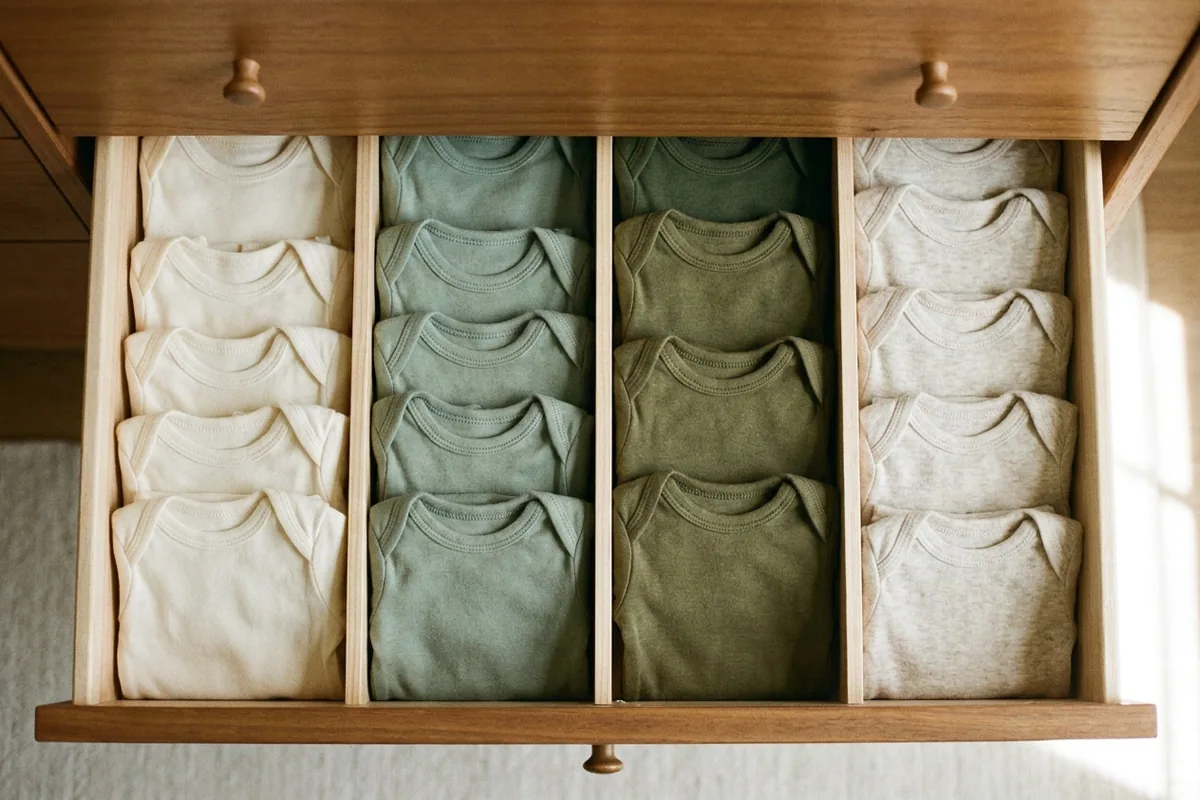
Dividers do the quiet work of holding those rectangles upright. Without dividers, some rows may shift when an item is removed.
Match the number of slots to your real categories, not an ideal. Three or four clear groups per drawer are easier to keep than eight tiny ones, and a simple map survives busy weeks far better than a fussy one.
Refill from the back so older items move forward. That small habit keeps clothes in rotation and stops the front row from becoming the only outfits your baby ever wears.
What breaks nursery dresser organization?
If items become difficult to find, adjust the layout or refold some pieces. Stacking is also fine when it works for your household.
A second failure is the overloaded top drawer holding every category at once. If one drawer is a jumble while others sit empty, the map has broken down. Give each drawer a single job and move the overflow to its own home.
A third failure is the creeping dresser top, where lotions, toys, and mail pile around the changing pad. Keep the changing area clear and use only the approved changing setup. Keep supplies within caregiver reach but outside the baby’s reach; store hazardous or small items locked away.
Reliable systems last because they are tested against real laundry and real exhaustion, not a tidy photo. Choose the layout that works for your household and anchor the dresser before loading it.
For more tight-space systems, browse the small space organizing guides. You can also run the free reset checklist before you reload the drawers.
How do you adjust the dresser as your baby grows?
A dresser that works for a newborn will need small changes every few months. Baby needs shift fast, from swaddles and sleepers in the first weeks to real outfits, socks, and pajama sets later on. Planning for those shifts keeps the drawers from slowly filling with things you no longer use.
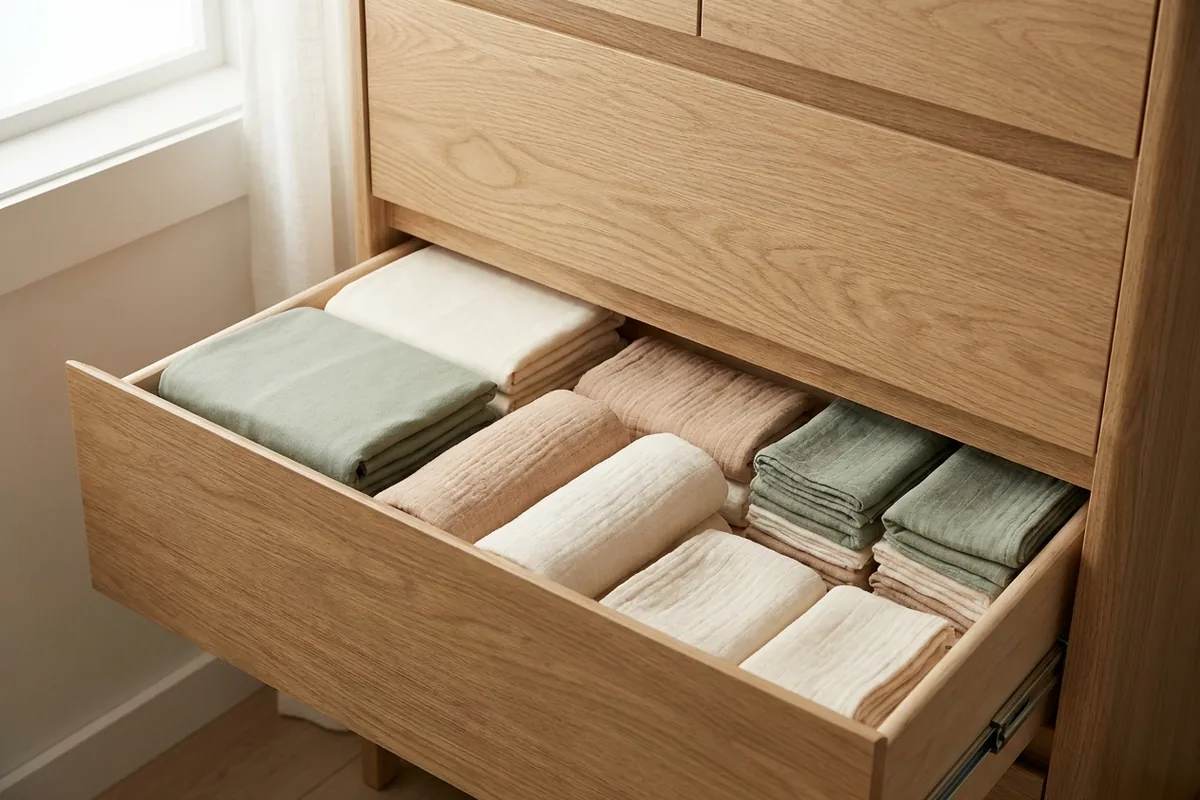
In the newborn stage, the top drawer usually holds swaddles, burp cloths, and bodysuits. Those are the items you grab many times a day, often with one hand. Keep them in front and fold them so each one shows at a glance.
If you swaddle for sleep, stop as soon as the baby begins trying to roll, rather than waiting for a particular age; do not use weighted swaddles. See the American Academy of Pediatrics safe-sleep guidance. Store unused swaddles outside the sleep space.
Plan for child access from the start, not only once crawling begins. Anchor the dresser according to its instructions and use suitable child-resistant locks where needed. Keep diaper cream, medicines, nail clippers and small parts in locked, inaccessible storage. Neither a top drawer nor a high surface is automatically inaccessible, especially as children climb and reach.
As a child grows, review access and supervise their use of the dresser. Do not let children climb or hang from drawers; keep drawers closed when not in use and use appropriate child-resistant locks where needed.
Every time the stage changes, take five minutes to move items between drawers. Small, regular shifts prevent the big weekend reset most parents dread.
Keep a small transit bin in a separate, safe storage location, not on a changing surface or within the baby’s reach. Clothes that are almost outgrown, a hat that needs washing, or a sock without a mate can wait there. Empty it during each weekly reset.
A quick look at the separate transit bin also shows you when a stage change is coming. If it keeps filling with one type of item, it is time to move that group.
Frequently asked questions
How do you organize baby clothes in a dresser?
Group clothes by category and size, then give each drawer a single job. File-fold or stack items as suits your routine, and add dividers if helpful. Keep daily pieces at waist height and bulk storage low, and label the front edge of each drawer.
Should you fold or hang baby clothes?
Either folding or hanging can work. Choose based on the garment, available space and what makes the clothes easiest for the caregiver to reach.
How do you keep baby dresser drawers from getting messy?
Use dividers or small bins so each category has a wall, and file-fold items so they stand on edge. Refill from the back so older clothes rotate forward. When a drawer starts needing a dig, refold it to standing rather than letting the pile rebuild itself.
Where should the changing station go on a dresser?
Use only a dresser and changing unit approved for use together by their manufacturers, with the specified attachments and restraints. Keep supplies within the caregiver’s reach but outside the baby’s reach, and keep hazardous or small items locked away. Never leave the baby unattended or step away to open drawers; place the baby safely elsewhere before fetching anything missing.
How do you anchor a nursery dresser safely?
Use the manufacturer’s tip-over restraint and instructions, with hardware appropriate for the wall, before loading the dresser. Consult a qualified installer if the wall or anchoring method is uncertain. Correct anchoring reduces tip-over risk but does not replace supervision or safe drawer use; do not let children climb the furniture.
How often should you reset a nursery dresser?
Review the drawers as clothes stop fitting or your routine changes; timing varies by child. Each reset goes quickly once the fold is habit. Between resets, return clean laundry to its chosen place.
Written by the SetsQuick Team. First published · Last updated .
© SetsQuick. This article and its images may not be copied or republished without permission. To report reuse, see our DMCA page.
Was this guide helpful?
Save it for later or send it to someone