
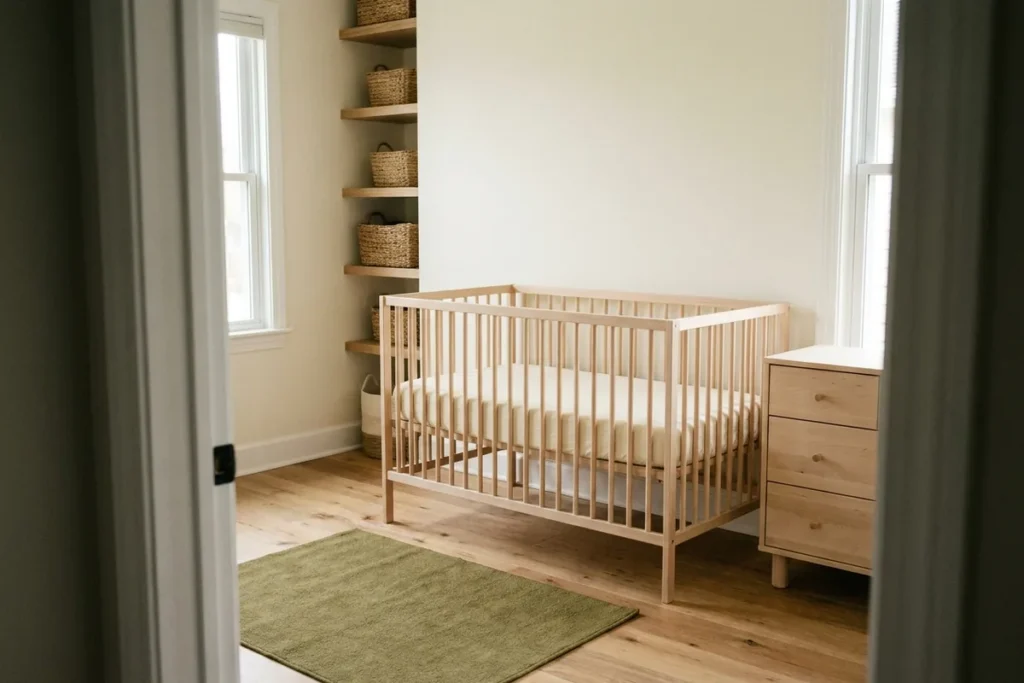
A small nursery forces every square foot to work hard, since a crib and a dresser already fill most of the floor. Useful small nursery storage ideas make safe use of suitable walls, furniture and doors without crowding the sleep or changing areas. Under-crib storage is an option only when the exact crib’s manufacturer permits it.
A tiny nursery works when storage climbs the walls instead of crowding the floor.
Key takeawaysFour moves that open up a tiny nursery
- Go vertical carefully: install suitable shelves and hooks away from the sleep and changing areas.
- Check hidden zones: use under-crib storage only in a manufacturer-permitted configuration; do not add overhead storage where it could fall onto a child.
- Choose furniture for its intended use: combine functions only when the products are designed and approved for them.
- Contain and label: keep small or hazardous items locked away and inaccessible to children.
Small rooms fail at the floor, not the walls. A crib, a dresser, and a chair leave almost no open floor, so every new item has nowhere to land except a surface that is already full.
Some suitable wall and door areas may add storage, but not every empty space is safe to fill. Keep shelving, cords, hanging bags and stored items away from the crib and changing surface. Respect manufacturer clearances and installation instructions.
So the goal is to lift storage off the floor and into the unused space around the room. That keeps the walkway clear and the surfaces open, which makes a small nursery feel calmer and work better.
Why do small nurseries run out of space so fast?
Nursery gear is bulky out of proportion to the baby. Diapers, wipes, blankets, and clothes in several sizes all need a home at once, and they arrive faster than a small room can absorb them.
The floor fills first because it is the easy default. Bags and boxes land on the floor, then migrate to chairs and the dresser top. Soon every flat surface carries a pile, and the room feels crowded and hard to clean.
Check wall and door options against child access, falling-object risk, load ratings and clearances before treating them as storage. Do not assume the space under a crib is usable, or that a door organizer is suitable for every door.
A clear floor also matters for daily routines. Open floor gives you a safe path to the crib at night, and it makes quick cleanups possible between naps.
The goal is to clear walkways using appropriate storage, without putting items where they could fall or be pulled into the sleep or changing areas.
Which small nursery storage ideas save the most space?
Start with safe, permitted zones. Check suitable wall construction and fixings, door and hinge ratings, and the exact crib’s instructions before choosing storage. Do not attach storage to a crib or add bins underneath unless its manufacturer permits that configuration.
Empty the room on paper first by listing what actually needs storing. Group those items by how often you reach for them, because daily supplies and deep backups belong in very different places.
Choose safe zones first: Check the wall, door, furniture and crib instructions. Keep the sleep and changing areas clear of items that could fall or be pulled into them.
Sort the plan before you buy anything. Knowing exactly what you own, and how often you use each thing, keeps you from buying bins that do not fit the real pile.
This order follows the SetsQuick method, Sort, Edit, Type, Store, scaled down for a room where every purchase has to earn its space.
The four steps below turn that plan into action. Small nursery storage ideas work best in this order, because each step shrinks the pile before you decide where the remaining items should live.
- Sort by frequency: separate daily supplies from weekly items and deep backups.
- Edit thoughtfully: set aside surplus items and donate clean, safe, usable gear you no longer need.
- Type by zone: match each group to a suitable, safely installed storage area.
- Store and label: label containers and keep hazardous items secured and inaccessible.
Before a change, gather diapers, wipes and a change of clothes within an adult’s reach but outside the baby’s reach. If you must fetch something, take the baby with you or put them in a safe place first.
Store deep backups securely outside the daily work area, preferably in a closet or another room. Keep heavy bins low and within shelf load limits. Use under-crib drawers only when designed or expressly permitted by the crib manufacturer, without altering the crib or its required clearance.
How do you use vertical space in a nursery?
Suitable walls can add storage, provided shelves are correctly installed and positioned away from the sleep and changing areas.
Consider a vertical stack of shelves only where the wall and fixings support it. Follow load limits and keep the installation outside the child’s reach and away from areas where items could fall onto them.
Load storage safely: Anchor furniture as instructed, respect load limits, place heavy items low, and keep shelves and hanging items away from the crib and changing surface.
Hooks near a suitable door can hold a jacket or carrier if installed securely and kept out of the child’s reach. Keep hanging items, straps and cords away from the crib and changing surface.
A door organizer can hold suitable lightweight supplies if the door and organizer instructions permit it and the door still closes and latches. Keep medicines, creams and small parts locked and inaccessible, not in open pockets.
Label every shelf basket on the side that faces the room. A quick glance then tells you where diapers, cloths, and spare outfits live, which matters most during tired nighttime changes when nobody wants to search.
Keep heavier items low, follow shelf load limits, and anchor tall furniture as the manufacturer directs. See CPSC’s Anchor It guidance. Do not place shelves, bins or hanging objects where they could fall onto or be pulled into the crib or changing area.
What furniture earns its footprint in a tiny nursery?
A multipurpose piece can save space, but a dedicated item may be the safer or more practical choice. Use furniture only for functions approved by its manufacturer.
A dresser can double as a changing station only if the dresser and changing-unit manufacturers approve that combination. Check attachment, restraint, size, weight and anchoring instructions; matching the pad’s depth alone is not enough.
Do not assume that adding any pad makes a dresser a safe changing table. Use the approved combination exactly as instructed, keep supplies outside the baby’s reach, keep a hand on the baby, and never leave the baby unattended. Place the baby safely elsewhere before fetching supplies. See changing-table safety guidance.
Changing safety: Use only a changing unit compatible with the dresser and installed as both manufacturers direct. Keep one hand on the baby and never leave the baby unattended.
A crib with manufacturer-designed storage drawers may provide backup storage when assembled and used exactly as instructed. Do not substitute improvised bins, attach storage to the crib, or obstruct required clearance. Keep the sleep space bare, following CPSC safe sleep guidance.
Pick a chair that stores as well as seats. A glider with a side pocket, or a small ottoman that opens for storage, keeps nighttime supplies within reach while using space the chair already occupies.
Vertical storage and multitasking furniture work as a team. The walls take the light, frequent items, while the furniture hides the bulky ones, so the two together cover nearly every kind of nursery gear.
Measure before buying any piece, since a small room punishes guesswork. Check the footprint against your open floor and the walkway, so a new item solves storage without blocking the path to the crib.
What breaks storage in a small nursery?
The most common failure is floor creep, where bags and boxes reclaim the open floor one item at a time. The early sign is a walkway you have to step around. Move items to appropriate, secure storage outside the sleep and changing areas.
A second failure is overbuying bins that do not fit the shelves or the stuff. Mismatched containers waste the very space they promise to save. Measure the shelf and the items first, then buy only what fits both.
A third failure is burying daily supplies behind deep backups. If you dig past bulk diapers to reach today’s wipes, the zones are reversed. Move daily items to the front and send backups to the high or hidden storage.
Smart small nursery storage ideas last because they match the room you actually have, not a larger one in a photo. Choose only safe, permitted storage zones and keep the routes through the room clear.
For more tight-space systems, browse the small space organizing guides. You can also run the free reset checklist before you rework the room.
How do you fit a nursery corner into a shared bedroom?
In many small homes, the nursery is not a separate room. It is a corner of the parents’ bedroom or a slice of a shared kids’ room. The same small nursery storage ideas still apply, but each piece has to work harder because the space has two jobs.
Choose a suitable area for the crib or bassinet and essential supplies, leaving the required clearances and a clear walkway. Store additional items elsewhere if that makes the setup safer.
Use a dresser as a changing station only with an approved compatible changing unit, installed and restrained as the manufacturers instruct. Anchor the dresser, keep the surface clear, and never leave the baby unattended. Space savings do not override those requirements.
Use a separate suitable wall for securely installed shelves or hooks, away from the crib and changing area. Even light objects can fall or be pulled down.
Store backup supplies outside the bedroom if possible. Extra diapers, spare bedding, and next size clothes can live in a hall closet, under the parents’ bed, or in a bin in the living room. The baby corner then holds only what you need each day.
A clear layout can distinguish the baby area without adding a screen, curtain or loose rug that could introduce tipping, entanglement or tripping hazards.
Keep the shared space flexible as your child grows. Reassess furniture and storage for stability, accessibility and age-appropriate use at each stage.
Under the crib: Use storage only when the exact crib manufacturer permits that configuration; do not alter the crib or block required clearance.
Door storage: Check the door and organizer instructions and keep the door able to close and latch. Keep medicines, creams and small parts locked away and out of a child’s reach.
Frequently asked questions
How do you store things in a small nursery?
Use suitable, securely installed wall or door storage outside the child’s reach, following load limits and clearance requirements. Keep creams, medicines and small parts locked and inaccessible, not in open door pockets. Use under-crib storage only when the exact crib’s manufacturer permits the configuration.
What is the best way to use wall space in a nursery?
Install suitable shelves or hooks securely, away from the crib and changing area and outside the child’s reach. Follow load limits, keep heavier items low and anchor tall furniture as instructed.
How do you store baby gear without a big closet?
Replace missing closet capacity with securely installed shelving and storage furniture suited to the room. An over-door organizer needs permission from the door and organizer instructions and must not obstruct closing or latching. Under-crib drawers and dresser-changing combinations are options only when approved for that use by the relevant manufacturers.
What furniture is best for a small nursery?
Choose furniture that is designed and approved for its intended uses. A compatible dresser-changing-unit combination or a crib with manufacturer-designed drawers may save floor space; improvised combinations do not. Check installation instructions, anchoring, load limits and clear walkways before buying.
How do you keep a small nursery from feeling cluttered?
Clear walkways by using safely installed storage outside the sleep and changing areas. Secure small and hazardous items, and set aside clean, usable surplus for donation or storage.
How often should you reset a small nursery?
Plan a quick reset whenever supplies creep back onto the floor, which happens often in a tight room. Each pass goes quickly once every basket is labeled. Between resets, return each item to its zone so the floor and surfaces stay clear from day to day.
Written by the SetsQuick Team. First published · Last updated .
© SetsQuick. This article and its images may not be copied or republished without permission. To report reuse, see our DMCA page.
Was this guide helpful?
Save it for later or send it to someone