
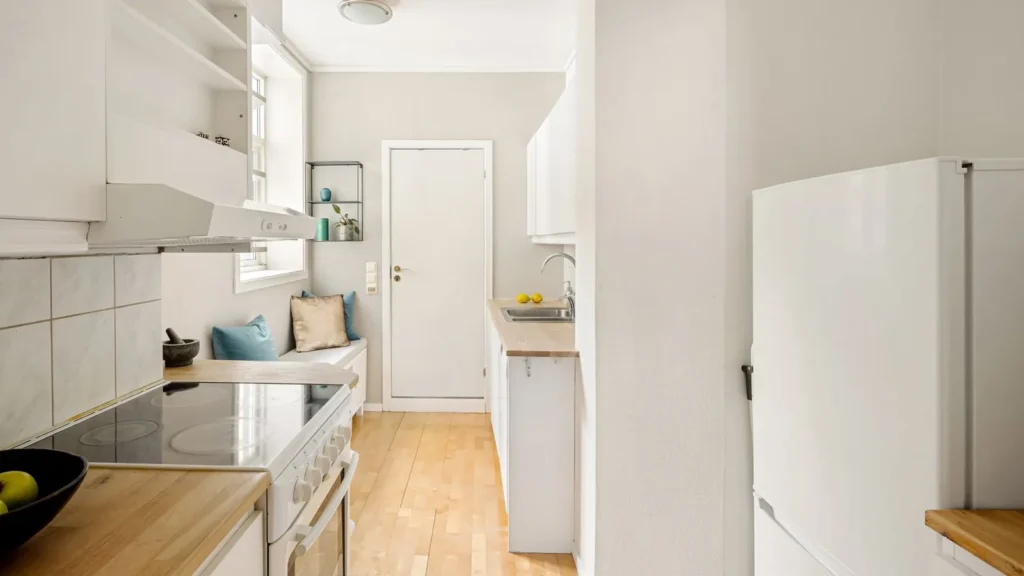
Your counter vanished under a toaster, a dish rack, and a row of oils. Vertical storage gives a tiny kitchen its counter back when each item sits at the right height on a wall that can hold it. Here is a reach rule, a wall check, and a plan.
Key takeawaysDecide these before you hang anything
- Keep daily items between hip and eye height, and push weekly items higher.
- Check whether each wall is drywall, tile, or a stud before choosing hardware.
- Clear one wall at a time, starting with the one beside the stove or sink.
- Leave some wall bare, so the kitchen still looks calm and open.
Why does a tiny kitchen run out of counter space so fast?
A small kitchen usually has one short run of counter, and everything competes for it. Appliances, drying dishes, knives, oils, and a fruit bowl all land there because it is the only flat surface close to the stove and sink. Within days, the prep area shrinks to a narrow strip.
Upper cabinets rarely help as much as they should. Their shelves are often too deep for small items and too high for daily use, so the things you reach for every day stay on the counter instead. The result is a kitchen with full cabinets and a crowded counter at the same time.
The walls, meanwhile, stay mostly empty, even though the strip under the upper cabinets, the fridge side, cabinet doors, and cabinet tops can all carry weight. Together they often add up to more storage area than the counter itself.
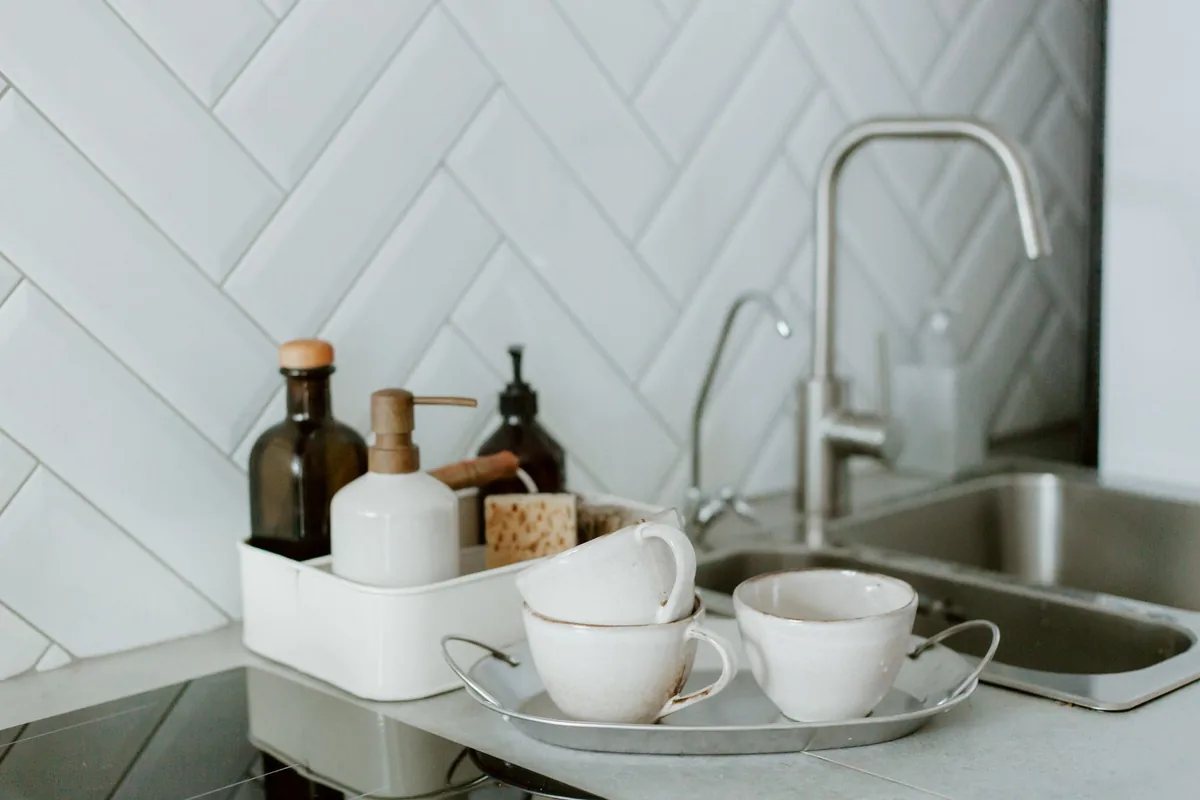
Vertical storage moves items from that crowded flat surface onto those unused vertical ones. Done well, it frees the counter for cooking and puts the most used tools within one step of where you need them. Done badly, it just moves the clutter up to eye level.
The difference comes down to three choices: how high each item goes, what the wall behind it can hold, and how much wall you leave bare. The sections below take those choices one at a time, so each wall you use earns its place and nothing goes up just because it looked good online.
Where does vertical storage work best in a small kitchen?
Start with reach rather than products, and stand at the counter and notice the comfortable zone between your hip and your eyes. For many adults, that band runs from about counter height, roughly 36 inches above the floor, to about 60 inches; measure your own. Items in that band can be grabbed without bending or stretching.
That band is the daily zone, where knives, oils, towels, and your favorite spatulas belong on a rail, a strip, or a small shelf. These are the items that currently crowd the counter, so moving them first gives the biggest result.
Above the daily zone sits the weekly zone. This area suits things you use a few times a week, like a colander or backup spices. A shelf above the upper cabinets or the top of a pantry door works well here, as long as you can reach it with a small step stool.
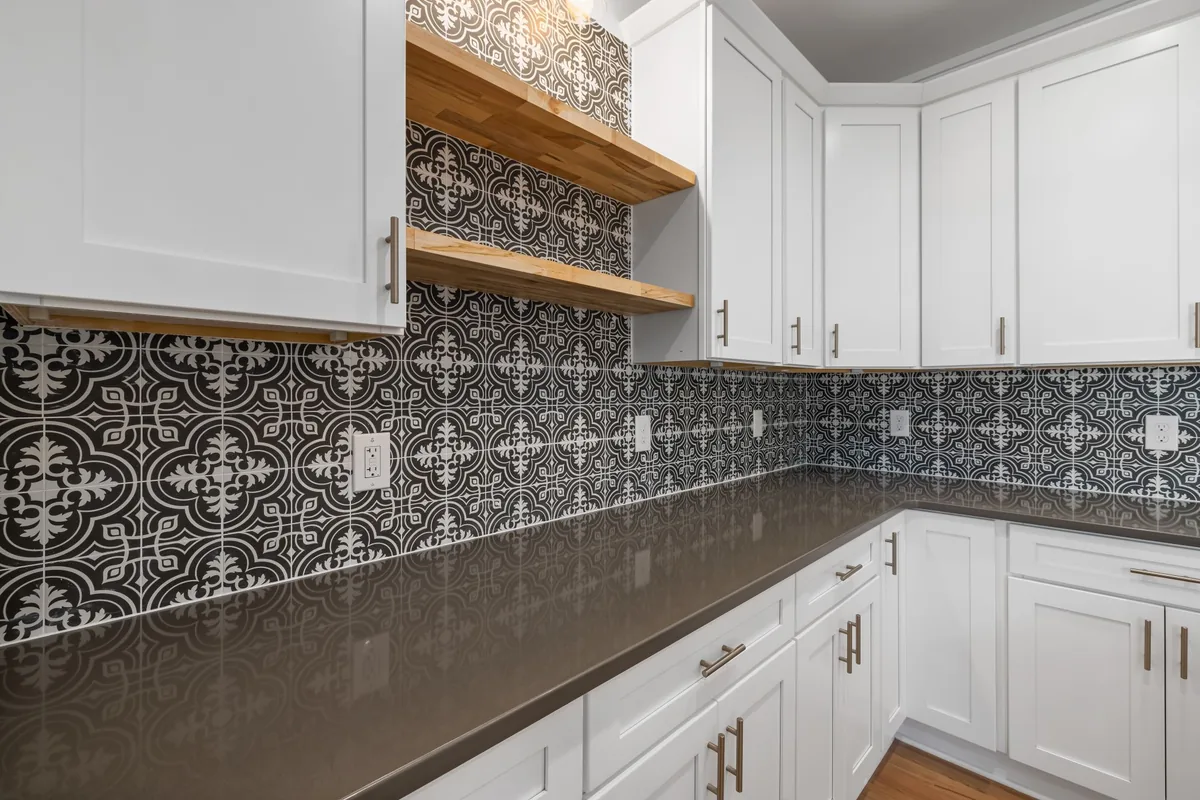
The top zone holds seasonal and rare items, such as holiday platters, a large roasting pan, or spare storage containers. Use lidded bins so dust stays out and so the shelf looks tidy from below. Label the bin fronts, because you will not see inside them from the floor.
Measure your own zones before buying anything by marking your hip and eye height with painter’s tape. Then measure the space between the counter and the upper cabinets, since that gap limits every rail. Many kitchens have a gap of around 18 inches there, which is enough for a rail and one row of hooks.
What can your walls actually hold?
Wall construction and the exact storage product determine the fixing method. Knocking and listening is not a reliable way to locate studs, pipes or cables. Use appropriate detection methods, follow the product instructions and check for utilities before any drilling. If the wall or utility route is uncertain, use a qualified installer rather than guessing.
Tile backsplashes are hard to drill without cracking the tile. Drill tile only if the product instructions allow it, using the bit and method they specify, and check for pipes and cables first. If you rent or prefer not to drill tile, choose a rail that mounts to the underside of the upper cabinets instead.
Many fridge sides are magnetic steel, so magnetic racks can hold spices, wraps, and towels without any holes. Test the side with a magnet first, since some finishes and side panels are not magnetic, and check the fridge manual for side clearance. Check the weight limit printed on the rack, and keep heavy glass jars off it. Remember that the fridge door swings, so items on the hinge side must not block it.
Cabinet doors are thin, so only light items belong on them. A slim rack for lids, cutting boards, or cleaning cloths works well inside a door, as long as it clears the shelves when the door closes. Measure the gap between the door and the shelf edge before you choose a rack.
Which vertical storage solutions fit a tiny kitchen?
The best choice depends on the wall, the zone, and what currently crowds your counter. The list below matches common vertical storage types to the space they suit and the one thing to check before buying.
Vertical storage types for a small kitchen
- Rail with S hooks. Best when: the gap between counter and upper cabinets is open, in the daily zone. Holds: utensils, mugs, small pans; wall: screw into studs or mount under the cabinets. Watch for: hooks crowding the backsplash where you splash while cooking.
- Magnetic knife strip. Best when: a knife block takes up counter space, in the daily zone. Holds: knives and metal tools; wall: studs or strong anchors. Watch for: placing it above the stove, where heat and grease build up.
- Small floating shelf. Best when: oils and spices crowd the stove side, in the daily zone. Holds: bottles, jars, a salt box; wall: studs for anything heavy. Watch for: a shelf deeper than about five inches, which invites clutter.
- Pegboard panel. Best when: a whole wall is free and you change tools often, in the daily and weekly zones. Holds: pans, tools, baskets on hooks; wall: studs, with spacers behind. Watch for: too many hooks, which make the wall look busy.
- Fridge side magnetic rack. Best when: you cannot drill, in the daily zone. Holds: spices, wraps, towels; wall: the fridge itself. Watch for: weight limits and the door swing.
- Over the cabinet door rack. Best when: lids and boards clutter the counter, in the daily zone. Holds: lids, cutting boards, cloths; wall: none, it hangs on the door. Watch for: shelves hitting the rack when the door closes.
- Shelf above the upper cabinets. Best when: there is a gap below the ceiling, in the top zone. Holds: lidded bins of rare items; wall: sits on the cabinet tops. Watch for: open items gathering dust and grease.
- Slim rolling cart. Best when: there is a narrow gap beside the fridge, from the floor up to about counter height. Holds: cans, oils, cleaning supplies; wall: none. Watch for: a cart too tall to slide out under a counter overhang.
For most tiny kitchens, a rail and a magnetic knife strip on the daily zone give the fastest result. Together they clear knives, utensils, and mugs off the counter in one afternoon, and both mount to studs or under the cabinets with very little hardware.
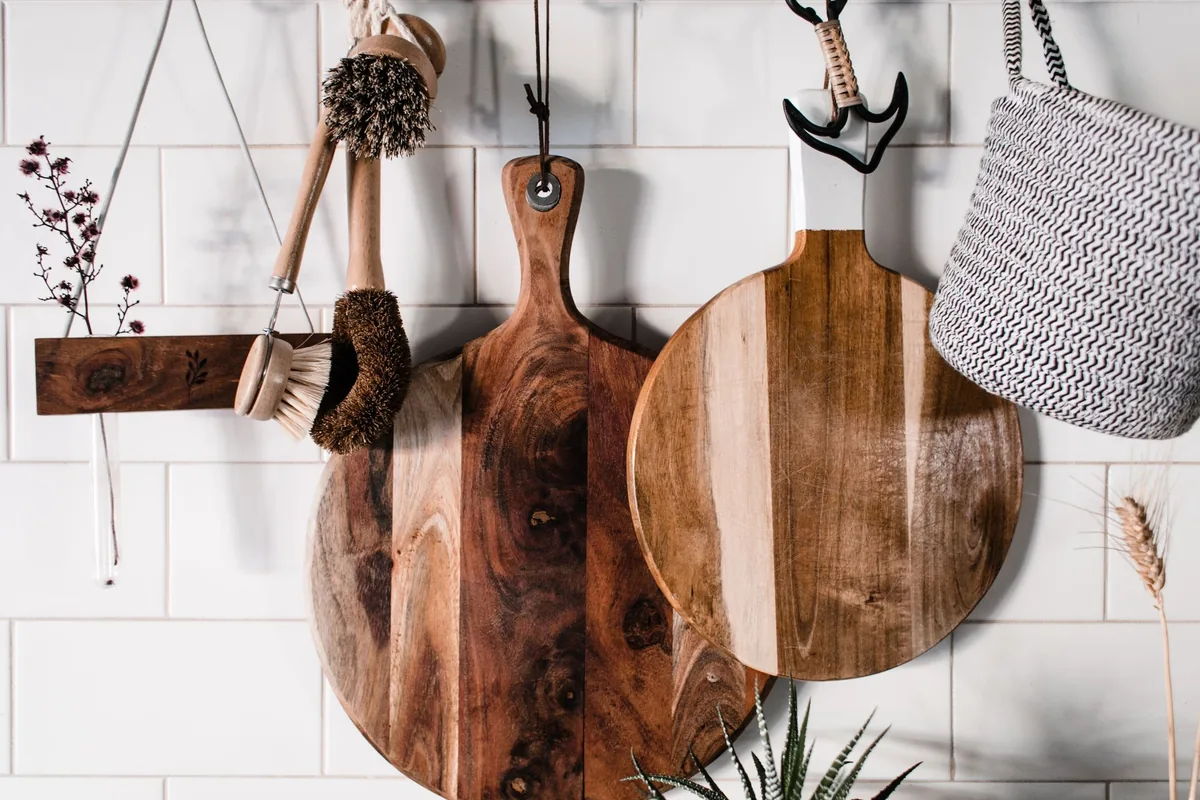
Add a shelf or a pegboard only if the rail is full and the counter is still crowded. Starting small keeps the wall calm and lets you see what you actually reach for before you commit to more holes. Most kitchens need fewer pieces than a list of ideas suggests.
The top zone is where many people gain the most unused storage. A few matching lidded bins on top of the upper cabinets can hold everything you use twice a year. That frees whole cabinet shelves below for daily dishes and food.
Can renters use vertical storage?
Yes, and many of the best options need no drilling at all. A fridge side magnetic rack, an over the door rack on a pantry or cabinet door, and a slim rolling cart can often go in without drilling, if the surface, door and load suit the exact product. Tension rods inside a cabinet can also hold spray bottles or lids.
Use adhesive hooks or rails only on surfaces and for loads expressly allowed by the exact product instructions. Follow its cleaning, preparation, curing and removal instructions; do not apply a universal alcohol-cleaning rule to every finish. Check rental permission, and do not use adhesive mounting for a loaded rack or sharp or breakable items unless the product expressly permits that use.
A one-day light-load trial does not establish long-term adhesive safety or a higher load rating. Never exceed the manufacturer’s limits, and allow the full specified curing time before loading. If there is no rated, suitable fixing method for the item and surface, choose a different storage location.
If you can make small holes, a few screws into studs are often easier to patch than people think. Small holes fill with spackle when you move out. Check your lease and ask your landlord first, since many are happy to agree when the holes are few and neat.
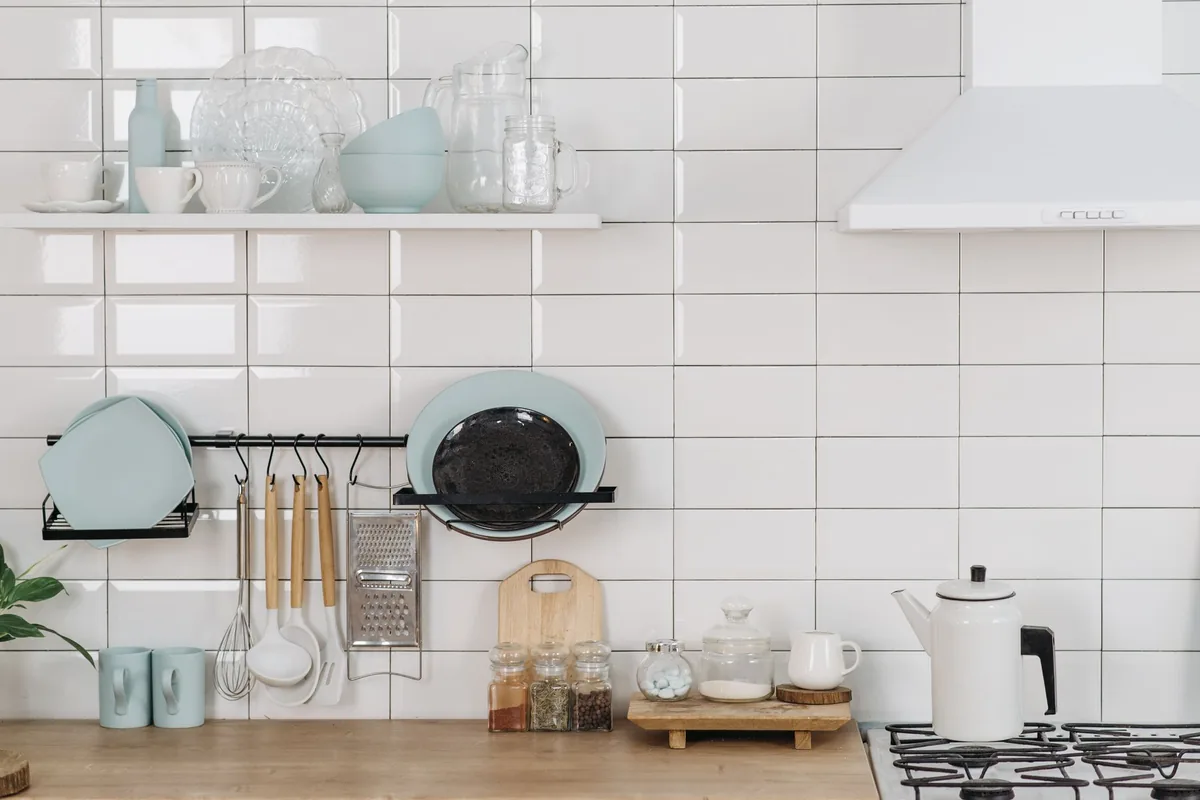
A tension pole shelf is another good renter option, because it stands between floor and ceiling and holds several small shelves without touching the walls. Measure the ceiling height carefully, since these poles only work within a set range, and check that the floor below is level.
For more ideas that work without drilling, stackable bins help inside cabinets too. Our guide to the best stackable bins for a rental pantry shows how to size them for shelves you cannot change, which suits any rental kitchen.
What goes wrong with vertical storage?
The most serious failure is an anchor pulling out of drywall. A rail loaded with cast iron pans or heavy jars puts steady pressure on its screws, and hollow wall anchors can slowly tear through the board.
When it fails, it often fails suddenly, taking the whole rail and everything on it down onto the counter.
Cracks, bulging paint or movement around a fixing are reasons to stop using the storage and unload it safely. Do not simply add a stronger anchor to a damaged or unidentified wall. Have the substrate, utility locations, installation and load checked before reuse.
The second failure is visual clutter, since a wall covered in hooks, tools, and baskets can make a small kitchen feel smaller and messier than before. Aim to leave a clear stretch of wall between each storage zone, and keep items on each rail of a similar type and color.

The third failure is putting daily items too high. A shelf of oils above eye level means reaching over a hot stove, and a heavy pan on a top hook is hard to lift down safely. Keep anything heavy or hot at or below shoulder height.
Grease is the last problem, because anything stored near the stove collects a sticky film over time. Keep open storage on the side away from the stove where possible, and wipe rails and hooks every few weeks. Closed bins and lids protect anything you store higher up.
How do you set up one wall in an afternoon?
Pick the wall that holds the most counter clutter today, often the one beside the stove or sink. Then follow these steps in order, so you only buy hardware for the items you will really hang.
- Clear the counter below the wall and sort everything into daily, weekly, and rare groups.
- Mark your hip height and eye height on the wall with painter’s tape.
- Find and mark the studs, and note any tile, outlets, or switches.
- Choose one rail or strip for the daily group only, sized to the items you sorted.
- Install only by the exact product’s approved fixing method on a suitable substrate, with utility checks and permission where needed; use a qualified installer if uncertain.
- Load it with daily items, keeping heavy pieces at the ends near the studs.
- Move weekly items to a higher shelf and rare items into lidded bins on top.
- Leave the counter below clear for one week and note anything you still reach for.
Step eight tells you whether you need anything more. If the counter stays clear, you can stop there, but if one or two items keep returning, add a small shelf or a few hooks for them. This keeps the wall from filling with storage you never needed.
The same zone thinking works inside the pantry. Our review of the best pantry organization containers set uses shelf depth and reach in the same way, so food and tools follow the same logic.
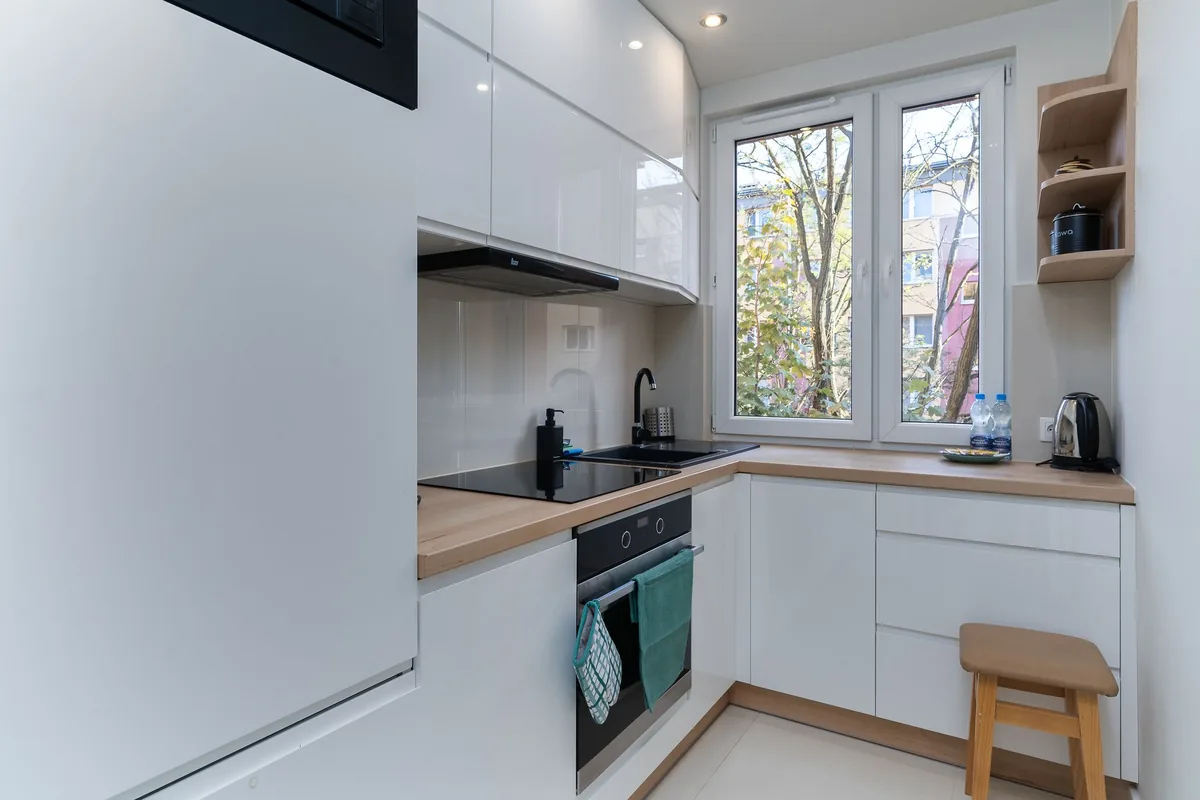
You can find more ideas for small homes on the small spaces hub. For a full plan, the free 30-Day Home Reset follows the SETS method: Sort, Edit, Type, then Store, one space at a time.
A good vertical setup is quiet to look at. The counter is clear, the daily tools are one reach away, and there is still some bare wall. If your kitchen looks like that after a week of cooking, the walls are working for you.
Frequently asked questions
What is vertical storage in a kitchen?
Vertical storage means using walls, doors, and the space above cabinets instead of the counter. Rails, magnetic strips, small shelves, and door racks hold items upright or on hooks. The goal is to clear the counter for cooking while keeping the most used tools within easy reach between hip and eye height.
How do I add storage to a kitchen with no counter space?
Start with the wall beside the stove or sink. Mount a rail or a magnetic knife strip under the upper cabinets for daily tools. Then move weekly items higher and rare items into lidded bins on top of the cabinets. Add more only if the counter still fills up.
What can renters use for vertical storage?
Renters can consider freestanding carts or other removable options whose instructions permit the intended surface, load and placement. Magnetic, over-door, tension and adhesive products are not suitable for every appliance, door or wall. Check load limits, appliance ventilation, door closing and lease rules. A light-load trial does not establish long-term safety.
How much weight can a kitchen wall hold?
It depends on the exact product, wall construction, fasteners and intended load. Follow the storage and fastener manufacturers’ instructions, check for pipes and cables before drilling, and do not treat grout lines or a tapping sound as a safe drilling guide. If there is cracking, movement or uncertain fixing capacity, unload the unit and consult a qualified installer.
Is open vertical storage hard to keep clean?
It needs a little more care than closed cabinets. Items near the stove collect grease, and top shelves collect dust. Keep open storage away from the stove where you can, wipe rails and hooks every few weeks, and use lidded bins for anything stored high or used rarely.
Written by the SetsQuick Team. First published · Last updated .
© SetsQuick. This article and its images may not be copied or republished without permission. To report reuse, see our DMCA page.
Was this guide helpful?
Save it for later or send it to someone