
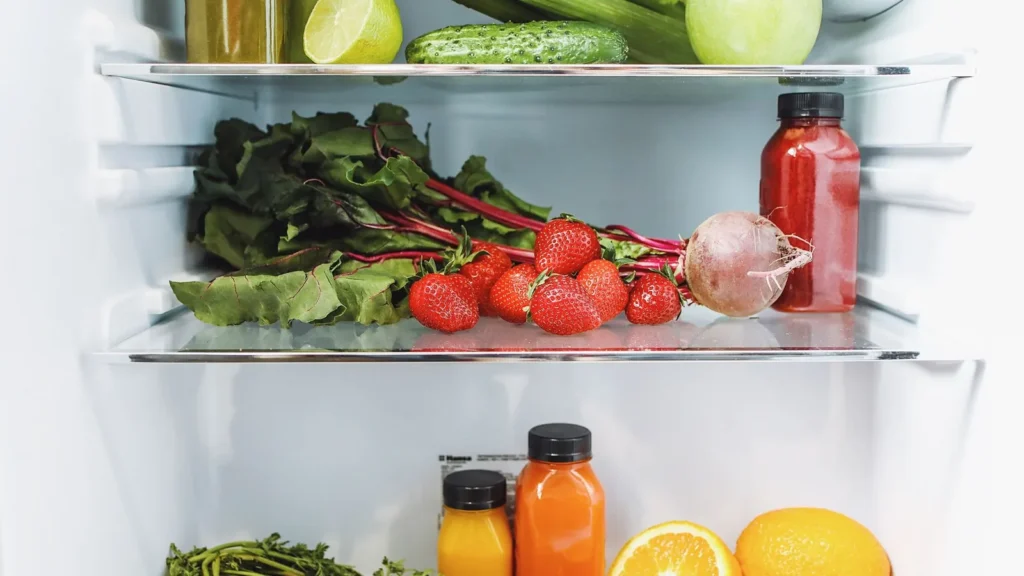
You filled the fridge with matching bins, and now the door needs a push. Fridge bins need to fit the particular shelves, door and airflow requirements. This guide covers measurements, bin types and food-safety checks.
Key takeawaysDecide these before you buy any bins
- Measure usable shelf space and check how door shelves and their contents fit when the door closes.
- Locate supply and return vents in the refrigerator manual and keep the manufacturer’s required clearances open.
- Buy bins for the three foods that get lost, not a full set for every shelf.
- Choose containers suited to the food and intended use; keep refrigerated foods covered as appropriate and use leakproof containers for raw meat.
- Keep one shelf bin free. Leftovers need somewhere to land tonight.
Why do fridge bins fit badly in a top freezer refrigerator?
Top-freezer refrigerators vary in width, depth and shelf layout. A bin that fits one model or another refrigerator style may not fit yours.
That mismatch shows up in three places. The bin is too deep, so the door shelves hit it. The bin is too tall, so it blocks the shelf above. Or the bin is too wide for the intended arrangement.
There is also the air flow. Vent positions and airflow vary by model. A bin or food placed in front of a supply or return vent can interfere with circulation and cooling.
So the best fridge bins for this style are the ones that fit its real shelves and leave its air path open. Brand and style matter much less than depth, height and where you place them. That is the part most shopping lists leave out.
Start with the fridge you have, then choose the bins. Most people do it the other way round. They buy a set, fill the fridge, and then find the door, the vent and the shelves were never part of the plan.
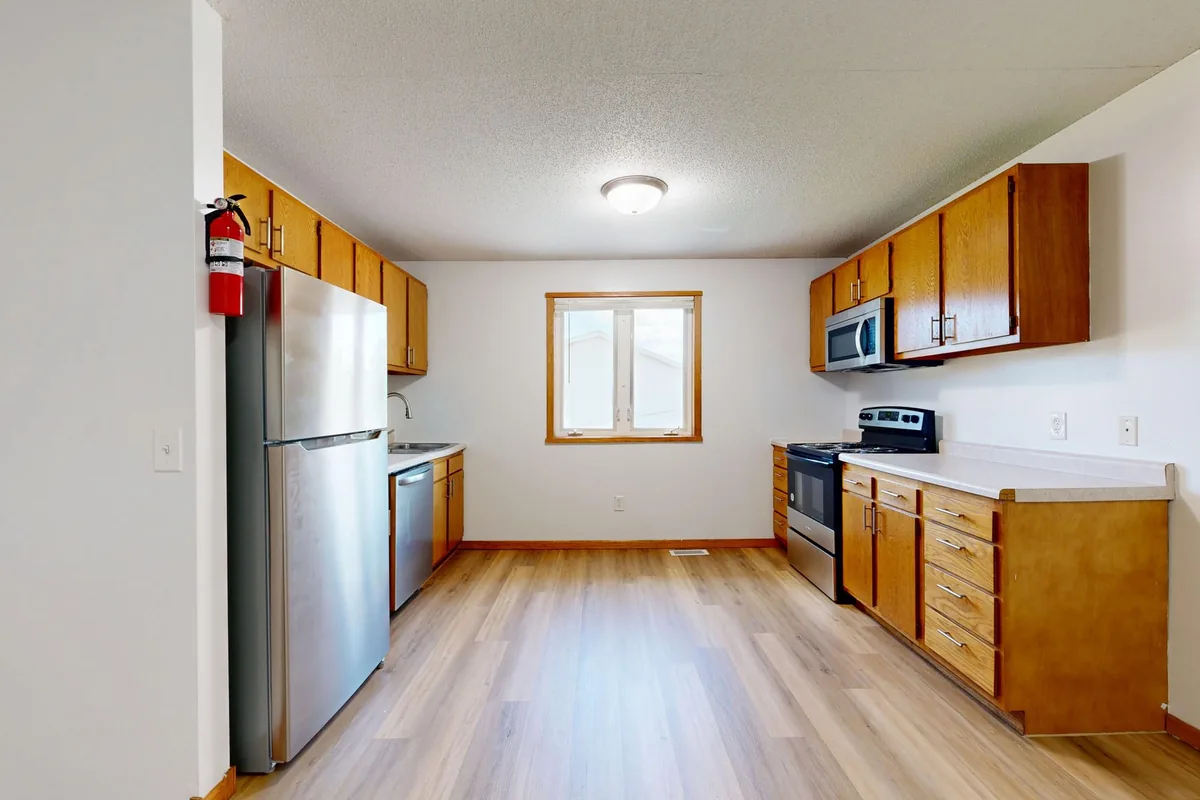
It also helps to be clear about the goal. Bins do not add space to a fridge. They gather small things into groups that you can pull out in one move. If an item is easy to see and reach on a bare shelf, it does not need a bin.
How do you measure a top freezer fridge for bins?
Take four measurements one shelf at a time, keeping perishable food refrigerated or in a suitable cooler with ice or cold packs while you work. Write each number on a note you can take shopping.
- Shelf depth from the front edge to the back wall.
- Door clearance: how far the door shelves reach into the fridge when shut.
- Gap from each shelf surface to the underside of the shelf above.
- Shelf width from side wall to side wall, inside any rails.
Door-shelf depth cannot simply be subtracted from shelf depth: positions, shelf heights and bottle shapes vary. Account for the door bins and their contents, then gently check the actual fit and closure without forcing the door. Reposition or use a smaller bin if anything touches.
Next, locate every supply and return vent using your refrigerator’s manual. Keep the clearances specified for that exact model rather than assuming the vent is in a particular position or that a finger-width gap is enough. Do not cover vents with bins or labels.
Then check the shelf gaps. Top freezer fridges often let you move the shelves. If the manual permits it, adjust a shelf before buying; check the resulting clearance, load and airflow requirements.
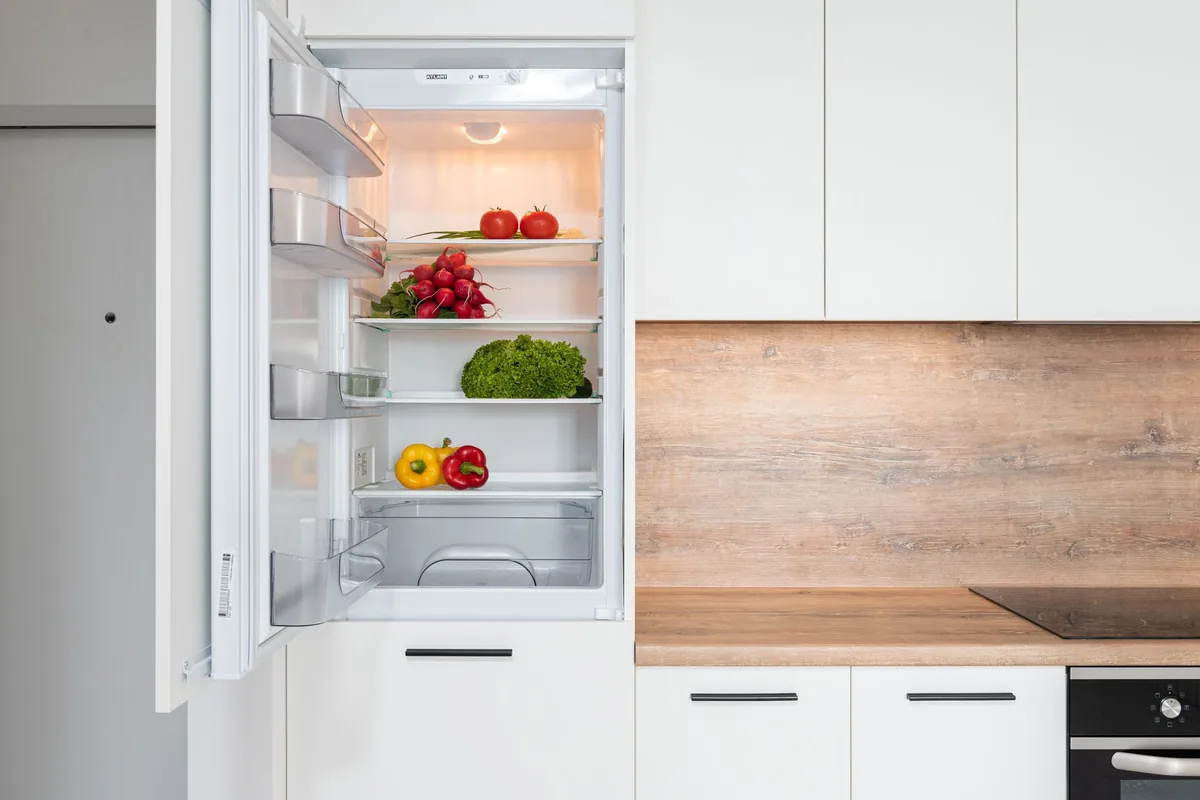
Width is the last number. Divide the shelf width by the width of the bins you are looking at. If useful, compare one wide bin with a narrow one, but leave the space required for circulation, door closure and safe access.
Which fridge bins work best in a top freezer fridge?
Five bin shapes cover most needs. Check each shape against your measured space, door closure and vent clearances.
Fridge bin shapes for a top freezer model
- Open front shallow bin. Best for: yogurt, snacks, small jars. Depth need: short, well within usable depth. Stacks: no. Watch for: tall items tipping out of the open front.
- Lidded stacking bin. Best for: cheese, cut fruit, deli items. Depth need: short to medium. Stacks: only if the exact bin is designed and rated for stacking, with clearance. Watch for: the food’s storage and covering instructions.
- Long narrow pull bin. Best for: bottles and jars along a side wall. Depth need: close to full usable depth. Stacks: no. Watch for: blocking the vent at the back.
- Carton-sized tray. Best for: retaining eggs in their original carton on a refrigerator shelf, not in the door. Depth need: measure the carton. Stacks: only if the exact tray is rated for that use without crushing the carton. Watch for: hiding the date or obstructing airflow.
- Turntable. Best for: sauces and condiments on a middle shelf. Depth need: square space, width and depth equal. Stacks: no. Watch for: small bottles sliding off the edge.
Read the list from your own measurements. Choose shapes that fit the actual shelf and allow ventilation. Stack only containers designed for stacking, within their limits, and keep food covered according to its storage needs.
Clear bins can make contents and spills easier to see. Opaque bins can work too if labeled and checked regularly. Use containers suitable for food contact when food touches them.
Where should each bin go on the shelves?
Start with foods that are difficult to find. Group them where they fit safely, keeping raw foods separate from ready-to-eat foods and respecting temperature and storage instructions.
Keep drinks and tall bottles on the door or along one side wall. A long narrow pull bin lets you slide them out together. Keep the center of each shelf for leftovers and meal prep, which change every day and do not need a bin.
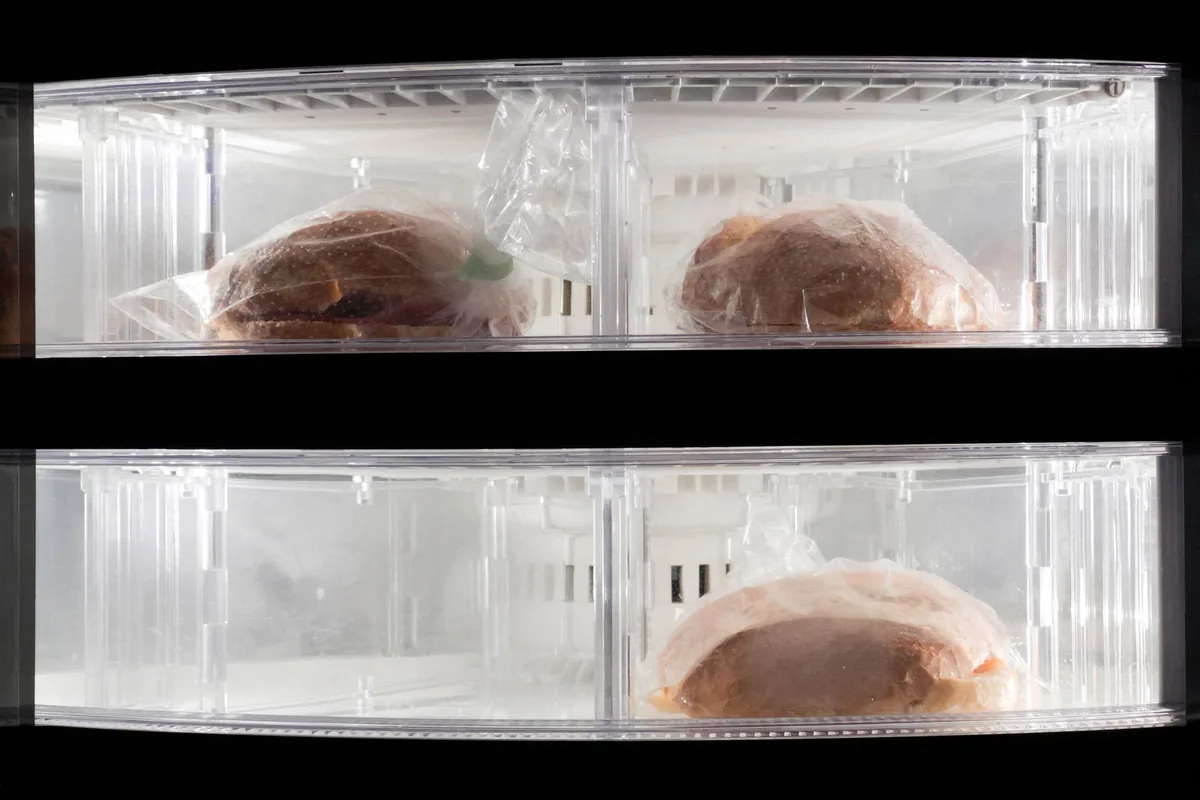
Keep raw meat, poultry and seafood in sealed, leakproof containers on a lower shelf so juices cannot drip onto ready-to-eat food. An ordinary lidded organizer is not necessarily leakproof. Keep the refrigerator at or below 40°F (4°C), check it with an appliance thermometer, and allow air to circulate. See FDA food-storage guidance.
Keep the clearances and vent zones required by the appliance manual clear. There is no universal finger-width gap that establishes adequate airflow. Do not overfill the shelves, and check the refrigerator temperature with an appliance thermometer after changing the layout.
The crisper drawers need less than you think. Most already work as bins. A simple liner or a single divider can keep herbs from being crushed under heavier vegetables. Adding bins inside the drawers often wastes space you already had.
What goes wrong with fridge bins?
A blocked vent can disrupt circulation. Frost, frozen food or a warm section may have several causes and do not by themselves establish that a bin is blocking a vent.
If food freezes unexpectedly or the refrigerator seems warm, check its thermometer, the door seal, settings and vent clearances against the manual. If the problem persists, contact the manufacturer or a qualified technician. Do not rely on touch or smell to determine food safety.
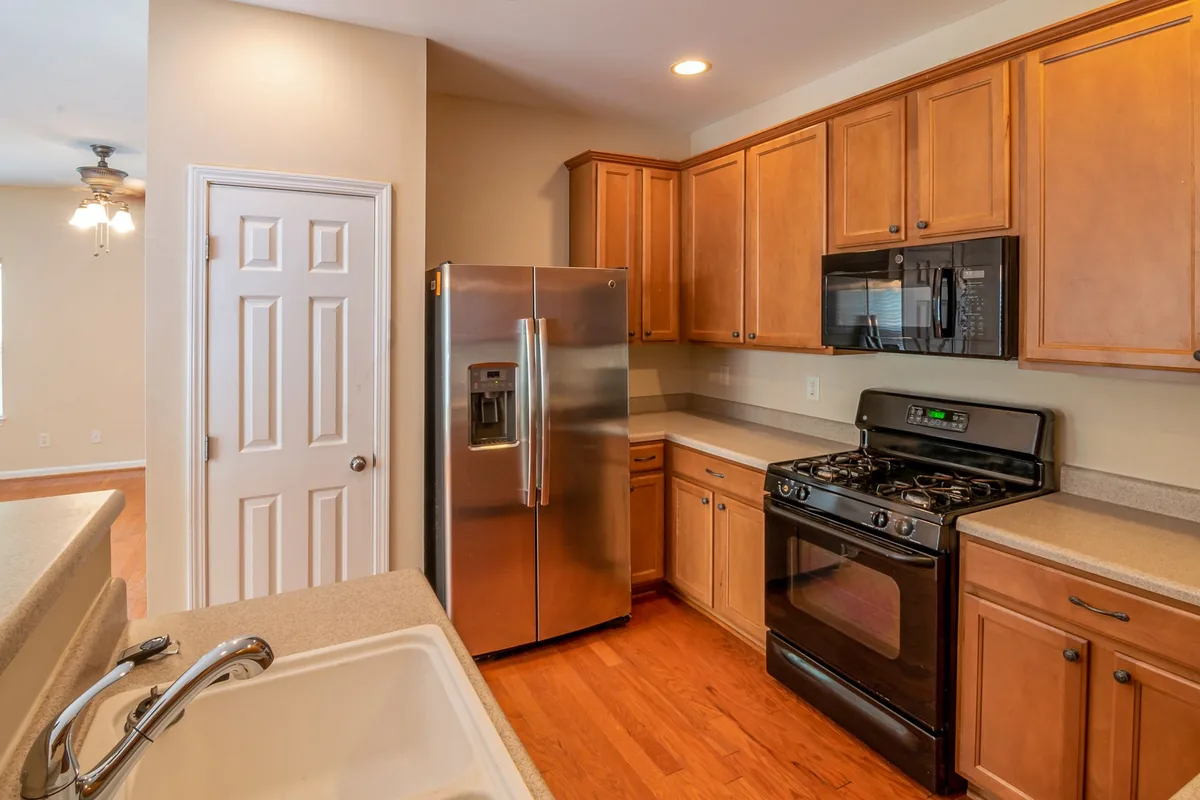
The second failure is a door that will not close. An over-deep bin may push against the door shelves or their contents. The door then needs a push, and the seal may not close. A door that does not seal lets cold air out and warm air in.
The third problem is too many bins. Bin walls occupy space and can make access or airflow harder. Use bins only where small items get lost, and leave the rest of the shelf open.
The fourth failure is hidden food. Lidded, stacked bins can hide leftovers for weeks. Use suitable covered containers and label or date foods as needed. Check the bottom bin when you clean out the fridge each week.
How do you set up fridge bins in one pass?
Keep perishable groceries cold while organizing. Work one shelf at a time, returning food promptly to the refrigerator or a cooler with ice or cold packs.
- Move one shelf’s food to a cold holding place, then clean that shelf according to the appliance instructions.
- Locate vents using the manual and keep them unobstructed; adjust shelf heights only as the manufacturer permits.
- Place useful bins where they fit, keeping required airflow clear and foods properly separated.
- Add a bin for bottles or jars only if it fits safely without obstructing airflow or the door.
- Put raw meat in a sealed, leakproof container on a lower shelf, away from ready-to-eat food.
- Close the door and check that it seals without a push.
The door check in the last step matters most. Close the door slowly and feel for any bump. If a bin touches the door shelves or their contents, move it away from the obstruction without blocking vents, or choose a smaller bin. Never force the door shut.
This is also a good time to clear out old jars and duplicates. Check dates and storage instructions for open jars; keep them refrigerated where required and discard unsafe food rather than giving it away.
Food safety: Keep perishable foods cold while organizing. FDA guidance says not to leave perishable food at room temperature for more than two hours, or one hour above 90°F (about 32°C); count the total time at room temperature, including shopping and organizing.
If your kitchen storage needs more help, the same thinking applies to containers. Our guide to the best pantry organization containers set uses measurements before shopping, just like this one.
Leftovers need containers with lids you can find. If your lid drawer is a mess, try our method for organizing tupperware lids in a deep drawer so every container in the fridge has its match.
For more kitchen guides like this, visit the kitchen and pantry hub. If the whole house needs a reset, the free 30-Day Home Reset walks you through sorting before any shopping.
A note on cleaning. Clean spills promptly and wash bins regularly using the bin maker’s care instructions; dry before returning them. Follow the appliance maker’s instructions for shelves and cleaning products.
That order is the SETS method: Sort, Edit, Type, then Store. Fridge bins are the last step. They work best when foods are safely stored, visible and reviewed regularly.
Recheck the layout regularly: verify the temperature with an appliance thermometer, make sure the door closes properly, keep vents clear and review the bins. Remove any bin that stays empty or fills with forgotten food.
A good fridge setup should make the next shop faster. You open the door, see what is missing, and write the list in a minute. If that happens after two weeks, the bins are doing their job.
If it does not, go back to the four numbers. A bin that fights the door, the vent or the shelf gap is the wrong size, however good it looks. Swap it for a smaller one, or take it out.
The freezer above follows the same rules. Keep the vent area clear, use shallow bins for small bags, and leave room for the ice tray. Avoid crowding the freezer or blocking vents; follow the manual for the model’s airflow requirements.
Frequently asked questions
What size fridge bins fit a top freezer refrigerator?
Measure usable shelf depth, width and height, and locate the vents. Door shelves and their contents may intrude at particular heights, so check actual door closure gently rather than relying on a simple subtraction. Follow the model’s clearance requirements.
Can fridge bins block air flow in a refrigerator?
Yes. Bins can obstruct supply or return vents and affect cooling. Locate vents and required clearances in the manual for your exact model; do not assume their position or rely on a finger-width gap. Keep air paths open and use an appliance thermometer to confirm a refrigerator temperature at or below 40°F (4°C).
Should fridge bins be clear or opaque?
Clear bins can make contents easier to see; labeled opaque bins can also work. Check food and spills regularly, use food-contact-suitable containers where needed and stack only as the maker permits.
How many bins does a small fridge need?
There is no fixed number. Start with bins for foods you have trouble finding, such as small jars or snacks. Add other bins only if they fit; use a sealed, leakproof container for raw meat on a lower shelf. Leave the rest of the shelves open for leftovers and daily items.
Where should eggs go in a top freezer fridge?
Keep eggs in their original carton on a refrigerator shelf, not in the door. Do not decant them into a decorative egg organizer or hide the date. Follow FDA food-safety tips and keep an appliance thermometer in the refrigerator to confirm it stays at or below 40°F (4°C).
Written by the SetsQuick Team. First published · Last updated .
© SetsQuick. This article and its images may not be copied or republished without permission. To report reuse, see our DMCA page.
Was this guide helpful?
Save it for later or send it to someone