
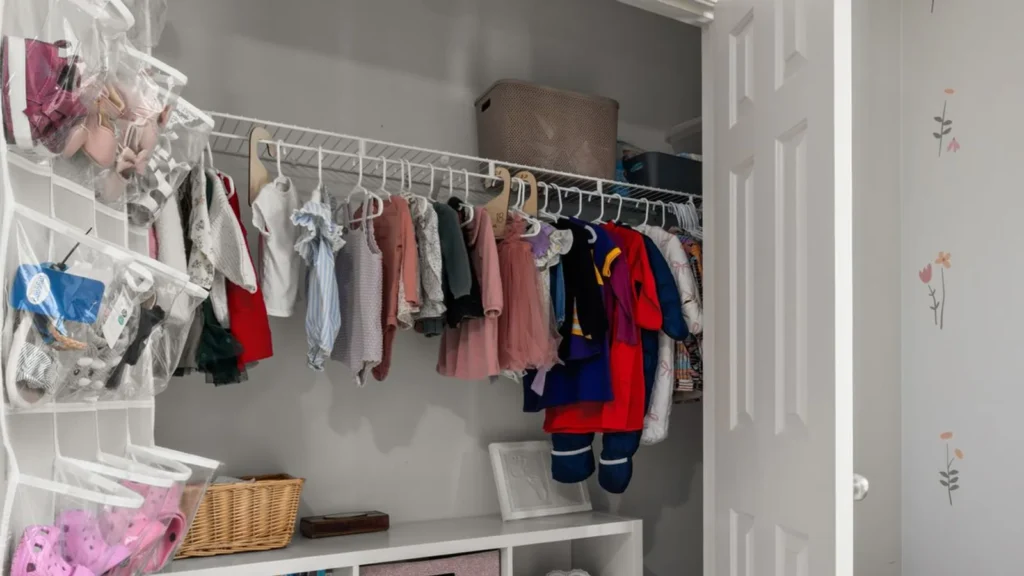
A child’s closet can stop working when clothing, reach or everyday needs change. Useful kids closet organization ideas begin with what the child can comfortably do now, with help where needed. Keep suitable storage accessible, retain required safety measures, and adjust only when a real need changes.
Plan for comfortable access, not the highest point a child can touch.
Key takeawaysFour decisions before you buy anything
- Observe comfortable use: check handling of a light everyday item, not maximum fingertip reach.
- Separate access from safety: suitable daily clothes can be accessible; hazardous items need secure adult storage, not just height.
- Check permitted adjustments: fixed or adjustable parts must suit their exact instructions, loads and tasks.
- Follow anti-tip instructions: closet location or low height does not remove furniture-restraint requirements.
An adult-height rod can make everyday clothing hard for a child to use. Before buying a lower one, watch an ordinary task together: choosing a shirt, taking it out and returning it. The difficulty might be reach, a heavy hanger, a crowded drawer or a lid, rather than height alone.
You do not need a special system to begin. Try a manageable set of clothes in suitable accessible storage, with the child’s agreement and appropriate adult help. Independence is not a requirement; a shared routine may be the better fit.
This guide covers access, rods, bins and review points, plus furniture anchoring and secure storage. Reach planning is not childproofing: low furniture can still tip, and a high shelf is not secure storage for hazardous items.
A clothing change or a task that has become difficult can be a useful time to review the closet. There is no need to empty everything at once or follow a seasonal deadline. Keep the route clear and stop before the work becomes more than you can safely put back. Avoid locks or latches a child cannot release from inside, and do not leave a child shut inside. Address damaged tracks and pinch points with appropriate help rather than relying on supervision alone.
What makes kids closet organization ideas work as a child grows?
A reusable part can help when needs change, but fixed storage can also work. Judge a system by its intended use, installation requirements and actual tasks, not by a promise that one layout will fit every age.
An adjustable rod or shelf is an option only where the exact system permits the proposed positions and loads. Check the model’s instructions and support requirements before moving a component. “Adjustable” does not mean every position or combination is suitable.
Before buying, ask what can be changed as instructed and what can be reused safely. A bin might serve a different category later. A rod need not move higher each year if the current position still works.
Review clothes with the child and any family member whose belongings are involved. Outgrown items may be stored, handed down, donated or kept for personal reasons; do not discard someone else’s belongings without agreement. Sort one manageable section before planning more storage.
How do you measure your child’s reach?
Age charts cannot establish comfortable access for an individual child. Observe the intended task rather than measuring a maximum overhead stretch. This is an informal planning check, not an assessment of development, disability or safety.
You can use a temporary note and a tape measure if useful. Check that marking tape is suitable for the surface, keep small pieces away from young children, and measure only from a safe position. Do not ask a child to climb or pull on furniture.
- Start safely. With the child’s agreement, observe from a stable floor position suited to their ability; offer appropriate help. Keep tools and unsecured furniture out of the task.
- Try a comfortable task. Use a light garment only with storage installed according to its instructions and with required anchoring in place. If uncertain, pause and ask the manufacturer or a qualified installer. Watch taking it out and returning it; do not encourage stretching, climbing or hanging on a rod.
- Record what worked. Note the position and the actual item, not only a fingertip height. An adult can measure from a safe position if needed.
- Check access below as well. Floor-level bins can obstruct movement or be awkward to use. Choose a suitable location and manageable contents instead of a fixed knee-height zone.
Comfortable-use record, not a safety line
Record the task, light item, comfortable position and help needed. No maximum reach or tape mark establishes safe storage. Keep hazards securely elsewhere.
A note about comfortable access can guide a light-item trial; it is not a universal line for every object. A child may touch an empty hanger but be unable to lift or return a coat comfortably. Hazardous items do not belong immediately above a reach mark: use appropriate secure adult storage.
Revisit access when the child reports difficulty, the task changes or the arrangement is no longer comfortable. Do not raise rods and hooks automatically because a measurement increased. Follow the system instructions and provide adult help where needed.
Where should the closet rod go in a kids closet?
Hanging storage may not suit every child or task. A few light clothes in suitable accessible bins or drawers can be an alternative, with adult assistance as needed. Drawers and cubbies still require the furniture’s safety measures; accessibility does not remove tip-over risks.
A lower rod can help with selected garments if the exact closet system permits it. It does not necessarily double usable space: garment length, load limits and access to both levels still matter. Do not add a hanging rod to an unsupported shelf or an incompatible parent rod.
Choose a permitted position where the intended child can handle the actual hanger and a light garment comfortably from a stable floor-level position, without climbing on furniture or using a step to extend reach. Check garment length and retrieval without snagging on bins. Keep long or heavy items in a suitable adult-access location rather than encouraging overhead lifting.
Reposition components only as the manufacturer instructs, within their permitted support and load conditions. Do not move a shelf because a child grew if that would obstruct another task or place tempting items where climbing may follow.
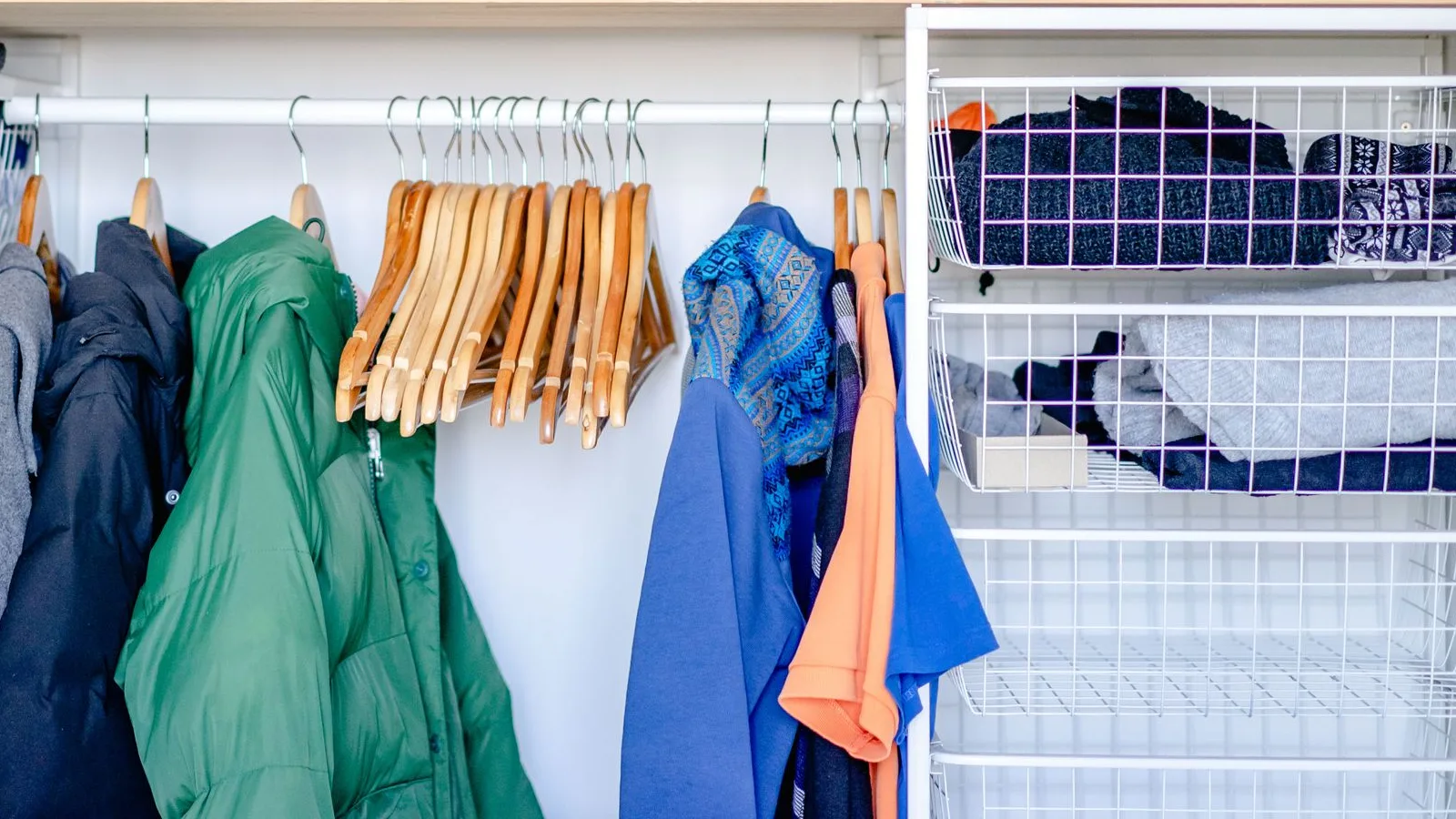
How to set up bins, hooks, and shelves at reach height
Choose manageable drawers or bins suited to the child and their contents. Short stacks or fewer categories may be easier to use. An open basket may remove a lid-opening step for clothing but is not suitable for hazardous items. A lidless bin avoids a falling lid, though it is not a general safety guarantee. If a closet includes a chest, consider lid-fall and entrapment hazards; CPSC warns about toy-chest lids and describes lid supports. Follow the product instructions; supervision does not replace safe design or installation.
Picture labels are an optional way to identify categories. Choose them together where possible and see whether they help the actual task; written labels or no labels may suit another child. Keep loose small labels, hanger clips, pins and other choking hazards away from young children.
Hooks are one option for light jackets and hats, not an automatic solution for heavy school bags. Check mounting and load instructions and comfortable use; consider protruding hooks at a child’s face level and keep long straps or cords out of young children’s reach. A suitable low cubby may be preferable; do not ask a child to lift a heavy bag overhead.
Keep hazards out of the child-accessible clothing system. Keep medicines and cleaning chemicals in their original packaging in locked adult storage away from the child’s closet, following their labels; a high basket is not a substitute. CPSC poison-prevention guidance recommends locked storage for these hazards.
Keep spare batteries in suitable secure adult storage, not among clothing bins. The CPSC’s button-battery guidance says children must not play with button or coin batteries and that battery compartments should be secured. If you suspect a child swallowed one, seek emergency medical care immediately and call U.S. Poison Help at 1-800-222-1222 for guidance; do not delay care.
Keep plastic garment and dry-cleaning bags away from children and discard packaging safely; the American Academy of Pediatrics warns that plastic bags can cause suffocation. Keep loose cords and straps out of young children’s reach, and choose cordless window coverings where relevant; CPSC’s window-cord guidance warns that accessible window-covering cords can strangle children.
How to plan a kids closet that grows with your child
Plan a possible next change without committing to it. Record what is difficult now and which permitted adjustment might help. There is no guaranteed afternoon fix, and a safe system may need a different component or qualified installation.
Review the task before moving the parts
Note what changed, what still works and the exact system instructions for any adjustment. Leave a useful rod or shelf where it is; growth does not require raising it.
Keep a manageable selection of suitable everyday clothes accessible with support as needed. Adult-handled clothes or keepsakes can live elsewhere. Avoid heavy or tempting items overhead; follow documented shelf loads and the furniture’s safety instructions.
A private planning note can record the task, comfortable access, model instructions and unresolved questions. Avoid displaying a child’s name, schedule or other personal information to visitors or in shared photos. Include the child’s feedback rather than only an expected future height.
Changes in clothing, interests or ability may call for a different layout. Move only components that can be repositioned as instructed, and only if that improves the actual task. Bins can change jobs without changing height.
An older child may prefer a single rod, drawers or another arrangement. Decide together using actual garments and comfortable use. Age is not a rule for changing the system or ending adult assistance.
Should you anchor a dresser or shelf in a kids closet?
Follow the exact furniture and anti-tip instructions even inside a closet. The CPSC Anchor It! campaign advises securing furniture properly, installing anti-tip devices and removing objects that tempt children to climb. A low position or a closet wall does not by itself make furniture tip-proof.
The CPSC campaign directs readers to the manufacturer’s instructions for proper securing. Use hardware suitable for the exact furniture and wall; a generic list of tools or four-step diagram cannot establish that an installation is safe. Ask the manufacturer or a suitable installer when wall construction or the attachment is uncertain.
Anchoring record: exact instructions first
Identify the furniture, restraint, wall and permitted hardware. Follow manufacturer installation and inspection instructions; no improvised tug or climbing test proves safety.
If required anchoring is not permitted or the wall is unsuitable, discuss a compliant solution with the landlord, manufacturer or a suitable installer. Do not omit a required restraint or assume a patchable hole makes any fixing acceptable. Do not allow use or access while the furniture is unsecured; seek help for a compliant solution or safe removal rather than trying to move unstable furniture alone.
Follow the manufacturer’s completion and inspection instructions. Do not invent a tug test, pull furniture forward or invite a child to test it by climbing. A strap feeling tight is not proof that the wall, hardware and furniture attachment are correct. Stop using a damaged or uncertain arrangement until it is resolved.
Keeping suitable items accessible may reduce a reason to reach, but does not prevent climbing or replace restraints and supervision. Remove tempting objects from furniture tops, avoid using drawers as steps, and provide appropriate adult help.
A closet review when needed
Review one manageable area when needed rather than promising a full reset in under an hour. Check what changed, what still works and any safety or installation concerns. Keep the child away from adjustment work and tools.
- Review the task and comfortable access; change positions only if needed and permitted by the system instructions.
- Review fit and use with the owner before deciding to keep, store, hand down or donate.
- Move seasonal items only to suitable storage with documented support and safe adult retrieval.
- Check that labels still match what is inside each bin.
- Inspect and maintain furniture and restraints as their instructions require; do not invent a pull or climbing test.
Ask what is hard to find or put back, and try one bounded change rather than rebuilding the whole closet.
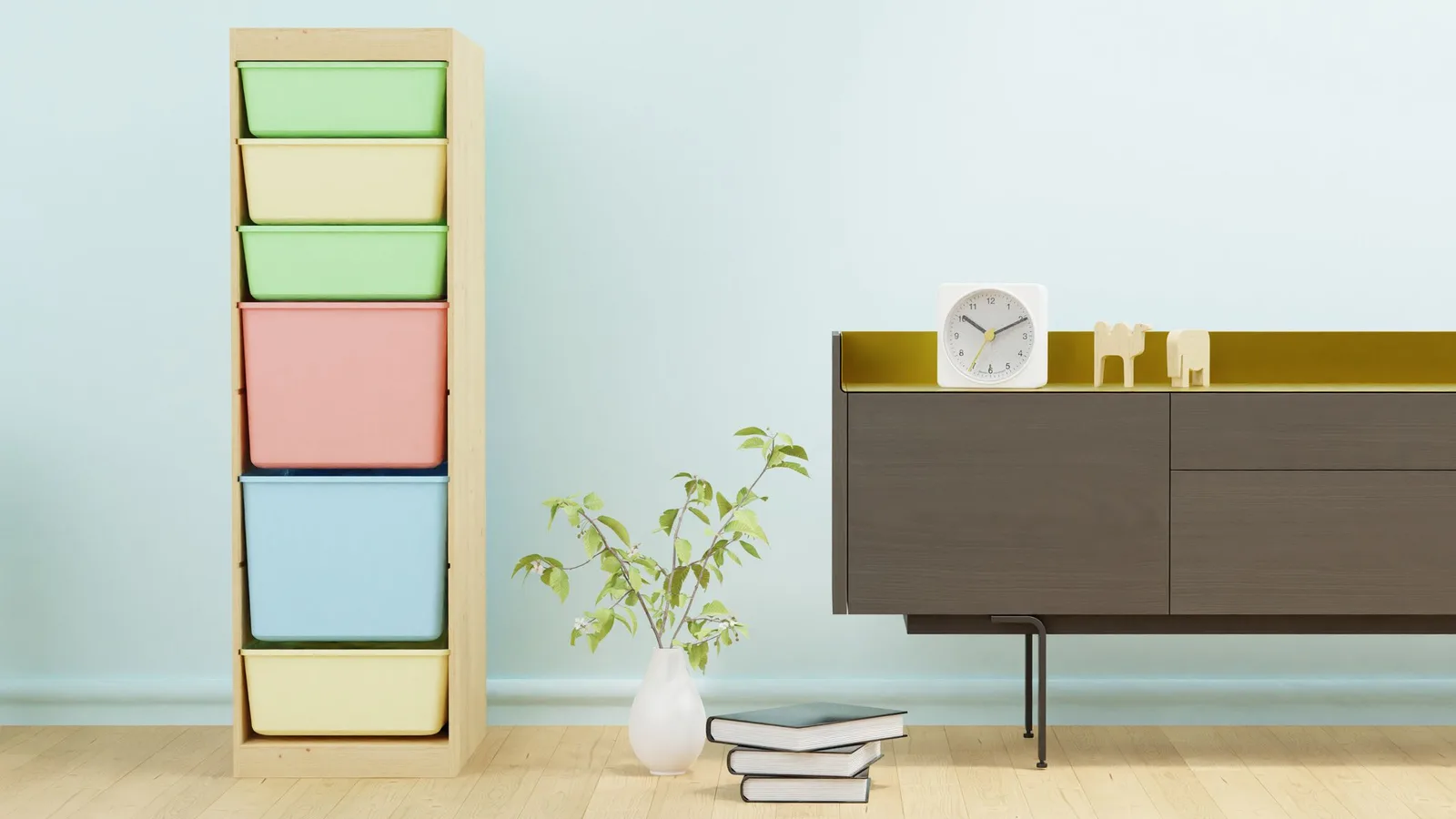
Useful kids closet organization ideas fit the child, the actual task and the household’s support. Comfortable access matters, but assistance is not failure and a tidy appearance is not evidence of a safe installation.
For more ways to plan hanging and folded space, browse the closet organizing guides. If shoes keep ending up on the closet floor, compare an over the door shoe organizer vs a shoe rack before you buy either one. Check that an over-door organizer allows the door to open, close and latch fully and that it meets the product’s instructions.
Frequently asked questions
What height should a closet rod be for a child?
There is no single height for every child or task. Check the exact rod system’s permitted positions, then comfortable handling of the actual hanger and a light garment, with adult assistance as needed. A maximum fingertip reach is not a safe working-height standard.
How do you organize a small kids closet?
Review one manageable category with the owner’s agreement. Keep suitable daily clothes comfortably accessible and store hazardous items securely elsewhere. Check anchoring, garment clearance and actual retrieval before adding a lower rod or bin.
Are adjustable closet systems worth it for kids?
They can be useful when permitted adjustments suit changing needs, but are not automatically better value. Compare the exact system’s installation, load and repositioning instructions with the tasks you need it to support. A fixed layout may work well too.
How can you get kids to keep their closet organized?
Make the task manageable with the child’s input and appropriate support. Try fewer categories or clearer labels if useful. If clothes keep stopping elsewhere, ask what happened before adding rules or bins. This is not a parenting diagnosis or a promise of independent tidying.
Do you need to anchor a dresser inside a closet?
Yes. A dresser can tip even inside a closet. Secure it as the furniture and anti-tip instructions require; CPSC Anchor It! explains proper securing. If the wall or hardware is uncertain, ask the manufacturer or a qualified installer. Do not use an improvised tug or climbing test as proof of safety.
Written by the SetsQuick Team. First published .
© SetsQuick. This article and its images may not be copied or republished without permission. To report reuse, see our DMCA page.
Was this guide helpful?
Save it for later or send it to someone