
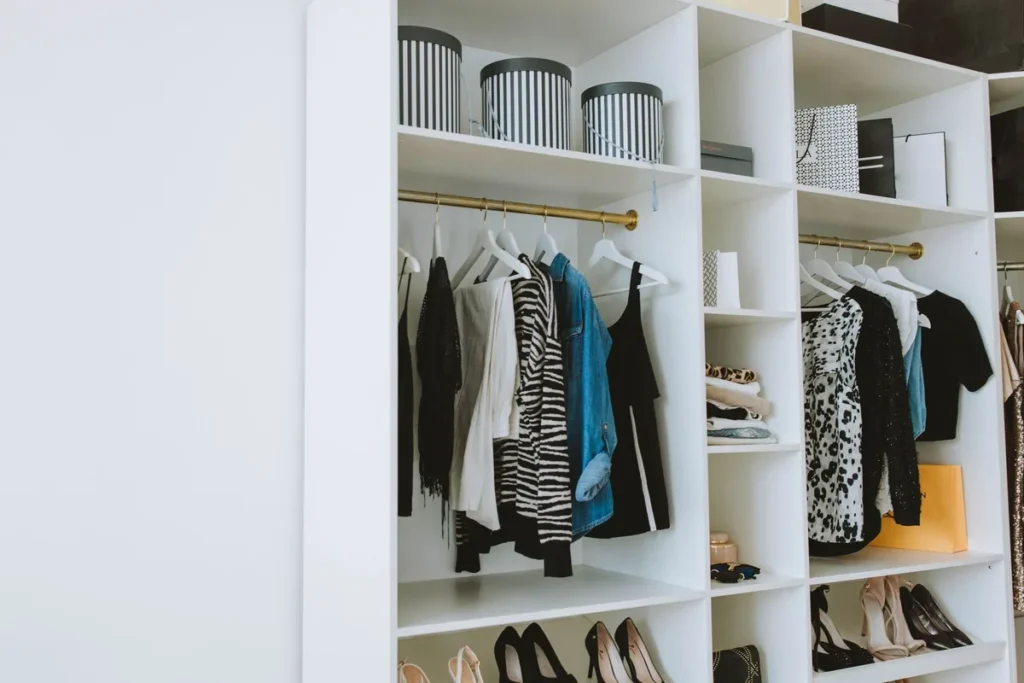
These thirteen shoe storage ideas for small closets begin with the shoes, usable space and access you actually need. Compare floor, door, rod and shelf options without treating a fixed shelf depth or a door that closes as proof that an organizer is suitable.
Measure each proposed location with the clothes and shoes that will share it.
Key takeawaysFour checks before buying shoe storage
- Local clear height: measure below the lowest hem or obstruction over the actual rack footprint.
- Door compatibility: check the exact organizer’s mounting instructions, door dimensions, movement and permitted load.
- Pairs you need accessible: include work, protective, occasional and seasonal footwear, not only recent wears.
- Loaded footprint: measure shoe length, width and height, then allow the handling space the selected arrangement needs.
A small closet may share its floor with shoes, hanging clothes and other belongings. Before adding storage, identify which pairs need a place and which parts of the closet are genuinely usable.
Try a suitable existing shelf or floor row first. Added storage is useful only when the person using it can retrieve and return the intended shoes without obstructing access.
The options below describe possible uses and reasons to rule them out. They are not tested product rankings or installation instructions.
If your footwear changes seasonally, include the next season in your notes. A month of non-use does not make a pair unnecessary or determine whether it should leave the home.
How do you measure a small closet for shoes?
Measure floor-to-obstruction height separately at each proposed location. Longer garments usually leave less height below them, not more. Account for garment movement and do not use the shortest garment’s hem to approve a rack beneath longer clothes.
Measure every relevant shoe type: toe-to-heel length, widest part, sole/heel profile and overall height. Compare the selected organizer’s usable spaces, not only its exterior dimensions. There is no universal shoe-length-plus-one-inch requirement here.
Record shelf depth and width, tier gaps and the route for getting shoes in and out. An open, sloping or enclosed shelf can have different support needs; extra depth may be useful for handling rather than automatically wasted.
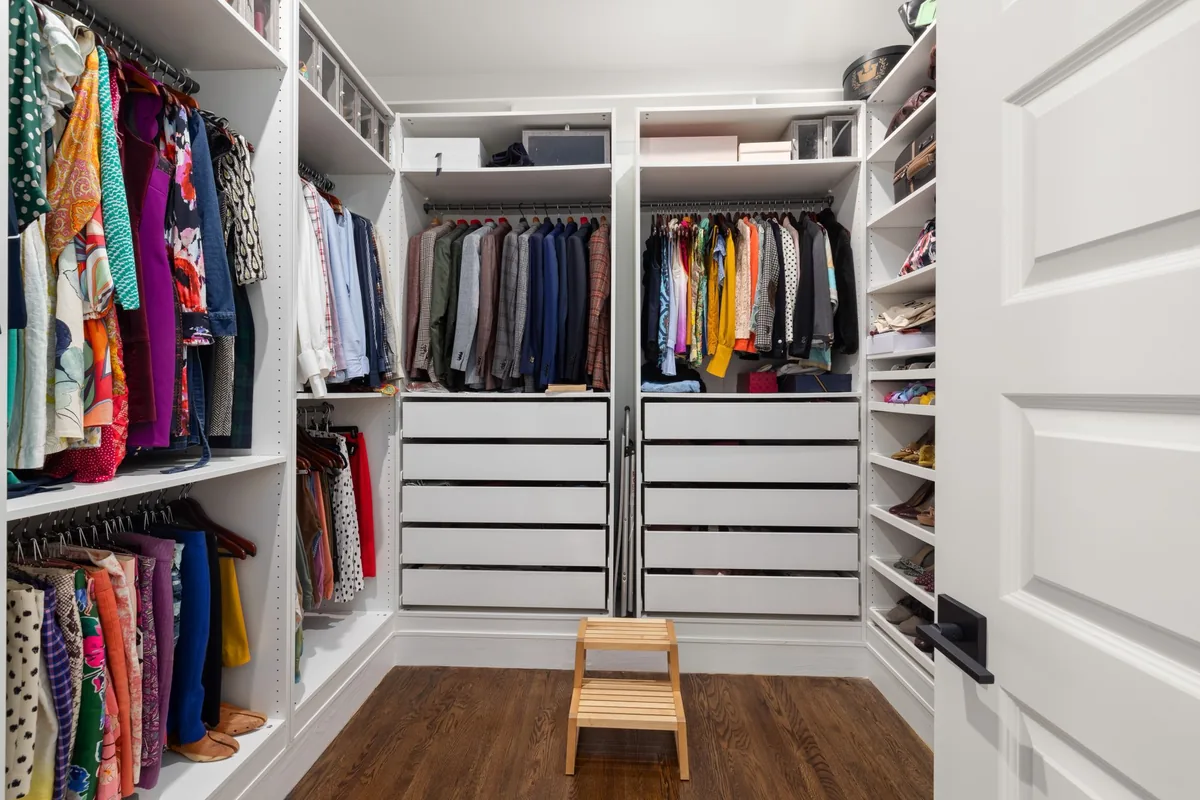
List the pairs that need convenient access and choose a comfortable reach for the actual user. Recent wear can help you start, but it must not exclude protective, occasional, cultural or season-specific footwear. Ask before moving anyone else’s shoes.
Which ideas work on the closet floor?
A floor row or low rack can be a starting point when it leaves the door, walking route and hanging clothes clear. Compare these three arrangements with the real shoes and the exact rack instructions.
Record the loaded shoe-storage space
Note each relevant shoe’s length, width and height, local floor-to-obstruction clearance, usable support area and handling path. The lowest hem over the actual footprint matters; one added inch is not a universal fit rule.
A two tier rack under short hanging clothes
A two-tier rack may work beneath shorter garments if every tier accommodates the intended shoes. Compare the complete loaded height, the gap between shelves and the local lowest hem, plus retrieval space. Rack height alone is not enough.
Stackable single shelves you can add later
Use shelves that are explicitly designed to stack in the selected configuration. Follow their connectors, maximum stack and load limits; a shelf that balances on another is not a stackable system. Check shoe support, loaded height and any anchoring requirement before adding a level.
Alternating pairs toe to heel
Try alternating the direction of similar shoes on an existing suitable shelf if it makes retrieval easier. Check that heels and soles remain supported and pairs do not catch. This is a layout option, not a promise of extra capacity for every shoe shape.
What are shoe storage ideas for small closets with no drilling?
A no-drill label does not establish door, wall or rod compatibility, nor promise damage-free removal. Check the lease and the exact product instructions. If required support or permission is missing, use suitable existing floor or shelf space instead.
An over the door pocket organizer
A pocket organizer may hold pairs that fit its actual pocket dimensions and stated load limits. Follow the specified hooks and door requirements, and check unobstructed movement and closure without forcing it. Door closure alone does not prove the door or hinges can carry the load. For another layout comparison, see over the door shoe organizer and a shoe rack.
An over the door rack with wire shelves
A wire-shelf door rack is not automatically stronger than a fabric organizer. Verify the exact model’s mounting method, compatible door thickness/type, permitted load and shoe fit. Do not substitute hooks or assume that loading the bottom first makes an unsuitable door installation safe.
A purpose-built tension shoe system, where permitted
Consider only a purpose-built shoe-storage system whose instructions cover the actual span, contact surfaces, shoes and load. Do not improvise a shoe shelf from two general-purpose tension rods or use a few trial pairs as a capacity test. If suitability cannot be established, skip this option.
How do you use the rod and the top shelf for shoes?
A rod organizer or shelf box is an option only when its support and retrieval requirements work for this closet. Space above clothes is not automatically safe or practical to use.
Hanging fabric shelves on the rod
For a hanging fabric unit, check cubby dimensions, hanger attachment and the organizer’s load instructions. The closet rod, brackets and fixings must also accommodate the combined clothing and shoe load. Spare rod width or fabric appearance cannot establish capacity.
Clear boxes on the top shelf
Use a shelf box only where the shelf support, box weight and retrieval are suitable. Avoid placing heavy or awkward loads overhead. Do not stand on a chair or climb shelving to reach a box; choose a lower location if it cannot be handled safely.
Boot clips or shapers for tall boots
Use boot supports or clips only as directed for the boot material, shape and weight; unsuitable clips can mark or strain footwear. Check standing or hanging height and any rod load. There is no universal one- or two-pair limit that determines where boots belong.
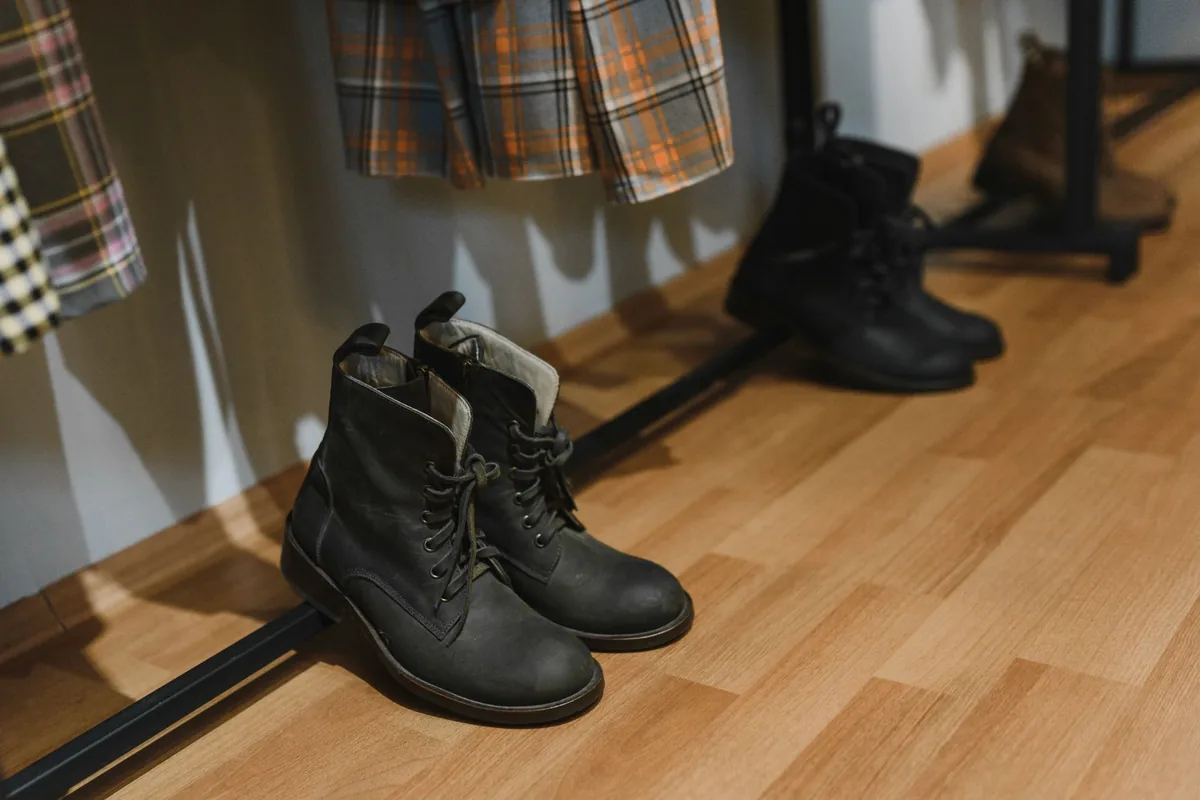
What works in a shallow or awkward closet?
A nearby cabinet or corner may offer space, but check opening paths, support and any required attachment before treating it as storage.
A slim tilt out shoe cabinet beside the closet
A tilt-out shoe cabinet can have a compact closed footprint yet need additional room to open and a specified wall attachment. CPSC’s Anchor It guidance says to follow manufacturers’ instructions to secure furniture and to anchor top-heavy furniture. Follow the exact cabinet and wall-fixing requirements; if permission or suitable anchoring is unavailable, do not use a model that requires it unsecured.
Corner shelves in the dead space
A corner shelf can be considered if its usable shape supports the shoes and it remains reachable without blocking doors or other storage. Check the shelving system’s specified installation and load limits. A small shelf is not exempt from support requirements or automatically a no-drill option.
Where do shoes go when the closet is simply full?
If the closet cannot accommodate the intended pairs and access, another suitable location may help. Agree on shared space first; do not move overflow into an exit or walking route.
An under bed drawer for off season pairs
For an under-bed drawer, measure the opening, supports, full pull-out path and space to handle it. Follow the bed and drawer instructions; do not raise the bed or remove supports to make it fit. Check the footwear’s care directions before enclosed storage.
A small landing spot by the front door
A small tray or rack near the entry may suit frequently used pairs when it leaves exits, door movement and walking routes clear. Agree on the footprint and who uses it rather than imposing a fixed two- or three-pair limit. If the space is needed for access, choose another location.
What goes wrong with shoe storage in a small closet?
One possible problem is shoes collecting in front of a rack. This shows where they stopped, not why. It is not evidence that a rack inevitably disappears behind a pile within a month.
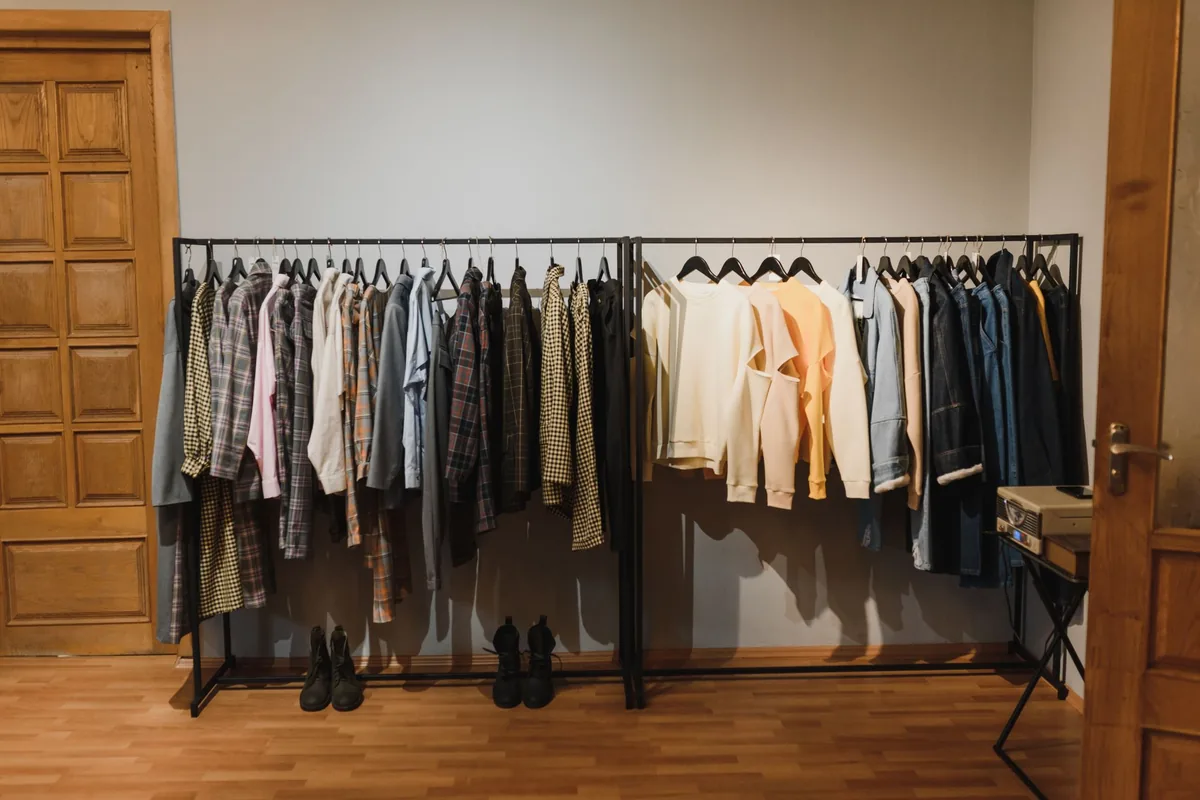
Before buying more storage, check actual capacity, shoe fit, access, return effort and shared use. Rarely worn shoes are not automatically the cause of overflow.
Notice a specific ordinary use: which pair was left out, what space was expected and what interrupted returning it? A pair left out twice is not a diagnosis or a disposal deadline. Ask the people using the closet before changing the arrangement.
If pockets or shelves do not suit the intended shoes, compare usable dimensions, support and the complete retrieval path again. Do not substitute a generic one-inch allowance or shortest-hem measurement for those checks.
How do you choose from this list?
Start with a suitable existing arrangement and rule out options whose fit or support is uncertain. You do not need a particular number of organizers or to work through a fixed buying sequence.
- Check the stock and task: identify which pairs need a convenient place and whether existing rows already serve them.
- Check a door option: verify the exact model’s mounting, door compatibility, load and movement; closure is only one check.
- Check a hanging option: confirm attachment, cubby fit and the combined load on the rod and supports.
- Check less-used storage: select a reachable location with suitable support and care conditions; overhead boxes are not automatic.
- Check special shapes and shared access: allow for boots, different users and clear routes before choosing another location.
Rule out unsupported options before buying
Compare shoe fit, comfortable access, permitted mounting and combined support loads for the exact configuration. Door closure, spare rod width and a recent-wear count cannot approve an organizer.
Once the plan is in place, keep it working with the rest of the closet. The closet organization hub covers rods, shelves, and hanging space, while the free home reset walks through a wider sort when shoes are only one part of the problem.
Frequently asked questions
How many pairs of shoes fit in a small closet?
Capacity depends on the actual footwear, usable spaces, support limits and access. Measure the intended pairs, not only those worn recently. There is no required pair count or rule that everything else belongs on a high shelf.
How deep should a shoe shelf be?
Compare the actual shoes and chosen shelf design with its usable support area, width, depth, height and retrieval space. A single published shelf depth or longest-shoe-plus-one-inch formula cannot establish fit for every pair or organizer.
Where should boots go in a small closet?
Choose a place that accommodates the boots’ full shape, allows handling and follows their care directions. Use compatible supports or clips only as directed. A larger boot collection does not automatically belong by an exit or under a bed.
Are over the door shoe organizers worth it in a small closet?
Only when the exact organizer suits the door, permitted mounting, load and intended footwear. Check pocket or shelf dimensions and unobstructed door movement. Do not infer capacity from fabric versus wire, or treat a door that closes as installation approval.
Written by the SetsQuick Team. First published .
© SetsQuick. This article and its images may not be copied or republished without permission. To report reuse, see our DMCA page.
Was this guide helpful?
Save it for later or send it to someone