
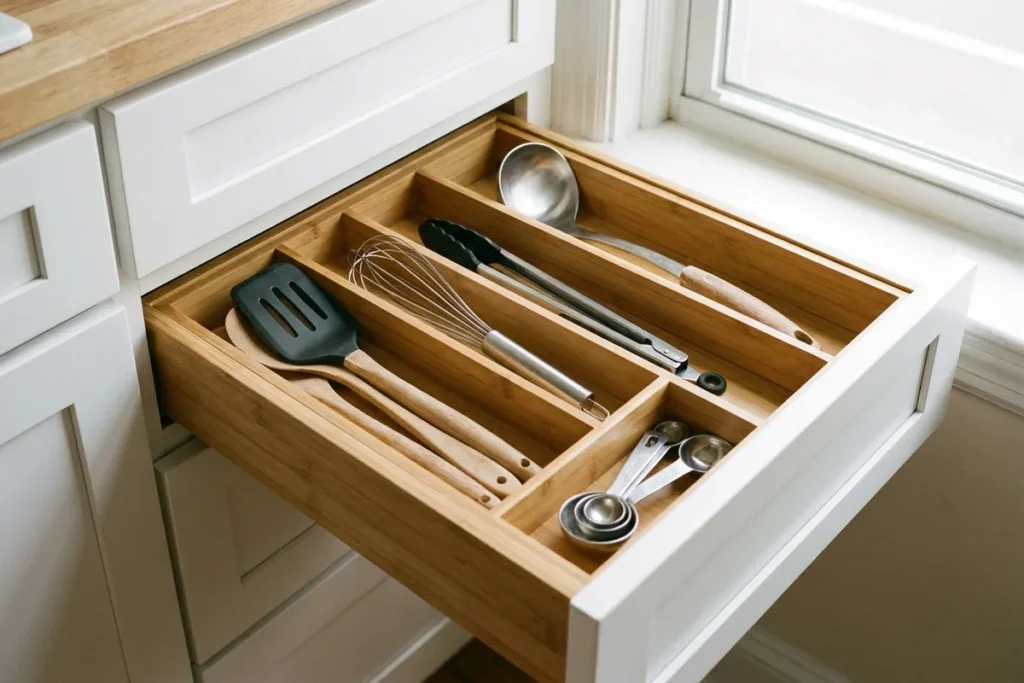
Good kitchen drawer organization starts at the counter, not inside the drawer. Group tools near the work areas where you use them, while accounting for drawer space, appliance clearances and safe access.
A useful drawer supports a nearby task without compromising safety.
Key takeawaysThe work zone drawer map
- Prep zone: knives, peelers, measuring cups, and cutting tools near the main counter.
- Cook zone: keep cooking tools accessible while storing combustible items away from the stovetop.
- Clean zone: towels, wraps, and bags near the sink and the trash.
- Serve zone: flatware and serving spoons closest to the table.
Most kitchens fill drawers by accident. The first drawer to open after moving in gets flatware, the next gets whatever fits, and years later a ladle lives across the room from the stove.
That random layout costs steps every single day. You cross the kitchen for a whisk, open three drawers to find the foil, and dig through a crowded mix of tools that never belonged together in the first place.
A zone map fixes this by tying each drawer to a job. This guide shows how to empty, sort, and measure, then how to assign drawers to convenient and safe work zones.
Why do kitchen drawers turn into clutter so fast?
Kitchen drawers collect more items than any other storage in the house. New gadgets arrive as gifts, takeout brings extra utensils, and duplicates pile up because nobody can see what the drawer already holds.
Open drawers also invite quick drops. A twist tie, a battery, or a spare key lands in the nearest drawer during a busy moment. Those small items slowly bury the tools the drawer was meant to hold.
Depth makes the problem worse. Items slide toward the back every time the drawer closes, so the front fills with whatever was used last while useful tools disappear behind them.
Without dividers, every item touches every other item. Tools tangle, sharp edges scrape handles, and the drawer looks full even when half of its floor is wasted space between loose objects.
That is why kitchen drawer organization fails when it starts with shopping. Buying trays before deciding what each drawer is for only gives the same clutter a neater frame, and the mess returns within weeks.
How do you start kitchen drawer organization?
Begin with one drawer at a time, not the whole kitchen. Pick the drawer that frustrates you most, empty it onto a towel on the counter, and wipe the inside clean before anything goes back.
Consider the work areas near that drawer and what it can safely hold. A useful location need not be directly under the counter where an item is used.
Reset one drawer: Sort tools by task, set aside damaged or surplus items, choose a suitable zone, and return them to storage that fits. Secure sharp tools from children.
Repeat the same process for each drawer in turn. Working one drawer at a time keeps the kitchen usable during the project, and it lets you finish a full drawer in a single short session.
Set aside non-kitchen items for suitable storage. Keep batteries in their original packaging or otherwise separated to prevent terminals touching, and keep all batteries secured away from children. If a button battery may have been swallowed, seek emergency medical care immediately; see CPSC guidance.
This sequence follows the SetsQuick method, Sort, Edit, Type, Store, applied to one drawer before you touch the next one.
- Sort: group the tools on the towel by job, such as cutting, stirring, or measuring.
- Edit: set aside duplicates, broken tools, and gadgets you have not used in a long while.
- Type: decide which zone each group serves, based on where you use it.
- Store: return each group to a suitable drawer, using dividers where helpful.
Keep the tools and duplicates your household actually uses, and set aside surplus or broken items.
Give the edited items a short trial before donating them. Place them in a box for a few weeks, and if nobody reaches for them, let them go with confidence.
Which drawer should hold what in a kitchen?
A prep drawer near the cutting area can hold peelers and measuring tools. Store knives in suitable blade guards or a slotted insert, and keep all sharp tools locked or otherwise inaccessible where children live or visit.
Choose a convenient cooking-tool drawer that follows appliance clearance and storage instructions. Gather utensils before cooking; do not reach across burners or place combustible items on or near the stovetop.
Cooking-zone safety: Gather tools before cooking, keep combustible items away from the stovetop, and follow the appliance’s clearance and storage instructions.
Keep pot holders and trivets accessible but away from burners, hot surfaces and other ignition sources. The U.S. Fire Administration advises keeping towels, oven mitts and wooden utensils away from the stovetop.
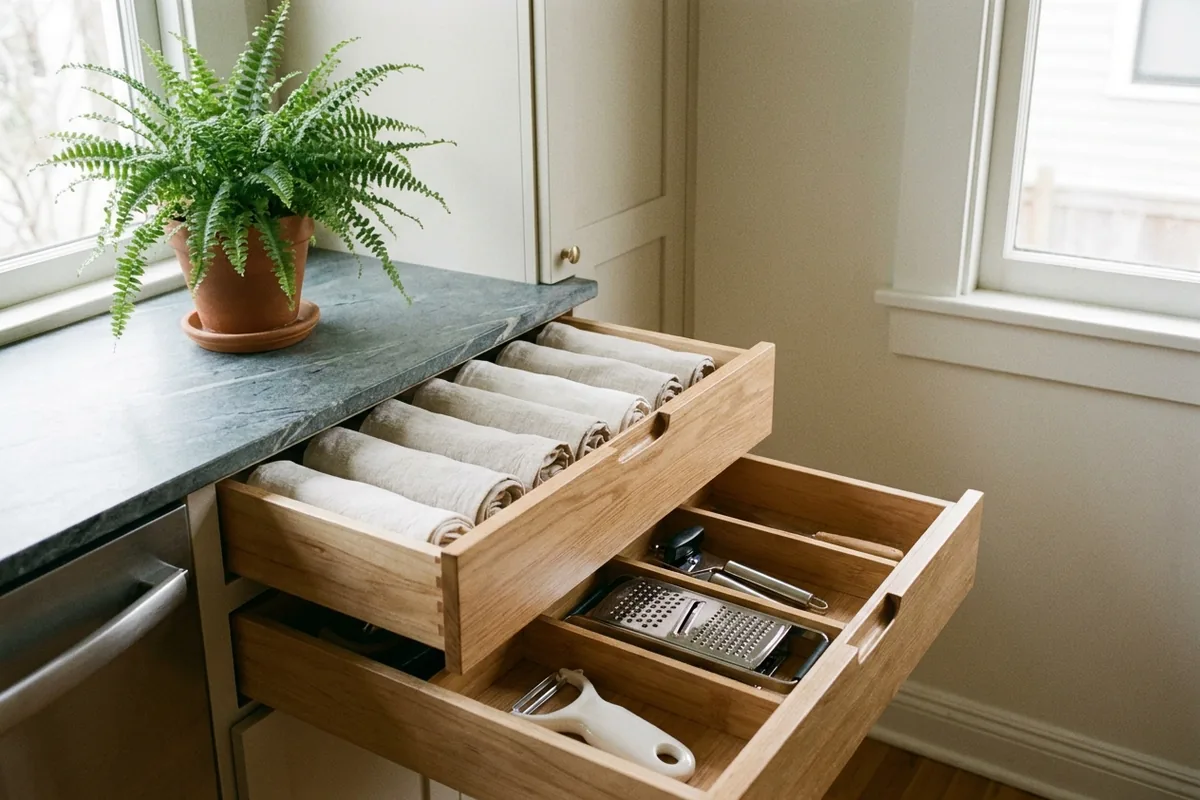
A clean drawer can hold dry dish towels, wraps, foil and storage bags near cleanup or packing areas. Keep it dry and away from leaks and heat.
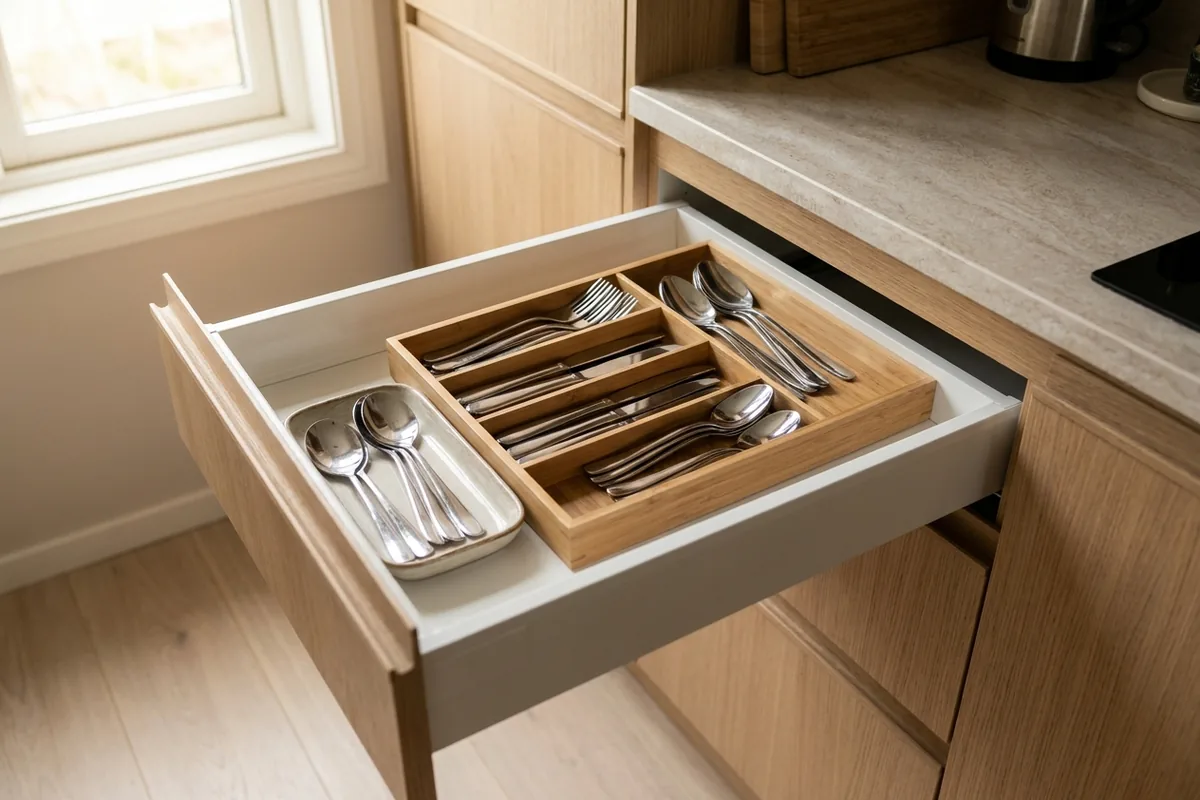
The serve drawer holds flatware and serving spoons. Place it on the side of the kitchen closest to the table, so setting places and unloading the dishwasher both take the fewest steps.
Many families keep a second set of everyday items for children, such as plastic cups and small spoons. Store those in a low drawer near the table, so kids can help set places without climbing.
If your kitchen has fewer drawers, combine nearby zones. Prep and cook can share a suitable drawer if tools fit safely and sharp items remain inaccessible to children. Respect appliance clearances and manufacturer instructions.
How do you measure for drawer dividers?
Measure every drawer before you buy a single organizer. Record the inside width, the inside depth, and the usable height, since the drawer box is often smaller than the front panel suggests.
Measure at the back of the drawer as well as the front. Some drawer boxes narrow toward the back, and a tray that fits at the front can bind when pushed all the way in.
Check the height carefully in shallow drawers. A tall tool or a divider with a raised edge can catch on the counter frame above, so the drawer jams instead of sliding closed.
Measure the drawer: Check the interior width and front-to-back depth at more than one point, plus usable height and clearance for rails, stops and stored tools.
Write the three measurements on a note and keep it on your phone. Kitchen drawer organization goes faster in the store when you can check every tray against the real numbers on the spot.
Plan the layout on paper before shopping. Sketch the drawer as a rectangle, then draw the trays inside it, leaving no wide gaps where loose items can slide and pile up.
Adjustable dividers can suit some drawers, but their adjustment range, height and installation must fit the measured space. Follow the manufacturer’s instructions and avoid over-tightening spring-loaded bars.
Fixed trays work well in standard flatware drawers. Choose a size that fills the width closely, then add a small extra tray in any leftover gap for items like bag clips and measuring spoons.
What keeps kitchen drawers organized for good?
The first habit is one home per tool. When every item has a single assigned spot, putting things away becomes automatic, and the drawer resets itself each time the dishwasher is unloaded.
The second habit is a firm limit on new gadgets. Before adding a tool, check whether the drawer has room; set aside an unneeded item if necessary.
The third habit is a short monthly check. Open each drawer, pull out anything that drifted in from elsewhere, and wipe up crumbs, so small messes never grow into a full reorganization.
Lasting kitchen drawer organization depends on the zone map more than on any product. Dividers help, but suitable, safe locations and easy access matter more than placing every tool directly below its work area.
For tight cabinets, see how to organize food storage lids in a deep drawer. Browse more kitchen and pantry guides, or start with the free reset checklist.
How do you organize a kitchen with only a few drawers?
Many small kitchens, especially in apartments and older homes, have only two or three drawers. In that case, kitchen drawer organization becomes a question of priority. Each drawer has to hold the tools you use most, and everything else needs a home outside the drawers.
Give the first drawer to daily cutlery and the few tools you use every day. A sturdy divider can separate flatware and small tools. Keep knives, peelers and other sharp items locked or otherwise inaccessible where children live or visit.
A stable crock can hold large utensils on a suitable counter away from the stovetop and other hot surfaces. Gather what you need before turning on the heat.
Wall storage may free drawer space, but a magnetic knife strip is not automatically child-safe or suitable for every wall. Follow the exact strip’s mounting, load and surface instructions and keep blades inaccessible to children. Where children are present, use child-resistant locked or otherwise inaccessible knife storage rather than relying on height alone.
Use the last drawer for flat items that do not stand well elsewhere. Foil, wrap, dish towels, and a few storage bags can share a drawer if you file them upright from front to back.
Rarely used tools, such as a pastry cutter or a melon baller, can live in a labeled bin on a high shelf. If you have not reached for one in a year, consider letting it go. A small kitchen works best when every drawer item earns its place.
Review duplicates against your cooking and cleaning routine. Keep what you use and donate clean, usable surplus if appropriate.
If drawer space is still tight after that edit, look at the inside of cabinet doors. Some adhesive racks can hold suitable lightweight items. Check the rack’s load rating, surface compatibility, door clearance and installation instructions; do not assume it can safely hold heavy lids or boards.
Frequently asked questions
What is the best way to organize kitchen drawers?
Group tools near the tasks they serve where practical, respecting appliance clearances and child safety. Empty, sort and edit one drawer at a time; use a fitting divider if helpful.
What should go in the top kitchen drawer?
The top drawer closest to the table usually holds flatware, since you reach for it many times a day. In a prep area, choose a location for tools that suits the layout. Use blade guards or an insert for knives, and keep sharp items locked or inaccessible where children live or visit.
How do you organize kitchen drawers without dividers?
Use small boxes, shallow containers, or trays you already own to separate groups. Place items in rows from front to back, and keep each group in its own section. Even simple containers stop tools from sliding together, though measured dividers give the cleanest fit over time.
Where should cooking utensils go in the kitchen?
Store utensils conveniently but away from hot surfaces and in accordance with the appliance instructions. Gather them before cooking, and keep combustible mitts, towels and wooden tools away from the stovetop.
How do you keep kitchen drawers from getting messy again?
Give every tool one assigned home, and return items there each time you unload the dishwasher. If space is tight, review whether an older tool is still needed before adding another. A quick monthly check that clears stray items and crumbs keeps each drawer working without a full redo.
Should knives be stored in a kitchen drawer?
Use a suitable slotted insert or blade guards so blades never ride loose, and follow the product’s instructions. Where children live or visit, keep knives and other sharp tools in child-resistant locked or otherwise inaccessible storage. A drawer or insert is not safe merely because it is high or currently out of reach.
Written by the SetsQuick Team. First published · Last updated .
© SetsQuick. This article and its images may not be copied or republished without permission. To report reuse, see our DMCA page.
Was this guide helpful?
Save it for later or send it to someone