
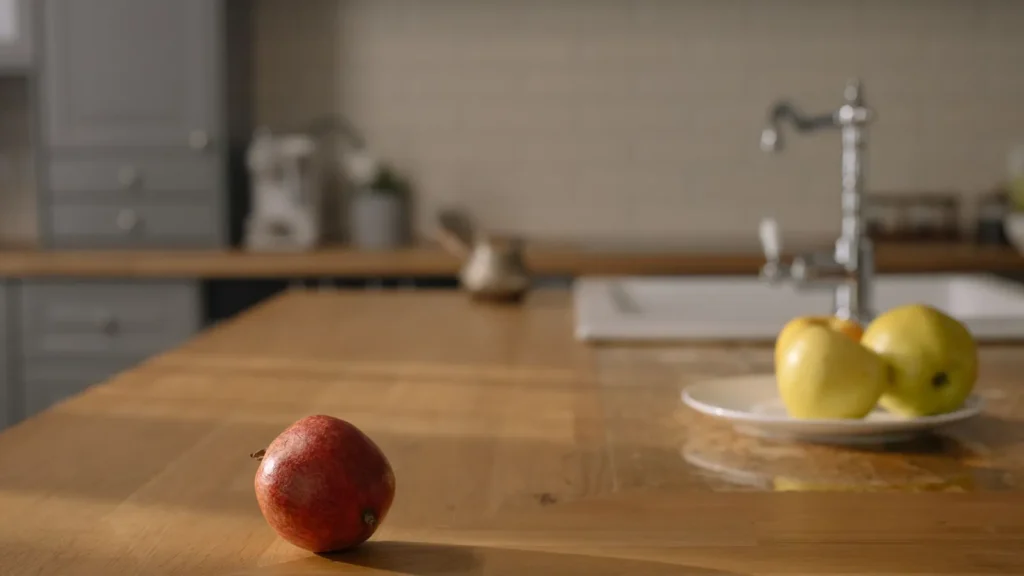
Most kitchens look organized on Sunday and fall apart by Tuesday night, when groceries land on the counter and nobody remembers where the colander went. The kitchen and pantry organization ideas in this guide are chosen for that ordinary bad evening, not for a photo, so the system still works when you are tired.
A kitchen is organized when a tired person can put things back without thinking.
Key takeawaysDecide these four things before you buy any organizer
- Name your landing zone: the one counter where groceries and mail arrive first.
- Apply the one-step rule: place items conveniently for their task where safe, without treating one step as a requirement.
- Split active and reserve: keep suitable active items accessible and reserves where their storage instructions permit.
- Set a reset time: choose a manageable reset time and adjust the frequency to the household.
Most organizing advice treats the kitchen and the pantry as two separate projects, with one article for cabinets and another for shelves. In a real home, food and tools move constantly between the two, and the handoff is where most systems quietly break down.
A pantry can be perfectly labeled and still fail if the cutting board lives across the room from the knives. A cabinet can look beautiful and still cause clutter if its door needs two hands to open while you are holding a pot.
That is why this hub focuses on flow rather than on individual products. Once the flow works, the specific containers, bins, and dividers become easy choices, and our other guides help you choose each one without overbuying.
Before any unusually large grocery shop or gathering, test whether the kitchen handles your normal routine. A seasonal holiday reset is optional and depends on your location and household; the same checks work at any time of year.
What makes kitchen and pantry organization last?
Lasting organization passes what we call the bad Tuesday test. Imagine a tired evening with a full grocery bag, a hungry household, and a sink that is already half full, then ask whether your kitchen still cooperates with you.
Use the test as a prompt, not a timed standard: can the household put groceries away, prepare a meal and return tools without avoidable obstacles? The time and arrangement will differ by household.
Most kitchens fail at least one of those checks, and the failure points to the fix. Slow unpacking may suggest unclear storage or an overloaded space, while a crowded start may point to a congested prep area.
Messy cleanup usually means items have no assigned home, so they wait on the counter for someone to decide. Fixing that one habit often clears more space than any new organizer, because it removes the pile that makes every other task slower.
How do you set up kitchen zones that match how you cook?
Zones group items by the task they support rather than by appearance. Use this as an editorial planning approach: place a few items near their actual task, then see whether the arrangement reduces unnecessary reaching or searching in your own routine. It is not a guarantee or an attributed expert finding.
- Landing zone: the counter nearest the entry, kept clear for bags and deliveries.
- Prep zone: cutting boards and mixing bowls near the prep area; store knives securely and inaccessible to children.
- Cooking zone: pots and pans in a convenient place; keep oils, spices and other heat-sensitive items away from heat and steam.
- Cleaning zone: towels and suitable food containers near the sink; store cleaning chemicals in their original containers, securely and away from food and children, following safe storage guidance.
- Serving zone: plates, glasses, and flatware close to the table or dishwasher.
Start by standing in each zone and noting what you reach for during a normal meal. Place suitable daily items at a comfortable height for the intended user. Sharp tools and hazardous products still need secure, appropriate storage inaccessible to children, even if that is less convenient.
Items used weekly can sit slightly higher or lower in the same zone. Store infrequently used items in a suitable location; keep heavy or awkward pieces low enough for safe handling, within the shelf’s load limits.
The cleaning zone often needs the most attention because it handles the most traffic. Our guide to storing food storage lids in a deep drawer shows how to keep containers and lids together beside the sink without a jumbled pile.
Plan around tasks and safety: Arrange landing, prep, cooking, cleaning and serving areas to suit the household. Keep cooking surfaces clear; store sharp tools and chemicals securely and inaccessible to children, and follow food-storage instructions.
Which kitchen and pantry organization ideas work in small spaces?
Small kitchens benefit most from ideas that add access rather than volume. Adding more containers to a crowded cabinet usually makes it harder to use, while improving how you reach existing space can feel like gaining a whole shelf.
Pick the idea that solves the problem you actually have
- Cabinet shelf risers for stacked plates and mugs. They split one tall gap into two usable levels without tools.
- Door-mounted racks for wraps and small packets. Check the exact rack and door instructions, compatible fixings, loaded weight, hinge capacity and the full clearance before installation.
- Drawer dividers for utensils and linens. Measure the drawer depth and height before buying any divider.
- Pull-outs for suitable lower cabinets: compare exact dimensions, moving clearance, cabinet and slide load limits, and the manufacturer’s fixing instructions before installation.
- Wall rails for daily tools: use only a suitable product and substrate, with the specified fixings and total load limit. Check for utilities before drilling and keep tools clear of heat, cooking work and child access.
Before choosing any of these, empty one cabinet completely and sort its contents on the counter. Removing duplicates, broken tools, and gadgets you never use often solves half the space problem before you spend anything on storage.
Measure every space you plan to fill, including the door swing and any hinges that stick out. A riser that blocks a hinge or a bin that stops the door from closing will create a new problem while solving the old one.
Choose containers that fit the food, shelf and intended use. Matching shapes may use space efficiently, but a shared appearance does not prove lids or containers are compatible for stacking.
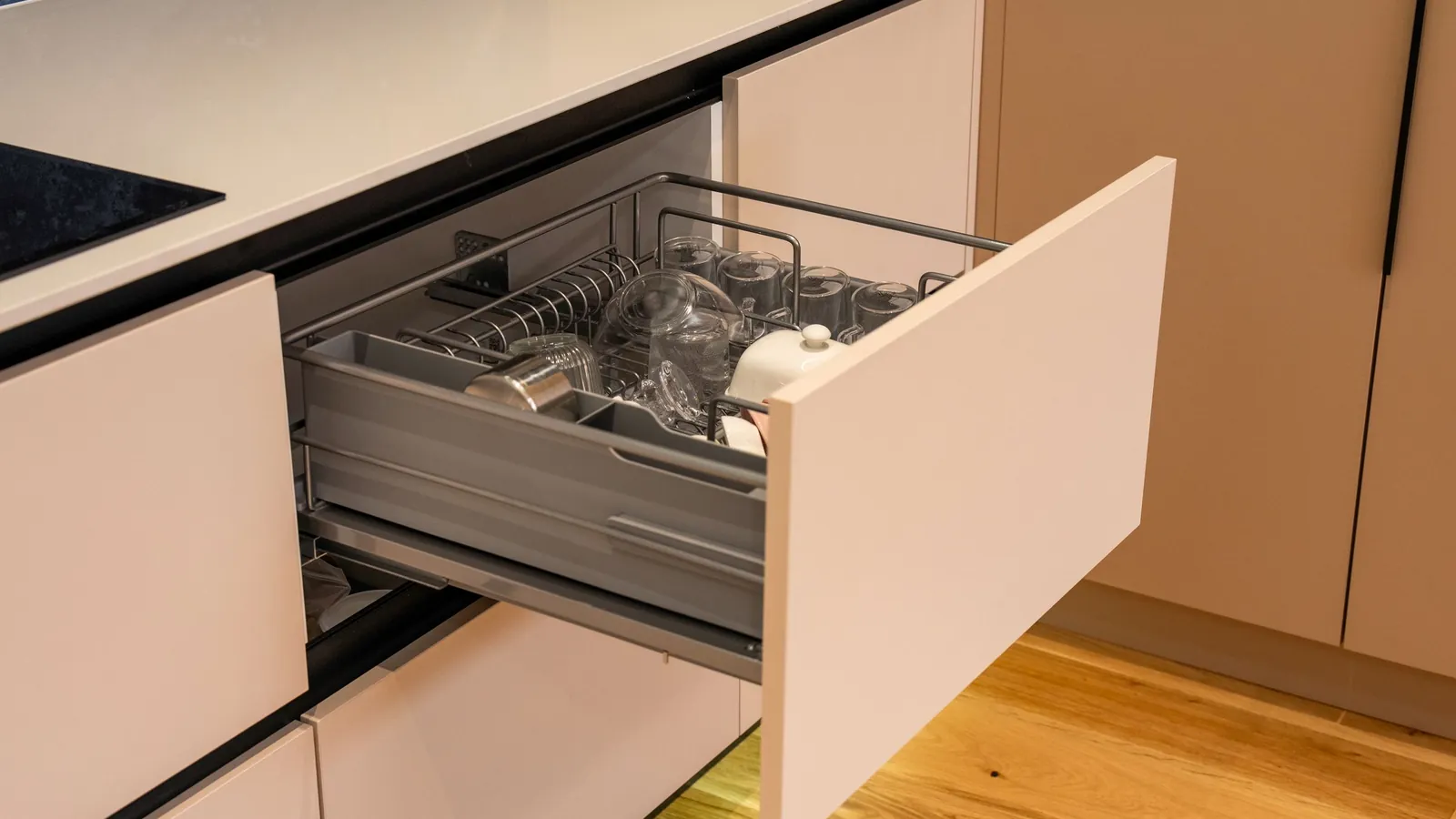
How should the pantry connect to the kitchen?
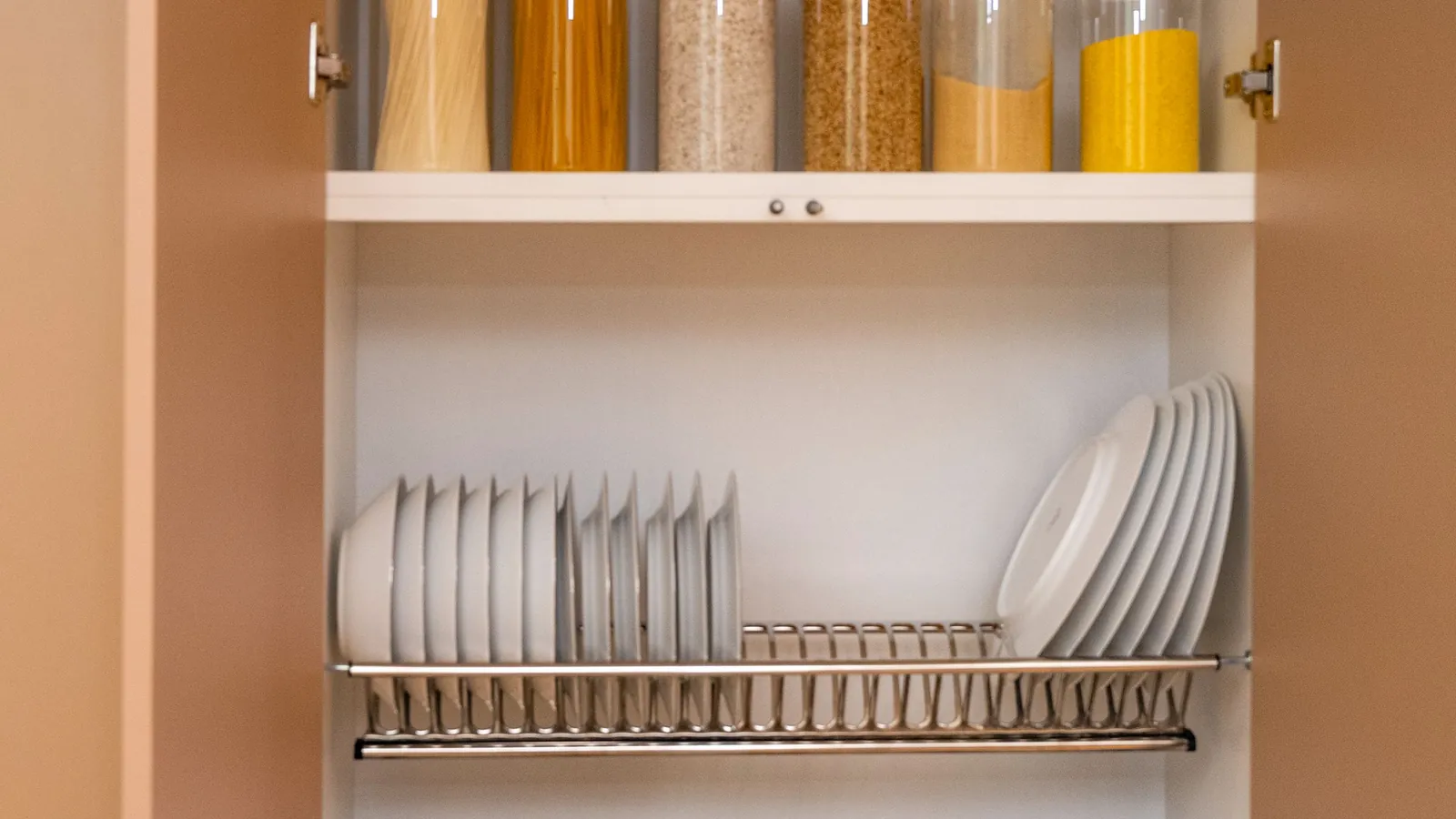
The pantry works best as a reserve for the kitchen rather than a second kitchen. Keep suitable active items near their tasks, and store spares and bulk purchases in clearly labeled pantry lanes where product instructions permit.
This split keeps kitchen cabinets light and easy to scan, while the pantry becomes a simple restocking point. When the active bottle of oil runs out, you take the next one from the pantry and add the item to your shopping list at once.
Pantry lanes should match the zones they supply, so breakfast items sit together, dinner staples sit together, and baking supplies stay in one area. That grouping means one trip to the pantry covers a whole task instead of several separate searches.
Containers play a big role in making lanes readable from the doorway. Our guide to pantry containers that fit your shelves explains how to size a set to your actual shelf depth. Renters can also compare stackable pantry bins for rental kitchens that need no hardware.
What goes wrong with kitchen organization?
The most common failure is counter creep, and it begins with a single item that does not go back. A cereal box stays out after breakfast, a charger lands beside it, and within a week the prep counter holds a small pile that nobody claims.
The early warning is an item left on the counter two nights in a row. That usually means its home is too hard to reach, needs two hands to open, or is already full, so the item waits for a better moment that never arrives.
Fix counter creep by making the home easier rather than by trying harder. Move an item closer only where safe, or choose a more accessible suitable container. Do not remove closures required to protect food or contain hazardous products. You can also clear space in its cabinet by sending rarely used items to the pantry.
The second common failure is buying organizers before sorting. Containers bought in advance rarely fit the final layout, and unused organizers become clutter themselves, so always sort, edit, and measure before you shop for anything new.
The third failure is ignoring the people who share the kitchen. A system that only one person understands will slip whenever someone else unpacks groceries, so label pantry lanes broadly and show everyone where the landing zone and reserve shelves are.
How do you reset the kitchen in ten minutes?
A daily reset keeps the system working without big cleaning sessions. Choose a consistent moment, such as right after dinner or before bed, and follow the same short sequence each time.
- Clear the landing zone. Put away groceries, mail, and bags first.
- Return every tool to its zone. Choose a convenient home that also meets safety and storage requirements.
- Load or empty the dishwasher. Put clean dishes away before adding dirty ones.
- Wipe the prep counter. A clear counter makes the next meal easier to start.
- Check the pantry lanes. Move any strays back and note items that are running low.
If ten minutes feels like too much, start with the first two steps only. Clearing the landing zone and returning tools prevents most counter creep, and the habit usually expands naturally once the kitchen starts to feel easier.
For a longer weekend version that covers the whole home, our free home reset checklist walks through each room in the same calm order. It works well as a monthly check that keeps small problems from growing.
How do you keep the system working through the holidays?
If your household has a busy cooking period, make temporary room for the ingredients and serving pieces you actually expect. Do this before your own event or season, not automatically in early November. Keep heavy stock low and do not exceed shelf or storage limits.
Store seasonal platters and roasting pans together, ideally in a single labeled bin outside the main kitchen. Bringing them out as a set saves searching, and returning them together after the holiday stops them from drifting into everyday cabinets.
Keep the landing zone clear even when the house is busy. Guests often place dishes, bags, and coats on the nearest counter, so a clear landing spot gives those items a place without blocking your prep or cooking areas.
After the holidays, run a quick edit before putting everything away. Donate duplicate gadgets, use up opened ingredients, and return the kitchen to its normal zones so it is ready for another ordinary Tuesday.
A small guest station also helps during busy weeks. Set out cups, a pitcher of water, and napkins on a tray away from the stove, so visitors can serve themselves without walking through the cooking zone.
Add a small bowl for bottle caps and a towel for spills, and the tray handles most guest needs on its own. Keep a spare roll of paper towels in the same cabinet.
When the gathering ends, the whole tray goes back to one cabinet in a single trip. That keeps glasses and napkins from scattering across every counter and makes the evening cleanup noticeably faster.
These kitchen and pantry organization ideas work because they follow how you cook rather than how a catalog photo looks. You can explore more kitchen and pantry storage guides for specific cabinets, drawers, and shelves once the zones are in place.
Frequently asked questions
What is the best way to organize a kitchen and pantry together?
Treat the pantry as a reserve for the kitchen. Keep suitable active items near their tasks and store spares in labeled pantry lanes where product instructions permit. This split keeps cabinets light and makes restocking quick and predictable for everyone.
How do you organize a small kitchen with no pantry?
Choose one tall cabinet or a freestanding shelf as the reserve and keep only daily items in the main zones. Consider suitable risers or door racks only after checking fit, fixing, clearance and load; edit duplicates first. Secure freestanding furniture as directed. A small kitchen gains the most space from removing items rather than adding containers.
What should be kept on kitchen counters?
Keep a manageable selection of suitable daily items on the counter while leaving prep and cooking surfaces clear. Store knives securely and inaccessible to children; follow appliance instructions and keep heat-sensitive or combustible items away from heat. A clear landing zone and prep counter make cooking faster and stop clutter from building up overnight.
How often should you reorganize the kitchen?
A full reorganization is rarely needed once zones are set. A short reset and periodic review can help; choose a schedule that fits the household. A deeper edit before or after a busy gathering is optional.
Where should food storage containers go in the kitchen?
Store food storage containers near the sink or dishwasher, since that is where they are washed and dried. Keep lids and bases together in the same drawer or cabinet, and limit the collection to the sizes you use so the space stays easy to search.
Written by the SetsQuick Team. First published · Last updated .
© SetsQuick. This article and its images may not be copied or republished without permission. To report reuse, see our DMCA page.
Was this guide helpful?
Save it for later or send it to someone