
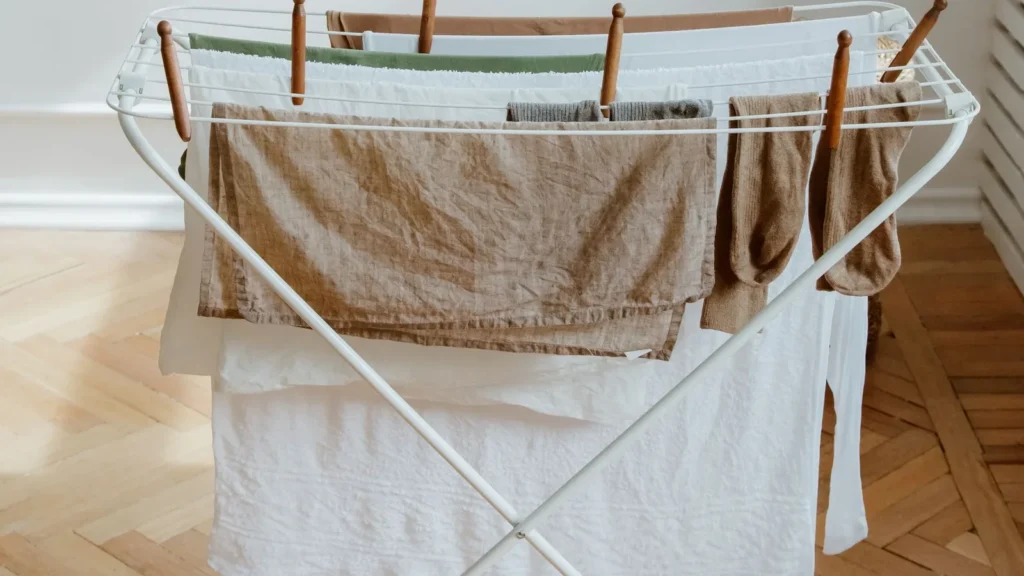
A small laundry room is often a closet with two machines and no plan. These small laundry room organization ideas start with what the machines need, from door swing to vent access. Storage then goes into the spots that are left, while keeping required clearances, service access and door movement unobstructed.
The machines get their space first; storage gets what is left.
Key takeawaysFour zones in a small laundry space
- Above the machines: consider only permitted, securely installed storage for safely reachable light items; keep hazardous supplies locked away.
- The side gap: storage only outside all required appliance, ventilation and service clearances; some gaps must remain empty.
- The door and walls: consider hanging storage only if mounting, appliance clearances and exit operation permit it.
- The floor in front: kept clear for loading, circulation and front-opening doors.
Many homes put the washer and dryer in a hall closet, a corner of the basement, or a narrow room off the kitchen. Detergent ends up on the dryer, clean shirts wait on a chair, and the iron lives wherever it last cooled down.
Most idea lists jump straight to products such as rolling carts, drying racks, and floating shelves. Each one can help, yet a small laundry space can get worse after a shopping trip. A new cart blocks the dryer door, or a shelf sits too low to lift the washer lid.
This guide starts with measurements that protect the machines. Map the available zones first, then choose storage only where it is safe and permitted.
Where do small laundry room organization ideas start?
They start with the machines, not with storage. Use a tape measure and notepad to record the space each machine needs before choosing storage. Ask for help if measuring safely is difficult.
- Open each machine door fully: measure how far it swings into the room.
- Check the washer lid: a top-loader needs clear space above it to open.
- Find the vent and hookups: note where the dryer vent and water lines run.
- Measure the side gaps: width and depth beside or between the machines.
- Measure up: from the machine tops to the ceiling or the nearest shelf.
Check the manual for each machine as well. It lists the clearances the maker requires around the appliance, and those numbers matter more than any storage idea. The U.S. Consumer Product Safety Commission notes that lint can block a dryer’s airflow and cause heat to build up, and it advises keeping the area around the dryer clean and free of clutter.
Door swing is only one constraint. If safe and suitable for your floor, a temporary tape mark can help visualize the swing, but it does not establish ventilation, service or installation clearances.
What goes above the washer and dryer?
The wall above the machines may offer space for a securely installed shelf only if appliance, ventilation and service requirements permit it. Keep hazardous supplies locked in their original packaging, safely accessible without reaching or lifting over machines.
Set the lowest shelf high enough to clear the machines. A top-loading washer needs enough room for the lid to open fully. Front-loaders also need all top, side, rear, ventilation and service clearances required by their exact installation instructions; hand space alone is not enough.
Laundry storage: permitted space comes first
Record required appliance clearances, ventilation and service access from the exact installation manuals. Side gaps may need to stay empty. Keep chemicals secured in original packaging; use a separate folding surface unless a specific appliance accessory is expressly permitted.
Keep adult-use supplies reachable without stretching over machines, but prioritize secure storage over a convenient open shelf when children or vulnerable adults could access them. Do not let children play in or on appliances; supervise children near them and follow the appliance manual. UL Standards & Engagement describes entrapment risks in front-loading machines. Put heavy bottles at a safely accessible lower level in suitable locked storage, not overhead; a low open shelf is accessible to children and does not replace a lock.
Use closed storage for anything that could be harmful. For single-load laundry packets, the CPSC advises keeping them sealed in their original packaging, locked up, and out of a child’s sight and reach. Use an appropriate lock, not just a latch or a high shelf. Do not let children handle packets, and keep liquids and packets in their original labeled containers.
Use labels to group supplies without decanting chemicals or laundry packets into decorative containers. Keep original packaging and warnings; an outer bin does not replace secure storage.
How do you use the gaps beside and between the machines?
An apparently unused gap may be required clearance, ventilation or service space. Read the exact appliance installation instructions before considering storage. A cart that physically fits is not necessarily permitted; if requirements are unclear, leave the gap empty and ask the manufacturer or a qualified installer.
If a cart is permitted outside all required clearances, follow its load limits and prevent contact with vibrating machines, hoses, cords or vents. Do not put hazardous supplies on a child-accessible cart; keep them secured as their labels require.
Do not slide an ironing board, rack or supplies into a required clearance or service gap. Storage must not obstruct ventilation, shutoffs, drains, filters or safe access, or press against hoses, cords and ducting. Do not move appliances or alter hookups to make storage fit. Do not crush or store items against the dryer duct, and keep combustibles away from the dryer and vent. Follow the manual and use qualified service for vent or gas work.
The U.S. Fire Administration advises plugging washers and dryers directly into a wall outlet, not an extension cord.
If you smell gas, clear the building, do not operate switches or use a phone inside, and call the gas supplier from a safe location; call the fire department if the supplier cannot be reached. Follow your own manual and local gas supplier’s emergency instructions; these steps also appear in Whirlpool dryer instructions.
Stacked machines may free floor space, but use it only outside required appliance, ventilation and service clearances. If your machines are stackable and you plan to stack them, follow the maker’s instructions and use the correct stacking kit, rather than improvising with a shelf between them.
Key takeawaysMeasure, then verify. Door swing, side gaps and available height are starting observations—not permission to install storage. Check both appliance manuals for clearances, ventilation, access and installation.
How do you handle hanging, drying, and folding?
Hanging and drying need a spot that does not block anything. A securely installed rod or drying rack is an option only where the exact installation and load are suitable and appliance and door clearances remain open. Keep dripping clothes and wet items away from electrical equipment, controls, outlets and machine tops. Dry garments in a different suitable area when necessary.
A folding surface may help in a small space. Use a separate surface, or a supported shelf installed for its intended load. Do not bridge or load appliance tops unless the exact appliance and accessory instructions explicitly permit that arrangement; fitting across the machines does not establish support, ventilation or service access.
Use baskets per person or category if helpful, keeping them away from appliances, vents and walkways.
Hang suitable shirts and blouses after drying if a safely installed rod is available, or use another suitable space.
Hanging a shirt promptly may reduce wrinkles, depending on the fabric and care instructions.
Follow the iron’s instructions: unplug it after use, let it cool fully in a safe location, then store it securely with its cord inaccessible to children. Store the board where it cannot fall or block appliance clearances, exits or door swings.
Where do towels and sheets go in a small laundry space?
Store clean, dry linens wherever they are safely accessible, away from appliances and clearances. Choose quantities based on actual household needs and available space.
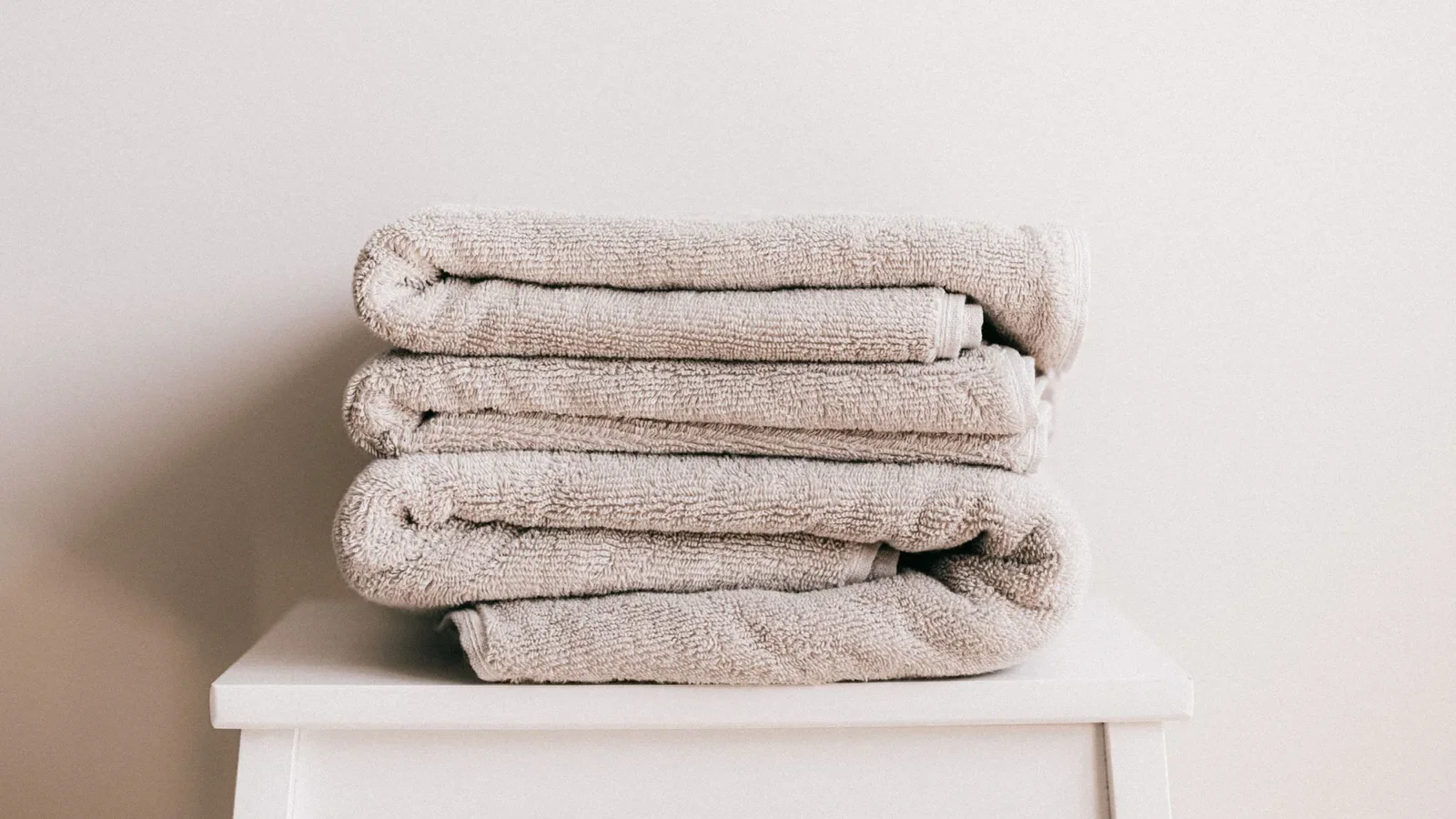
Fold each sheet set together; if a pillowcase is available, use it to hold the other pieces so the set is easier to find.
Keep clean, fully dry guest linens in a suitable accessible location away from appliance heat and required clearances. Use overhead shelves only for light items that can be retrieved safely; do not lift heavy bins over machines or stand on appliances. Check condition before guests arrive and wash when needed according to care labels.
Towels roll or fold well in a basket. Choose a basket sized to the household’s needs and keep it away from the dryer. If the basket overflows, check both capacity and actual towel needs. Limited space alone does not prove the household owns too much.

Why do small laundry spaces get messy again, and how do you stop it?
One possible problem is a dryer-top pile. Clean clothes come out of the dryer and land on top of the machine, then the next load follows. A pile can make machines and nearby storage harder to use.
The early warning is clean clothes still sitting on the machine the next morning. If a pile recurs, ask whether the folding surface, available time, help or destination is the obstacle. A recurring pile does not establish its cause.
Set one rule for the machine tops. Keep machine tops clear unless the manufacturer explicitly permits an accessory or use. A folding surface is not an automatic exception. Put small buttons, coins and pocket finds in secure adult-controlled storage away from children; do not leave them in an accessible open tray. A separate basket can hold stray socks.
Run a short weekly reset as well. Wipe permitted surfaces according to the manuals, return supplies to secure storage and dispose of empty containers according to their labels. This reset does not replace dryer maintenance: CPSC advises cleaning the lint screen before or after every load and periodic vent/exhaust checks. Follow the exact manual and use qualified service where needed; do not wait for a weekly reset to address a blocked airflow warning.
Write the rule where everyone can see it. A small note on the shelf can say what lives where and that the machine tops stay clear. It helps every person in the house follow the same system, even on a busy week.
Put the small laundry space together
A small laundry space works when the machines get the room they need first. Any permitted storage stays outside appliance, service and ventilation clearances. Secure hazardous supplies and keep drying away from electrical equipment.
The floor in front stays clear for loading, and a folding surface replaces the habit of piling clean clothes on the dryer.
Start with the zone that causes the most daily friction, then add the next one once it is working.
For more ideas that work across the house, visit our whole-home organization hub or the small spaces hub. Both pair well with these small laundry room organization ideas and collect guides for tight rooms where every inch has to earn its place, from narrow hallways to shared bedrooms.
If the laundry space feels out of control, start with the machine tops. The SETS method explains how to sort and edit supplies before choosing storage, and the free reset checklist suggests short sessions that you can adapt to your circumstances.
These small laundry room organization ideas all share one principle. Protect the space the machines need, give every supply one home, and keep the tops clear. Review the arrangement when needs change; it cannot guarantee that piles will never occur.
Frequently asked questions
How do you organize a small laundry closet?
Read the exact installation manuals and map required clearances, ventilation, service access and door movement before adding storage. Some side gaps must stay empty. Install any permitted shelving or hanging hardware for its documented load, secure chemicals and keep exits and the loading area clear.
What can you put between a washer and dryer?
Nothing should occupy required clearance, ventilation or service space. Only consider storage where the exact appliance instructions allow it, with no contact with hoses, cords, ducts or vibrating machines. A cart fitting the gap is not permission; secure hazardous supplies away from children.
How high should shelves be above a washer and dryer?
There is no universal height: use the exact installation manuals for all clearances, lid travel, ventilation and service access. Front-loaders need more than hand space. Mount shelves for their documented load; keep heavy items safely accessible and laundry chemicals secured in original packaging.
Where do you fold clothes in a small laundry room?
A separate surface in this room or the next is a good starting option. Use a wall shelf only with suitable mounting and load instructions. Do not bridge or use appliance tops unless the exact manufacturer instructions permit it; clearing a board after use does not make an unsupported setup safe.
How do you store laundry detergent safely?
CPSC advises keeping laundry packets sealed in their original packaging, locked up and out of children’s sight and reach, and not allowing children to handle them. A high shelf or ordinary latch alone is not a lock. Keep liquid and powder detergents and other products in their original labeled containers and follow their storage and spill instructions.
Written by the SetsQuick Team. First published .
© SetsQuick. This article and its images may not be copied or republished without permission. To report reuse, see our DMCA page.
Was this guide helpful?
Save it for later or send it to someone