
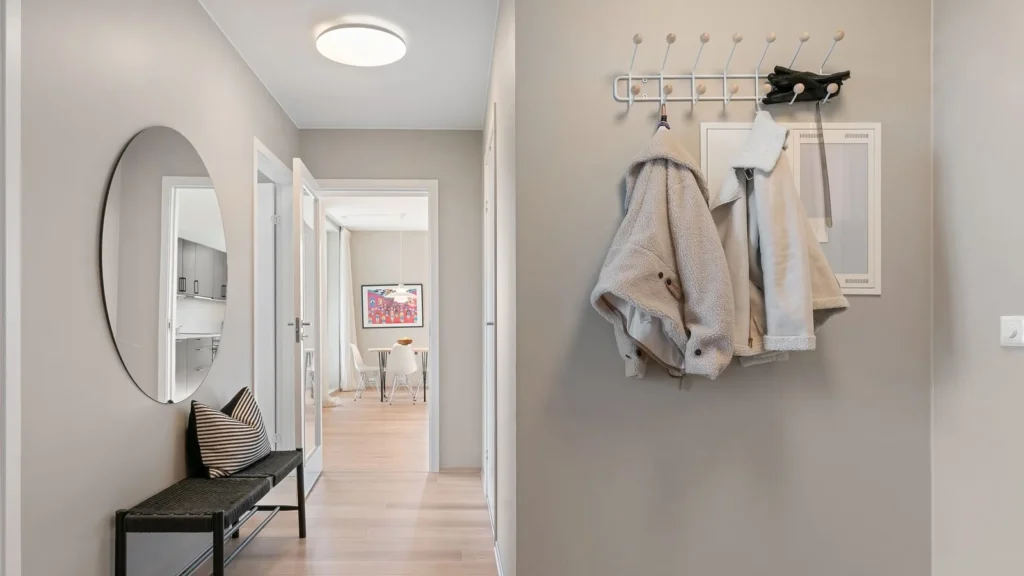
Sharing one hook, a shoe pile and a chair for bags can crowd a family entryway. These entryway organization ideas for families start with the people, not the furniture. A defined place for each person may reduce searching, provided it fits their reach, belongings and the available space.
Start with the space available, the things people use, and a clear route through the door.
Key takeawaysChoose personal or shared places
- Personal or shared places: choose accessible storage that fits each person and the space; separate lanes are optional.
- Accessible storage: choose a safe height and arrangement for the person and the item; do not expect a child to lift a heavy bag overhead.
- Plan for shoes: allow for weather, school and access needs without obstructing an exit.
- Private paper spot: check urgent notices on arrival and keep personal details away from visitors and public view.
- Optional reset: agree on a routine that fits the household.
Family entryways vary: a hallway, a corner by the garage, or space beside stairs may have limited room for bags, shoes and papers.
The usual advice is a gallery of benches, cubbies, and hall trees. Those pieces can help, yet a bench does nothing if nobody knows which part of it is theirs. A row of hooks can also become crowded when several people use the same spot.
Start by noting what each person carries, then agree on accessible places for shoes, bags and papers. Separate lanes are one option, not a requirement.
Changing seasons may bring bulkier coats, hats or boots, depending on the household and climate.
Visitors may also bring coats and shoes. Plan an accessible place for them only if the space and safe load allow it.
What are the best entryway organization ideas for families?
Useful options match the household’s belongings, reach and available space. Before buying anything, notice what people bring in over a representative period, from bags and coats to shoes, keys and papers.
- List every person: include adults, kids, and anyone who stays over often.
- Note their daily load: a backpack, a coat, one pair of shoes, sports gear.
- Note the seasonal load: boots, hats, gloves, and umbrellas for winter.
- Mark shared items: keys, dog leash, reusable bags, and outgoing mail.
- Measure the wall: usable width, comfortable reach and depth you can spare while keeping doors and routes clear.
The count shows what your household actually carries, not what it should own. One hook and a shoe spot may be enough for one person but insufficient for another; allow for shared items and changing needs.
Depth matters in a hallway. Keep escape routes clear and doors able to open easily, as NFPA’s home escape-planning guidance advises. A shallow unit can still obstruct a route; measure the actual circulation space and do not use an exit path as storage.
How do you set up a lane for each person?
A lane is one possible arrangement: a defined area for someone’s belongings. Hooks, a shoe spot or a bin can be combined or shared according to available space and access, without blocking a door or exit.
One usable place per person
Record the person, daily items, comfortable reach for a light item, and a suitable hook or low-cubby option. Check exact mounting and load instructions. Reassess when needs change; do not automatically raise hooks each year or ask children to lift heavy bags overhead.
Start with safe access. A hook is only one option: check documented mounting and load requirements, protrusion hazards and a comfortable height for a light item. For heavy bags or difficult reach, consider a low cubby outside the walkway or adult assistance. Follow the furniture maker’s assembly and anchoring instructions, including for low units when required; do not let children climb on furniture. The CPSC’s Anchor It campaign explains furniture tip-over prevention.
Check placement with the child using a light item; maximum arm reach is not a safe loaded-bag height. Avoid protruding hooks where they could cause injury and reassess as needs change.
A basket or bin may hold small items if it fits safely. Share or separate containers as useful; a color paired with a symbol or picture can help distinguish them without displaying full names to visitors.
Equal lane widths are optional, not a fairness rule or a fit standard. Different coats, mobility needs and bags can require different space. Measure the real items and agree an arrangement together; a door-width comparison does not establish safe capacity.
Where should shoes go in a family entryway?
Choose shoe storage from actual use and available space. Keep needed pairs accessible without blocking an escape route.
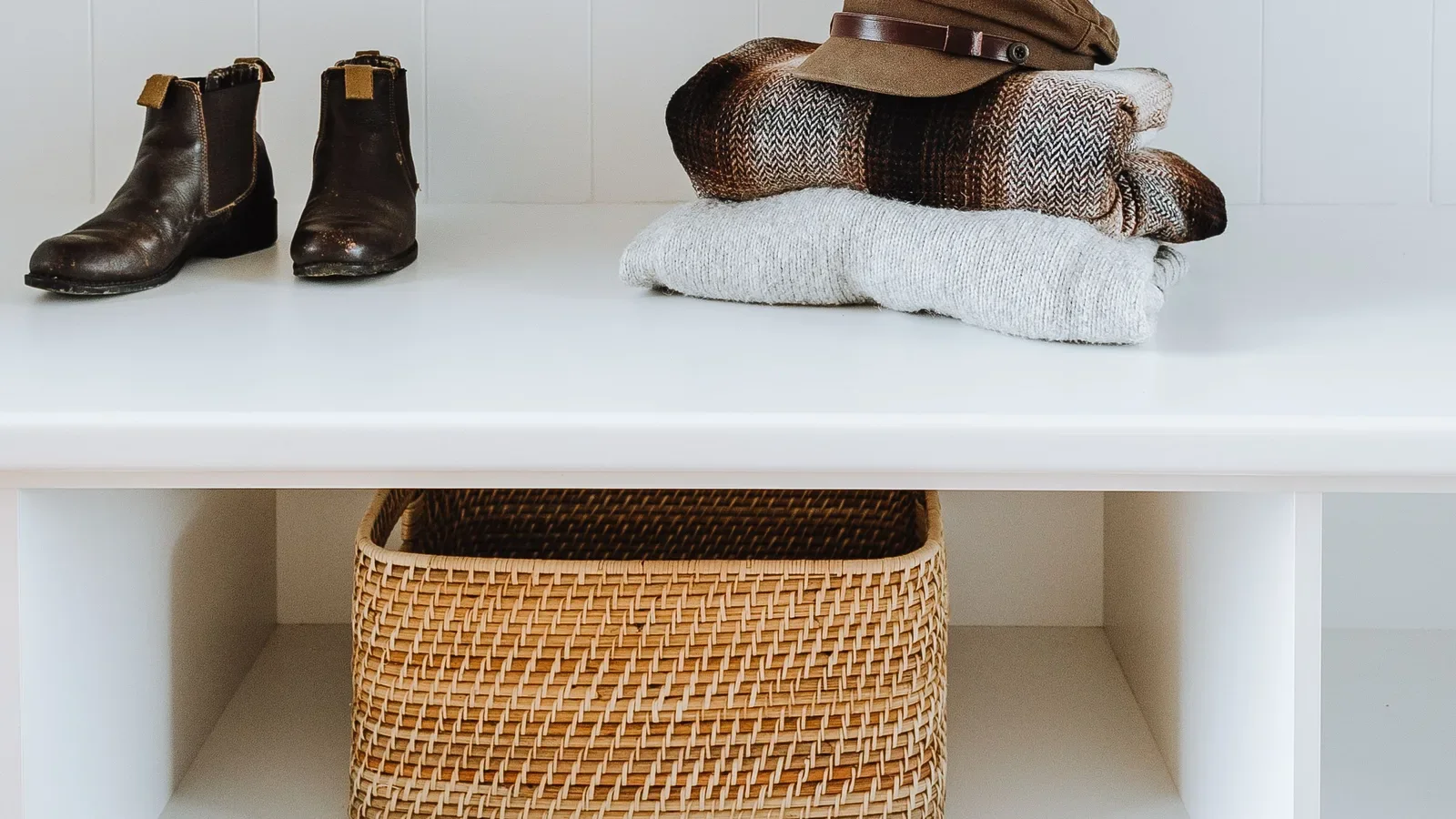
A low, open shoe rack or a tray may suit daily pairs if it fits outside the walking and exit routes. Allow room for mobility aids to approach and pass through the door. An over-door organizer must not impede opening, closing or latching an exit door; follow the product and door instructions. Our comparison of an over-door shoe organizer versus a shoe rack compares the two options.
Where winter boots are used, a separate spot may help; a shallow boot tray with a washable mat may contain some meltwater and road salt. Place it outside the walking path, empty collected water and promptly wipe spills to reduce slip risk. Follow footwear care instructions; a tray does not guarantee floor protection or overnight drying.
Review actual daily needs together and relocate extras only where there is suitable space and agreement.
How do you handle bags, papers, and keys?
Keep bags out of the walkway. A securely installed hook with a documented suitable load is one option; a stable low cubby outside the escape route is another. Do not ask a child to lift a heavy bag to an unsuitable height.
Choose a private paper landing spot rather than an exposed tray at the entrance. A responsible adult should check urgent notices and deadlines on arrival; an evening review can handle the rest. Keep names, addresses, medical details and school information out of visitors’ sight, including in photos shared online.
Keep everyday keys and packages out of reach from outside the door or mail slot, in a place suited to your household. Do not let key storage or locks delay escape: check that required exits open readily from inside under local requirements, and ask the local fire authority if unsure. NFPA recommends practicing escape routes and ensuring permitted locks can be used; the U.S. Fire Administration recommends planning who will help young children escape. Store leashes, cords, small parts and pet supplies where young children cannot access them; never let bags or parcels obstruct the exit.
An optional evening check
Clear the exit route, return items in a way suited to each person’s ability, review papers privately and put everyday keys away without compromising escape. Check urgent notices on arrival. An item left out is a reason to ask what happened, not proof a lane is wrong.
Size shared storage to the items and people who use it; a container that is too small can interrupt access or create overflow.
If papers keep accumulating, check volume, privacy, deadlines and who has time to review them. A different location or more appropriate capacity may help; the pile alone does not prove someone should work faster.
Why do family entryways fall apart, and how do you fix it?
A bag left in the walkway can have several explanations, including capacity, reach or an interrupted routine. The bag alone does not identify the cause.
Clear the route first, then ask what happened before deciding whether the arrangement needs changing.
Check whether the height is still comfortable and safe, then check the load and product instructions. Needs can change without requiring an automatic height change.
If helpful, agree on an evening reset in which people participate according to their ability and availability. An adult can review the private paper spot and put everyday keys away without compromising escape; urgent notices should be checked on arrival.
If you use a reset, consider sharing it rather than making it one person’s job. Agree roles appropriate to each person’s age and ability; participation may make upkeep easier, but the zone will still need review. A timer or song is an optional cue, not a required duration.
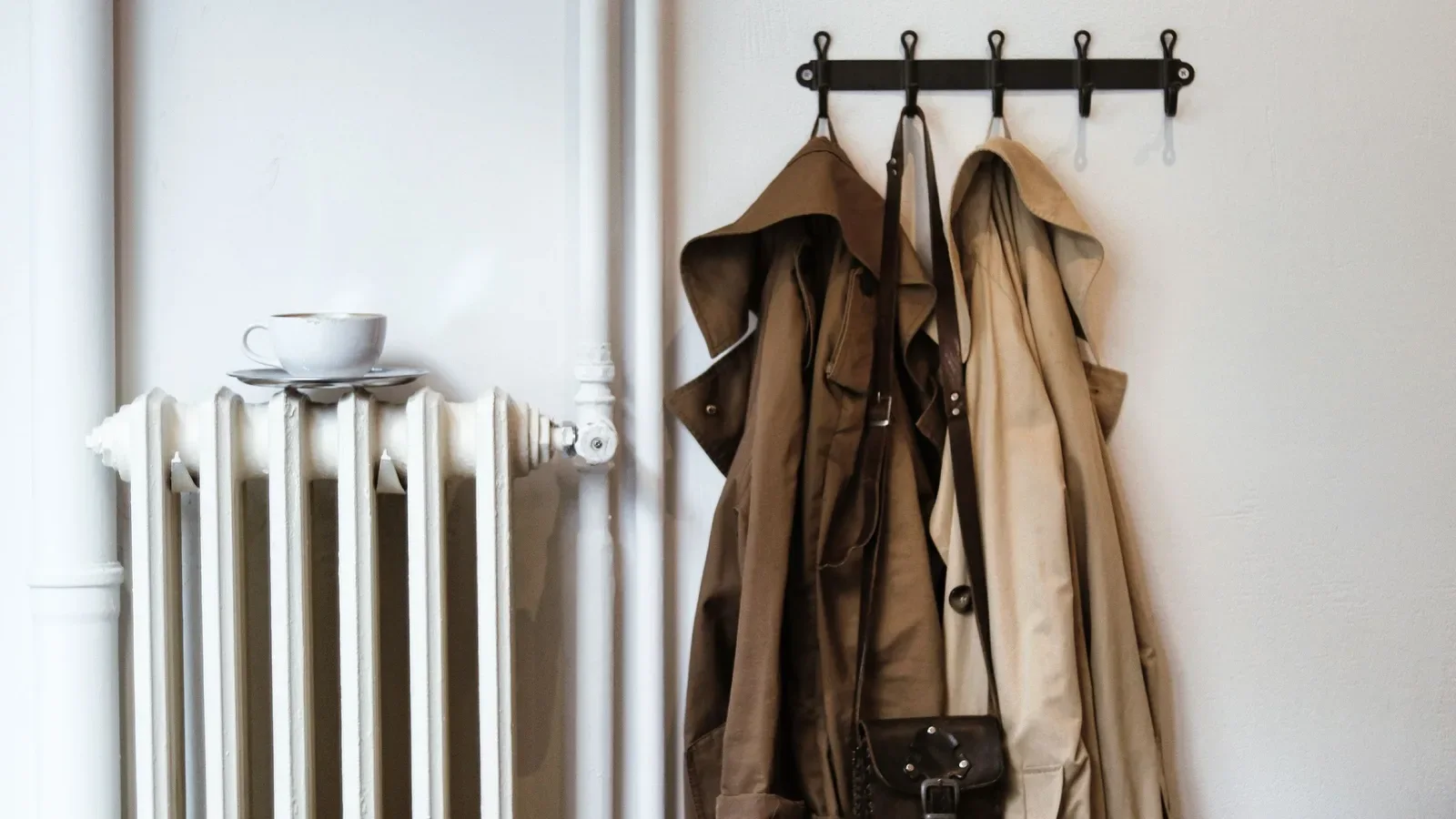
Put the whole entryway together
A family entryway can use individual or shared spaces sized to the people and belongings involved. Keep hooks and other storage suitable for the load and user, exits clear, and papers private; check urgent notices on arrival.
For more ideas that work across the house, visit our whole-home organization hub. The SETS method explains how to sort, edit, and set up a zone before you buy storage, which may help identify whether more furniture is actually needed.
If the entryway feels out of control, start with the floor. The free reset checklist suggests short sessions; adapt the pace to the household and keep the exit clear throughout.
When guests are expected, consider a suitable place for their belongings if space and safe load allow. Keep any basket or tray outside the door swing, walking path and escape route.
These entryway organization ideas for families all rely on one principle: personal and shared items have agreed, usable places. An agreed arrangement may make returns easier, but it can need adjustment over time.
Review the arrangement when needs or seasons change. Check reach, hardware, load and clear exits rather than assuming a fixed annual schedule is sufficient.
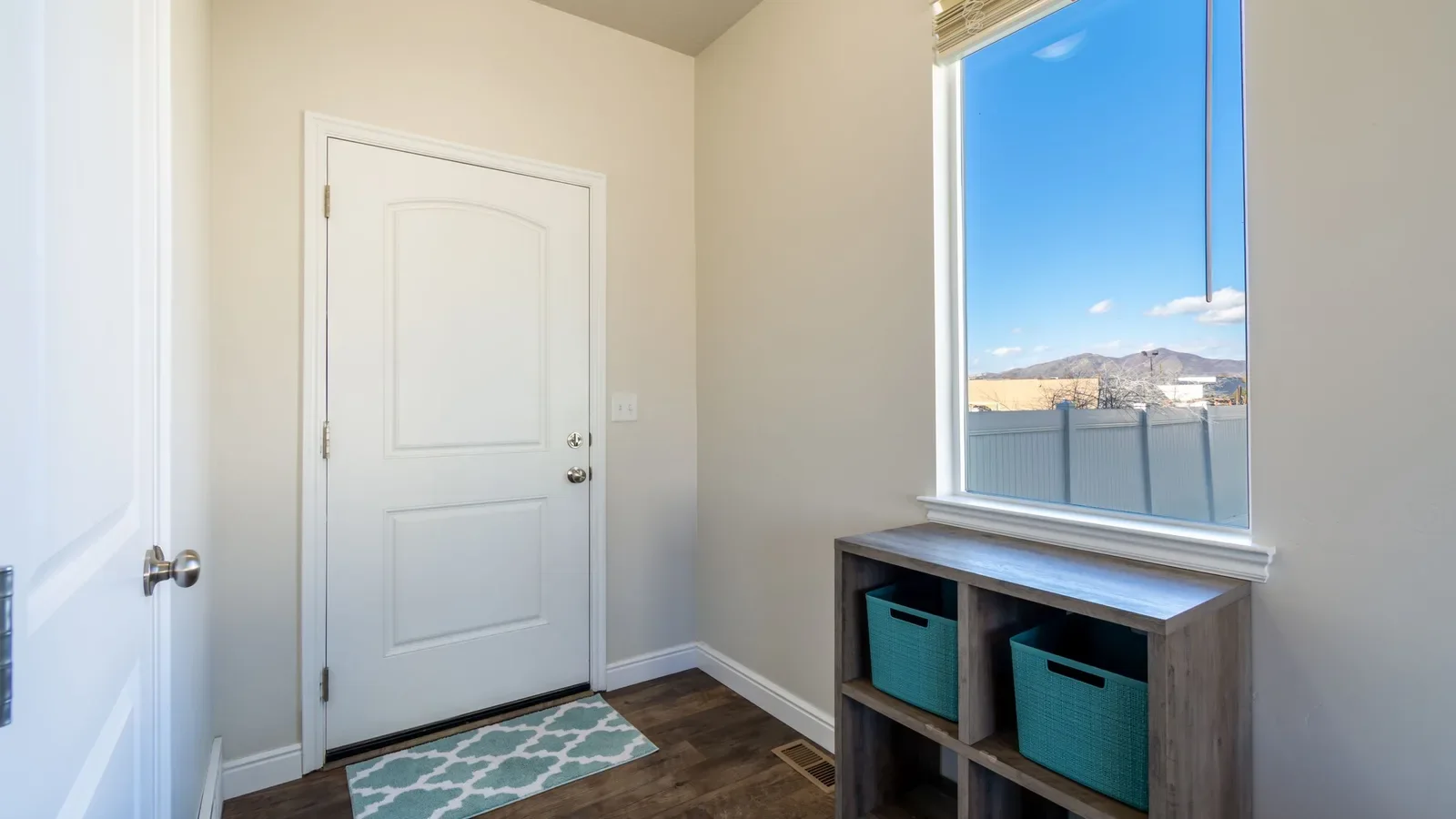
Follow manufacturer instructions for furniture, hooks and shelves; a child-height label is not a safety certification. Keep items away from heating equipment as its manufacturer requires; a photograph does not establish safe clearance.
Frequently asked questions
How do you organize an entryway for a family of five?
Agree on personal or shared places suited to each person, the available space and documented load and installation requirements. Keep exits clear, store everyday keys without compromising escape, and keep papers private; check urgent notices on arrival. An evening reset is optional.
What height should kids’ coat hooks be?
No single height suits every child. Use a comfortable height for a light item, not maximum arm reach or a heavy loaded bag. Follow hardware mounting and load instructions. A low cubby outside the walkway or adult assistance may be safer; reassess as needs change without automatically moving hooks every year.
How many shoes should be kept by the front door?
There is no fixed number: it depends on weather, school, mobility needs and available space. Keep the exit clear, and do not discard or move others’ belongings without consent.
How do you organize an entryway with no closet?
Where space permits, hooks or a low storage unit may help. Follow the product’s installation, anchoring and load instructions and obtain landlord or building permission for mounting if needed. Keep the door swing and escape route clear; even a shallow unit can obstruct them. Avoid unsafe reach and protruding hooks.
How do you keep an entryway organized with kids?
Choose storage that fits each child’s comfortable reach for light items; use adult assistance for heavy bags when needed. Agree on an arrangement that fits your household and review what gets in the way. A family reset is optional.
Written by the SetsQuick Team. First published .
© SetsQuick. This article and its images may not be copied or republished without permission. To report reuse, see our DMCA page.
Was this guide helpful?
Save it for later or send it to someone