

A linen closet can look tidy and still be awkward to use. A towel pulled from the bottom may topple a pile, or a sheet set may lose a pillowcase. A collapsing shelf is a separate support problem: stop using it and get suitable repair rather than simply refolding its contents. To decide how to organize a linen closet, start with the linens you need, shelf support, accessible space and a practical way to retrieve items.
A stack that fits is easier to plan for, but fit alone does not guarantee stability or shelf safety.
Key takeawaysFour decisions before you refold anything
- Count sets by use: base the number of sheets and towels on your laundry rhythm, not a store list.
- Measure one folded stack: check its height against the shelf opening before you add more.
- Group each sheet set: use a pillowcase, label or bin if helpful.
- Plan safe access: keep frequently used linens within easy reach and choose other locations by weight and safe access, not frequency alone.
Linen storage varies, but soft items can shift or become difficult to retrieve when a shelf is crowded.
Dimensions, shelf support, access and quantity all matter. A pile may be awkward for several reasons; its appearance alone does not identify the cause.
This guide walks through what belongs in the closet, how many sets make sense for your home, and how to measure each shelf to plan storage and retrieval. It also distinguishes a shifting pile from a damaged or overloaded shelf that needs attention.
Consider reviewing the arrangement when seasons, visitors or household needs change.
What belongs in a linen closet?
Start with one manageable shelf, using a clean surface for sorting. A full empty-out is optional; do not remove more than you can safely return in the available time. Keep the floor and exits clear, and do not climb on shelves or furniture to reach items. Keep textiles and other combustibles away from heating equipment and respect its required clearances; do not use an equipment closet for storage unless its instructions and local rules allow it.
The core groups for most homes are sheet sets, bath towels, hand towels and washcloths, blankets and throws, and spare pillows. Some people also keep extra toiletries, first aid basics, or cleaning cloths in the same closet. A separate container alone is not enough for medicines or hazardous supplies. Keep a first aid kit accessible to responsible adults, with medicines and hazardous contents secured separately. Follow product labels for temperature, moisture and secure storage. Keep medicines and hazardous supplies out of children’s sight and reach, using secure locked storage; keep chemicals in original containers and separate from linens. The CPSC’s poison prevention guidance recommends locked storage for medications. A shared linen closet may be unsuitable.
Next, edit. Pull out sheets that no longer fit any bed in the house, towels with frayed edges, and single pillowcases with no match. Check whether these pieces have another purpose before discarding them; unmatched does not mean useless. Set aside only your own unwanted items, or agree changes with others. Donate only items the recipient accepts, and follow care and disposal instructions.
Finally, ask one question about each remaining category: how often do you reach for it? Weekly items deserve the most accessible shelf. Place seasonal blankets and guest bedding where their weight and bulk can be handled safely; do not put heavy bundles overhead. Writing this down as a short list makes the next steps faster, because you are placing groups instead of single items.
If the closet also holds supplies that are not linens, decide now whether they belong there at all. Store medicines and cleaning products elsewhere if the closet cannot provide secure, label-compliant storage separate from linens. Store only clean cloths with linens; follow product labels for handling used cloths. The SETS method is a useful way to sort before you store.
How many sheet and towel sets do you actually need?
There is no single right number. Count sets that are in use, being washed, drying or needed before the next wash. Guest needs, accessibility, incontinence, illness and drying arrangements can change the reserve a household needs.
A shopping list cannot establish the right quantity for every home. Keep enough clean sets for the time between reliable laundry opportunities, then check where those sets can be stored accessibly.
Laundry frequency, drying time, household use and overnight guests all affect the count. Less frequent washing may require a larger reserve, but frequency alone cannot determine the number.
Key takeawaysPlan from actual needs. Count what is in use, ready, washing or drying; keep needed reserves even if another safe location is required.
Compare your needed count with the available shelf capacity. If it does not fit, keep the necessary items and find another accessible, dry location. Under-bed storage is an option only if the bed manufacturer permits it and airflow and access are maintained; store clean, fully dry textiles and check for dampness.
Choose guest reserves from visit length and realistic wash and drying opportunities. Store them where their weight and bulk can be handled safely; infrequent use alone is not a reason to move a heavy bundle overhead.
How to organize a linen closet shelf by shelf
Measurements can help match folded items to a shelf, but do not explain every slipping pile or support failure. Work one accessible shelf at a time. If a shelf is loose, damaged or overloaded, stop using it. Avoid standing beneath or leaning on it; seek qualified help to unload or repair it safely before reuse.
- Measure the shelf opening. Record the clear height from the shelf surface to the bottom of the shelf above, plus the depth and width.
- Fold one item from each group. Fold it the way you will store it, then measure the height of a stack of your usual count.
- Leave space above each stack. Allow enough room for your own retrieval method; check the actual items and shelf limits.
- Match groups to shelves. Match the items to supported, accessible shelves; weight and safe reach matter as well as frequency.
- Split stacks that do not fit. Two shorter stacks may be easier to handle, provided they fit the shelf and its load limits. If the capacity or support is unknown, ask the manufacturer, installer or a qualified professional rather than assuming it is safe.
Linen shelf record
Record the shelf opening, actual folded stack, documented shelf limits, and the space you need for comfortable retrieval. Take the top item or a small bundle without destabilizing a pile. Use both hands if needed; do not test by pulling from beneath a tall stack.
Do not choose shelf spacing from a generic number. Measure the actual folded items, clear shelf opening and retrieval space, then check the shelving manufacturer’s installation and load instructions.
A stack measurement helps plan the layout, but does not certify shelf support or stability. Never remove structural shelves, alter supports or exceed documented loads to make a pile fit.
Adjust shelves only as their manufacturer permits, without removing structural supports. A second row is an option only if rear items are comfortably reachable without destabilizing front stacks; otherwise use a more accessible location.
Wire shelves need one more check. Soft folds can sag into the gaps and catch when you pull an item out. A suitable liner or shallow bin may provide a smoother base if the shelf instructions and ventilation allow it; it does not strengthen the shelf.
How do you keep sheets folded and sets together?
One option is to fold the pieces of a set into one of its pillowcases. If that is impractical or the set has different pieces, a label or suitable bin can group them instead. This can make pieces easier to find, not guarantee that none will go missing.
This matters most in homes with different mattress sizes, where a queen fitted sheet and a full fitted sheet can look almost identical on a shelf. Labeling bundles by bed size can help distinguish them.
A neat fitted sheet fold also helps, because a lumpy fitted sheet makes the whole stack uneven. The fold does not need to be flawless. Aim for a flat rectangle about the same size as the flat sheet, so the bundle stacks squarely.

Keep the folds for each group consistent. A consistent fold may help with access, but it cannot guarantee a stable stack.
Where should towels, blankets, and extras go?
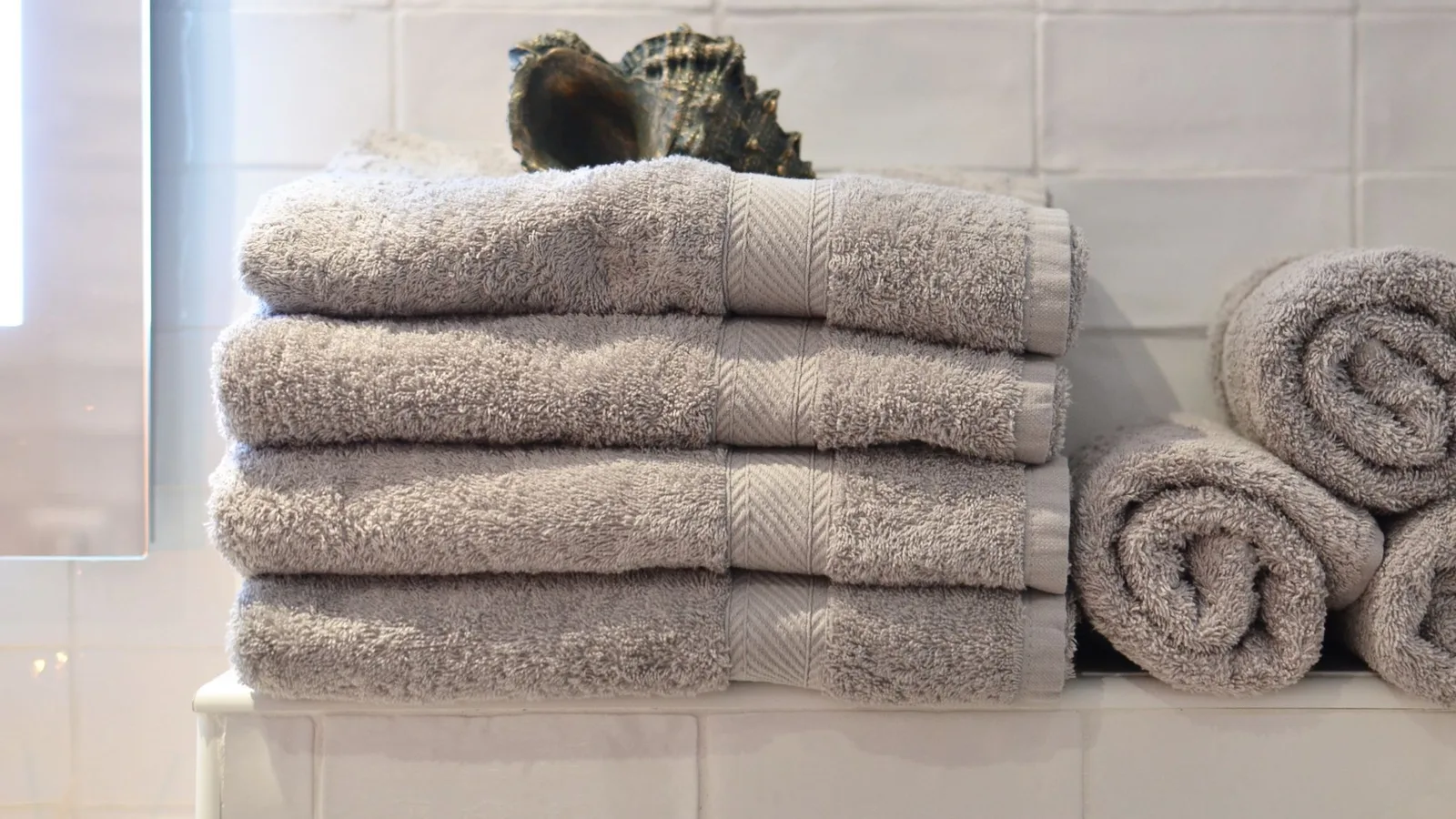
Put the most frequently used group at an accessible height when its weight and support allow. Stack bath towels together and keep hand towels and washcloths in a separate short stack or a small open bin.
Keep bulky blankets and pillows in an accessible location with suitable support. Use high shelves only for light items you can retrieve safely; do not pull an overhead bin toward your face. Store clean, fully dry textiles in a dry location, protected from damp floors and walls, and follow their care labels.
Small extras such as spare toiletries can go in labeled bins if their storage requirements and the shelf’s load and access allow. Bins may help separate categories if they fit and are safe to reach.
Measure towel stacks the same way you measured sheets. Thick bath towels build height quickly, so a stack that looks modest can reach the shelf above after only a few towels. If retrieval is awkward, consider shorter stacks or another accessible location without exceeding shelf limits.
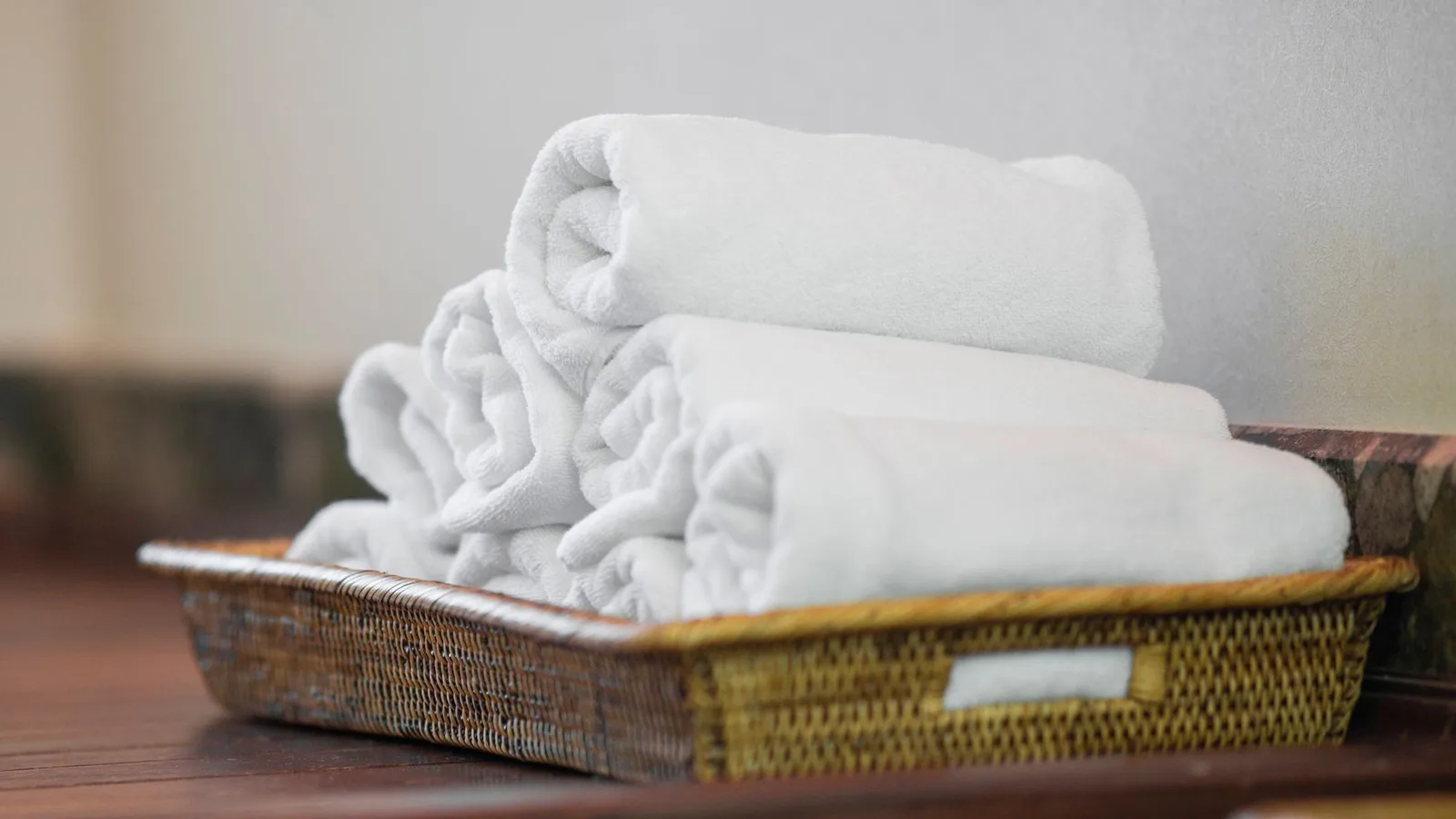
Rolling hand towels and washcloths into a shallow basket is another option, though any arrangement should be checked for stable, comfortable access.
The back of the door is useful space too. An over-door rack may hold light items if its instructions permit the exact door and load and the door can open, close and latch fully. Check the exact organizer’s allowed door, mounting method, load and closing clearance. A gap measurement alone does not establish compatibility. Store a hair dryer only after unplugging and cooling it as instructed, away from damp items and children; do not hang it by its cord, and keep the cord from snagging on a moving door.
What goes wrong with linen closets?
A tall or uneven pile can tip when a lower item is pulled out. That is a pile-access problem, distinct from a shelf that cannot support its load. Do not treat needing two hands as failure; choose a retrieval method that is comfortable and keeps both the pile and support stable.
Use a comfortable retrieval check, not a one-handed bottom-pull test. Take the top item or a whole small bundle without destabilizing a pile; use both hands if needed. If retrieval is awkward, try shorter stacks, a supported bin or a more accessible location. This is a usability check, not proof of shelf safety.
A second failure is set drift. Pillowcases and flat sheets get separated after one wash, and the stack fills with mismatched pieces. Grouping pieces in a pillowcase or labeled bin may help keep sets together.
A third is a stale smell. Put linens away only when they are fully dry, and leave a little air between stacks instead of packing shelves wall to wall. If a stale smell persists, look for damp textiles, leaks or condensation rather than masking it with fragrance or an absorber. EPA’s mold guidance identifies moisture control as central to limiting mold growth. Address the moisture source, follow care instructions and seek suitable help for persistent dampness or suspected mold.
An optional linen closet check
There is no required reset schedule. When helpful, review one manageable shelf and adjust to the household’s needs.
- Pull any item that is not in its group and put it back where it belongs.
- Rebundle any sheet set that came back loose from the wash.
- Check that stacks or bundles can be retrieved comfortably without tipping; do not pull from beneath a tall pile.
- If rotating sets helps, use a method that does not destabilize a stack; rotation is optional.
- Review rarely used items and choose an accessible location appropriate to their weight and the shelf instructions; do not automatically move heavy items overhead.
Knowing how to organize a linen closet once is only half the job. The other half is a routine small enough that you will actually repeat it, and a short regular check may help, with the time and frequency adjusted to the household.
For a broader plan that covers the rest of the house, browse the whole home organizing guides. You can also use the free reset checklist to work through one space at a time.
Frequently asked questions
How often should you reorganize a linen closet?
There is no fixed schedule. Review a manageable area when needs change or a problem recurs; capacity, access, dampness or a changed routine may need attention.
Should towels be folded or rolled in a linen closet?
Both are options. Folded towels may suit a shelf and rolls may suit a basket; choose the arrangement that fits the shelf, its load limits and comfortable access. Neither method guarantees stability.
How do you store sheets so they stay together?
Fold a set into one of its pillowcases if practical, or group its pieces with a label or suitable bin. Label by bed size to help identify sets; configurations vary.
What is the best shelf height for a linen closet?
Measure the actual folded stack and allow comfortable retrieval space. Follow the shelving instructions for supports and loads; a layout that fits is not automatically stable or safely reachable.
What if the linen closet is too small?
Keep the sets your household needs and seek another dry, accessible location if necessary. Under-bed storage depends on bed instructions, airflow and access; store only clean, dry textiles. Leave room to retrieve stacks, respect shelf limits, and use door storage only if compatible and the door remains operable.
Written by the SetsQuick Team. First published .
© SetsQuick. This article and its images may not be copied or republished without permission. To report reuse, see our DMCA page.
Was this guide helpful?
Save it for later or send it to someone