
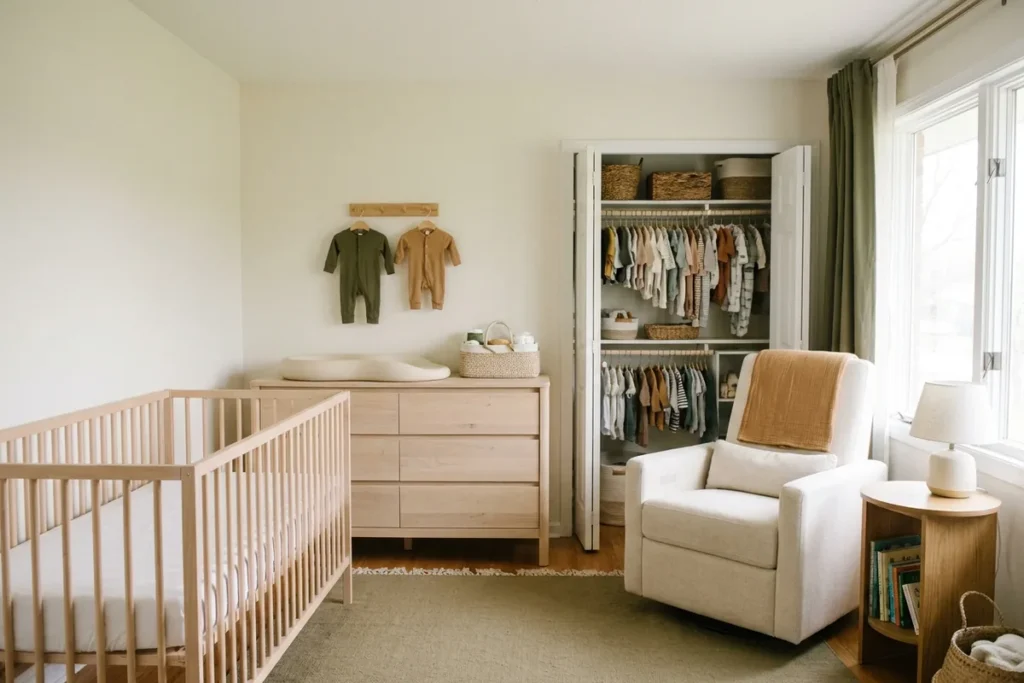
Good nursery organization starts with a map, not a shopping cart. Most nurseries hold the same four jobs, which are sleeping, changing, dressing, and soothing. When each job gets its own station with its own supplies, the room runs smoothly, even during tired nighttime routines.
Give every job in the nursery its own station, and the clutter has nowhere to go.
Key takeawaysThe station map at a glance
- Sleep station: keep the crib bare and storage, shelves and cords away from it.
- Change station: safe supplies stay within the caregiver’s reach; creams and hazardous items stay secured and inaccessible to the child.
- Dress station: clothes are sorted by size in the dresser and the closet.
- Soothe station: keep useful supplies near the chair without blocking the walkway or creating a cord hazard.
Most nursery clutter is not a storage problem at all. It is a placement problem, where supplies drift away from the spot where they are actually used and then pile up somewhere random.
A station map fixes that drift by giving each supply a clear home near its job. Diapers belong at the changing pad, pajamas belong near the dresser, and burp cloths belong beside the chair you feed in.
This guide walks through each station, then shows how to keep the whole room steady as the baby grows. The system follows the SetsQuick method, Sort, Edit, Type, Store, applied to one room at a time.
Why does nursery organization fall apart so quickly?
A nursery changes as your baby grows: clothes stop fitting, needs shift and gifts may arrive before you decide where to store them.
Each of those changes is small on its own. Together, they mean the room never settles into one stable layout for long, so even a well planned setup needs regular small adjustments.
Tired routines speed up the slide. During a late feeding, a burp cloth gets dropped on the dresser and a bottle lands on the windowsill, because the right spot is a few steps too far away.
Those small detours add up. After a few days, the changing area holds clothes, the chair holds diapers, and the closet floor holds a bag of hand-me-downs that nobody has had time to sort.
Placement can make routines easier: keep appropriate supplies conveniently stored without putting hazardous items within a child’s reach.
How do you plan nursery organization around stations?
Start by walking the room and naming the four jobs. Mark where the crib, the changing pad, the dresser, and the feeding chair sit, since those anchors decide where every station will form.
Then list what each job needs on a normal day. Keep the list short and practical, because a station only works when it holds the daily items and leaves the backups somewhere else.
Four flexible stations: Keep the sleep space bare; arrange changing supplies within the caregiver’s reach but outside the baby’s reach; group clothes by fit; and keep the feeding area clear and safe.
Sort supplies in manageable groups, setting aside outgrown clothes and items you no longer need. Keep the baby safely supervised while you work.
Group the remaining items by the job they serve rather than by type. A pack of wipes belongs with the changing pad, while a spare pack can join the backups in the closet.
That grouping turns a messy pile into four short kits. The steps below apply the SetsQuick method to those kits, so each station ends up stocked, labeled, and easy to reset.
- Sort by job: place each item with sleep, change, dress, or soothe.
- Edit the extras: donate clean, safe, usable surplus and store outgrown sizes out of the way.
- Type each kit: decide which items are daily and which are backups.
- Store safely: place suitable daily supplies within adult reach, while keeping hazardous items locked and inaccessible to children.
Before a routine, check that essential supplies are accessible without compromising safety. If a supply is missing during a change, place the baby safely elsewhere before fetching it.
Write the station names on simple labels as well. Clear labels help every caregiver, including grandparents and sitters, return supplies to the right place without asking where things go.
What belongs at the sleep and change stations?
The sleep station is the simplest one, because the crib itself should stay empty. The Consumer Product Safety Commission advises Bare is Best, which means only a fitted sheet in the crib, with no blankets, pillows, or bumpers. See the CPSC safe sleep guidance for the full list.
Store spare sheets and sleep sacks in a secure drawer or closet away from the crib. Keep shelves, hanging objects, lights and cords away from the sleep area and outside the child’s reach.
Before each change: Gather supplies first, keep hazardous products locked and inaccessible, and never leave the baby unattended. Use a changing product only as its manufacturer directs.
The change station needs supplies within the caregiver’s reach but outside the baby’s reach. Never leave a baby unattended, even briefly, and keep a hand on the baby during changes. Follow the changing product’s attachment, restraint and use instructions; use it on a dresser only if both manufacturers approve the combination. If you need to fetch anything, place the baby in a safe location first. See changing-table safety guidance.
Keep diapers and wipes in a stable caddy in a manufacturer-permitted location beside the changing area, not where the baby can grab them or where they obstruct the pad. Store creams, medicines, sharp items and small parts in locked, inaccessible storage; an open caddy is not suitable for hazardous supplies.
Store backup diaper boxes in a secure, accessible spot away from the changing surface and out of the child’s reach. Use underneath storage only as the furniture manufacturer permits.
Place a diaper pail where it will not obstruct the walkway. Keep bags and liners secured and inaccessible to children.
Restock diapers and wipes when convenient, before starting a change. Never leave a baby waiting unattended on the pad.
How do you set up the dress and soothe stations?
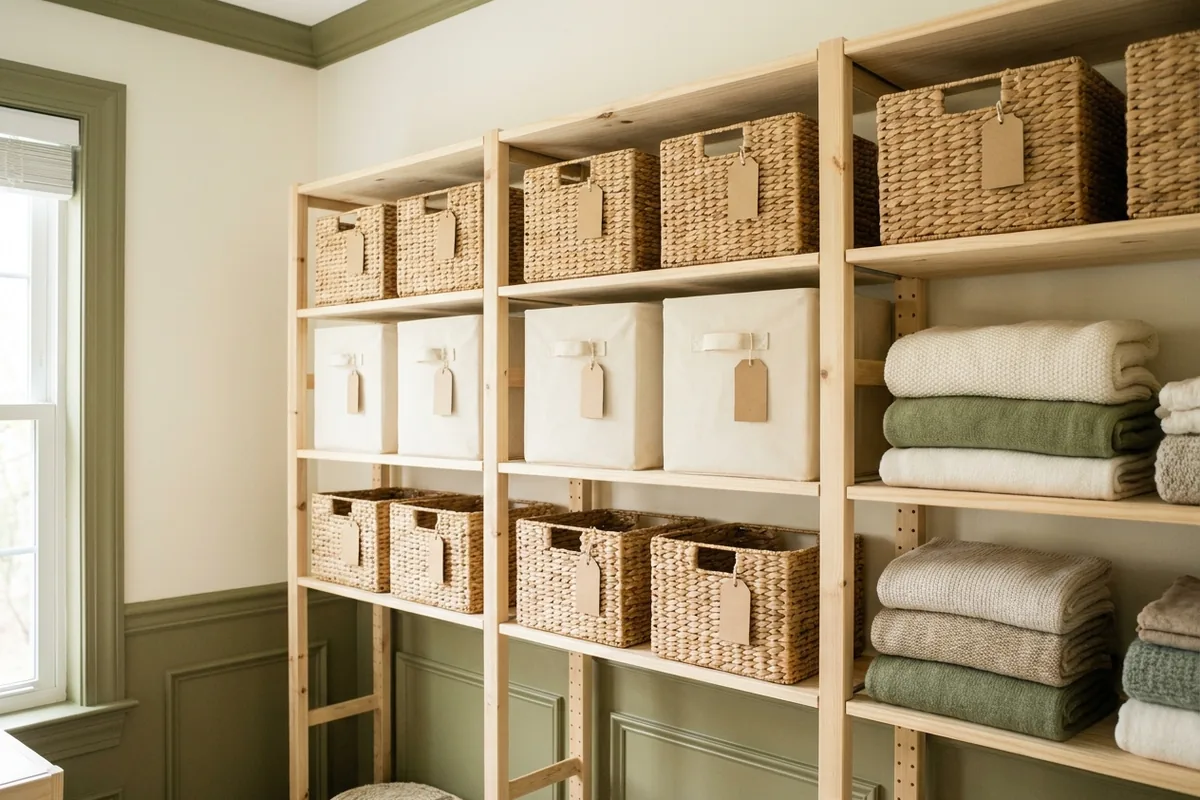
The dress station covers the dresser and the closet together. Daily outfits, pajamas, and socks go in the top drawers, while larger sizes and seasonal clothes wait on a closet shelf in labeled bins. Use the nursery closet organization guide to divide hanging space and shelves by size.
Group clothes by approximate fit, keeping pieces that fit and the next size convenient. Set aside individual garments as they become snug; labels and fit can differ by brand.

Anchor the dresser to the wall before filling it. The CPSC Anchor It campaign explains how furniture tip-overs happen and why anchoring every dresser matters in a room where a child will climb.
The soothe station centers on the feeding chair. Keep burp cloths, a water bottle, a small light, and a book within arm’s reach of the seat, so a long feeding never needs a trip across the room.
A stable side table or a suitable chair pocket can hold a small kit. Keep cords and small items out of the child’s reach, and keep baskets and other objects out of walking paths.
Keep the soothe kit small on purpose. When the basket only fits the essentials, it stays easy to restock, and it never grows into a second pile that slowly takes over the chair.
What keeps nursery organization working as the baby grows?
The biggest threat is drift, where items slowly leave their stations and pile up in the wrong place. Watch for a crowded dresser top or a chair full of supplies, since both are early signs that a kit needs a reset.
A second threat is outgrown clothing that stays in the active drawers. Keep an empty bin on the closet shelf, and drop each outgrown piece into it the moment you notice the fit is too snug.
A third threat is new gear without a home. Every time something arrives, decide which station it belongs to, or whether it should go into backup storage, before it lands on the floor.
Strong nursery organization adapts instead of starting over. As the baby grows, the stations stay the same while their contents change, so a quick weekly reset keeps the system working through each new stage.
That steady approach is what makes nursery organization last. You are not building a perfect room once, you are keeping four small stations stocked and close to the jobs they serve.
For more tight-space systems, explore the small space organizing guides, or grab the free reset checklist to plan your first full pass through the room.
How do you organize a nursery on a small budget?
Good nursery organization does not need a cart full of matching bins. Most of the work comes from deciding where things go, and the containers can be simple. A small budget often leads to a better system, because you buy only what the room proves it needs.
Start with what you already own. Shoe boxes make good drawer dividers for socks, bibs, and hats. A clean basket can hold suitable supplies if it does not obstruct the walkway. Keep bags, straps and hooks away from the crib and changing area and outside the child’s reach.
If you can, use existing safe storage first and let real routines show where the gaps are. You may find you need a caddy at the changing station but no extra shelves at all, which saves both money and floor space.
When you do buy, choose pieces that will outlast the baby stage. A simple bookcase, plain fabric bins, and wall hooks work in a toddler room, a home office, or a closet later. Themed nursery furniture rarely moves to a second job.
Labels cost almost nothing and do a lot of the work. Masking tape and a marker are enough to mark bins by size or by station. They help every caregiver put things back in the same place.
Finally, set a rule for new purchases. Before anything comes into the nursery, decide which station it belongs to and what it replaces. That habit keeps the room light, the budget steady, and the system easy to reset each week.
A simple reset: Return items to safe storage, restock daily supplies and set aside garments as they become too snug.
Frequently asked questions
Where do you start with nursery organization?
Start by identifying the sleep, change, dress and soothe areas. Sort supplies in manageable groups, donate clean, usable surplus and keep necessary items accessible to the caregiver without compromising child safety.
Can you store anything inside the crib?
No. The CPSC recommends that the crib hold only a fitted sheet, with no blankets, pillows, bumpers, or toys. Keep spare supplies in a secure drawer or closet away from the crib. Keep shelves, hanging objects and cords out of the sleep area and outside the child’s reach.
How do you organize a changing station?
Set up an approved changing product according to its instructions. Keep diapers, wipes and a spare outfit within the caregiver’s reach but outside the baby’s reach, and keep creams and small or hazardous items secured. Never leave the baby unattended. Gather supplies before starting; if something is missing, place the baby safely elsewhere before fetching it.
What should go next to the nursery chair?
Keep a soothe kit within arm’s reach of the seat. Good items include burp cloths, a water bottle, a small light, and a book. Choose a stable table or suitable chair pocket; keep cords and small items out of the child’s reach and leave the walkway clear.
How do you keep a nursery organized long term?
Run a quick weekly reset that returns drifting items to their stations. Keep an empty bin on the closet shelf for outgrown clothes, and give every new item a home before it lands on the floor. The stations stay the same as the baby grows, while their contents change with each stage.
Does nursery organization work in a small room?
Yes, because stations depend on placement rather than square footage. Two stations may share furniture only where the manufacturers permit that use, such as an approved dresser-and-changing-unit combination installed correctly. Keep shelves, cords and loose items away from the crib and changing area, and never trade safety clearance for storage capacity.
Written by the SetsQuick Team. First published · Last updated .
© SetsQuick. This article and its images may not be copied or republished without permission. To report reuse, see our DMCA page.
Was this guide helpful?
Save it for later or send it to someone