
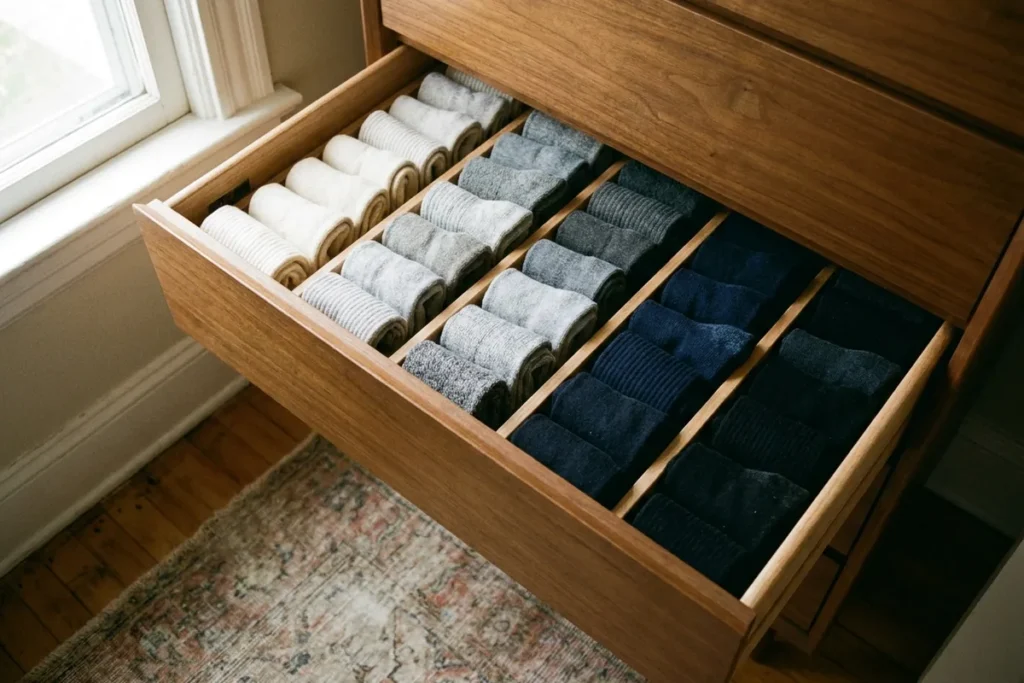
Sock drawer organization starts with visibility: store pairs so you can identify them from above. Flat folding, loose rolling or separate cells may each work, depending on the sock and drawer. Choose a method you can maintain and follow the garment’s care instructions rather than assuming one fold protects every elastic cuff.
Try filing socks upright in rows so pairs are easier to see.
Key takeawaysFour rules for a sock drawer that stays sorted
- Match before storing: only complete pairs go into the drawer.
- Choose a manageable fold: keep pairs visible without forcing the cuff; follow the garment’s care instructions.
- File upright: pairs stand in rows so each one shows from above.
- One lane per type: dress, athletic, casual, and cozy socks each get a lane.
Socks seem like the easiest thing in the dresser to store. They are small, soft, and light, yet the sock drawer is often the messiest drawer in the house.
The trouble comes from volume and sameness. Most people own many pairs that look alike, and when they are tossed in loose, matching them turns into a daily puzzle.
Lost singles add to the clutter. One sock goes missing in the laundry, and its partner stays in the drawer for months, taking up space and slowing every search.
This guide explains how to sort, fold, and file socks so the drawer stays consistently neat. It follows the SetsQuick method, Sort, Edit, Type, Store, and finishes with habits that keep pairs together through laundry day.
Why does a sock drawer get messy so fast?
Socks pile up because they are small and numerous. A single drawer may hold twenty or more pairs, and loose socks shift into one mound each time the drawer opens or closes.
A tightly packed bundle can hide a pair’s color and length. If folding a cuff around the pair puts it under obvious tension, try a looser fold or a separate cell. This is a storage preference, not a tested claim that a particular fold causes every sock to lose elasticity.
Similar socks create confusion. Black dress socks, navy socks, and dark gray socks look almost identical in a dim drawer, so people grab the wrong pair or give up and wear mismatched ones.
Laundry is another cause. Socks come back from the wash unmatched, and if there is no routine for pairing them, they go into the drawer loose and stay that way.
The drawer itself can work against you. A deep drawer lets socks sink into layers, and the pairs at the bottom rarely get worn because nobody wants to dig for them.
Each of these problems has a simple fix. Good sock drawer organization uses folding, upright filing, and dividers to keep every pair visible, separated, and easy to grab.
How do you start sock drawer organization?
Empty the drawer onto a bed or table so you can see the collection, including stray singles. If it is part of a dresser, anchor the dresser to the wall according to the manufacturer’s instructions and open only one drawer at a time.
Wipe out the drawer before anything goes back. Lint, dust, and stray threads gather in sock drawers, and a clean, dry base helps the new system start fresh.
Match every pair you can. Lay pairs side by side, and set unmatched singles in a separate pile so they do not get mixed back into the collection.
Next, edit the collection. Remove socks with holes, thin heels, or worn elastic, since damaged socks are uncomfortable and rarely chosen when better pairs are available.
Look at how many pairs you actually wear. Most people reach for the same small group every week, and the rest sit untouched for months at the bottom of the drawer.
Give unmatched socks a review point that suits your laundry routine. Reuse suitable clean socks if useful, or check a local textile collection program’s current acceptance rules before donating or recycling; worn socks are not accepted everywhere.
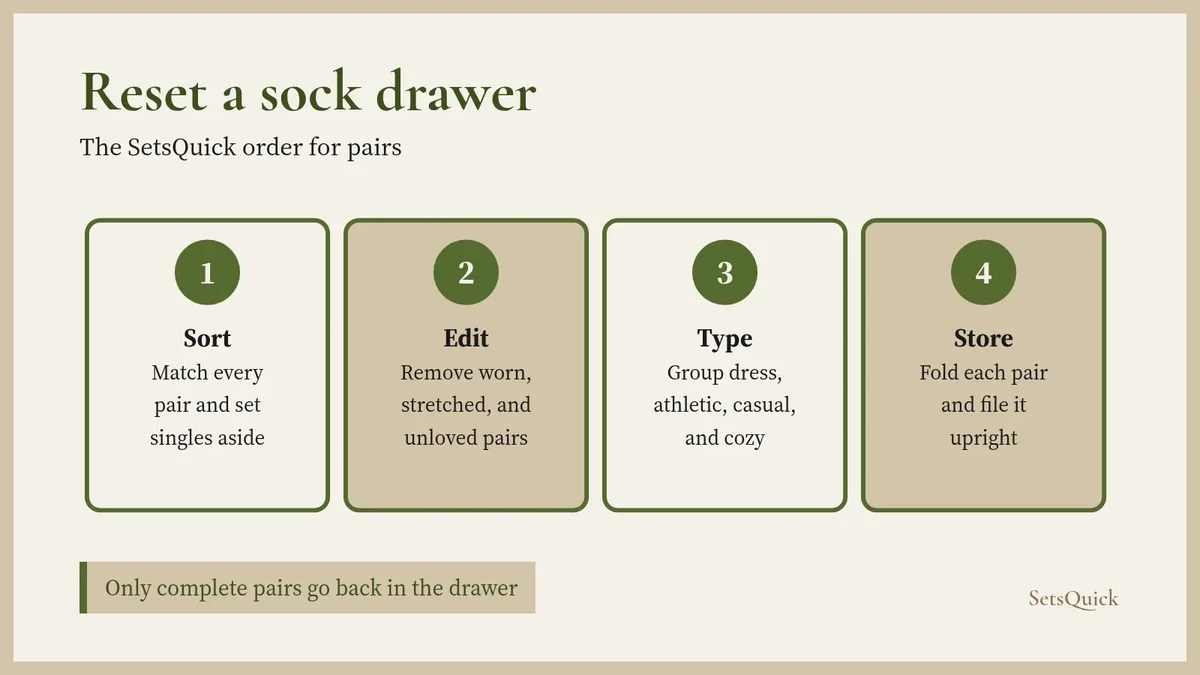
The steps below apply the SetsQuick method to the sock drawer, from first sort to final layout.
- Sort: match every pair and separate the singles.
- Edit: remove worn, stretched, and unloved pairs.
- Type: group pairs by dress, athletic, casual, and cozy.
- Store: fold each pair and file it upright in its own lane.
Count the pairs in each group once editing is done. These counts show how many lanes the drawer needs and how wide each lane should be before you buy dividers.
How should you fold socks for a drawer?
A flat fold is one useful option for keeping pairs visible and filing them upright. A loose roll or separate cells may work better for other socks. Follow the manufacturer’s care and storage advice, especially for wool or compression garments; there is no universal winning fold.
For ankle socks, lay one sock on top of the other and fold them in half. The result is a small rectangle that stands upright and fits easily into a narrow lane.
For crew socks, lay the pair flat and fold it into thirds. Fold the toe up to the middle, then fold the cuff down over it, creating a compact rectangle that stands on its edge.
For knee socks and compression socks, follow the garment manufacturer’s care and storage directions. Use only a fold or loose roll that does not strain, crease or damage the particular garment; do not assume the same method suits every compression product.
Thick wool and cozy socks need more room. Fold them in half only, since extra folds make them too bulky to stand, and give them a wider lane near the back of the drawer.
No show socks are tiny and easy to lose. Stack each pair together and fold once, then keep them in a small container so they do not slip under larger folded socks.
Choose a fold that fits: Try a flat fold or loose roll without forcing the cuff. For wool, compression garments, or other delicate items, follow the manufacturer’s care and storage instructions.
Practice the fold a few times and it becomes quick. Folding a full load of socks takes only a few extra minutes, and it saves far more time on busy mornings. Teach the same fold to everyone in the household, so every pair returns to the drawer in a consistent shape.
Which dividers work best in a sock drawer?
Dividers turn a pile into a system. They hold folded pairs upright, keep each type in its own lane, and stop socks from sliding when the drawer opens.
Honeycomb dividers are a popular choice. Each small cell holds one folded or rolled pair, which works well for people who like to see every pair as a separate unit.
Long adjustable dividers suit upright filing. They create lanes from front to back, and each lane holds a row of folded pairs, so you can fit more socks in the same space.
Fabric bins are another option. Soft bins in different sizes can hold each sock type, and they lift out easily when you need to clean the drawer or rearrange the layout.
Measure the drawer before buying dividers. Record the inside width, depth, and height, and compare those numbers to the divider sizes, leaving a little room for the drawer slides.
Height matters for upright filing. Folded crew socks usually stand a few inches tall, so check that the drawer height allows them to stand without catching on the frame above.
Consider material and maintenance, too. Plastic dividers wipe clean easily, bamboo dividers feel sturdy and attractive, and fabric organizers are lightweight, though they can collapse when partially empty.
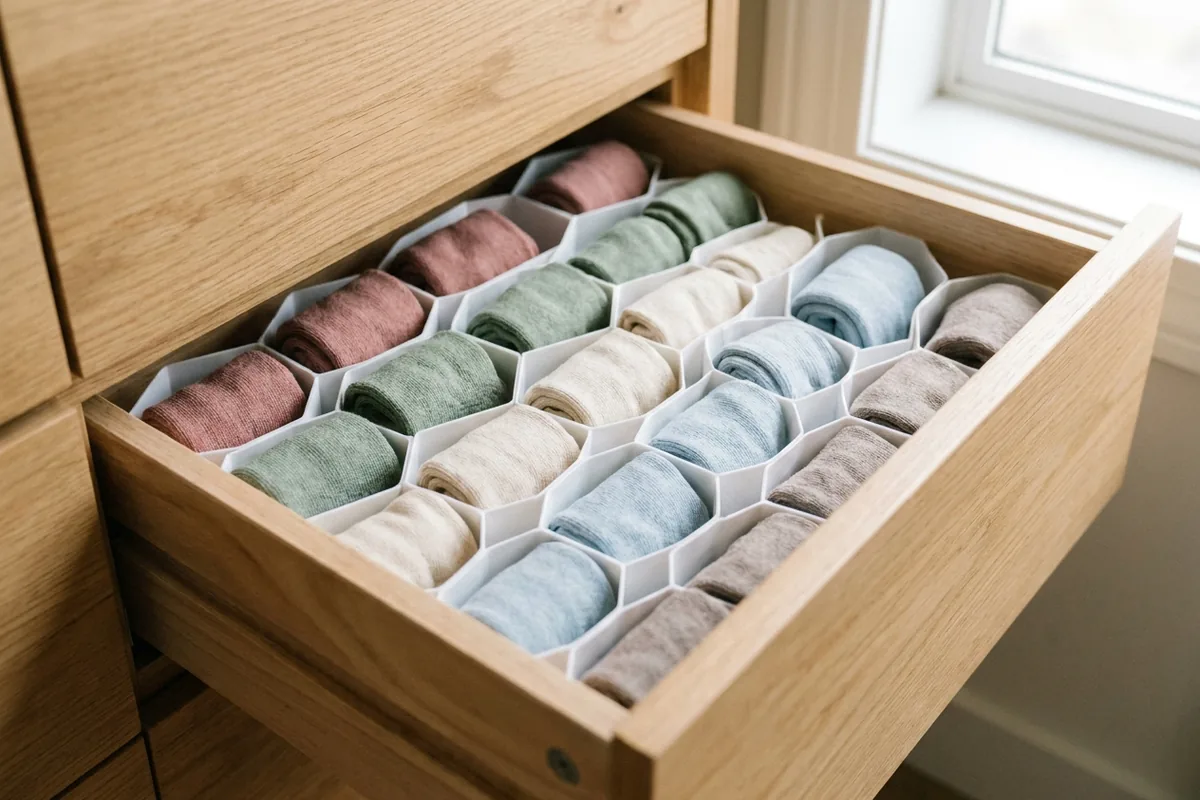
Strong sock drawer organization uses dividers that match your folding style. Honeycomb cells suit rolled pairs, while long lanes suit folded pairs filed in rows.
How should socks be grouped in the drawer?
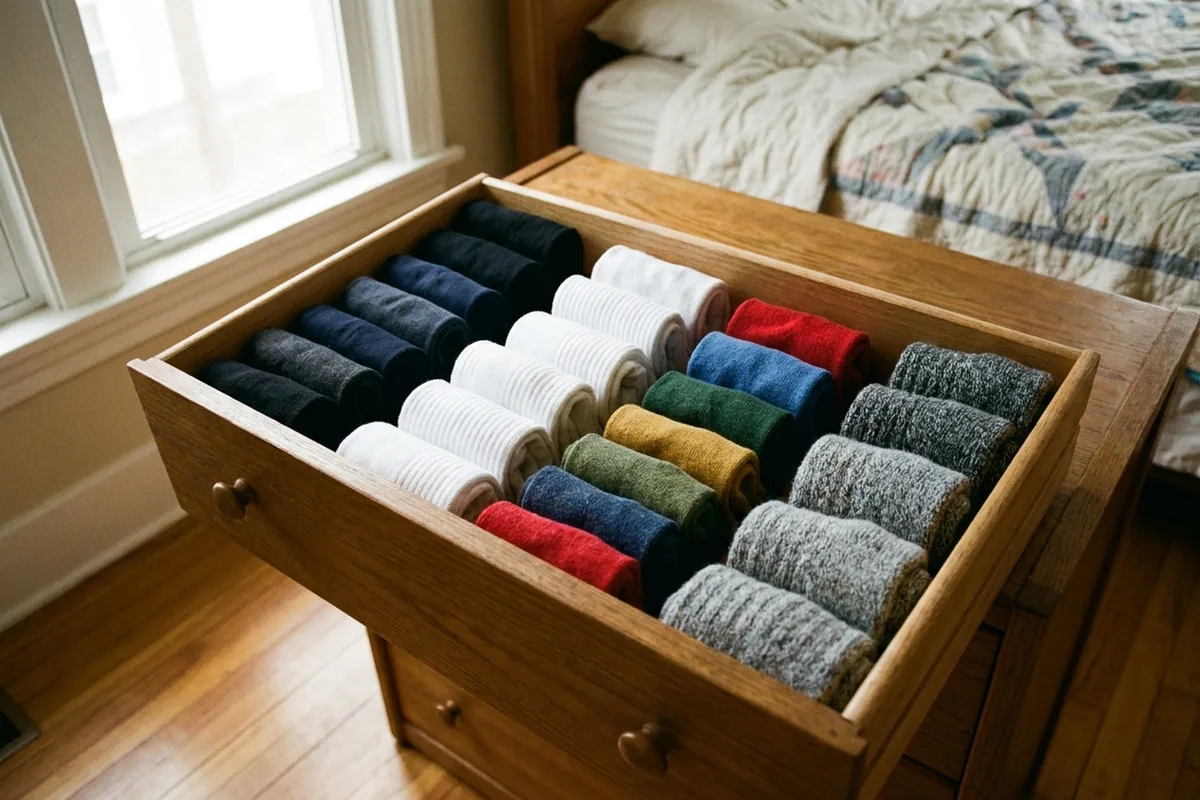
Group socks by what you do in them. Dress socks, athletic socks, casual everyday socks, and cozy house socks each serve a different purpose, so each type deserves its own lane.
Put the pairs you wear most at the front. Everyday socks should be easy to grab without looking, while dress socks and special pairs can sit a little farther back.
Within each lane, sort by color. Arrange pairs from light to dark, so finding a specific color takes one glance rather than a careful search through similar shades.
Separate black and navy socks clearly. These two colors are the hardest to tell apart, so give them separate lanes or place a small divider between them to prevent mistakes.
Seasonal socks can rotate in and out. Store thick wool socks in a bin during warm months, then swap them forward when the weather turns cold and lighter pairs move to the back.
Workout socks often need extra space. If you exercise often, give athletic socks the widest lane, since you may need a fresh pair every day of the week.
Shared dressers need clear boundaries. When two people use one drawer, assign separate halves or separate dividers, so each person’s socks stay distinct and nobody borrows the wrong pair by accident.
Thoughtful sock drawer organization reflects your daily routine. When the drawer layout matches how you dress, socks go back in the right place naturally and stay sorted.
How do you keep sock pairs together after laundry?
Laundry is where most pairs get lost. Socks slip between other clothes, cling to sheets, or fall behind the washer, so a simple routine helps keep every pair together.
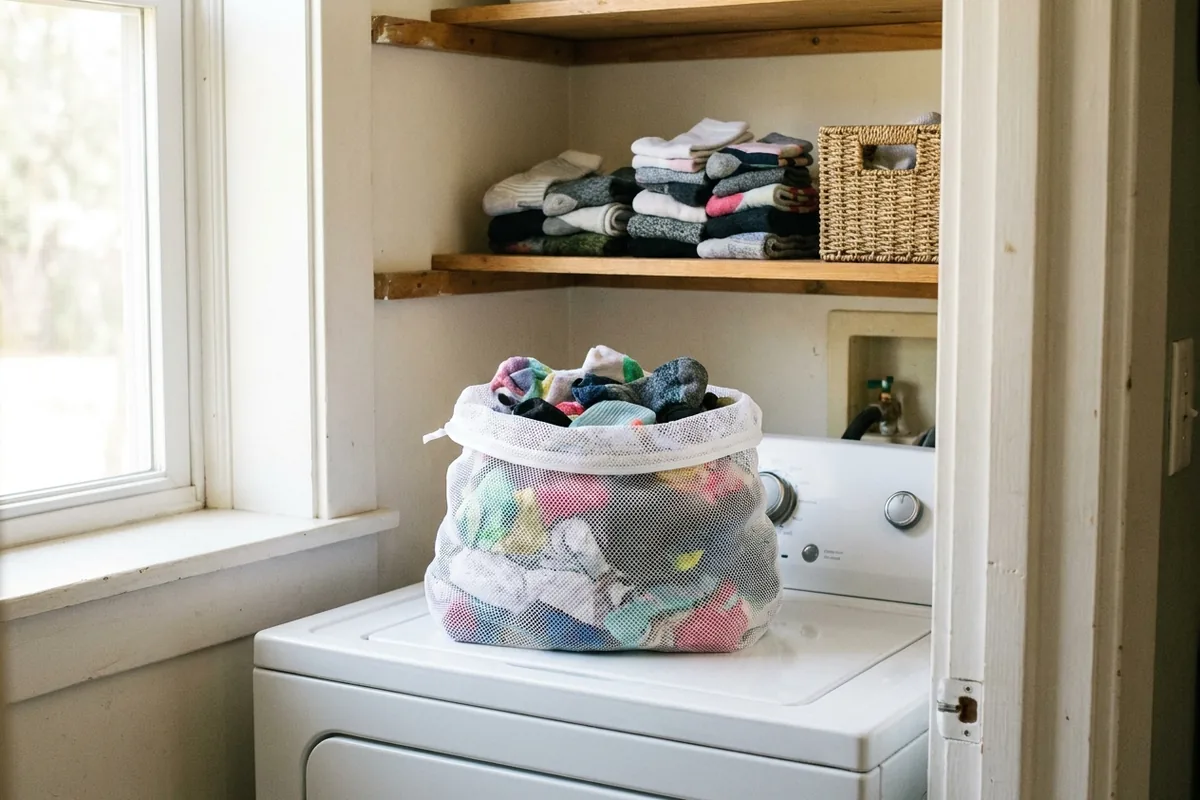
A mesh laundry bag can help contain socks in the wash. Follow the socks’ care labels and the bag manufacturer’s instructions, avoid overfilling it, and use a dryer only when both permit it.
Once socks are completely dry, pair and fold or roll them before putting them away.
Keep a small singles bin in the laundry area. When a sock comes out alone, place it in the bin and check it each laundry day, matching partners as they turn up.
Buy multiples of the same sock when possible. Several identical pairs make matching easy, since any two socks form a pair, and a lost single no longer ruins the set.
Review the singles bin regularly, but choose your own deadline. Reuse suitable clean singles or use a local collection route that explicitly accepts their material and condition; do not assume ordinary recycling accepts textiles.
What sock drawer mistakes should you avoid?
Overstuffing is the most common mistake. When lanes are packed too tightly, folded pairs get crushed, and removing one sock pulls several others out of position. Leave a finger’s width of space in every lane.
Keeping too many pairs creates similar trouble. Extra socks rarely get worn, yet they occupy valuable space and hide the favorites. Regular editing keeps the collection proportional to the drawer.
Mixing hosiery with everyday socks causes snags. Tights and sheer stockings catch easily on rough fibers, so store them separately in a smooth pouch or a dedicated compartment.
Skipping regular maintenance also undermines the system. A monthly five minute review, removing damaged pairs and straightening lanes, keeps sock drawer organization working without a complete overhaul.
Avoid storing damp socks, which can develop odors or mildew. Check that they are fully dry before putting them away.
For more closet and drawer systems, browse the closet guides and the whole home guides, or start with the free reset checklist.
Frequently asked questions
What is the best way to organize a sock drawer?
Match every pair, remove worn socks, and group the rest by dress, athletic, casual, and cozy. Choose a suitable flat fold or loose roll, then use lanes or cells if they help you see the pairs. Keep everyday socks at the front and sort each lane from light to dark.
Is it better to fold or roll socks?
Choose the fold or loose roll that suits the garment’s instructions and your drawer. Upright flat folds can improve visibility, while cells may suit rolled pairs. Do not treat either method as a proven way to preserve every sock’s elasticity.
How do you keep socks from getting lost?
A mesh laundry bag may help keep socks together; follow garment and bag instructions. Pair them after they are completely dry. Keep a small singles bin for lone socks and check it each laundry day. Buying several identical pairs also helps, because any two socks will form a matching pair.
How many pairs of socks should you keep?
It depends on how often you do laundry and how active you are. Many people keep enough everyday pairs for about one to two weeks, plus a few dress and athletic pairs. Count what you actually wear, and let the drawer size set the upper limit.
What should you do with single socks?
Choose a review point, such as after a few laundry cycles. If a partner does not appear, consider safe reuse or a textile collection service that accepts that exact item and condition. Follow local rules rather than putting socks in ordinary recycling.
Written by the SetsQuick Team. First published · Last updated .
© SetsQuick. This article and its images may not be copied or republished without permission. To report reuse, see our DMCA page.
Was this guide helpful?
Save it for later or send it to someone