
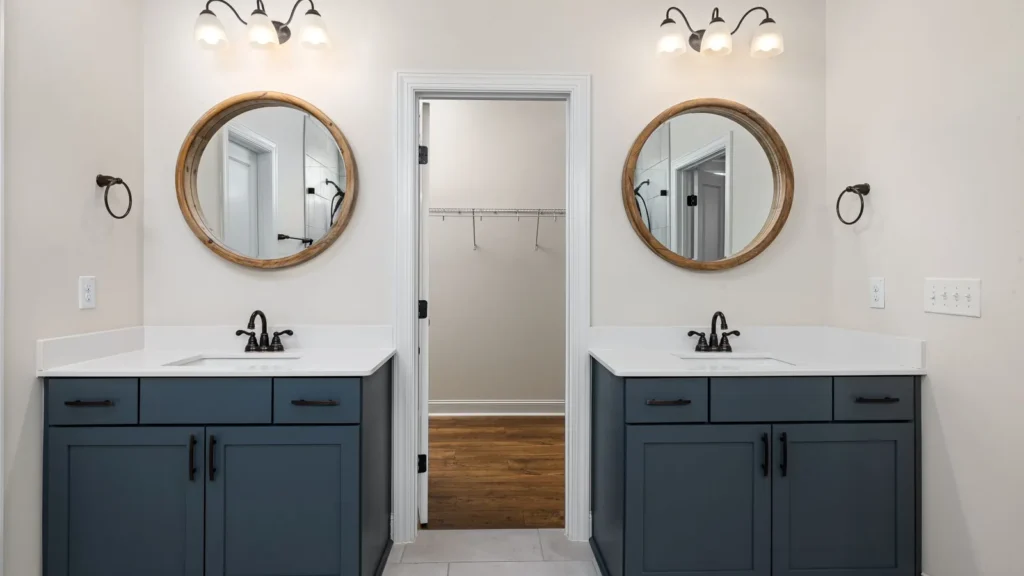
You open the vanity, and bottles tip over against the drain pipe while the spray you need hides at the back. Storing cleaning supplies under a bathroom sink works when you plan around the pipe. This guide maps the trap with tape, splits the cabinet into lanes, and shows the early sign of a leak.
Key takeawaysDecide these before you buy a single organizer
- Identify the pipe, valves and door opening before measuring; tape on the cabinet floor can help mark their positions.
- Plan storage around the actual pipe and valves; use side lanes or space below the trap only where they fit safely.
- Keep only bathroom cleaners here, and move spare paper goods and extra refills to a closet shelf.
- Use a removable, washable tray where it fits, and inspect the cabinet and plumbing regularly for moisture.
Why is the space under a bathroom sink so hard to use?
A bathroom vanity looks like an open box, but the drain changes everything. The drain typically includes a curved trap, but its position and the route of the drain vary. Both the trap and the connected pipes limit the space available for bottles.
Supply lines and shutoff valves add obstacles; their number and positions vary. Keep containers clear of plumbing and leave the shutoffs accessible without moving storage.
Most bathroom cabinets are also shallow compared with kitchen cabinets. The door frame narrows the opening, and a center stile on double doors can block the middle even further. The layout may leave side pockets and some space beneath the trap, but measure your own cabinet rather than assuming those areas are usable.
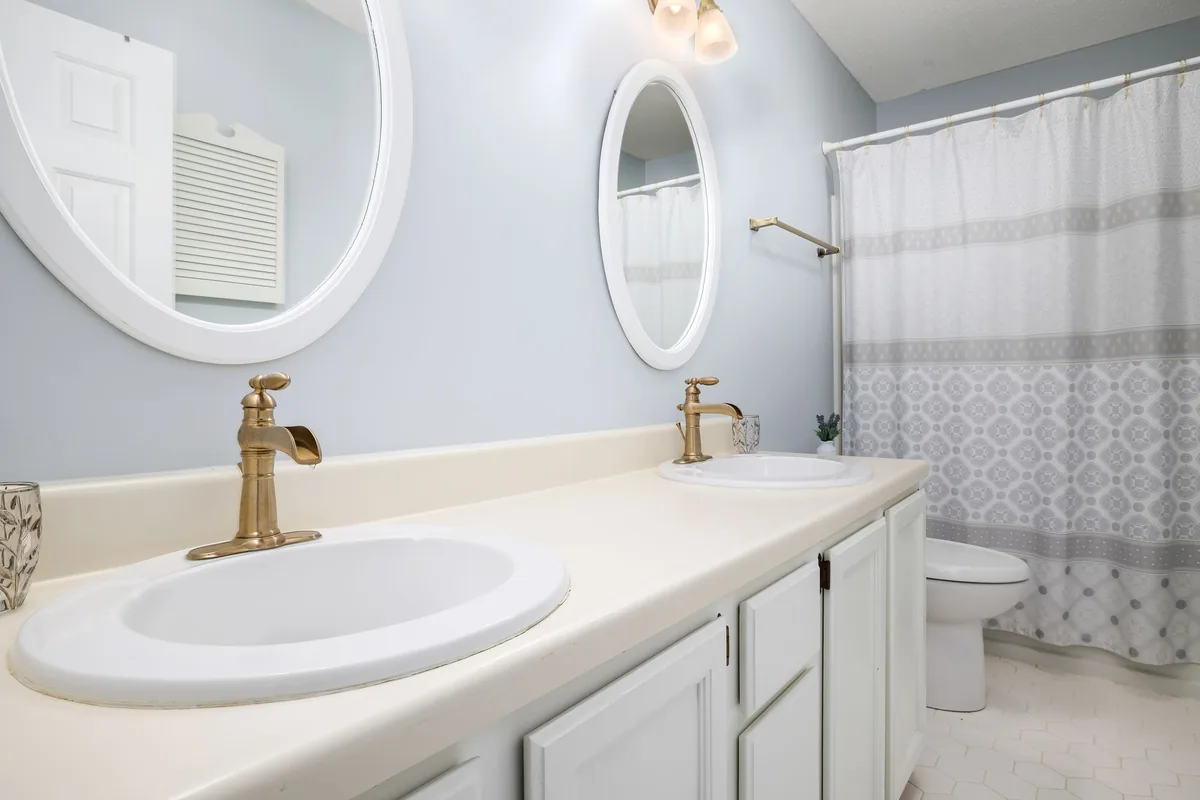
Store bought organizers rarely match that shape. A two tier rack that looks neat in a photo may be too tall for the space under the trap, or too deep to clear the valves. The result is a rack pushed to one side with bottles piled around it.
Storing cleaning supplies under a bathroom sink therefore starts with the pipe, not the product. Once you know exactly where the trap, the valves, and the door frame sit, choosing containers becomes simple, because each lane has a clear width, depth, and height.
What should you measure before you buy anything?
Empty the cabinet completely and wipe the floor dry. If useful, mark the pipe’s footprint with removable masking tape on the cabinet floor. Note where the valves, supply lines and door frame restrict access, without putting pressure on plumbing.
Use your pipe map to guide four measurements. Record the numbers and note any areas that must remain clear.
- The width of the left lane, from the side wall to the nearest edge of the pipe.
- The width of the right lane, from the pipe to the other side wall.
- The usable depth in each area, accounting for the door, hinges, valves and other obstructions.
- The height under the lowest point of the trap, from the floor to the bottom of the bend.
Measure the door opening as well, because a container that fits inside the cabinet may not pass through the frame. Allow room to move the chosen container in and out without disturbing plumbing or spilling its contents.
Check the hinge side too. Hinges can project into the opening, so measure around them and confirm that a caddy can be removed without hitting them.
Use the space below the trap only if an item fits with clearance and does not block inspection or touch the plumbing. A shallow removable tray or dry cloths may fit; keep chemical bottles upright and follow their labels.

Use those measurements and the door opening to compare containers before buying.
What should never be stored under a bathroom sink?
A bathroom sink cabinet may be damp and within reach of small children or pets. That makes it a poor home for anything that reacts badly to moisture or that could hurt someone who opens the door without an adult nearby.
Never mix household bleach or any disinfectant with another cleaner or disinfectant; dangerous vapors can result. This rule is not limited to ammonia. Follow the CDC guidance on bleach safety. Keep products tightly closed in their original labeled containers and follow each label’s storage and incompatibility instructions. Separate bins do not make incompatible products safe to store together or mix.
Paper goods also do badly here. Spare toilet paper and tissues soak up humidity and any drip from the trap, so they are better kept on a closet shelf. The same goes for medicine, which should stay in a cool, dry place away from the sink.
Keep products out of sight and reach of children and pets, in locked storage where children are present. A child-resistant lock is an added safeguard, not a substitute for supervision. Keep products inaccessible while organizing as well as afterward. If this cabinet cannot meet product labels’ storage requirements or cannot be secured, use another location. See Health Canada’s storage guidance.
How to store cleaning supplies under a bathroom sink step by step
With your measurements and pipe map, work through these steps before buying storage.
- Sort tightly closed products in a secure place out of reach of children and pets, following their labels; group daily cleaners, weekly cleaners and items that belong elsewhere.
- Remove every item from the third group and take it to its new home before you continue.
- Place a removable washable tray or liner where it fits without touching the plumbing or blocking inspection; do not conceal moisture beneath it.
- If it fits safely, put an upright caddy for compatible daily cleaners in an accessible lane, clear of valves and pipes.
- If space permits, use a separate suitable bin or pull-out basket for compatible weekly cleaners and refills, following their labels.
- Use any space beneath the trap only for items that fit without touching plumbing or obstructing inspection.
- If useful, add a small hook for gloves only where it clears the plumbing and stored items when the door closes; check the mounting instructions and cabinet material first.
- Open and close the door gently to confirm nothing touches the plumbing or obstructs the valves.
An accessible caddy can make cleaning easier. When you clean, you lift the whole caddy out and carry it to the tub or toilet, then return it in one move. That single habit keeps the cabinet tidy because nothing gets put back one bottle at a time.
Choose a caddy no taller than the lane allows with the door closed. Measure a bottle of your tallest spray while it stands in the caddy, since the handle often adds a few inches. If the caddy scrapes the frame, it will soon be left outside the cabinet.
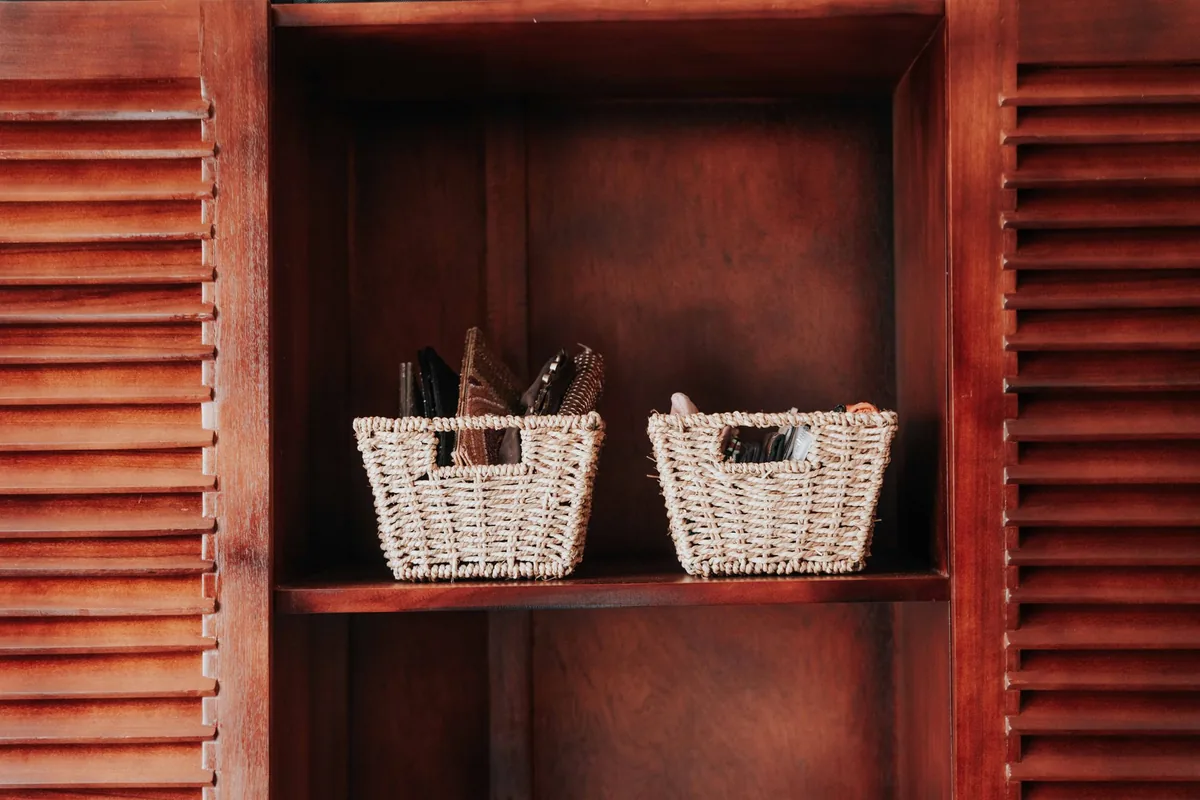
A pull out basket in the second lane helps with depth. Weekly cleaners and spare refills tend to drift to the back, where they sit next to the valves. A basket that slides forward brings the back of the lane to you, so you never reach blindly past the pipe.
What is the five minute version?
If you only have five minutes, do the three steps that matter most. First, take out anything that does not belong in a bathroom, such as paper towel packs, kitchen cleaners, or empty bottles, and put those items where they really live.
Second, inspect the cabinet for moisture and use a removable washable tray where it fits without obstructing the plumbing. Third, group compatible, tightly closed cleaners in a caddy that fits without touching pipes or valves. Keep them locked and inaccessible to children and out of reach of pets.
More detailed measuring and any additional storage can wait until you have time. A tray may make moisture easier to notice, but it does not prevent leaks or replace regular inspection.
It also shows you how much actually belongs in the bathroom. That makes the full setup faster later, because you already know how many bottles each lane must hold.
What goes wrong under a bathroom sink?
The most serious failure is water damage to the cabinet floor. Most vanity floors are made of particleboard, which swells and softens when it stays wet. A slow drip from the trap or a supply line can soak the board for weeks before anyone looks, because bottles and bins hide the surface.
Check the tray, cabinet floor and accessible plumbing regularly for dampness or stains, including beneath the tray. If you see moisture, identify the source before touching it: a cleaning-product spill needs the product label’s precautions, not a water-leak test. For a suspected plumbing leak, seek a qualified plumber or contact the landlord; avoid disturbing pipes or valves.
A second failure is the rack that blocks the valves. A tall wire rack pushed against the back wall can leave no room to reach the shutoff handles in an emergency. Before settling on a layout, make sure the available shutoff valves remain accessible without moving stored items.

The third failure is the slow return of mixed items. A new bottle of glass cleaner arrives, there is no space in the caddy, and it ends up lying on its side in the center strip. Within a month, the strip is full again and the tape map is buried.
Stop that drift with a one in, one out rule for the caddy. When a new product arrives, the oldest or least used one leaves. If a product has no clear place in either lane, it probably belongs outside the bathroom, in a shared cleaning closet or the laundry area.
How do you keep the cabinet working month after month?
Give the cabinet a two minute check each week when you clean. Lift out the caddy, look at the liner, wipe anything sticky, and put back only the bottles that still have product in them. Remove empty bottles according to the product label and local disposal guidance.
Every few months, empty the cabinet safely and check your recorded measurements. Replace the tape if it has peeled, and adjust the lanes if you have changed what you store. A new family member, a pet, or a new cleaning routine can shift what needs to be close at hand.
If your household keeps cleaning supplies in more than one place, set a clear rule for what lives where. Bathroom cleaners stay under the bathroom sink, while bulk refills and larger tools go to one shared shelf. That split stops the vanity from turning into the overflow for the whole house.
Stackable bins with lids can help on that shared shelf. Our guide to the best stackable bins for a rental pantry explains how to size them for a shelf you cannot drill. The same method suits a laundry or hall closet.
This approach follows the SETS method, which starts with sorting and editing before you buy any storage. You can see the same order applied to other rooms on the whole home hub, and the free 30-Day Home Reset walks you through one small space at a time.
A well planned vanity feels calm when you open it. You see the caddy, you see the dry liner, and you can reach both valves. If your cabinet looks like that after a month, the pipe is no longer in charge of the space.
Frequently asked questions
Is it safe to store cleaning supplies under a bathroom sink?
Only use this cabinet if each product’s label permits the conditions there and the products can be kept secure. Never mix bleach or any disinfectant with other cleaners or disinfectants. Keep chemicals closed in their original labeled containers, follow incompatibility instructions, and use locked, inaccessible storage where children are present. A tray or separate bin does not prevent chemical reactions or replace safe storage. Keep medicine and paper goods elsewhere.
How do you organize under a sink with pipes in the way?
Map the drain pipe on the cabinet floor with masking tape, then measure the width of each side lane and the height under the trap. Use any side or low areas only where containers fit, plumbing stays clear, valves remain accessible and product labels permit storage.
What is the best container for under a bathroom sink?
A narrow caddy with a handle works best for daily cleaners because you can carry the whole set to the tub and back. For the second lane, a pull out basket or a lidded bin keeps refills together and brings the back of the cabinet forward, so you never reach past the pipe.
How do I stop my bathroom sink cabinet from getting wet?
A removable washable tray and regular inspection can help reveal moisture, but they do not prevent leaks. Check the cabinet floor and plumbing, including beneath the tray. Keep shutoffs accessible and containers clear of supply lines; seek a plumber or contact the landlord for a suspected leak.
What should I keep under the bathroom sink?
Keep the cleaners you use in that bathroom every week, such as a toilet cleaner, a surface spray, a glass cleaner, gloves, a brush, and a few cloths. Move bulk refills, paper goods, medicine, and kitchen products to other places, so the cabinet holds only what earns its space.
Written by the SetsQuick Team. First published · Last updated .
© SetsQuick. This article and its images may not be copied or republished without permission. To report reuse, see our DMCA page.
Was this guide helpful?
Save it for later or send it to someone