
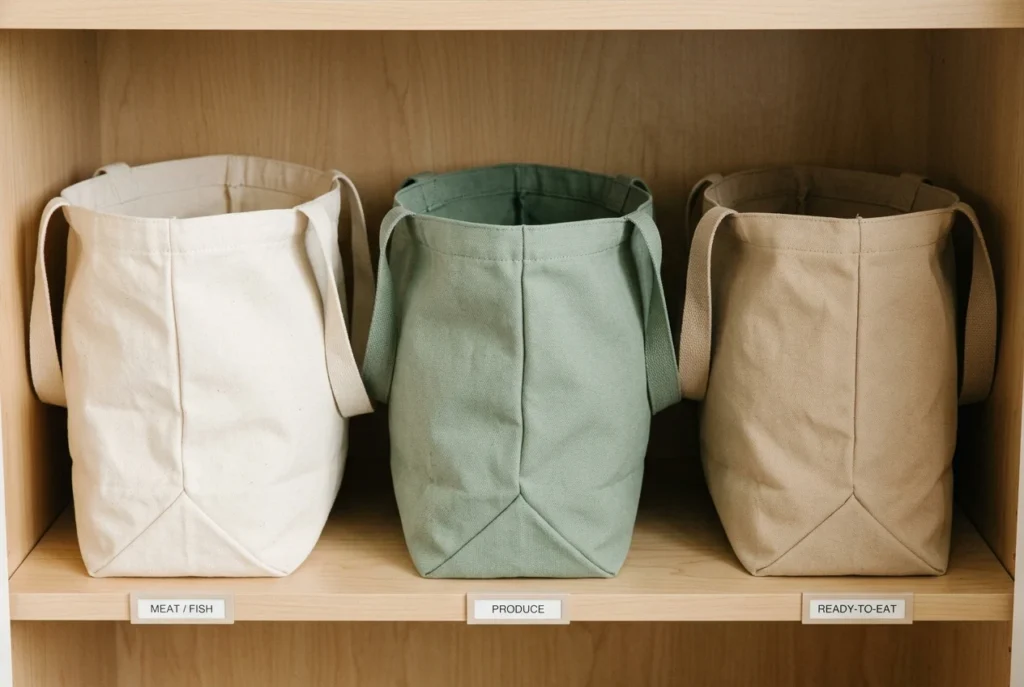
To store reusable shopping bags so they are ready for your next trip, keep grocery bags separate from non-food errand bags, finish the required cleaning and drying, and give ready-to-use bags a clean, dry home off the floor. Select the next trip’s bags from that ready group. Use a reminder near the exit if the bags themselves belong somewhere more suitable.
Cover image: AI-generated grocery-role illustration, not proof of cleanliness or safe food transport.
The short answer: think of the three zones as functions: care, ready storage, and a next-trip selection drawn from the ready group. They do not need three new containers or three separate physical locations. Keep the entrance and door movement clear.
This guide is about empty carry bags used for shopping, not reusable food-storage pouches, storing groceries, or choosing an insulated food-transport system. It combines public-health guidance with an original return-path record and fictional examples. We have not tested a household layout or a bag organizer, and a tidy storage setup is not a hygiene certification.
What should you sort before you store reusable shopping bags?
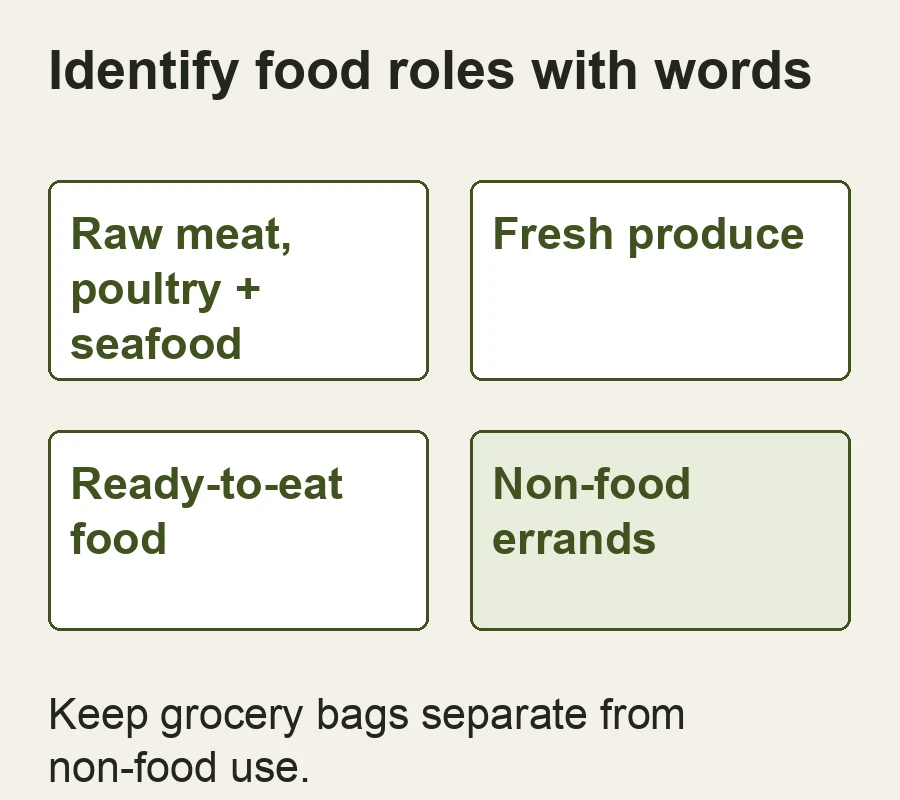
Empty the bags so you can see what each one is actually used for. Separate grocery bags from library, clothing, gym, or other errand bags. Then identify the grocery roles you need to keep distinct. A bag’s printed logo is not a dependable description of its job, especially when several people use the same collection.
New York State Department of Health guidance recommends separate bags for raw meat, fish or poultry; fresh produce; and ready-to-eat foods. It also says grocery bags should be used for food rather than other purposes. For raw meat, fish, and poultry, New York’s guidance recommends placing the packages in a disposable plastic bag before putting them in a reusable bag, then discarding the disposable bag immediately after use. Virginia Cooperative Extension similarly recommends separating food classes and keeping non-food items out of grocery bags.
Use words to identify each bag’s role, either on a suitable label attached to the bag or by linking a distinctive bag to its role in your inventory. Follow the bag’s care instructions when labeling it. Colors can help, but the words should still make sense to someone who does not know the color code. Avoid a system in which a tote switches between carrying shoes and groceries just because it is the first one near the door.
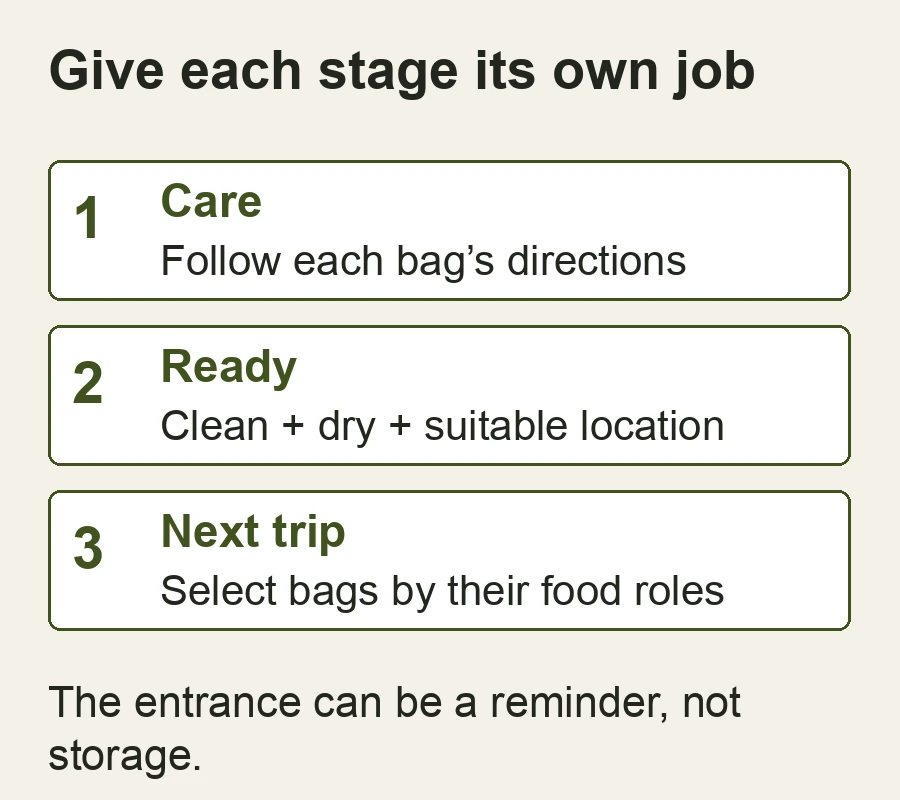
What has to happen before a bag enters ready storage?
Virginia Cooperative Extension advises reviewing each bag’s fabric care instructions because cleaning procedures vary with fabric and design. It recommends cleaning bags immediately after use and making sure they are dry before storage. The New York guidance also emphasizes washing and complete drying before storing. Apply the appropriate directions to the actual bag rather than treating all washable-looking materials alike.
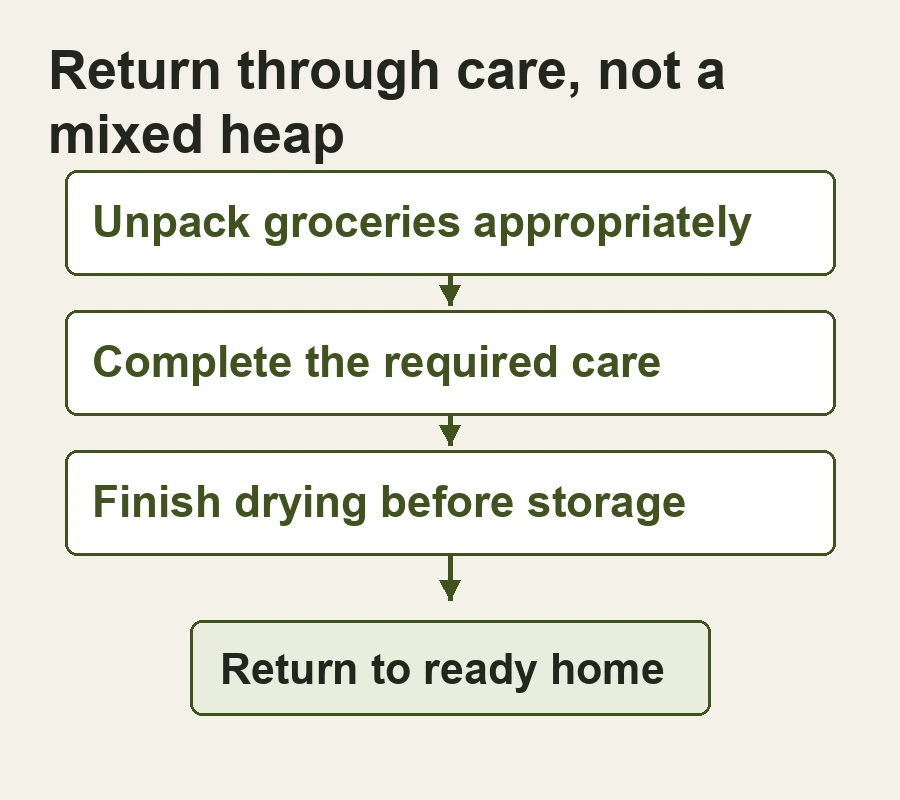
Give care a real place in the return path. After unloading groceries, take used grocery bags to the appropriate care location; do not tuck them into the ready collection while deciding what to do later. Do not interpret a quick visual check or a “ready” label as proof that a bag has been cleaned correctly.
The drying location is not the same as the storage location. Do not compress or nest bags while they still need to dry. Move them to the ready group only after the required care and drying are complete. An insulated or structured bag may need different handling from a simple cloth tote; consult its own directions instead of transferring a washing recipe from another bag.
Does ready storage really have to be beside the door?
No. The front door can be a useful reminder location even when it is not a suitable storage location. Virginia Cooperative Extension recommends a clean, dry place, keeping bags off the floor and away from pets and dirty surfaces. A shelf in an appropriate cupboard may meet those conditions more reliably than a basket mixed with outdoor shoes.
Keep entrance doors and your routes out unobstructed. The U.S. Fire Administration’s home escape-planning guidance says doors and windows should not be blocked. That principle does not establish a universal hallway clearance or permission to place storage in a shared building corridor. Follow the requirements for your actual home and building.
If no suitable ready-storage spot exists at the entrance, put a simple “shopping bags” reminder with your shopping list or another existing departure cue. Retrieve the bags from their proper home before the trip. The reminder can be near the door without making the doorway responsible for every stage of bag care and storage.
Should you stand folded bags upright or keep them flat?
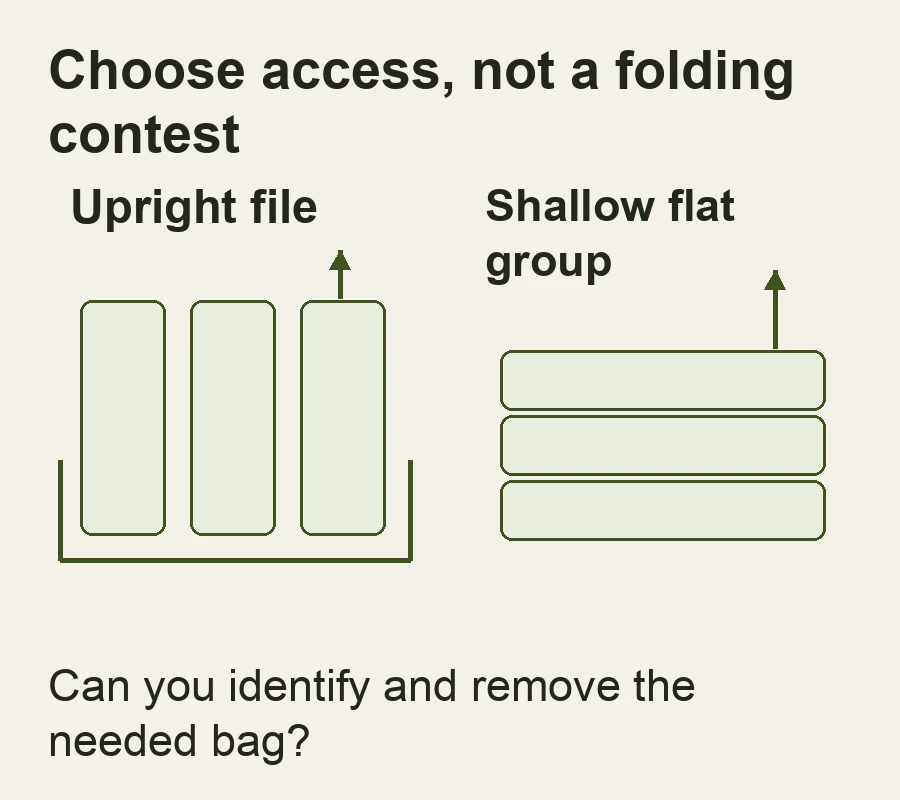
Try the simplest arrangement your bags and existing storage support. A shallow flat group can work when you can choose the needed bag without lifting a tall pile. Its drawback is that a bag near the bottom may become inconvenient to reach. Keep the group small enough for your actual space and routine, not to satisfy a universal ownership quota.
An upright file may make individual folded bags easier to see when their shape supports that orientation. Flexible bags can slump or hide one another, however, and a deep container can turn retrieval into rummaging. A divider is useful only if it improves access without forcing or damaging the bag.
Nesting bags inside one carrier is another possibility, but keep the food-role groups identifiable. Do not make a mystery bundle whose contents must be emptied before anyone knows whether the right grocery bags are available. Folding style matters less than whether the next person can identify and retrieve the required bags.
How do you prepare the next trip without creating another pile?
Select bags for the actual errand from the ready group. Keep grocery roles distinct, and consider what you plan to buy rather than grabbing a random armful. A household member should be able to tell which bags are suitable for the intended food category without remembering who used them last.
The next-trip group can be a selected set waiting in its appropriate storage location, with a note that it is assigned to the next shop. It does not have to become a bundle on the floor. If several people shop, agree where the selected group lives and how to show that someone has taken it.
Avoid making the car trunk the permanent default home. Virginia Cooperative Extension advises against trunk storage because trunks may hold dirty items and can become warm and humid. This guide does not establish that a particular vehicle compartment is a suitable substitute. Solve the reminder problem separately from the storage conditions.
What should a reusable-bag return record contain?
Use one short note for the household rather than a complicated inventory of every tote design. Record locations and responsibilities clearly enough that another person can complete the return path. A paper note or existing shopping-list app is sufficient; no new subscription or organizer is required.
- Grocery roles and how the bags are identified: __________
- Separate non-food errand-bag location: __________
- Care instructions or source for each bag type: __________
- Location for bags needing care: __________
- Drying location suitable for each bag under its care instructions: __________
- Clean, dry ready-storage location off the floor: __________
- Next-trip selection and departure reminder: __________
- Who updates the selection after a trip: __________
The note records a process; it does not certify cleanliness, bag strength, or safe food transport. Perishable groceries still need proper temperature handling regardless of how organized the empty bags are. New York’s guidance says to refrigerate cold foods within two hours of leaving the store or market, or within one hour when the outside temperature is above 90 °F. For this article, the practical task is getting the right empty bags from care to ready storage and back into use.
How would the system work in a shared apartment?
Fictional planning example: two adults share a shopping list, but either person may do the grocery trip. Their ready grocery bags have identifiable food roles on a clean shelf. Non-food errand totes have another home. A note with the shopping list points to the shelf rather than leaving a bag bundle in the entrance.
After the trip, groceries are put away appropriately before the empty bags are returned. Used grocery bags go through the appropriate cleaning and drying process, separate from ready storage. The person who finishes that process returns them to the shelf and updates the next-trip note. The other shopper does not need to guess whether a bag in a mixed heap is ready. If the required bag role is still in the care stage, mark it unavailable rather than substituting a non-food tote into the grocery group.
If the shelf becomes hard to use, first check whether flat stacking, upright filing, or the number of bags in the active group is causing the problem. Change one arrangement and try the next retrieval. For the surrounding room, the kitchen and pantry organization guide covers broader household zones; the bag return record here handles the care-to-trip handoff.
Frequently asked questions
Can ready grocery bags share a basket with shoes or gym bags?
Keep grocery bags separate from non-food errand bags and dirty items. The cited health guidance says grocery bags should be used for food only; Virginia Cooperative Extension also recommends clean, dry storage off the floor and away from dirty surfaces.
Can you store bags before they are completely dry?
No. The cited public-health guidance says bags should be dry before storage. Follow the care instructions for each material and design, and keep the drying stage separate from the ready collection.
Is a hook behind the front door always the best option?
No. This guide does not approve a universal hook, mounting method, or load. Choose a suitable clean, dry storage location without blocking the door or exit route. A reminder near the door can point to bags stored somewhere more appropriate.
How many reusable shopping bags should you keep?
There is no universal number in this guide. Keep an identifiable, manageable collection that serves your real errands and can be cleaned, dried, stored, and retrieved appropriately. A larger pile is not a substitute for distinct food roles and a workable return path.
What should you do next?
Choose one grocery trip and trace what happens to its bags afterward. Identify the care location, the clean and dry ready home, and the departure reminder. Fix the missing link before buying a basket or moving the whole collection beside the door.
Written by the SetsQuick Team. First published .
© SetsQuick. This article and its images may not be copied or republished without permission. To report reuse, see our DMCA page.
Was this guide helpful?
Save it for later or send it to someone