
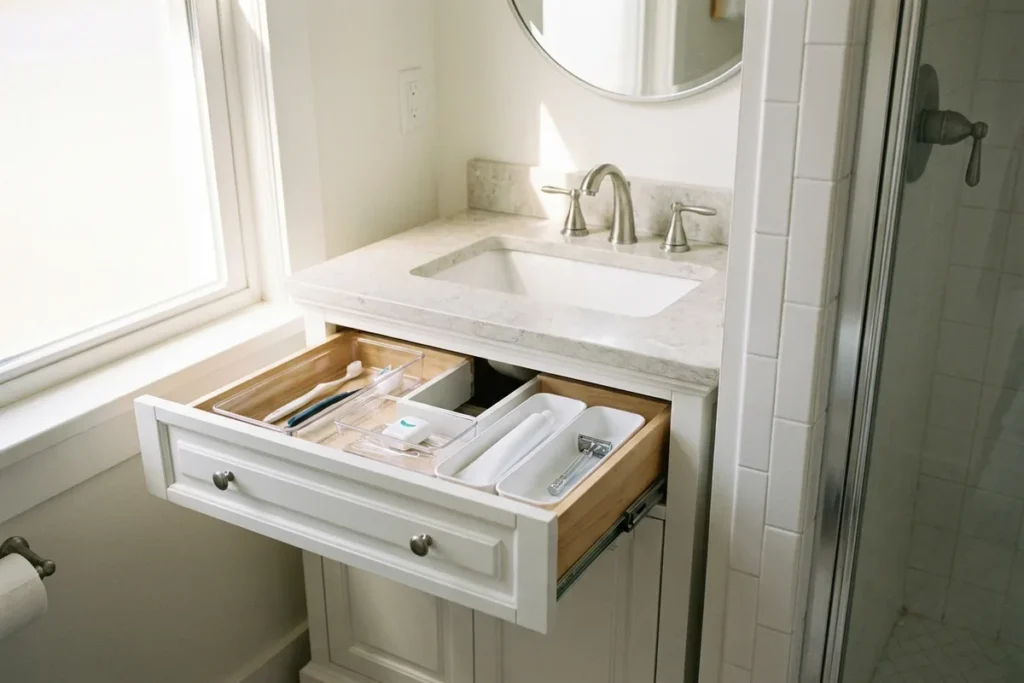
Organize a bathroom vanity around each item’s care needs. Dry rinsed tools before enclosed storage, protect paper from moisture, and choose separate, secure storage for medicines and sharp items.
Keep drawers dry and store each item as its instructions require.
Key takeawaysThe care-based vanity split
- Washable tools: clean and dry suitable items before enclosed storage; keep toothbrushes upright with airflow.
- Dry drawer: cotton, paper, bandages, and boxed items, away from drips.
- Daily row: keep suitable supplies convenient, without compromising hygiene or child safety.
- Hot tools: cool them fully before they go into any drawer.
Bathroom drawers face a challenge no other drawer does. Hands are wet, counters are splashed, and steam drifts through the room, so anything stored near the sink meets moisture several times a day.
Moisture in a drawer can affect cotton, paper and nearby supplies. Dry items before storing them and address leaks or persistent dampness.
This guide shows how to split the vanity by moisture, plan the drawers by reach, choose washable trays, and keep the space clean. It follows the SetsQuick method, Sort, Edit, Type, Store.
Why do vanity drawers get messy so fast?
Vanity drawers hold an unusual mix of items. Toothpaste, hair ties, nail clippers, and spare soap all share a small space, and most of them are too small to stay put on their own.
Moisture speeds up the mess. Damp tools dropped back into a drawer leave water behind, and that moisture loosens labels, softens boxes, and leaves sticky rings on the drawer floor.
Many vanity drawers are also shallow or oddly shaped. Plumbing under the sink can cut into the space, so drawers end up narrow, short, or notched around the pipes.
Shared bathrooms add more pressure. Two or three people using the same drawers means more items, more habits, and more chances for things to land in the wrong place.
Sorting by cleaning and storage needs helps, but no enclosed drawer should be used to put away wet tools.
Clutter on the counter often starts in the drawers. When a drawer is too full to close easily, items stay out after use, and the sink area fills up with bottles, tools, and caps that have nowhere to go.
How do you start vanity drawer organization?
Empty every vanity drawer onto a towel. Wipe the drawers clean and let them dry fully, since a damp drawer floor will undo the project before it starts.
Sort items by care needs: those that must air-dry, dry supplies, and medicines or sharp tools requiring secure storage.
Sort by care needs: Dry rinsed tools before enclosed storage; keep toothbrushes upright with airflow. Protect paper from moisture and keep medicines, razors and small parts locked away from children.
As you sort, check dates on products that carry them. Follow the storage directions printed on each label, and set aside anything that is expired, empty, or no longer used.
Gather hotel samples and spare minis into one small container. Use them first, or keep a few for travel, so they do not scatter through every drawer in the vanity.
The steps below apply the SetsQuick method to the whole vanity, one drawer at a time. Work through them in order, and finish each drawer before starting the next.
- Sort: group items by their cleaning, drying and storage needs.
- Edit: remove expired, empty, and unused products.
- Type: mark each item as daily, weekly, or backup.
- Store: dry washable tools before putting them away, and keep moisture-sensitive items away from drips.
Do not put wet tools in an enclosed drawer. Let them dry as directed and choose a clean, dry storage space.
Keep cotton, paper and bandages in a clean, dry place protected from leaks and splashes. A different drawer is not automatically dry; check its actual conditions.
Which vanity drawer should hold what?
Keep daily items convenient, but follow their hygiene and drying instructions. Let rinsed tools dry before enclosed storage. Store toothbrushes upright with airflow so they can air-dry rather than enclosing a wet brush in a drawer; keep them separate from other brushes and hazardous supplies. See the American Dental Association guidance.
Use a dry drawer for suitable grooming tools. Keep razors, clippers, tweezers and other sharp items secured and inaccessible to children.
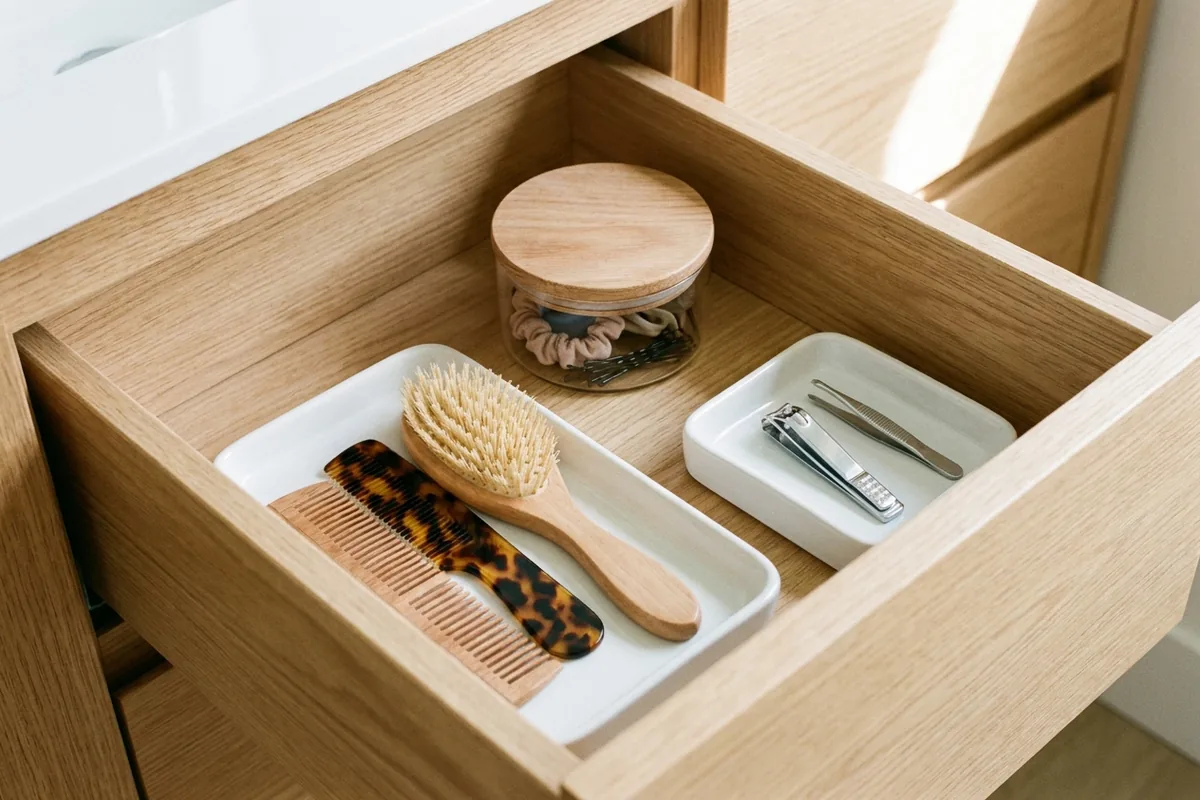
Keep hair ties, clips, and bobby pins in a single small container. These tiny items scatter fast, and one lidded box keeps them together while still opening with one hand.
Store backup supplies where conditions meet their labels. Keep spare razors locked or otherwise inaccessible to children, regardless of drawer height.
Keep bandages and similar supplies in a clean, dry labeled box. Store medicines as their labels direct and locked or otherwise securely inaccessible to children.
Hot tools need extra care. Unplug hair dryers and styling irons and let them cool completely on an appropriate heat-resistant surface before storage. Keep electrical tools away from water and out of children’s reach, and follow the manufacturer’s instructions.
Coil cords loosely with a soft tie rather than wrapping them tight around the tool. A loose coil is easier on the cord, and it keeps the drawer neat because cables no longer spread across every tray.
If the vanity has only one or two drawers, combine zones carefully. Put daily items in the front of the top drawer, grooming tools behind them, and keep backups in a basket under the sink or on a nearby shelf.
What trays work best in a bathroom vanity?
Choose trays suitable for the products and drawer. Follow each tray’s cleaning instructions and dry it fully before returning it.
Avoid putting damp items in cardboard or fabric containers; trapped moisture can damage materials. Dry items before storage.
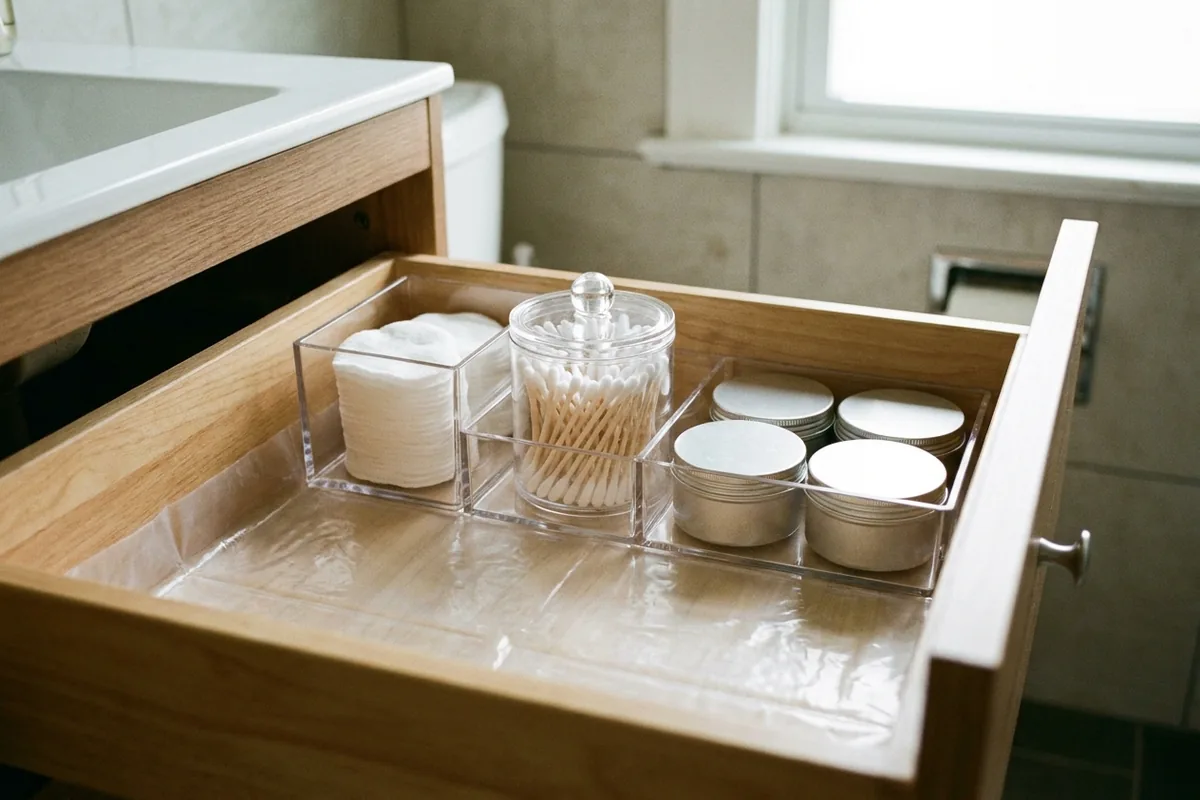
Choose easy-clean trays: Follow the tray’s care instructions and dry both tray and drawer after cleaning. A washable liner does not justify storing wet tools in a closed drawer.
Measure every drawer before buying trays. Record the inside width, depth, and height, and check for notches around pipes, since many vanity drawers are not simple rectangles.
Fill each drawer edge to edge with small trays. A tight fit keeps items from sliding when the drawer opens, and it leaves no gaps where clips and caps can disappear.
A washable liner can help protect the drawer, but it is not a substitute for drying items and addressing leaks. Dry the liner and drawer fully after cleaning.
Strong vanity drawer organization depends on washable materials more than clever products. When every tray can be rinsed, the drawers stay fresh with almost no effort at all.
In a shared bathroom, give each person a tray color. A quick glance then shows whose items are whose, which keeps the drawers sorted even when several people get ready at once.
How do you keep vanity drawers organized?
A short weekly reset keeps the system working. Once a week, open each drawer, return stray items to their trays, and wipe up any drips or toothpaste before they dry and stick to the liner.
Clean trays as needed according to their instructions, and dry trays and the drawer fully before reassembly.
Watch the backup drawer as well. When a backup moves up to daily use, add it to the shopping list right away, and you will rarely run out of toothpaste, soap, or floss.
Use a simple one in, one out rule for new products. When a new item joins the vanity, an old or unused one leaves, which keeps every drawer from slowly filling past its limit.
Check the system each season. Routines change, and a quick look shows which trays sit unused and which items need more room, so the drawers keep fitting how you really get ready. Steady vanity drawer organization comes from these small habits more than any single product.
For more tight-space systems, browse the small space organizing guides and the whole home guides, or start with the free reset checklist.
What should stay out of a bathroom vanity drawer?
Good vanity drawer organization is partly about what you leave out. A bathroom is warm and humid, and those conditions are hard on some items. Moving them elsewhere frees drawer space and helps them last longer.
Medicines often need a cool, dry place, but some have different requirements. Follow the label or pharmacist’s advice and keep them locked or otherwise securely inaccessible to children. MedlinePlus explains why a steamy bathroom may be unsuitable.
Extra paper goods do not belong in a damp drawer either. Tissue packs, cotton pads, and spare toilet paper can soak up moisture over time. Keep only one or two in the vanity and store backups in a hall closet or a bin under the bed.
Jewelry and electronics are also better elsewhere. Humidity can tarnish metal and damage chargers or small devices. A small tray in the bedroom keeps these items safe and dry.
Bulk refills and backup bottles take up more room than they are worth in a small vanity. Keep one open bottle of each product in the drawer, and store the rest in a labeled bin in another room.
Once these items move out, the vanity can hold only daily care tools. That shorter list makes each drawer faster to scan, easier to clean, and simpler to reset at the end of each week.
A simple test helps you decide what stays. Ask whether you use the item in the bathroom at least a few times a week. If the answer is no, it probably belongs in another room or a backup bin.
Use appropriate bathroom ventilation and address plumbing leaks or persistent dampness rather than hiding the problem. A moisture absorber does not replace ventilation or repair. If you use one, follow its label and keep packets and any collected liquid inaccessible to children and pets because of ingestion and spill risks; do not put loose packets among toiletries.
Check the drawer floors every few weeks for leaks or drips from the sink pipes. Catching moisture early protects both the cabinet and the items you keep inside it.
Frequently asked questions
How do you organize bathroom vanity drawers?
Clean and dry the drawers, then group items by care needs. Dry rinsed tools before enclosed storage; keep toothbrushes upright with airflow and protect paper from moisture. Secure medicines and sharp items away from children.
What should go in the top vanity drawer?
Keep the products you use most in convenient, clean storage, following their individual care instructions. Let toothbrushes air-dry upright with airflow rather than enclosing them wet. Fully dry washable trays before returning them, and keep medicines, sharp tools and small or hazardous items locked and inaccessible to children.
How do you keep vanity drawers dry?
Let suitable tools dry as directed before enclosed storage; toothbrushes need upright airflow. Clean and dry liners and trays, and repair leaks rather than relying on a liner to manage ongoing dampness.
Where should hair tools go in a bathroom?
Unplug hair dryers and styling irons and let them cool completely on an appropriate heat-resistant surface before storing them. Keep electrical tools away from water and secure them from children; follow the manufacturer’s instructions.
How do you organize a shared bathroom vanity?
Give each person a tray color or a section of each drawer, so items never mix. Keep shared items like spare soap and toothpaste in one backup drawer. A clear split helps everyone get ready at once and keeps the vanity drawer organization steady from day to day.
How do you organize a vanity drawer around pipes?
Measure the drawer carefully, including any notch or cutout around the plumbing. Then fill the usable space with small trays that fit around the cutout. Narrow trays often slide in beside a notch, so even an awkward drawer can hold grooming tools or small backups neatly.

Written by the SetsQuick Team. First published · Last updated .
© SetsQuick. This article and its images may not be copied or republished without permission. To report reuse, see our DMCA page.
Was this guide helpful?
Save it for later or send it to someone