
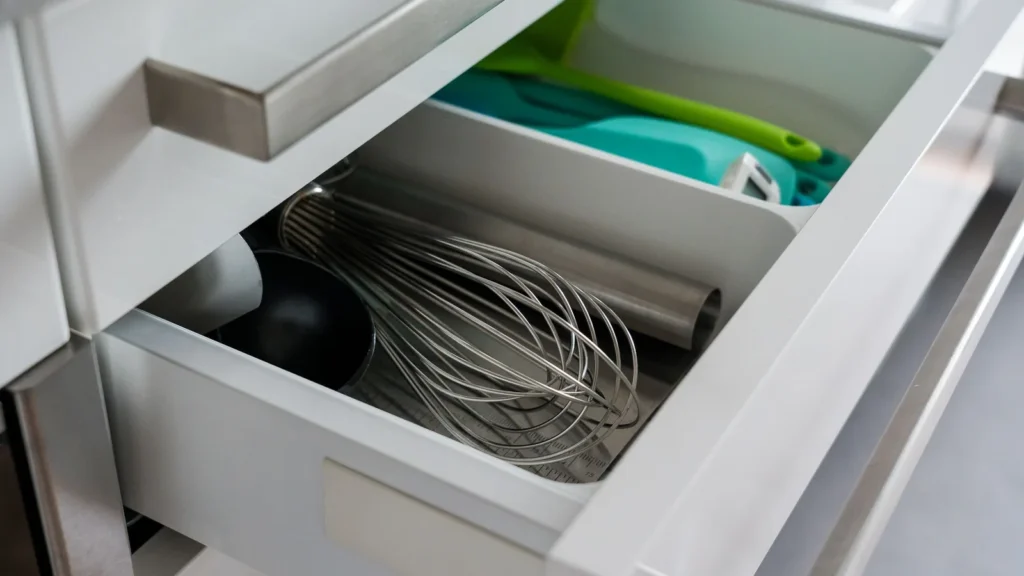
For a 24-inch drawer, choose an organizer by the usable interior—not the cabinet front. An expandable tray or modular bins can work for mixed utensils; a fixed tray may suit mostly cutlery. Measure width, depth and loaded clearance before choosing.
Key takeawaysDecide these before you order any tray
- Measure the inside width at the front, middle and back, and use the narrowest usable measurement.
- Sort your utensils by length first, since long tools decide the layout.
- Check that the tray and its tallest contents clear the lowest obstruction as the drawer moves.
- Buy one tray for the drawer you have, not a set of pieces for a drawer you imagine.
What makes a utensil organizer fit a 24 inch drawer?
A 24-inch measurement may describe the cabinet or drawer front rather than the usable interior. Cabinet sides, slides and drawer-box walls take up space, so check what the stated measurement refers to and measure the interior before buying.
Cabinet construction varies, so even an example interior width of 20 or 21 inches does not establish your drawer’s size.
Depth matters just as much. A standard base cabinet is fairly deep, yet the drawer box inside may be several inches shorter than the cabinet. A tray that is too long may not fit inside the drawer; a shorter tray can leave space at the back where small tools may collect.
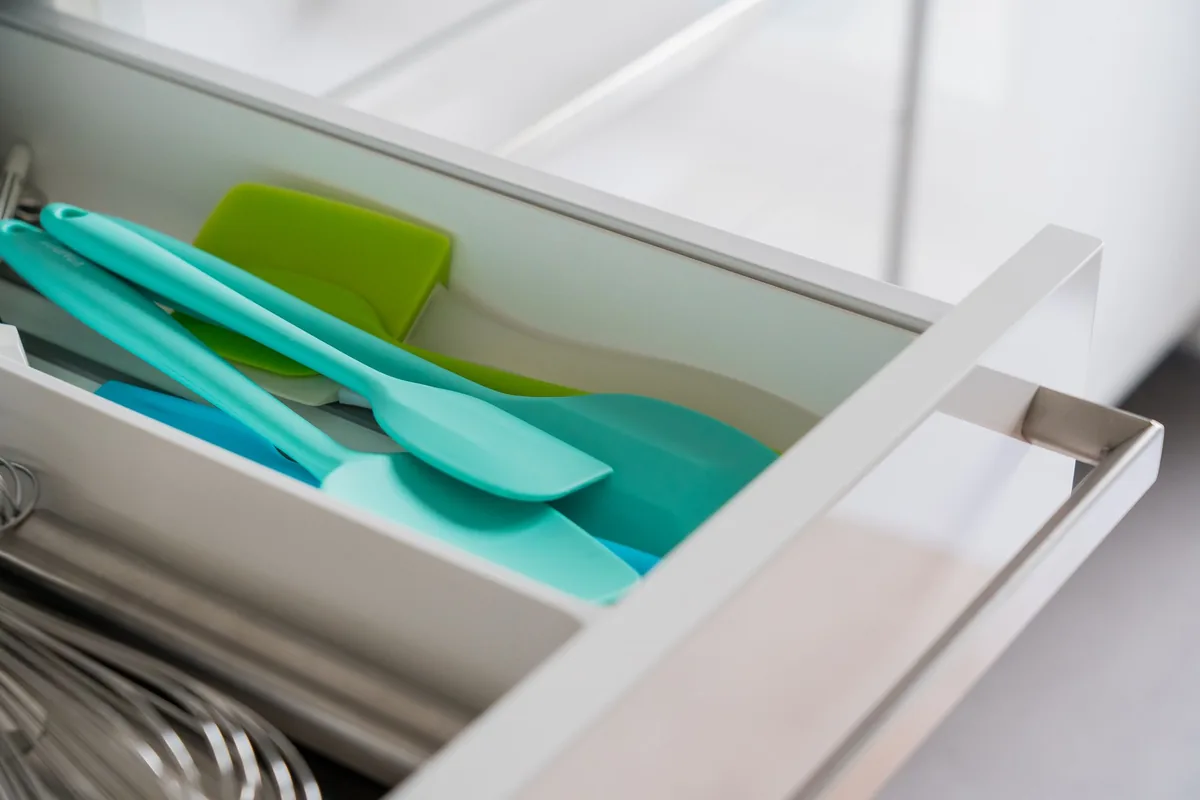
Height is the third limit, and it is the one most people forget. Utensil drawers are usually shallow, and the drawer above or the countertop lip sits close overhead. A deep grooved tray with raised dividers can catch on that lip as you open the drawer, especially when a whisk sits on top.
So the right choice among drawer organizers for utensils is the one that fits three numbers at once: inside width, inside depth, and clear height. Brand and material come after those numbers, because even the most attractive tray fails if it slides, jams, or leaves half the drawer empty.
How do you measure the drawer before you shop?
Empty the drawer completely and wipe it out. Measure the inside width in three places: at the front, in the middle, and at the back. Write down the smallest usable number and note any hardware or other obstructions.
Measure usable inside depth and the lowest closed-drawer clearance without trapping fingers or moving the drawer against the tape. Include the tallest utensil and tray movement; follow the product’s clearance instructions if provided.
Now take the longest utensil you own and measure it from end to end. For most cooks, this is a ladle, a pair of tongs, or a large spoon. If it is longer than your inside depth, it will have to lie on a diagonal, and that changes which tray will work.
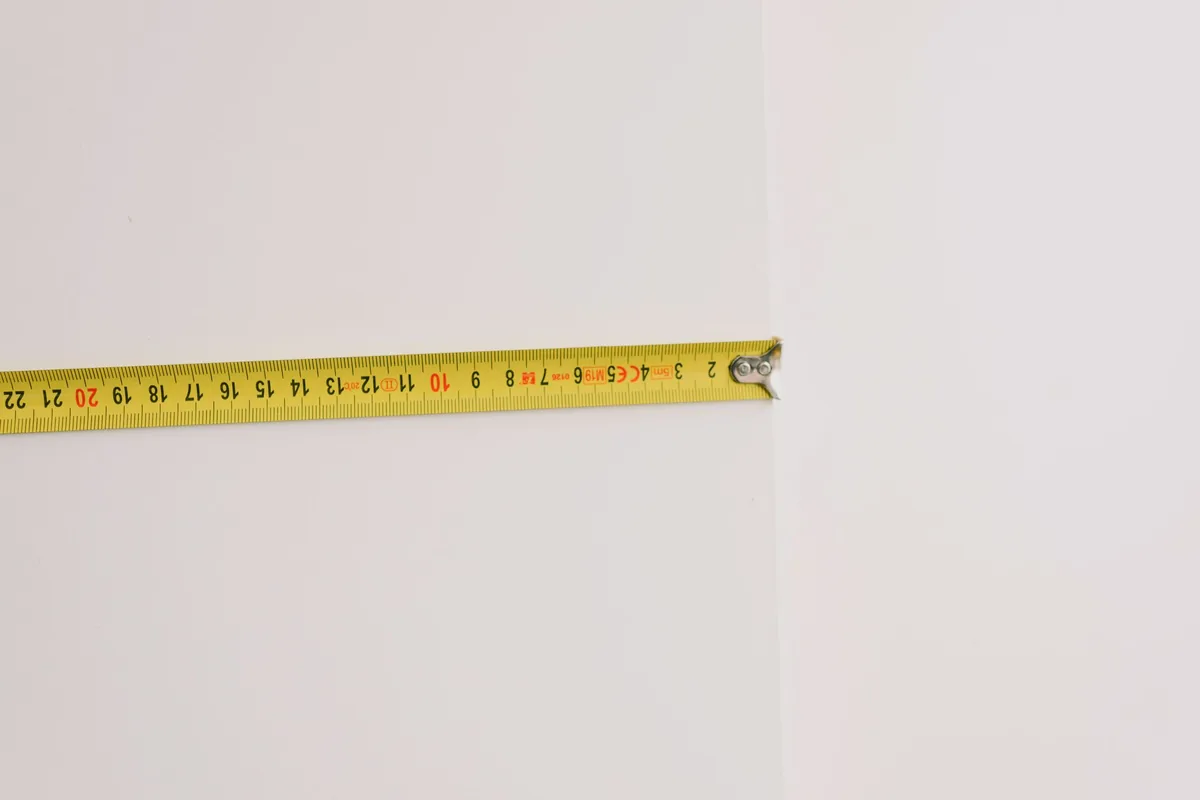
Record those measurements and compare the exact tray’s exterior dimensions, expansion range and required movement or access clearance.
If your drawer is wider than any fixed tray you like, plan to fill the leftover strip on purpose. A narrow side bin can hold measuring spoons or a bottle opener and may help limit the tray’s movement.
Which drawer organizers for utensils work best?
There is no single winner, because kitchens differ in drawer size and in how people cook. Four specific organizers are compared first by their published specifications, followed by the main organizer types and the one thing to check before buying.
Four organizers compared by published specifications
This is a specification comparison, not a hands-on review. SetsQuick did not buy, measure or use these organizers. Totally Bamboo and Joseph Joseph figures come from the manufacturers’ product pages, rechecked November 9, 2026. The Rev-A-Shelf 4WCT-3SH dimensions come from a retailer listing (Wholesale Home) rechecked on November 10, 2026; Rev-A-Shelf’s own series page showed no specification values on November 9, 2026. Listings can change, so recheck the exact model before buying. Links in this comparison are ordinary links, not affiliate links. Prices and availability are not shown; check them with the seller.
| Organizer | Published size (W × D × H) | Adjusts / maker’s height rule |
|---|---|---|
| Rev-A-Shelf 4WCT-3SH (retailer listing) | 20.63 × 22 × 2.38 in | Trim to fit; no minimum height found |
| Totally Bamboo 20-7554 | 13–22 × 17¾ × 2½ in | Expands in width; no minimum height found |
| Joseph Joseph 85127 | 38.4 × 39.7 × 5.3 cm (about 15.1 × 15.6 × 2.1 in) | Fixed; drawer at least 8 cm (3¼ in) tall |
| Joseph Joseph 85168 | 12.2 × 39.8 × 6 cm (about 4.8 × 15.7 × 2.4 in) | Fixed; drawer at least 8 cm (3¼ in) tall |
- Rev-A-Shelf 4WCT-3SH shallow maple cutlery tray (about 524 × 559 × 60 mm). The catalog says the series is designed for 24-inch or smaller base cabinet drawers. Suits: someone who wants one wood insert across most of the drawer and is willing to cut it to size. Limitation: at 22 in deep and 20.63 in wide it is larger than many drawer interiors, so it may have to be trimmed, and a cut cannot be undone. The manufacturer’s series page says two sizes in the series may be trimmed. A diagram in the distributor-hosted Rev-A-Shelf catalog is for the different, taller 4WCT-3, so its trimming limits are not applied to the 4WCT-3SH here. Confirm the exact model’s current cutting instructions and limits with the manufacturer before cutting.
- Totally Bamboo Expandable Drawer Organizer 20-7554. Suits: a drawer whose usable inside width is between 13 and 22 in and whose depth is at least 17¾ in, holding cutlery and some tools. It has three fixed and two sliding compartments. Limitation: the depth is fixed, so a deeper drawer keeps an empty strip behind it. The maker lists a composite-wood base and says to hand wash only and not to soak. Compartment sizes are not published.
- Joseph Joseph DrawerStore 85127, gray cutlery, utensil and gadget organizer. Suits: cutlery in stacked tiers plus a large utensil compartment and two gadget compartments, in a drawer at least 8 cm (3¼ in) tall. Limitation: the width is fixed at 38.4 cm (about 15.1 in), so a wider drawer leaves a strip to fill or leave empty. Joseph Joseph also shows rounded inch figures of W 15½ × D 15¾ × H 2 in. If the figures differ, plan with the larger one. An eBay page for model 85127 showed two reviews when checked on November 9, 2026: one 1-star review from 2018 reported difficulty inserting silverware, and one 5-star review from 2021 was positive. Two accounts are too few to show how common either experience is; they are not SetsQuick tests.
- Joseph Joseph DrawerStore 85168, bamboo compact cutlery organizer. Suits: cutlery only, in a narrow strip beside another organizer for longer tools. Limitation: it has no space for long utensils. One customer review on the maker’s page said the angled compartments made handles sit higher than expected. That is one account, not a SetsQuick test, but it is a reason to check the clearance above the tray. Joseph Joseph’s rounded inch figures are W 5 × D 15¾ × H 2½ in.
How to choose with your own measurements
- Measure the usable inside width, depth and height, and note the narrowest point and any obstruction.
- Width: the Totally Bamboo tray covers 13 to 22 in. Joseph Joseph lists widths of 38.4 cm and 12.2 cm (50.6 cm together), but also 15½ in and 5 in (20½ in together). For conservative planning, use the larger total: 20½ in (52.1 cm, rounded up), before allowing space for movement. Joseph Joseph does not present the two as a pair. The Rev-A-Shelf tray starts at 20.63 in and is cut down to fit.
- Depth: Joseph Joseph lists 39.7 cm and 39.8 cm, and also 15¾ in for each model. For conservative planning, use 15¾ in (40.1 cm, rounded up). The Totally Bamboo tray is 17¾ in deep, and the Rev-A-Shelf tray is 22 in untrimmed. Confirm the exact model’s permitted trim limits before cutting.
- Height: Joseph Joseph states a minimum drawer height of 8 cm (3¼ in) for both models. Those figures do not convert exactly: 3¼ in is 8.255 cm. Using 3¼ in (8.3 cm, rounded up) is a conservative planning choice, not a new maker specification. For the other two, no minimum was found. In every case, check the tray plus your tallest utensil against the lowest clearance as the drawer moves.
- Then allow for movement. The fit calculator uses SetsQuick’s generic planning allowance of ½ in spare width and depth and 1 in spare height. That allowance is separate from any maker requirement, and the maker’s instructions take precedence. The calculator does not check the Joseph Joseph minimum drawer height.
Checked but left out: the madesmart Classic Expandable Utensil Tray, because its product page and 2026 catalog list different item numbers and metric sizes; the OXO Large Expandable Kitchen Tool Drawer Organizer 13322100, because its expanded size is not published; and the Rev-A-Shelf 4WCT-24SH-1, because its maker page did not load and retailer listings disagree on its width.
Utensil organizer types for a 24 inch drawer
- Expandable bamboo tray. Best when: the inside width is between common fixed sizes. Fit: adjusts within its stated width range; it may not reach both walls. Holds: everyday cutlery plus a side row of tools. Watch for: a gap at the back when it expands in width but not in depth.
- Fixed plastic cutlery tray. Best when: the drawer is narrow and holds mostly forks, knives, and spoons. Fit: set size, easy to clean. Holds: cutlery only. Watch for: sliding, unless the leftover space is filled with a side bin.
- Modular bins that lock together. Best when: the drawer has an odd size or a pipe notch. Fit: combine pieces to suit the available width, allowing for any remaining gaps. Holds: mixed tools of different lengths. Watch for: bins that shift unless they lock or sit on a grip liner.
- Deep insert with angled slots. Best when: the drawer is tall and holds bulky cooking tools. Fit: check the insert’s footprint and height against the drawer. Holds: spatulas, ladles, and whisks side by side. Watch for: clear height, since tall tools can catch on the counter lip.
- Steel mesh trays. Best when: you want a slim profile and easy washing. Fit: set sizes, often combined in pairs. Holds: small tools and gadgets. Watch for: rattling and scratching unless a liner goes underneath.
- Two tier sliding tray. Best when: the drawer is deep but narrow, and cutlery and tools compete for space. Fit: needs good clear height. Holds: cutlery on top, tools below. Watch for: the top tier blocking access when the drawer only opens part of the way.
For drawers holding both cutlery and cooking tools, an expandable tray or modular bins may offer useful flexibility if the dimensions and compartments fit. An expandable tray adjusts within its stated range; modular bins can be rearranged, though their fixed sizes may leave gaps. Check depth, height and access as well as width.
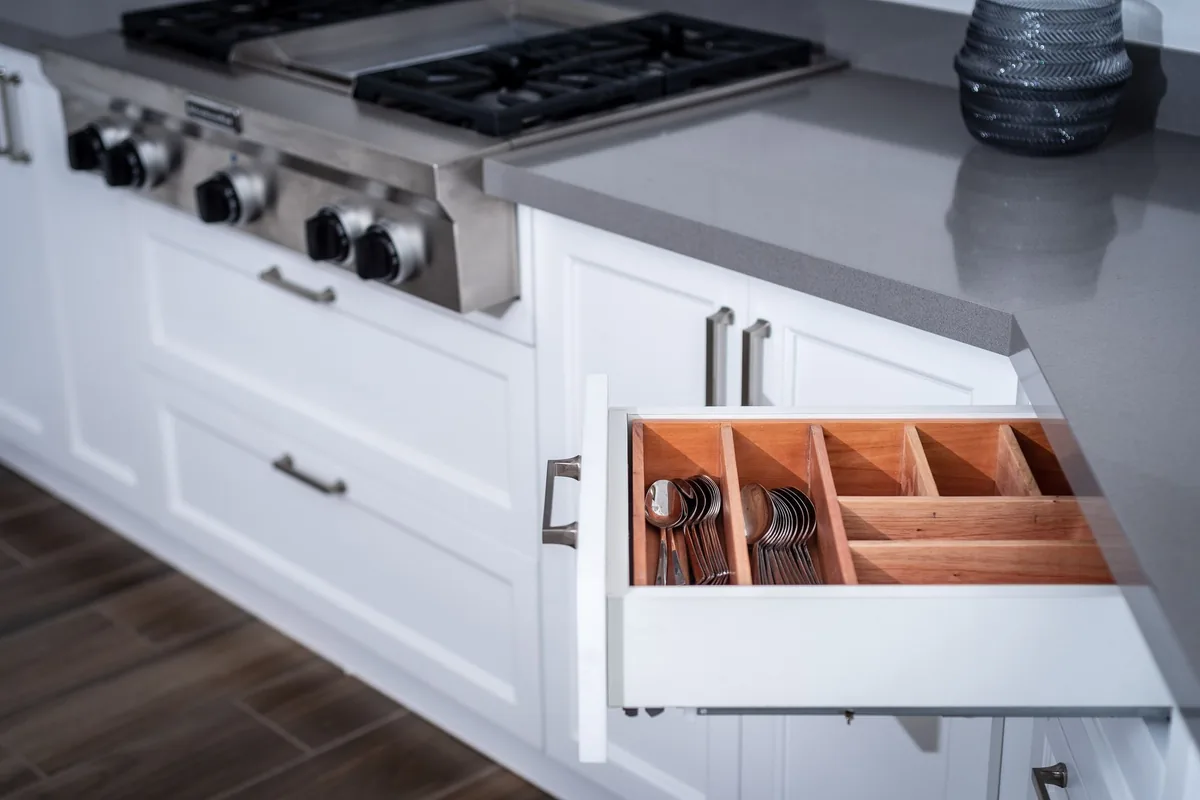
A fixed tray is still a good pick when the drawer holds cutlery only and your measurements match a standard size. It is simple, cheap to replace, and easy to wash. Just plan a side bin for the leftover width so the tray cannot slide when the drawer opens.
If you cook often and own many long tools, even the best drawer organizers for utensils will struggle, so consider giving them a separate drawer or a counter crock. Cramming every ladle and whisk into the cutlery drawer can make it harder to close and use.
How should utensils be sorted inside the tray?
Sort by length before you sort by type. Lay everything on the counter in three rows: short items like teaspoons and peelers, medium items like forks and spatulas, and long items like ladles, tongs, and whisks. The long row decides the layout.
Place the long items in the lane that runs front to back along one side of the drawer, where they have the full depth. Medium tools go in the center lanes, and short items sit in the front compartments, where you can grab them without looking.
Nest items of the same shape together. Stacked spatulas take less room than spatulas lying side by side, and spoons nest neatly by size. A whisk is the one tool that never nests, so give it its own slot or move it to a crock on the counter.
Put what you use daily closest to the front of the drawer and to the side where you usually stand. Tools used once a month can sit toward the back, or move to another drawer altogether. This simple split keeps the front of the drawer clear and easy to use.

If two people share the kitchen, agree on the lanes once and keep them stable. A tray only stays organized when everyone returns tools to the same place, and a stable layout is easier to remember than one that changes each week.
What goes wrong with utensil drawer organizers?
One possible problem is a tray or utensil that catches. A long ladle handle rests on a divider instead of lying flat, the tray tips slightly, and the drawer catches on the counter lip. Forcing a stuck drawer can damage the tray or strain the slides.
A drawer that sticks near the end of closing is a warning sign. When you feel that catch, open the drawer fully and look for a tool lying across a divider. Reposition the tool or choose another storage spot, then check for other obstructions without forcing the drawer.
Another problem is sliding. A tray that is narrower than the drawer can shift as it opens, letting small items move between compartments. A thin grip liner under the tray or a side bin filling the leftover width can reduce movement; follow the drawer and liner makers’ care instructions.
Overfilling can also cause trouble. A new gadget arrives and gets squeezed into a lane that was already full. Soon the compartment dividers disappear under loose tools, and the tray is organized in name only. Keep a one in, one out rule for the drawer, so every new tool replaces an old one.
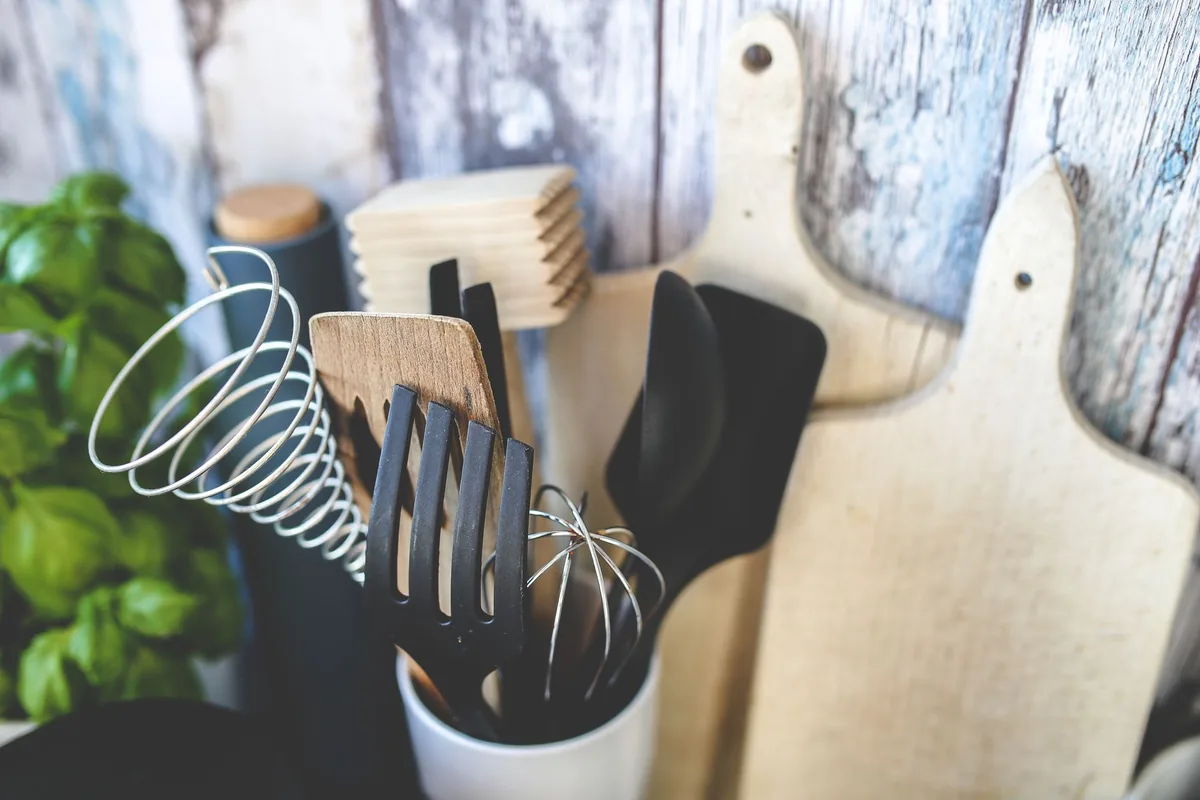
Finally, watch for moisture. Bamboo and wood trays can swell or stain when utensils go back damp. Dry tools fully before returning them, and wipe the tray out every few weeks. Plastic and steel handle moisture better but still collect crumbs in the corners.
How do you set up the drawer in one pass?
With your measurements and sorted rows, follow these steps to plan the setup before buying.
- Empty the drawer, wipe it clean, and let it dry fully.
- Measure the inside width at three points, the inside depth, and the clear height.
- Sort utensils into short, medium, and long rows on the counter.
- Move duplicates and rarely used tools to another drawer or a donation box.
- Choose a tray type from the list that fits your numbers and your long row.
- If the tray shifts, consider a suitable grip liner or a side bin that fits the remaining space.
- Load long tools first along one side, then medium tools, then short items at the front.
- Open and close the drawer gently; stop at any catch or sliding and address the obstruction without forcing it.
Step four often frees more space than any tray. Most kitchens hold several spatulas and spoons that nobody reaches for. Keep the tools and spares that suit your cooking habits, and relocate or donate those you do not need.
Neighboring drawers can help too. A deep drawer below can take lids and containers, which frees the top drawer for tools. Our guide to organizing tupperware lids in a deep drawer shows how to set that up without buying a large kit.
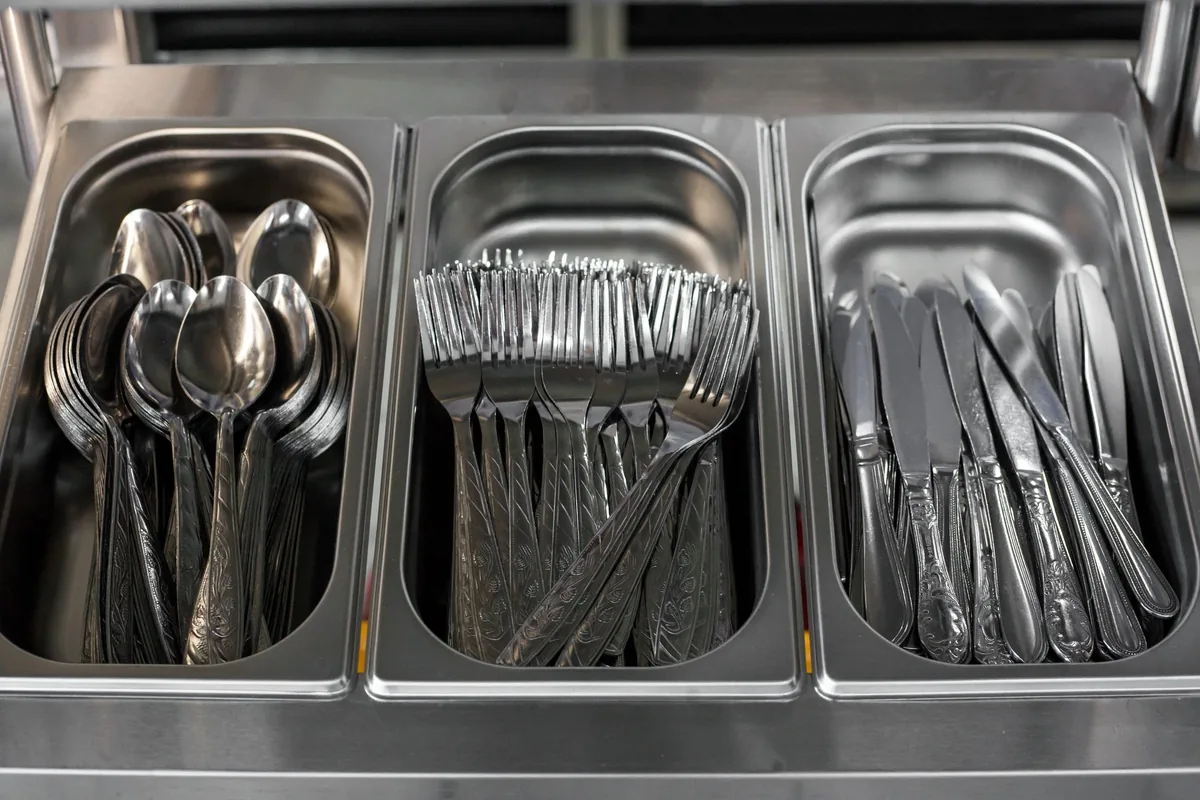
The same measure first approach works in the pantry. Our review of the best pantry organization containers set uses shelf depth in the same way, and you can find more systems on the kitchen and pantry hub.
If you want to reset the whole kitchen, the free 30-Day Home Reset follows the SETS method: Sort, Edit, Type, then Store. The utensil drawer is a good first project, because the result shows up the next time you cook.
A drawer that works feels quiet. It opens smoothly, nothing slides, and your hand finds the right tool without searching. If yours feels that way after two weeks of cooking, the organizer is doing its job.
Frequently asked questions
What size organizer fits a 24 inch drawer?
Measure your actual drawer at the front, middle and back and use the narrowest usable dimension. A nominal 24-inch cabinet does not establish the interior width or a universal clearance allowance. Check the tray’s exact dimensions, expansion range, utensil height and required moving clearance.
Is bamboo or plastic better for a utensil drawer?
Bamboo looks warm and is sturdy, and expandable bamboo trays adjust well to odd widths. It needs dry utensils and an occasional wipe to avoid stains. Plastic is lighter, cheaper to replace, and handles moisture better. Choose by drawer size and cleaning habits first, then by the look you prefer.
How do you keep a utensil tray from sliding?
Fill the leftover width with a narrow side bin, or place a thin grip liner under the tray. Either can help reduce movement when the drawer opens. If the tray is expandable, adjust it within its stated range; use another suitable way to limit movement if it does not reach both walls. A tray that sits snug keeps small items in their compartments.
Where should long utensils like ladles go?
Give long tools a lane that runs front to back along one side, where they have the full drawer depth. If they are still too long, lay them on a diagonal in a deep insert or move them to a crock on the counter. Never rest a long handle across a divider.
How many utensils should fit in one drawer?
There is no fixed number, but every tool should lie flat in its lane with space to lift it out. If tools stack on top of dividers, the drawer holds too much. Keep the tools and spares you use, and move the rest to another drawer or donate them.
Written by the SetsQuick Team. First published · Last updated .
© SetsQuick. This article and its images may not be copied or republished without permission. To report reuse, see our DMCA page.
Was this guide helpful?
Save it for later or send it to someone