

Choose slim hangers for a short closet rod by checking the actual garments, not just the thickness of an empty hanger. Keep suitable hangers you already own. Before buying replacements, check garment care, shoulder support, loaded spacing, hook-and-drop clearance and the full storage system’s permitted load. A thinner hanger does not increase a rod’s load rating or make a garment suitable for hanging.
Key takeawaysFive fit checks before replacing your hangers
- Care and support: decide which garments can hang, then compare the actual hanger’s shape, width, surface and permitted use.
- Loaded spacing: compare the same garments in the same usable rod section; empty-hanger thickness is not occupied clothing space.
- Hook and drop: check rod compatibility, removal space, garment length and the complete door route.
- Load and quantity: follow the hanger and installed system requirements; buy for identified garments, not a headline capacity or pack size.
Do slim hangers really save space on a short rod?
They may, if the new hanger occupies less space in the arrangement you actually use. The garment, its drape and the access needed to remove it still matter. A label such as slim, velvet, plastic or wood does not establish how many more items will fit, how securely they will stay in place or whether the support suits them.
Start with a defined section that is accessible without forcing hangers or compressing garments. Record its usable length, the exact garments and the hangers already supporting them. Keep the rod and its fixings within their permitted load. Do not pack a one-foot sample to discover the system’s limit.
If a suitable replacement is available, compare those same garments in normal permitted use. Record the section length they occupy and whether you can identify, remove and return each item. Keep the garments and usable access comparable; adding items midway makes the comparison unhelpful.
This is a personal layout check, not a load, durability, wrinkle or damage test. A satisfactory arrangement with shirts does not predict the result for coats, another garment size or a different part of the closet. If the new support pulls, marks, snags or does not suit the item, stop using that combination rather than accepting it as the price of a slimmer profile.

Do not scale a local count across the whole rod or treat it as permission to add weight. The useful outcome may be a better return routine rather than more garments. If an existing hanger already provides suitable support and usable spacing, replacement may add little.
How do you measure a short closet rod before buying hangers?
Keep five checks together in your notes. They answer different questions: a compatible hook does not prove shoulder support, and enough physical room does not establish a permitted load.
- Usable rod section: record the accessible length, brackets and other obstructions; keep the installed system’s instructions with the record.
- Garment and shoulder support: identify the actual item, care directions and the proposed hanger’s shape, width, surface and permitted load.
- Operating space: check hook placement and removal, loaded garment depth, drop to lower storage and the door’s full movement route.
Do not multiply a shirts-per-foot sample by the rod length to set a purchase or loading target. A section of mixed clothes may need different spacing and supports. Count the specific garments that will remain hanging, and check that their complete arrangement is permitted and usable.
Compare the actual hook and hanger geometry on the rod. Measure the resulting garment drop and removal route; do not assume a taller-looking hook always lifts the garment. Clothes must not be trapped by a shelf, lower rod or closing door.
A rotating hook can change orientation, but it does not guarantee faster handling, untangled hangers or lined-up hems. MAWA’s Silhouette 41F product page specifies a rotating hook for that model. Treat this as a model feature, not proof that rotating or fixed hooks are universally better.
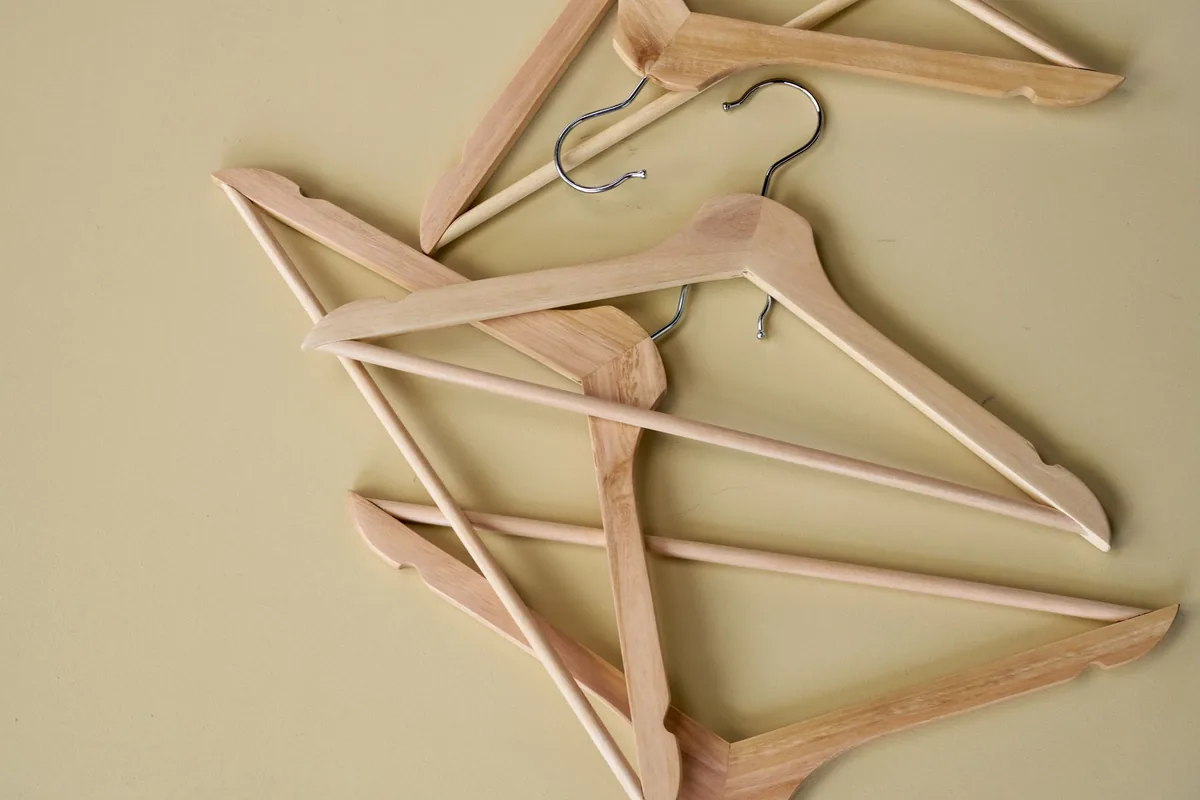
Count by the support each garment actually needs. You might keep several existing types, replace one unsuitable hanger or buy none. Matching appearance and a uniform hook height are optional; neither ensures the clothes fit or hang at the same level.
Record the loaded arrangement, not just hanger thickness
IKEA’s US BUMERANG 302.385.43 page lists a width of 16 7/8 inches and thickness of 9/16 inch for that hanger. These are product measurements, not the width a loaded garment occupies along your rod. Do not substitute the packaging dimensions, divide rod length by 9/16 inch to promise a clothing capacity, or transfer the specification to another hanger. No numerical hanger or rod load is established by those dimensions.
| Record | Current support | Proposed support |
|---|---|---|
| Garment set | Identify the actual items and care directions | Use the same permitted-to-hang items |
| Product and support | Record model, shape, width and condition | Confirm intended use, load and garment compatibility |
| Occupied section | Record the usable space occupied in normal use | Compare without compressing clothes or adding items |
| Operation | Note removal, return, drop and door route | Check the complete arrangement again |
| Decision | Keep suitable existing supports where useful | Buy only for a resolved need; hold unresolved requirements |
Which types of slim hangers work best?
Compare these five designs by the exact product’s shape, width, surface and permitted load. Choose only where the garment’s care needs agree; a material category is not a product ranking.
Slim hanger types by garment
- Flocked slim hangers: check the actual garment on the contact surface rather than assuming the finish prevents every slip or mark.
- Thin plastic hangers with notches: check whether the strap positions, edge finish and permitted load suit the item.
- Slim wood hangers: compare shoulder shape and width with the garment; wood alone does not establish suitable support.
- Coated metal slim hangers: check the exact intended use and coating condition; do not use a snagging or chipped contact surface.
- Hangers with a trouser bar: check the bar or clips against the garment’s support and care needs before using them.
Use a hanger only where its stated purpose and the garment’s care directions agree. For wool specifically, Woolmark advises shaped or padded hangers for woven wool garments and gently folded storage for knitted garments. A rounded or softer hanger is not a reason to override the care needs of a wool knit.
There is no established price advantage for a mixed set or a bulk pack here. Compare the complete quantity you need, any suitable hangers you can keep and the actual purchase terms. This guide does not rank products by cost, grip, garment protection or measured space savings.
What goes wrong with slim hangers?
A hanger that does not suit a garment’s weight or shape may leave marks or distort it. Do not assume a particular fabric will develop dents after a fixed number of weeks. Check the garment’s care instructions; folded support or a differently shaped hanger may be more suitable.
Check how the garment is supported when you first place it on a different hanger. Pulling, slipping, impressions or surface snagging are reasons to change that combination as appropriate, not to wait for a one-week deadline. Follow garment-specific care guidance before attempting to remove a mark.

Compare the garment’s construction and supported shoulder area with the hanger. A shoulder seam can be a useful reference where the item has one, but it is not a universal sizing formula for every cut, strap arrangement or fabric. Do not force a narrow neckline over a hanger or treat one width as suitable for an entire wardrobe.
Check the exact hanger’s stated load and intended use. Do not hang a heavy coat or wet garment on a product that is not rated for it, and follow the garment’s drying instructions. Thin appearance alone does not establish a failure rate or usable load.
If hooks catch or removal is awkward, recheck the actual geometry and access. Changing every hanger to the same style may not resolve the cause. Keep the supports needed by different garments and arrange them where each can be retrieved without forcing the rod or surrounding storage.
How many slim hangers should you buy?
Buy only for identified items that need a different suitable support. Keep any spares in an accessible, appropriate storage location; do not add them to a crowded rod merely to use the whole pack. Consider return conditions before trying a product, rather than assuming used hangers can be returned.
Build the quantity from the actual garment list, not a formula based on hanger thickness or a projected garments-per-foot count. If the complete layout is not usable, reconsider which items need to hang and where they can be stored appropriately. Adding a lower rod requires its own compatibility, installation, clearance and load checks.
Review what you need with season, occasional use, workwear and adaptive needs in mind. An unworn season is not an automatic disposal deadline, and there is no established exchange rate between donated garments and new hangers. Choose an appropriate identified home for anything moved elsewhere.
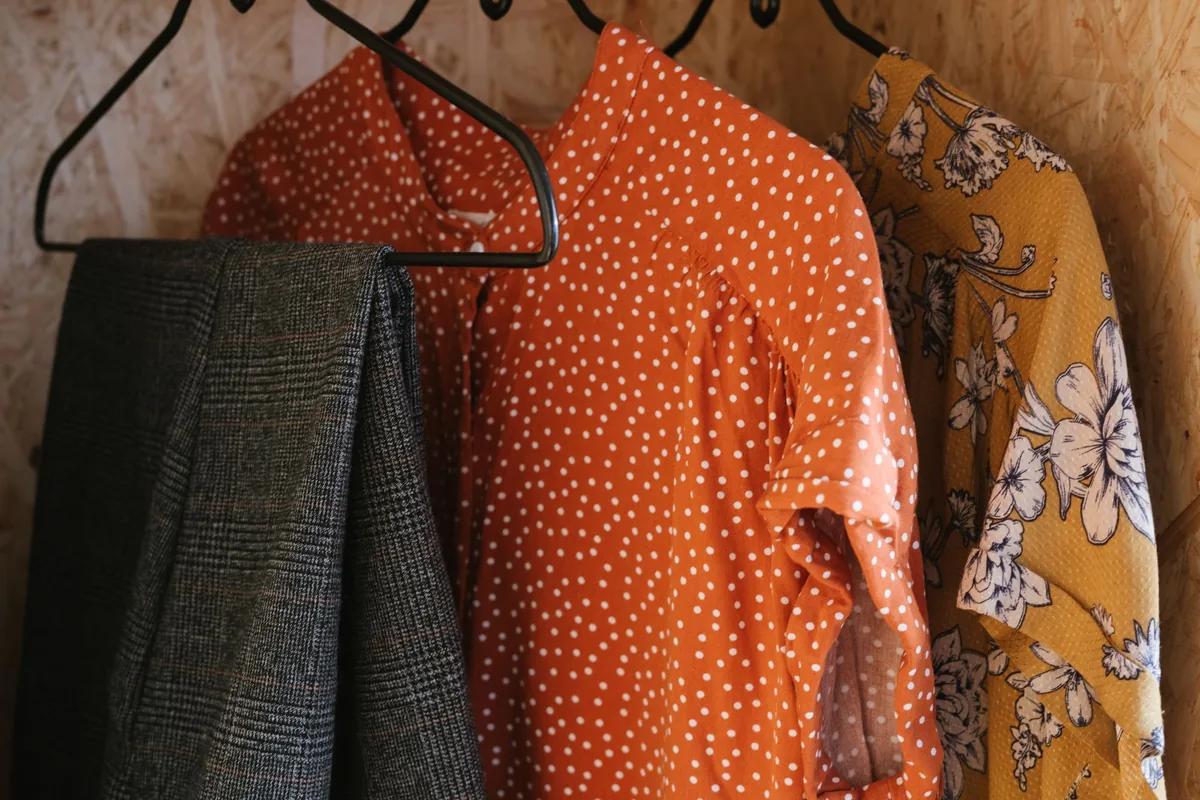
If changing a support is worthwhile, begin with a small number of the actual garments that need it. Compare occupied space and retrieval again without adding an unapproved load. Keep or reconsider the arrangement on its real requirements; a disappointing space result is not a reason to force a purchase or discard needed clothes.
If shoes interfere with access below the rod, our comparison of an over-the-door shoe organizer and a floor shoe rack evaluates each complete proposal separately. A crowded floor does not automatically approve hanging storage on a door.
How do you keep a short rod from filling up again?
Record the clothing that belongs in the space and revisit the complete arrangement when needs change. A hanger count can be a personal planning aid, not a universal household limit or a rule that a needed new item requires throwing something away. Moving an item elsewhere also needs a suitable storage home.
If helpful, turn hangers backward and turn them normally after wearing an item. This is an optional record of use during that period, not an automatic donation list. Consider season, occasional use, uniforms and essential or adaptive needs before deciding what to keep.
Keep only useful spares and store them where the intended user can reach them without disturbing other storage. Empty hangers do not cause purchases or prove spare load capacity. Review the garment list and actual occupied space rather than treating every empty hook as an invitation to fill it.
The SETS method follows the same order: Sort, Edit, Type, then Store. New hangers belong to the last step. If you want a guided start, the free 30-Day Home Reset walks through sorting before any buying, one room at a time.
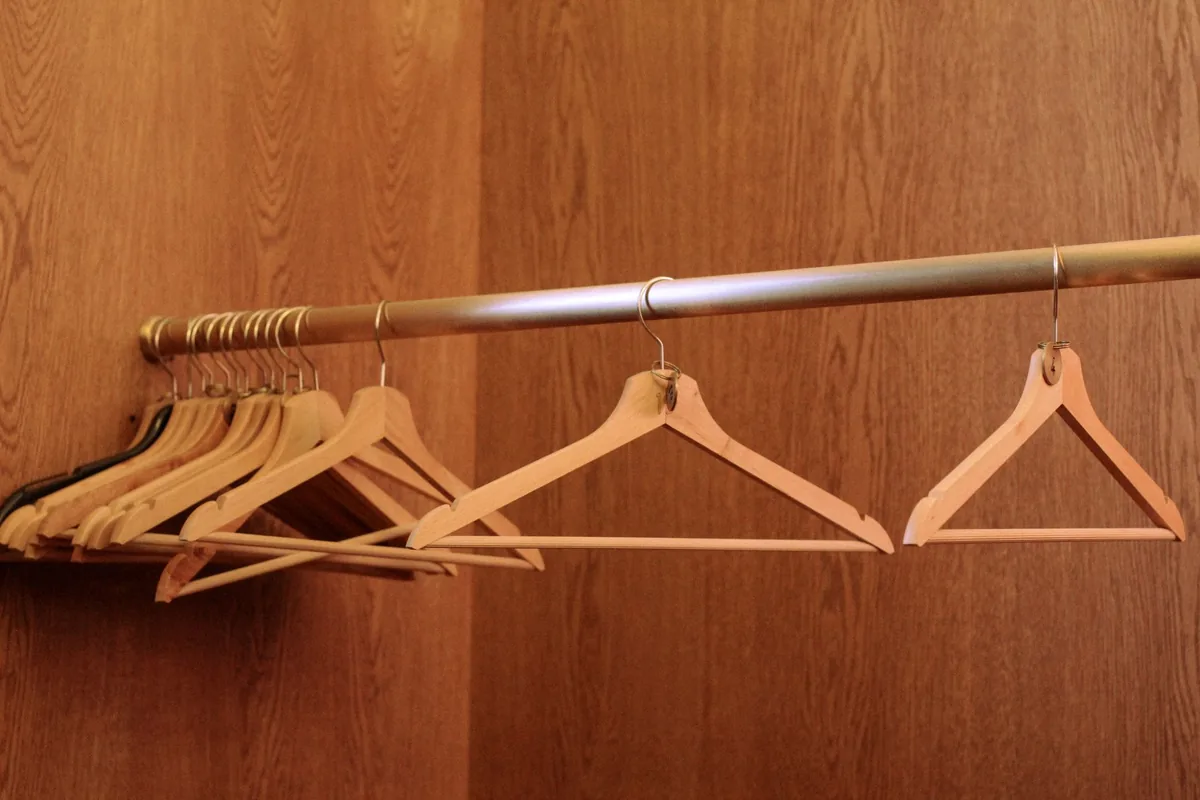
For more small closet guides built on measurements, visit the closet systems hub. Each guide starts with the tape measure and ends with a short list, so you buy only what the space needs.
Keep your garment list and the completed comparison record with any product instructions. A useful decision identifies what stays on existing supports, what needs a different support and what should be stored elsewhere. Unresolved fit or load requirements stay on hold.
Where should each type of slim hanger go on the rod?
Grouping garments by length may make the space below them easier to plan. Use a short-to-long order only if the actual rod access, garment support and adjacent storage suit it. A basket or folded stack below must leave the garment and retrieval routes clear; visible floor space alone does not approve another storage product.
Length does not establish the width a garment occupies on a rod. A short bulky item may need more space than a longer lightweight one. Review the actual section when it becomes difficult to use, without assuming that coats, dresses or shirts are always the cause.
Put frequently needed pieces where the intended user can identify and reach them. Rod ends are not universally the hardest positions to access, and off-season storage still needs suitable care and support. Reassess the actual arrangement when seasons or users change.

Leave enough usable space to remove and return the actual garments without forcing them. There is no universal hand-width gap or garments-per-foot target established here. Appropriate access depends on the user, clothing and storage layout.
If normal removal becomes difficult, reconsider the layout and the supports involved. Do not wait for a gap to disappear or for a weekly check when a hanger or rod moves unexpectedly, bends or no longer functions as instructed. Stop using the affected arrangement and obtain the appropriate manufacturer or qualified assessment.
Frequently asked questions
Are velvet hangers good for a small closet?
Flocked surfaces may suit some slippery garments, but grip and marking depend on the exact hanger and fabric. Follow garment-care and hanger instructions, and use folded storage where hanging could distort a knit. Do not infer universal performance or a denting timetable from the surface type.
What are the thinnest hangers for a closet?
There is no verified thinnest category or winning product in this guide. Compare the exact model’s published measurements and intended use. Empty-hanger thickness does not establish loaded clothing space, shoulder support, hook compatibility or the installed rod’s permitted load.
How do I fit more clothes on a short closet rod?
Identify which garments can hang, keep suitable existing supports and compare a defined set in the usable space. Check normal removal and return as well as the full system’s permitted load. A second rod or slimmer hanger is an option only when its own requirements are met; neither automatically creates usable capacity.
Do slim hangers damage clothes?
An unsuitable support may mark, snag or distort a garment. Follow the garment and hanger instructions, and change the support or storage method if problems appear. A shoulder seam, rounded end or one-week trial is not a universal protection rule. Woolmark recommends folding wool knits rather than hanging them.
Should all hangers in a closet match?
No. Keep or choose supports that suit each actual garment. Matching appearance may be a preference, but identical hangers do not make different garments the same width, align their hems or guarantee easy retrieval. Check the complete arrangement instead.
Sources
Sources checked November 1, 2026. Product pages provide model-specific features, not comparative testing. Woolmark’s care guidance here concerns wool; follow the actual garment’s instructions for other materials. SetsQuick has not tested hanger loads, rod installations, long-term garment outcomes or percentage space savings for this guide.
- IKEA US: BUMERANG hanger 302.385.43 — product width and thickness, distinct from packaging measurements.
- MAWA: Silhouette Shirt Hanger, Model 41F — rotating-hook feature. Marketing percentage savings and general garment-protection statements are not independent results established here.
- Woolmark: Caring for Wool — shaped or padded support for woven wool; gently folded storage for wool knits.
Written by the SetsQuick Team. First published · Last updated .
© SetsQuick. This article and its images may not be copied or republished without permission. To report reuse, see our DMCA page.
Was this guide helpful?
Save it for later or send it to someone