
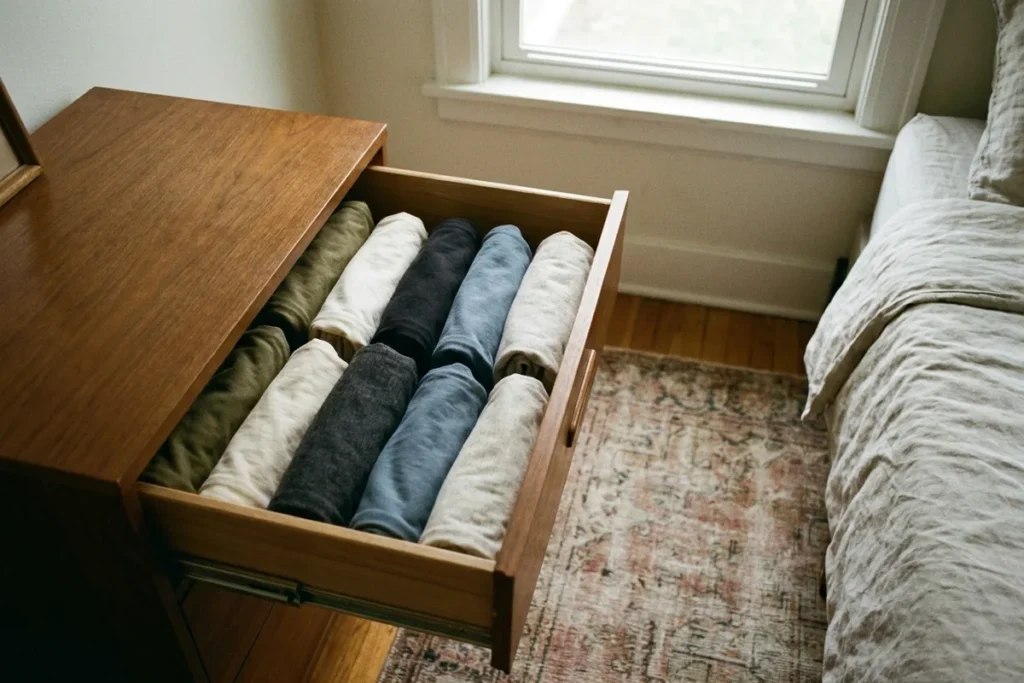
Clothes drawer organization gets easier when you fold to fit the drawer, not the other way around. Measure the usable space, then fold, roll or stack garments in a way that fits and respects their care instructions. Upright folds can improve visibility when they suit the fabric and drawer.
Choose a fold that fits the drawer and the garment.
Key takeawaysFour drawer decisions that last
- Measure usable space: allow clearance for the drawer to close.
- Choose a fold: use upright rows, rolls or stacks when suitable.
- Group by category: combine related items in a drawer when space is limited.
- Swap by season: move off season clothes out instead of squeezing them in.
Most dressers are packed in flat stacks. You lay shirts one on top of another, and the only piece you can see is the one on top. So you wear the same few items while the rest wait unseen.
Flat stacks also collapse each time you pull from the middle. One quick grab tips the whole pile, and a neat drawer turns into a tangle before the week is half over.
This guide shows how to measure each drawer, fold to fit, choose a layout, and keep the system working across the seasons. It follows the SetsQuick method, Sort, Edit, Type, Store, one drawer at a time.
Why do clothes drawers get messy so fast?
Drawers hide their contents from the side, so you only see the top layer of each stack. That makes it easy to forget what lies underneath, and it pushes you to dig every time you want something specific.
Digging is what breaks a drawer apart. Every time you pull a shirt from the middle of a stack, the pieces above it shift and slide, and the folds loosen until the stack falls over.
Overfilling adds to the problem, and it often starts with good intentions. When a drawer holds more than it comfortably can, clothes press against the top and catch on the frame, so the drawer jams and the pieces wrinkle.
Mixed categories can be harder to find if they are not separated. A divider can give shirts, shorts and pajamas distinct spaces in the same drawer.
That is why clothes drawer organization works best when it changes the way you fold, not just the way you stack. A small change in folding fixes most of these problems at once.
How do you start clothes drawer organization?
Begin with one drawer, not the whole dresser. Empty it onto the bed, wipe the inside clean, and lay the clothes out so you can see every piece in that category at once.
Next, measure the inside height of the drawer. That number guides the whole project, since it decides how tall each folded piece can stand while still letting the drawer close freely.
Fit the drawer: Measure the usable space, then fold, roll or stack each garment as appropriate. Leave enough clearance to close the drawer without forcing it.
Keep the drawer measurement as you sort, but let the garment’s care instructions determine whether it should hang or fold. A bulky item may need a wider shelf or separate folded storage rather than a hanger, especially if its weight could distort the fabric.
Look closely at what you actually wear. Set aside items you no longer need. Donate clean, usable clothing, and handle worn-out pieces according to local recycling or disposal guidance.
The steps below apply the SetsQuick method to a single clothes drawer, so the dresser can be finished in short sessions.
- Sort: group the pile by category, such as tees, sweaters, pants, or pajamas.
- Edit: remove pieces that do not fit, are worn out, or never get worn.
- Type: decide which pieces fold well and which belong on a hanger.
- Store: use a suitable fold, roll or stack that leaves room for the drawer to close.
Once one drawer is done, move to the next. Finishing a full drawer before starting another keeps the bedroom usable, and it gives you a clear win each session.
Keep a donate bag nearby the whole time. Dropping pieces in as you go makes the edit step feel quick, and it prevents a second pile of maybe items from forming.
How should you fold clothes for a drawer?
For an upright fold, make a rectangle and fold it in halves or thirds until it fits below the drawer clearance. Use another method if the garment does not stand well or its care instructions call for different storage.
Tees and light knits fold into small, firm rectangles that stand easily. Thicker sweaters need fewer folds, so they may stand taller and take up more width in the row.
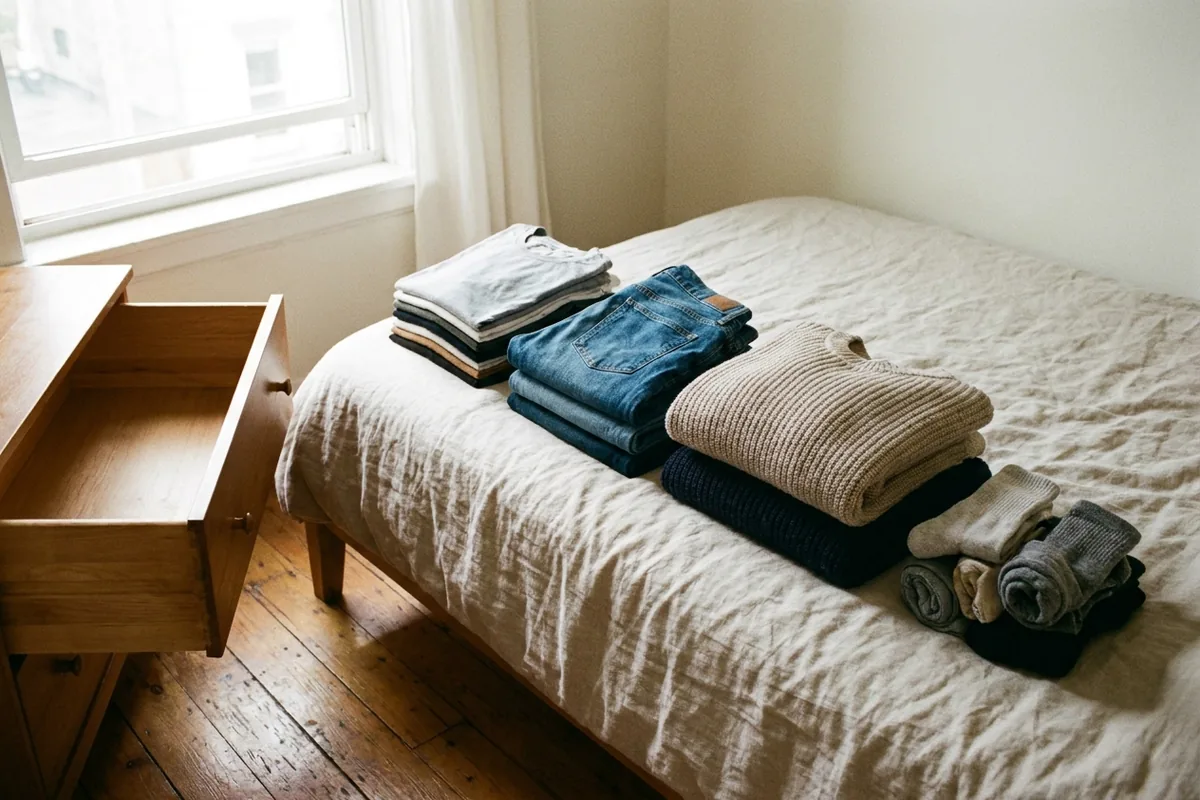
Fabric weight changes the fold more than size does. A thin tee may need an extra fold to stand firm, while a heavy knit stands well with only one or two folds.
Pants and jeans fold well too. Fold them in half lengthwise, then fold them again until they match the drawer height, so they stand in a row beside each other like files.
Some pieces work better rolled than folded. Thin pajamas, workout clothes, and soft leggings roll into compact tubes, which suit shallow drawers where an upright fold would be too tall.
Test a few folds before filling the drawer. Stand two or three pieces in the drawer and close it slowly, then adjust the fold if any item catches on the frame above.
Keep the folds consistent within each drawer. When every piece is folded to the same height, the rows line up neatly, and you can scan the whole drawer from above in a single look.
Clothes drawer organization depends on this one habit more than any other. A consistent fold makes the drawer readable, and a readable drawer stays tidy because nothing has to be dug out.
Which drawer should hold which clothes?
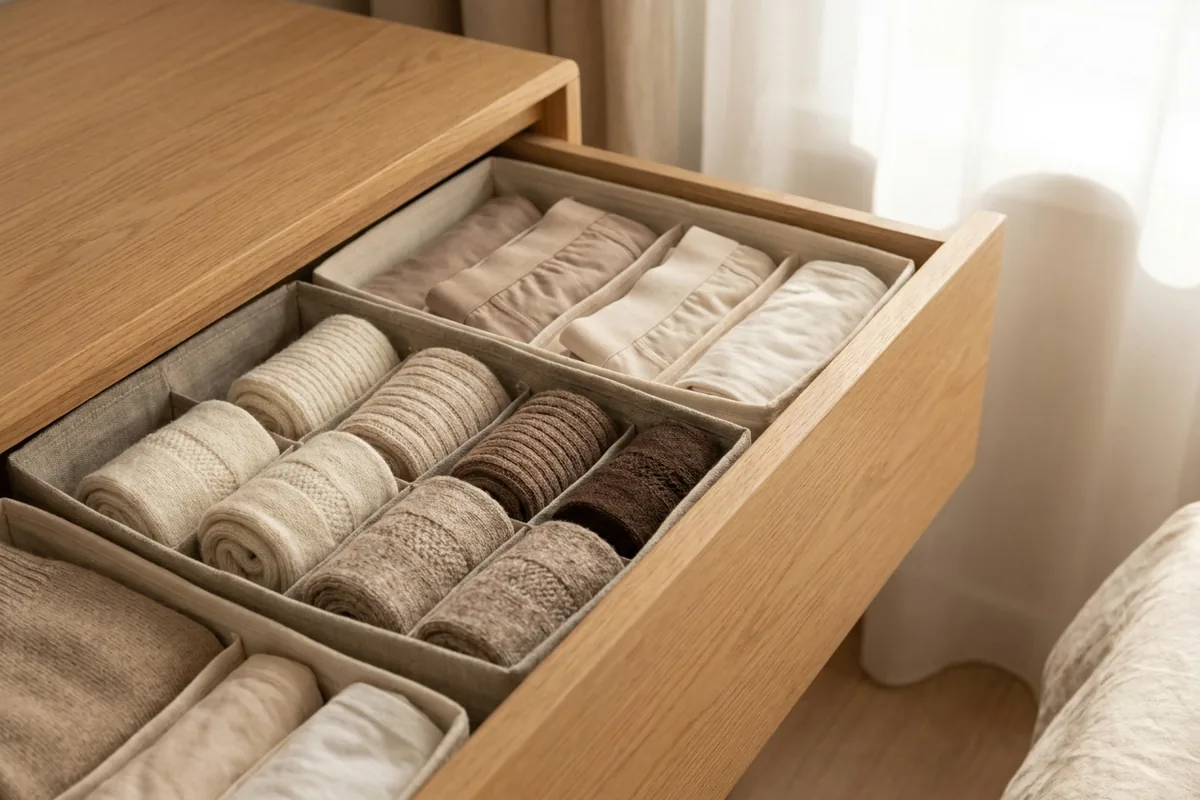
Give each category a clear space. Separate drawers are useful when available; dividers can keep related categories organized in a shared drawer.
Place the clothes you wear most in the easiest drawers to reach, since good clothes drawer organization puts daily pieces first. The most comfortable drawer varies with the dresser and the person using it.
Prevent tip-overs: Anchor the dresser using the manufacturer’s instructions and wall-appropriate hardware. Open one drawer at a time and do not let children climb on drawers. Heavy items low do not replace anchoring.
Place heavier items low within the dresser’s load limits, but do not rely on weight distribution to prevent a tip-over.
Anchor dressers and other tip-prone furniture to the wall using the manufacturer’s instructions and hardware appropriate to the wall. Open one drawer at a time, keep drawers closed when not in use, and do not let children climb on them. The CPSC Anchor It campaign explains tip-over prevention.
Label the drawer fronts if several people share the dresser. A small tag on the inside edge tells everyone where each category lives, which keeps clothes drawer organization steady when someone else puts the laundry away.
Accessible grouping can help children choose clothes with appropriate supervision; never let them climb on drawers or use an unsecured dresser.
Use simple dividers in wide drawers. A long drawer often holds two rows side by side, and a divider stops the rows from leaning into each other as clothes are pulled out.
If helpful, move some off-season clothes to suitable storage instead of overfilling drawers. Keep layers you still need accessible when weather varies.
When the seasons turn, the swap takes only a short session. Trade the bins, refold any pieces that lost their shape, and edit again as you go, so the dresser never gets overfilled.
For hanging pieces, see the guide to the best slim hangers for a short closet rod. Browse more closet guides, or start with the free reset checklist.
How do you organize drawers that are too deep or too shallow?
Not every dresser has drawers in a helpful size. Some drawers are so deep that folded clothes collapse into a pile. Others are so shallow that a sweater barely fits. Good clothes drawer organization adjusts the method to the drawer instead of forcing one fold everywhere.
In a deep drawer, file-folding still works, but the stacks need support. Use tall fabric boxes or shoe boxes as walls, and stand each folded piece upright inside them. The boxes stop items from tipping and let you see every shirt at once.
A deep drawer may accommodate rarely worn items flat at the bottom and a removable shallow tray of daily clothes above. Check the combined height and load limits, and lift the upper tray to reach the lower layer.
Shallow drawers suit small, flat items. Use them for underwear, socks, tank tops, and thin T-shirts. Rolling works well here, since rolls stay low and fill the space evenly from front to back.
Measure each drawer before you buy dividers, and write the numbers down. Note the inside height, width, and depth, since outside sizes can be misleading. Confirm that dividers and stored items fit without catching on the frame.
If a drawer still does not work, change what it holds rather than fighting it. A drawer that is wrong for sweaters may be perfect for belts and scarves. Matching items to the drawer shape is often the easiest fix of all.
Liners can help in any drawer size. A thin, washable liner protects the wood, keeps small items from sliding, and makes the drawer easy to wipe clean. Choose a breathable, unscented liner for clothing, since strong fragrances can transfer to fabric over time.
Cut it to the inside measurements and clean or replace it as needed, following its instructions.
Finally, test each new layout for one full week before you buy more inserts. Notice which drawers you open most and whether anything still tips or hides. Small changes after that test are cheaper and more useful than buying a full set of organizers on the first day.
Frequently asked questions
What is the best way to organize clothes in drawers?
Group related categories in separate drawers or divided sections. Choose folds, rolls or stacks that fit and follow garment care instructions. Put frequent items within easy reach and heavier ones low, but anchor the dresser rather than relying on weight distribution.
Is it better to roll or fold clothes in a drawer?
Upright folding can work for some tees, sweaters and pants, depending on the fabric and drawer. Rolling suits thin, soft clothes like pajamas, leggings, and workout wear, especially in shallow drawers. Many people use both, folding sturdier items and rolling the softest ones in the same dresser.
How do you keep folded clothes from falling over?
Fold each piece to the same height so the row supports itself, and fill the drawer from end to end without wide gaps. Use a divider or a small box at the end of each row to hold pieces upright. Avoid overfilling, since a crowded row tips once a piece is pulled.
How do you organize a dresser with only a few drawers?
Combine related categories only where each remains easy to reach, and use suitable separate off-season storage. Do not automatically hang thick sweaters to free drawer space: many knits need folded support. Follow the garment’s care instructions and use a suitable shelf or container if the drawer is too small.
What should go in the top drawer of a dresser?
A top drawer can hold small daily items such as socks, underwear and tees if its height is comfortable for the person using it. Use small boxes or dividers to keep those small pieces separate. Keep heavier clothes low within load limits, and anchor the dresser; low placement alone does not prevent tipping.
How often should you reorganize clothes drawers?
A full reset fits well at each change of season, when you swap off season clothes into storage. Between resets, refold any piece that loses its shape as you put laundry away. That quick habit keeps the rows neat, so the dresser rarely needs a complete redo.
Written by the SetsQuick Team. First published · Last updated .
© SetsQuick. This article and its images may not be copied or republished without permission. To report reuse, see our DMCA page.
Was this guide helpful?
Save it for later or send it to someone