
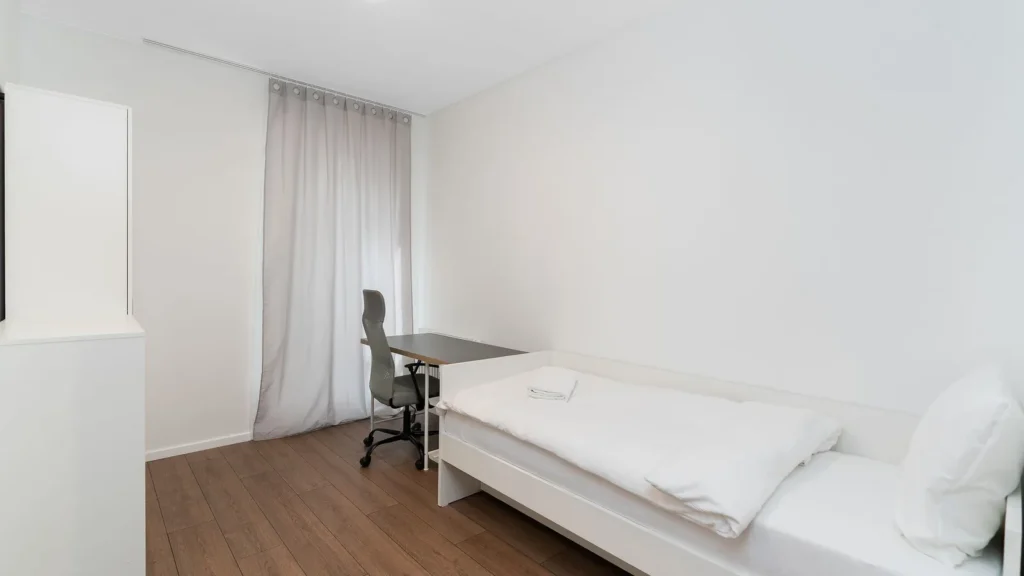
Move-in day makes a dorm room look finished, but the real test comes weeks later. Laundry piles up, snacks spill across the desk, and one bag is still unpacked under the bed. These dorm room organization ideas for freshmen focus on what keeps a small shared room working through the whole first semester.
A dorm room stays organized when every item has a home before it has a second copy.
Key takeawaysDecide these four things before you buy anything for a dorm
- Read the housing list: check rules on bed risers, adhesive hooks, and wall fasteners.
- Measure the room: bed height, under-bed clearance, closet width, and desk depth.
- Split shared and personal zones: agree with your roommate before move-in if you can.
- Bring less than you think: unpack first, then buy only what fills a real gap.
Dorm rooms are small by design, and many freshmen share one room with a stranger for the first time. That combination makes organization less about style and more about keeping two sets of belongings from blending into one pile.
Most shopping lists are written before students see their room, which is why so many dorm organizers go unused. A bin that looked perfect online may not fit under the bed, and a hook may break the housing rules on the first day.
This guide takes the opposite approach. It starts with the checks that prevent wasted purchases, then walks through ten ideas that hold up over a full semester rather than just on move-in weekend.
Late October is a useful moment for this list in most American colleges. Midterms are ending and fall break or Thanksgiving travel is coming. A trip home is the perfect time to swap summer clothes for winter gear and fix what is not working.
What should freshmen check before buying dorm organizers?
Start with your school’s housing rules, because they vary widely and they decide which organizers you can use. The three items that differ most from campus to campus are bed risers, adhesive hooks, and anything that goes into the wall.
Use your own institution’s current rules for your building and academic year. For an example of an official source, see the University of Arizona prohibited-items page, which directs residents to its full dorm policies and says items can change. Do not apply one university’s list to another residence.
Adhesive products, bed risers and wall fixings may be permitted, restricted or prohibited depending on the institution and room. Confirm the current policy and any required approval directly with housing staff before buying or installing; “removable” packaging is not permission by itself.
Read the list before you shop, and save a screenshot on your phone for quick reference in the store. Checking takes five minutes and can save both money and a damage charge at move-out. If a rule is unclear, ask your resident assistant before buying.
What are the best dorm room organization ideas for freshmen?
The ten dorm room organization ideas for freshmen below follow the order that works best in a real room. Early ideas prevent problems, while later ones handle the daily routines that keep the room calm through exams, laundry days, and visits from friends.
1. Measure under the bed at the height you will use
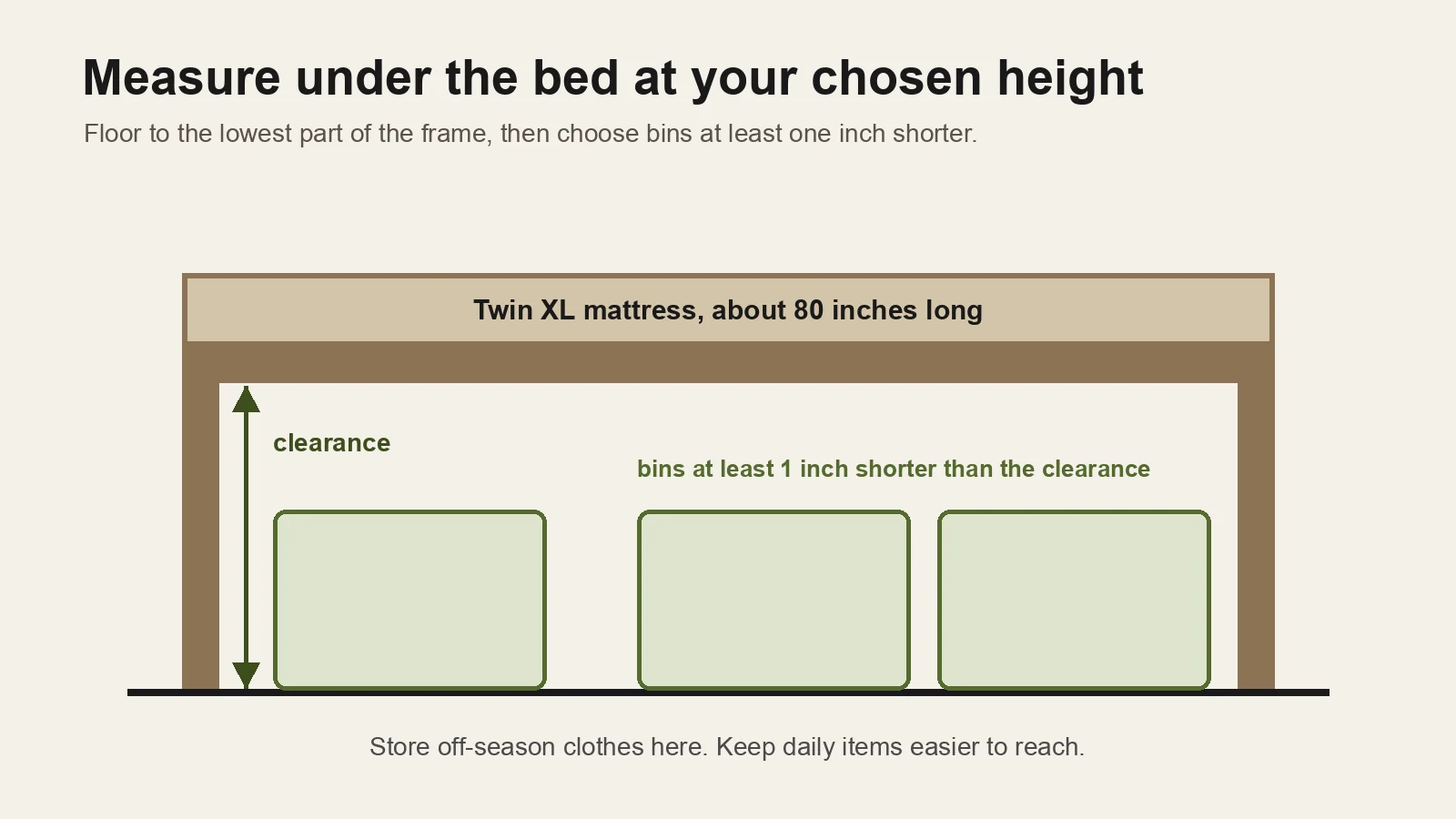
Many dorm beds adjust to several heights, and the space underneath is often the largest storage area in the room. Measure the clearance at the setting you plan to use, from the floor to the lowest part of the bed frame.
Choose bins at least an inch shorter than that clearance so they slide in and out easily. Standard dorm beds usually take a Twin XL mattress, which is about 80 inches long, so long, low bins can run the full length of the bed.
If your school allows bed risers and you need more height, check the allowed type first. Store off-season clothes and extra supplies here, and keep daily items somewhere easier to reach.
2. Give every item a home in the first week
The first week sets the pattern for the whole semester. Unpack everything, then give each category one clear home before classes get busy and bags start to pile up.
Think in zones rather than furniture. A sleep zone holds bedding and a small light, while a study zone holds books and chargers. A getting-ready zone holds toiletries, and a food zone holds snacks and dishes.
Once each zone is set, stop adding new storage for a while. Living with the room for two or three weeks shows you what actually needs a better home, which prevents buying organizers that solve problems you do not have.
3. Use the closet from floor to ceiling
Check the dorm closet’s actual usable height, depth and access, along with residence rules and the storage system’s instructions. Suitable folded storage and garment supports can help organize it, but slim matching hangers do not guarantee noticeable space savings or a higher rod load. Compare the actual garments and keep suitable supports you already own.
If your school allows it, a hanging closet organizer with fabric shelves adds space for folded shirts and jeans without tools. Keep the floor clear for shoes and a laundry hamper, so the closet door always closes.
Store bulky winter coats in a vacuum bag or bin until the weather turns. In late October, that swap is often due, and a trip home is a good time to exchange summer clothes for heavier layers.
4. Put the back of the door to work
Consider a door organizer only on a door and fixing method explicitly permitted by housing staff and the product instructions. Do not hang storage on a required fire, exit or egress door without express approval, even if the hooks need no drilling. A suitable closet door or freestanding storage may be a better option.
Keep exit routes, door handles, closers and latches unobstructed. A door must close and latch as required, but that check alone is not approval to load a fire or egress door. Obtain housing approval and confirm door, hinge and organizer compatibility before installation. See our door organizer and shoe rack comparison for measurement checks, not a substitute for residence safety rules.
A door organizer also keeps shared floor space clear. Two roommates can split the pockets evenly, which makes the arrangement feel fair and easy to maintain.

5. Build a simple shower routine
Shared bathrooms mean carrying toiletries back and forth, so choose a shower caddy that drains well and has a sturdy handle. Keep only the items you use daily inside it, and store refills in your room.
Hang your towel where it can dry fully between uses, such as on a hook or a towel bar if allowed. A damp towel folded on a chair can smell within days in a warm room with little airflow.
Add a pair of shower shoes and a small bag for your key or ID. Having everything in one caddy means you can leave the room in seconds without searching for a missing item.
6. Create a launch pad by the door or desk
A launch pad is one small spot where your keys, student ID, wallet, earbuds, and charger always live. Choose a tray or shallow bin near the door or on the corner of the desk.
Empty your pockets into it every time you come back to the room. That single habit prevents the most common dorm panic, which is searching for an ID card five minutes before class or a dining hall closing.
Add a small notepad or sticky notes for reminders, such as laundry day or a form that is due. Keeping those reminders in the same spot as your keys means you see them before walking out.
7. Keep food sealed and together
Food attracts pests quickly in a residence hall, so store snacks in sealed containers or a lidded bin rather than open bags. Keep all food in one zone, ideally near the mini fridge if you have one.
Check the housing rules for appliances before bringing a mini fridge, microwave, or kettle. Many schools limit fridge size and ban open-coil appliances, so confirm the rules before buying.
Wipe the food zone once a week and throw out anything past its date. A small, clean food area is easier to share and far less likely to cause a conflict with your roommate.

8. Choose stackable bins that fit your space
Stackable bins turn a corner, a shelf, or the top of a wardrobe into usable storage. Measure the space first, then choose one bin size that stacks neatly, so the stack stays stable when you pull the lower bin out.
Clear bins make it easy to see what is inside, while labeled opaque bins look calmer in a small room. Our guide to stackable bins built for renters covers bin sizes that work without drilling, which suits dorm rules well.
Keep the heaviest bin at the bottom and the items you use most at the top. A stack that needs to be unpacked to reach one thing will soon stop being used.
9. Set up a laundry routine and hamper spot
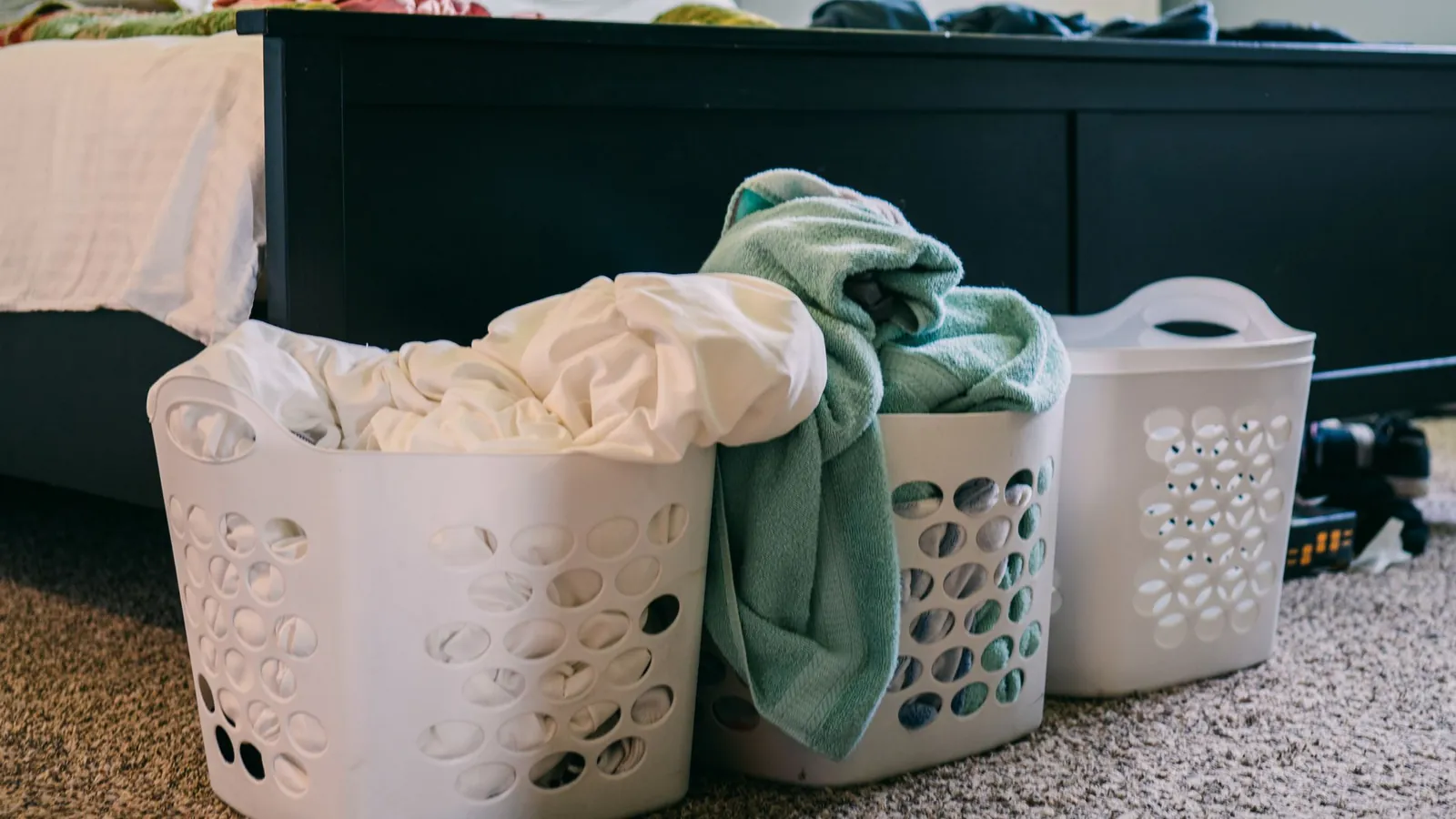
Laundry is one of the biggest sources of dorm clutter. Choose a hamper that fits in the closet or under the desk, and pick a regular laundry day so the pile never grows beyond a single load.
A hamper with a handle or a laundry bag with a shoulder strap makes the trip to the laundry room easier. Keep detergent pods or a small bottle in a sealed container with your quarters or laundry card.
Fold or hang clean clothes as soon as you return to the room. Clean laundry left in a bag tends to become a second pile, and it quickly blends back into the dirty one.
10. Agree on shared zones with your roommate
A shared room works best when both people know which spaces are personal and which are shared. Talk early about the fridge, the floor space, the door organizer, and where guests can put their bags.
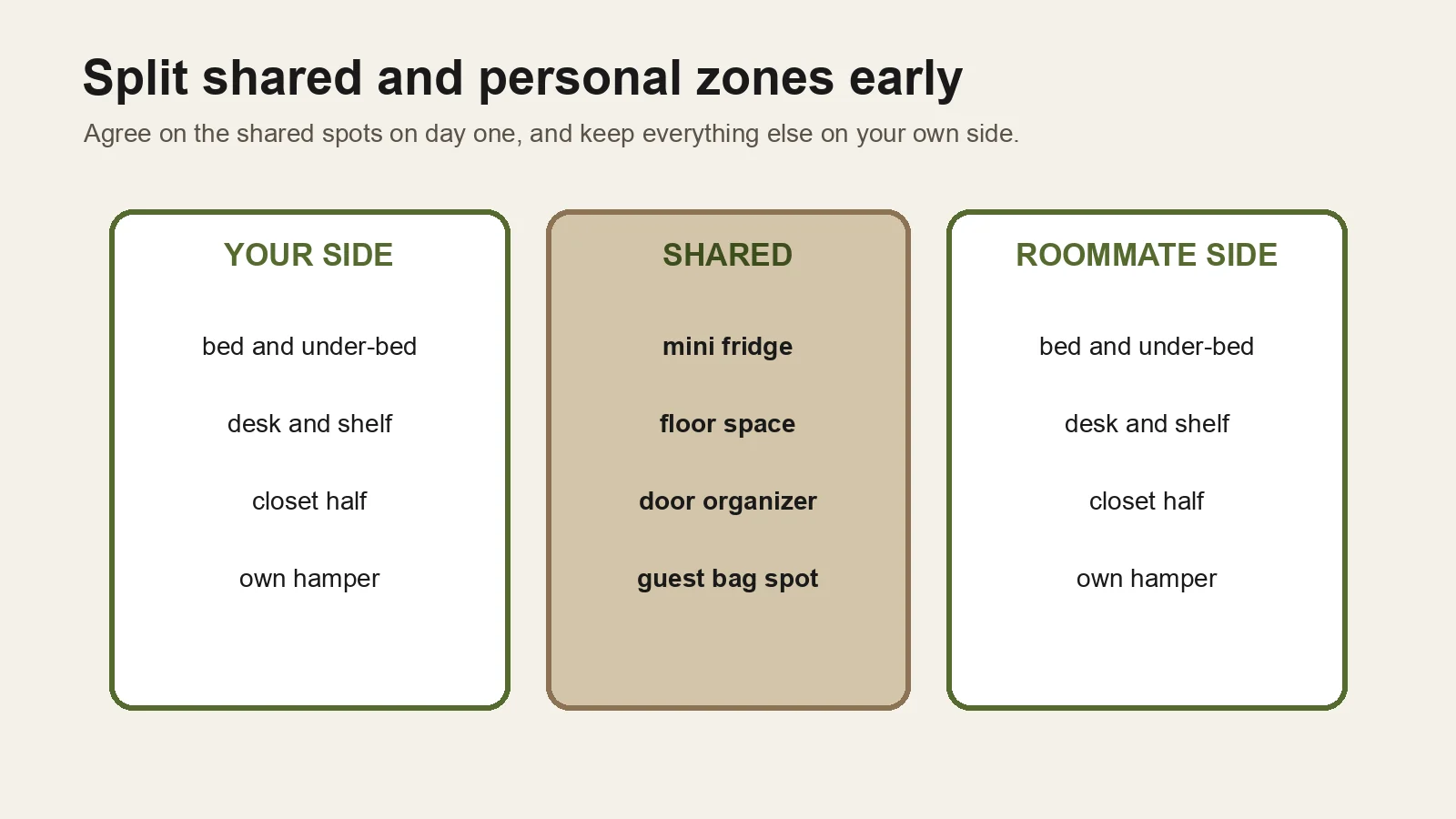
Split storage evenly and label shared bins broadly, such as snacks or cleaning supplies. A short weekly check-in helps you adjust the setup as routines change during the semester.
Being clear about zones prevents small annoyances from turning into bigger conflicts. It also keeps the room easier to clean, since each person knows which areas they are responsible for.
What goes wrong in a dorm room?
The most common failure is the move-in pile. A bag or box that never got unpacked sits under the bed or in a corner, and other items slowly join it until it becomes a second, unsorted storage area.
The early warning is anything still in a moving bag after the second week. That item either needs a proper home or should go back home with a family member or during fall break. Deciding quickly keeps the pile from growing and frees the floor again.
The second failure is buying too much storage. Organizers bought before move-in often do not fit, and extra bins become clutter themselves, so wait a few weeks before buying more.
The third failure is letting the desk become a catchall. When books, mail, dishes, and laundry all land on the desk, studying gets harder, so clear it fully at least once a day and keep only current coursework on top.
How do you reset a dorm room in five minutes?
A short weekly reset keeps the room manageable through busy weeks. Choose the same time each week, such as Sunday evening before classes start again.
- Put every item on the bed or floor back in its zone.
- Empty the trash and recycling.
- Move clean laundry into the closet or drawers.
- Wipe the desk and food zone.
- Refill the launch pad with keys, ID, and charger.
For a larger version that covers any small home, our free home reset checklist follows the same calm order room by room. It is helpful before a long break or when a roommate is visiting family.
Before winter break, run a slightly longer version of the reset. Take home anything you will not need until spring, empty the fridge, and leave the room clean so returning in January feels easy rather than overwhelming.
These dorm room organization ideas for freshmen work best when they become weekly habits rather than a single project. More ideas for tight living spaces are in our small space organization guides.
Frequently asked questions
What do freshmen forget to bring for dorm organization?
Freshmen often forget a tape measure, a small tool kit, removable hooks if allowed, and a lidded bin for snacks. A power strip that meets housing rules is also easy to overlook. Bring those basics first, then buy larger organizers after you see the room.
How do you maximize storage in a small dorm room?
Use only storage zones and configurations permitted for your residence. Check the bed manufacturer’s instructions and housing rules before adding risers or under-bed storage; keep exits clear. Door storage needs explicit permission where fire or egress requirements apply, and bins may be stacked only within their approved configuration and load limits.
Are bed risers allowed in dorms?
It depends on the school. Some residence halls allow bed risers, while others restrict or ban them for safety reasons. Check your housing rules or ask your resident assistant before buying risers, and use the bed’s built-in height settings if they are available.
How do you keep a shared dorm room organized?
Agree on personal and shared zones early, split storage evenly, and label shared bins broadly. A weekly five-minute reset and a short check-in with your roommate help keep the room tidy and prevent small annoyances from building into larger conflicts.
What should go under a dorm bed?
Store off-season clothes, extra bedding, spare supplies, and items you use less than weekly under the bed. Choose bins at least an inch shorter than the clearance so they slide easily, and keep daily items somewhere easier to reach, such as the desk or closet.
Related hanger-fit guide
For garment-support and loaded-spacing checks, see our slim-hanger fit guide. Keep the actual product instructions and garment-care directions with your storage plan.
Written by the SetsQuick Team. First published · Last updated .
© SetsQuick. This article and its images may not be copied or republished without permission. To report reuse, see our DMCA page.
Was this guide helpful?
Save it for later or send it to someone