

Comparing Elfa vs IKEA Boaxel on a tight budget starts with a complete, permitted layout—not a shelf count or a photo. Measure the usable space, confirm the exact system’s wall attachment and compare everything needed for the same storage job. This guide separates those checks so a low parts count does not become an incomplete order.
Key takeawaysDecide these before you open a planner
- Measure the back wall at several heights. Use the smallest reading as a starting point, then apply the exact system’s clearances.
- Confirm the wall and fixing plan first. Use the system’s specified fasteners, spacing and load limits rather than a universal anchor rule.
- Count all required uprights, brackets, fixings and storage components. Do not remove specified supports to reduce cost.
- Compare complete configurations that give the same belongings usable homes.
- Include tall items you actually need, with suitable support and retrieval space; do not reserve a universal bay by default.
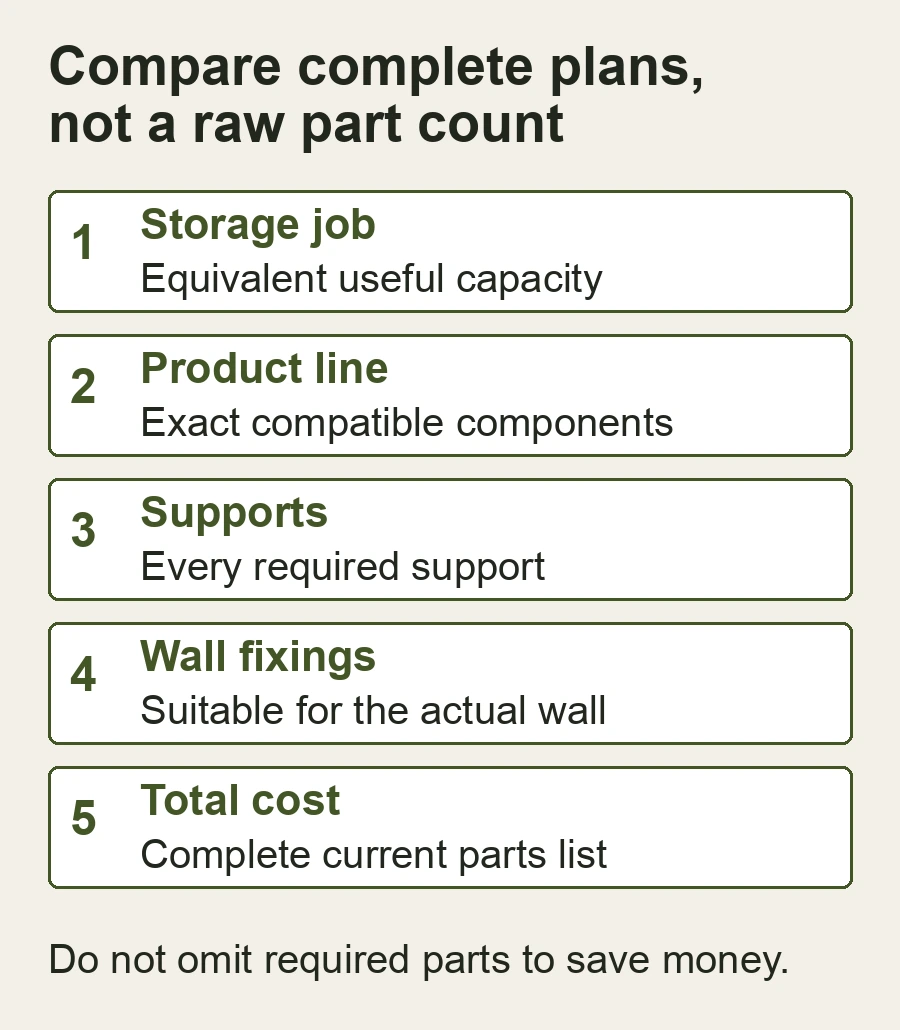
Elfa vs IKEA Boaxel: what is the real difference?
Elfa and BOAXEL both offer adjustable storage, but do not assume they use the same wall attachment or load path. IKEA states that BOAXEL suspension rail 104.487.40 is an aid during mounting and must not carry weight. Follow the BOAXEL upright instructions and the instructions for the exact Elfa product line separately.
Adjustability can help when storage needs change, but permitted positions and compatible parts depend on the system. Confirm what can be moved and how, rather than assuming every shelf or rod can be repositioned without other changes.
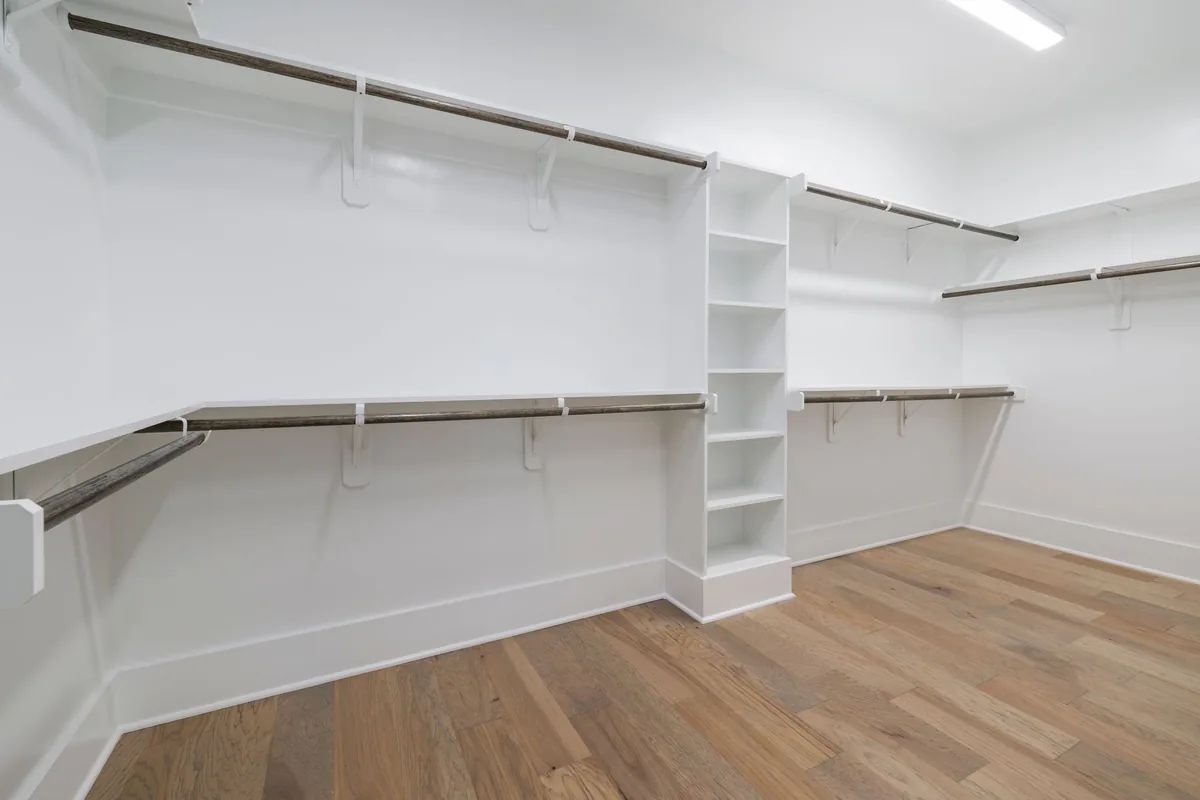
Elfa is sold through The Container Store, and its catalogue is wide. There are many basket depths, drawer frames, shoe racks and finish options. That range is useful when a closet has an odd corner or a sloped ceiling that needs a special part.
Boaxel is IKEA‘s version, with a shorter parts list and a simpler planner. Fewer choices can be a strength. When the closet is a plain box, a short list stops you from filling the wall with parts you will never use.
For a budget closet, compare the total cost of complete configurations that solve the same storage problem. The fewest parts is not automatically the cheapest or most suitable plan, and required supports are not optional.
How do you measure a small closet before choosing a system?
Measure instead of assuming the closet is square. Check width at several heights, depth along the proposed storage and obstructions around the opening. Trim, uneven walls and existing fittings can change the usable space.
Record the measurements before opening a planner. A planner needs accurate inputs and does not replace verification of the actual wall, clearances or installation requirements.
- Back-wall width at several heights covering the planned installation. Record the smallest reading and any local obstructions.
- Clear depth at several points, including trim and existing doors. Separately record clearance for handles, drawers and retrieval.
- Height from the floor to the ceiling, and from the floor to the bottom of any shelf that will stay.
- Wall construction and possible fixing locations, checked against the exact installation instructions. Identify utilities before any drilling; seek qualified help if uncertain.
The fixing plan matters as much as the dimensions. Wall construction, track design, fasteners, spacing and intended load determine a safe installation. Do not use a universal rule about a minimum stud count or the capacity of drywall anchors. Follow the exact system’s instructions and seek qualified advice if the wall or fixings are uncertain.

Use the smallest measured width as your starting point, then apply the exact system’s specified side, assembly and moving clearances. A universal one-inch deduction is not a fit rule for every Elfa or BOAXEL layout.
Which system fits a narrow reach-in closet better?
A narrow closet can have more back-wall space than accessible opening. Compare usable access and each system’s permitted component sizes. Choosing fewer standards is not a fit rule and must not override required support spacing.
| Planning check | Elfa | IKEA BOAXEL |
|---|---|---|
| Exact system | Identify the product line and its current instructions | Identify the exact uprights, brackets and compatible components |
| Wall attachment | Follow that line’s required method and fixings | Follow the upright instructions; the suspension rail is a mounting aid only |
| Bay layout | Use permitted widths, spans and support positions | Use permitted widths, spans and support positions |
| Budget comparison | Price the complete parts list for your storage needs | Price the complete parts list for the same needs |
| Access | Check retrieval and all moving parts at the opening | Check retrieval and all moving parts at the opening |
There is no universal wall-width band that establishes the correct number of bays or standards. Required supports depend on the exact configuration, component spans, attachment method and intended load.
Start with the storage jobs: hanging lengths, folded groups and items needing a drawer or basket. Use each current planner and its instructions to build a permitted layout. Compare equivalent useful capacity, not necessarily identical bay widths.
This is where a budget plan usually goes wrong. People compare a full Elfa plan against a full Boaxel plan, each designed by a different planner. The result is two very different closets, and the cheaper one wins for the wrong reason.
Where does the budget actually go in a closet system?
Compare the actual bill of materials and current prices. Include the mounting components, every required support, compatible brackets, storage fittings and any wall-specific fixings or installation costs. A raw part count cannot predict total price across brands or configurations.
“Bays plus one” can describe some simple shared-upright layouts, but it is not a universal support specification. Use the exact configuration’s required upright positions and quantities. Do not infer a permitted layout from a generic counting formula.
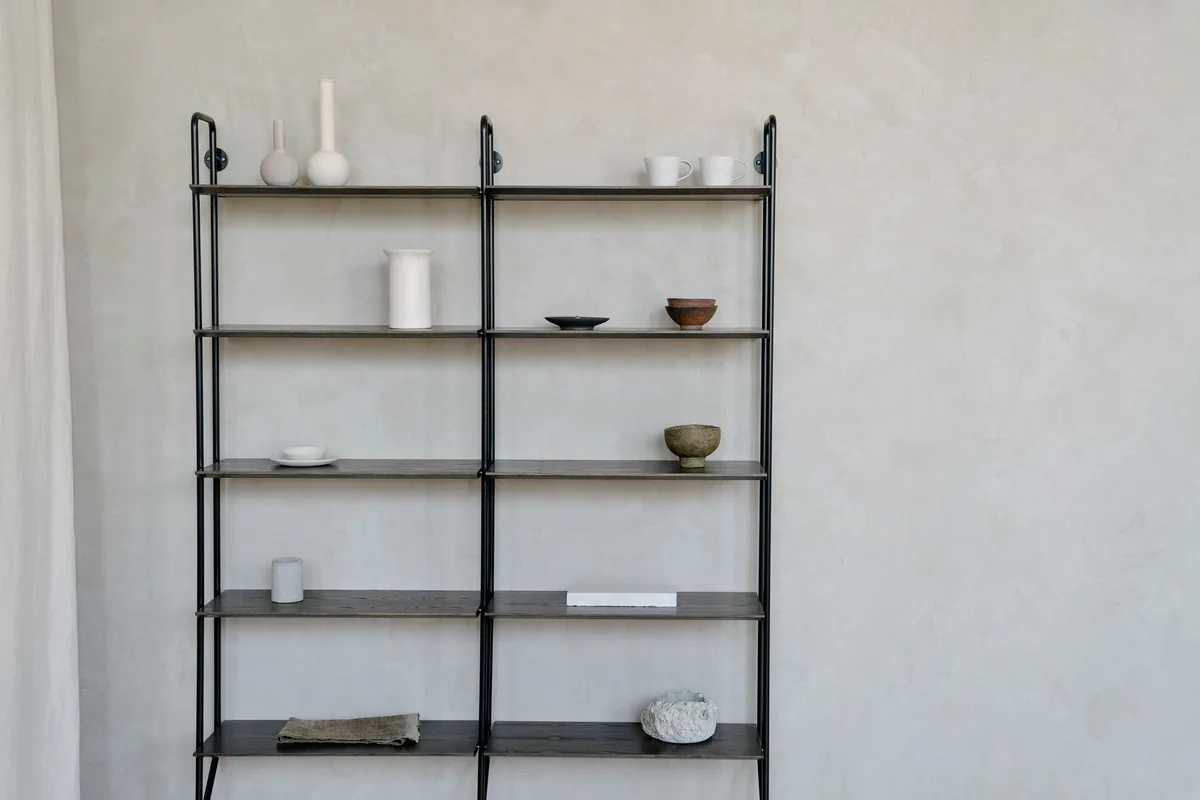
Accessories are the second budget trap. Mesh drawers, pull out baskets and shoe shelves feel like upgrades in a showroom. In a small closet they often block the rod below them or push clothes forward into the door.
Resolve the complete approved structure before ordering. Add optional drawers or baskets only when they solve an identified need and are compatible with the layout. Do not postpone a component required for support or safe use.
Avoid a universal one-accessory limit. Compare the complete configurations on cost, usability and suitability. A simpler plan is useful only if it still meets the instructions and gives the needed items workable homes.
What goes wrong with wall-hung closet systems?
An incorrect wall attachment or unsupported component can make storage unsafe. BOAXEL’s rail must not be treated as the load-bearing part of a different system. Follow the exact instructions and load limits; do not predict fixing capacity from a generic drywall or stud-count rule.
Unexpected movement, tilting or separation warrants stopping use of the affected storage and keeping people clear. Arrange a safe assessment by a qualified person. Do not assume the visible symptom identifies the failed part, and do not blindly tighten or add screws.
The second failure is a rod set too low. A standard rod height works for shirts but not for dresses or long coats. If long items touch the floor or the shelf below, the whole bay becomes a pile. Measure your longest item on its hanger before you set rod heights.
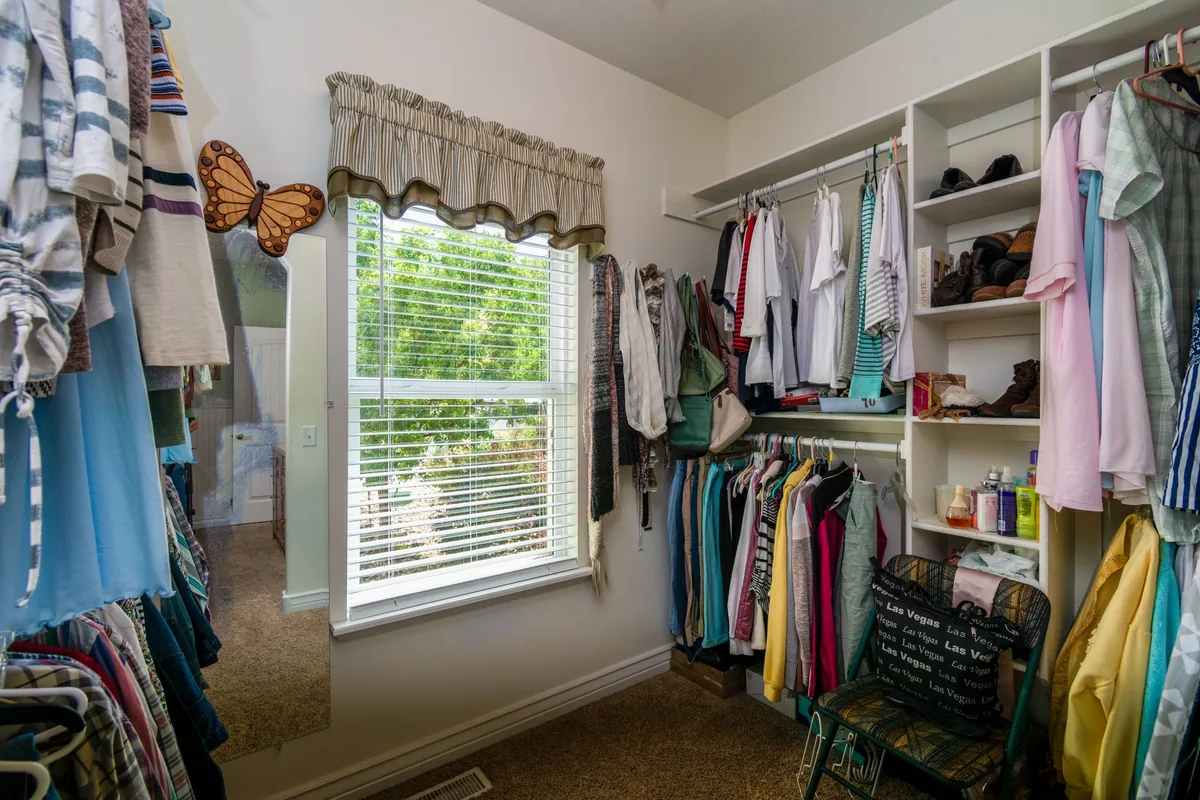
Another failure is storage that fits the back wall but cannot be used through the opening. Check shelf depth, side returns, drawers and the route needed to select and return items. Do not count inaccessible space as useful storage.
Measurements alone do not establish installation safety. Each system must use its own compatible components, correct wall fixings, spacing and load limits. Use the Elfa instructions for the exact product line and the IKEA BOAXEL wall-upright instructions, then check the instructions supplied with the components you actually buy.
What must you confirm before installation?
Installation time and the number of helpers depend on the configuration, wall and required tools. Do not promise a half-day, one-person installation. Follow the system’s assembly sequence, utility checks and lifting instructions, and use a qualified installer where appropriate.
- Identify the exact product line, article numbers and current assembly instructions for every required component.
- Confirm permission, wall suitability, utilities and the specified fixing method before drilling or removing existing fittings.
- Check the proposed upright positions, spans, compatible components and load limits against the exact configuration’s instructions.
- Plan the required assembly sequence, tools, working space and helpers from those instructions—not from a shared brand-neutral recipe.
- Verify access and movement for shelves, rods, baskets and drawers before committing to the layout.
- Load only after installation requirements are met and only within the specified limits. Stop use if unexpected movement, tilting or separation occurs.
A visual check after use does not prove load capacity or long-term fixing safety. Follow the specified inspection and maintenance instructions and arrange a safe assessment if anything changes unexpectedly.
If you rent, obtain permission for the exact fixing method before ordering. Fewer bays do not automatically mean fewer required holes or a permitted installation. If a suitable, permitted method cannot be established, choose another storage solution.
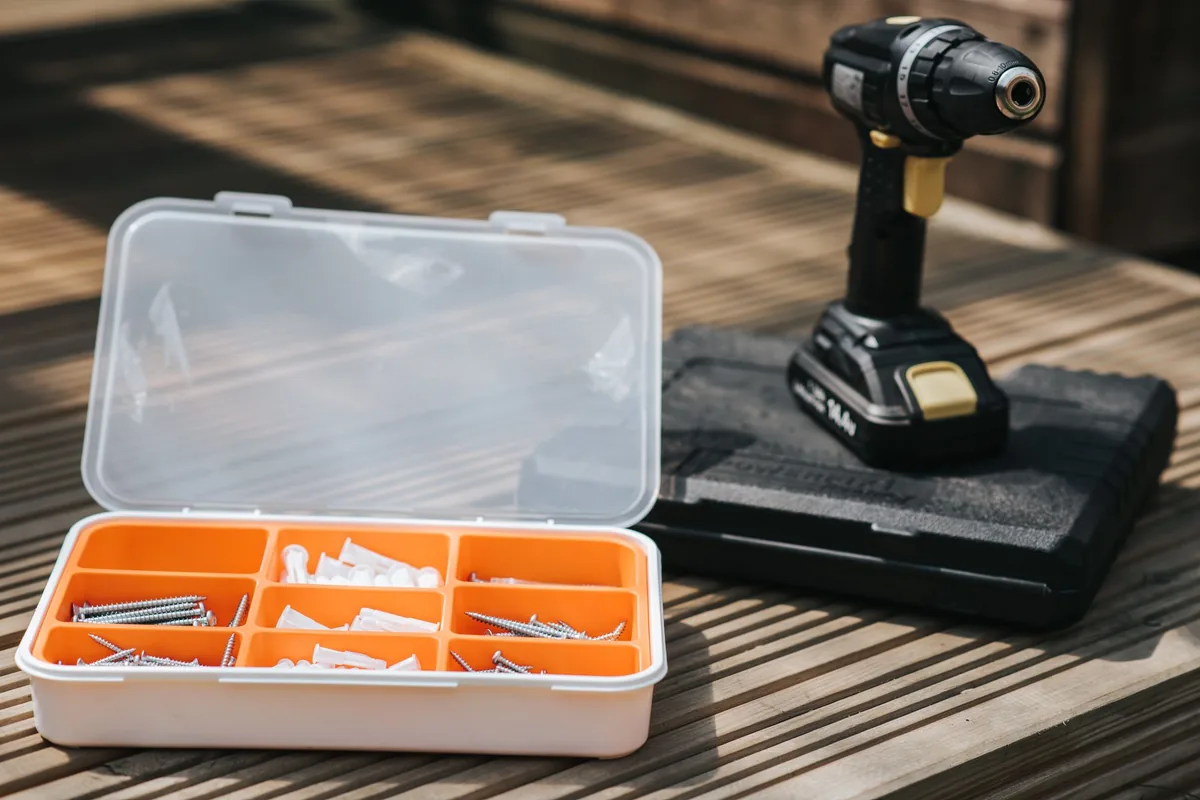
Part count helps compare cost, but do not remove specified uprights, brackets or fixings to reduce holes or installation time. Compare complete manufacturer-approved configurations, including the parts needed for the intended load.
How do you choose between them without regret?
Choose the complete layout that suits your belongings, available space and installation conditions. A plain wall does not automatically favor one brand, and a larger catalog does not guarantee a workable solution for a slope or corner.
Compare all required components and current costs for equivalent storage needs. Check usable shelf space, hanging lengths, access and any required installation work before comparing finishes.
Adjustability may let you adapt storage later, within the exact system’s limits. It is not a promise that both systems hang from the same kind of track or that every change takes minutes without new fixings.
Before you buy, look at your shoes. Shoes often decide whether a small closet works. If they cover the floor, plan for them first. You can also read our comparison of an over the door shoe organizer vs a shoe rack before you add a shoe shelf to the system.
For more closet plans built around real measurements, see the closet systems hub. If your whole home needs the same reset, start with the free 30-Day Home Reset, which walks through sorting before any shopping.

Sort before ordering. Include seasonal, occasional-use and protective items you still need, then measure their storage requirements. Buy for those belongings rather than filling every available wall with components.
That order follows the SETS method: Sort, Edit, Type, then Store. Identify the storage needs first, then choose a complete compatible system instead of buying parts and trying to make the contents fit afterward.
Frequently asked questions
Is Elfa worth it over IKEA Boaxel for a small closet?
Compare complete layouts and current prices for the same storage needs. A broader range is valuable only if its compatible components solve a real constraint. Check installation requirements, usable access and the exact parts list before deciding whether an additional cost is worthwhile.
Can you mix Elfa and Boaxel parts?
Do not assume components from Elfa and BOAXEL are interchangeable. Use only combinations approved for the exact product line. A proposal involving both systems still needs a permitted layout and separate verification of each system’s components and fixing method.
Do wall-hung closet systems need studs?
Follow the exact track and wall-fixing instructions for the system you buy. The wall material, intended load and required spacing determine suitable screws and plugs; a generic “two studs plus anchors” rule is not a substitute. If suitability is uncertain, ask the manufacturer or a qualified installer before use.
How many vertical standards does a small closet need?
Use the exact configuration’s required upright positions and quantities. “Bays plus one” is not a universal rule, and closet width alone does not determine the number. Do not omit required uprights, brackets or fixings to reduce cost or drilling.
What is the best closet system for renters?
Obtain landlord permission for the required fixing method before buying a wall-mounted system. Choose a manufacturer-approved layout, not simply the one with the fewest holes. If safe, permitted installation is not possible, use a different storage solution.
Sources
BOAXEL’s rail function and the related installation wording were refreshed on November 1, 2026 using the model-specific sources below. This is not a universal installation procedure. Confirm the exact Elfa line, BOAXEL components and current supplied instructions before buying or installing.
- Elfa product range: The Container Store: Elfa
- Elfa closet planning tools: The Container Store Design Center
- BOAXEL rail is a mounting aid only, not load-bearing: IKEA BOAXEL rail 104.487.40; wall attachment: IKEA BOAXEL upright instructions
Written by the SetsQuick Team. First published · Last updated .
© SetsQuick. This article and its images may not be copied or republished without permission. To report reuse, see our DMCA page.
Was this guide helpful?
Save it for later or send it to someone