
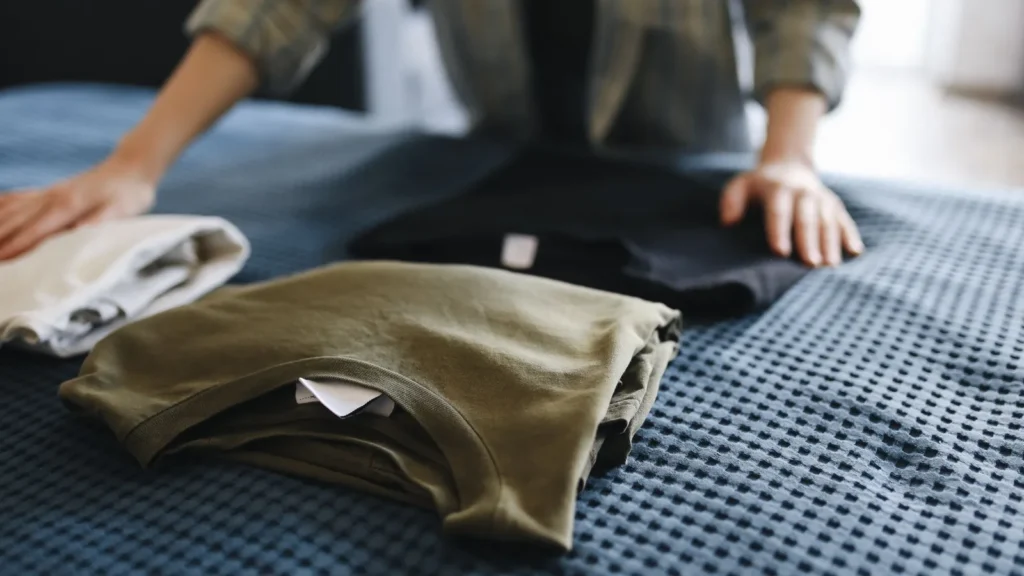
Learning how to fold clothes Marie Kondo style can make drawer contents easier to see. Keeping a row usable also depends on the garment, the drawer, and how easily you can return an item. Try one small section rather than refolding the whole dresser at once.
A useful fold also needs to suit the garment and drawer.
Key takeawaysFour checks that keep a file-folded drawer standing
- Measure the inside height: as a SetsQuick rule of thumb, fold every packet about one inch shorter than the drawer interior.
- Use the stand test: try standing one packet and returning it to the row; the three-second check is only an informal trial, not a standard.
- Triage the fabric: slippery, very thin, or bulky pieces get a roll, a box, or a hanger.
- Stop at about 90 percent: leave enough room to lift one item out without moving its neighbors.
The KonMari fold is simple on paper, since you turn a flat garment into a neat rectangle and fold it into a small packet. Then you stand it on its edge, so you can see everything when the drawer opens.
A packet needs to clear the actual drawer opening and any moving parts. If it slumps when a neighboring item is removed, try another fold or a small divider. Packet height alone does not explain every untidy row.
This guide adds the missing measurements, so you will learn the basic fold and a quick way to size packets to your own drawers. You will also see which fabrics should never be forced upright, and the early sign that a row is about to collapse.
November is a good month to try it. Many American households swap summer clothes for sweaters around now, so drawers get repacked anyway, and heavier knits are exactly the items that expose a poorly sized fold.
How to fold clothes Marie Kondo style, step by step
The official method from KonMari, the company founded by Marie Kondo, follows the same pattern for most tops. It works for tees, long sleeves, and most knit shirts.
The goal is a smooth rectangle that folds down into a firm packet able to stand on one edge.
- Lay the garment flat: smooth it face down on a bed or a clean table.
- Fold one side toward the center: tuck the sleeve back along that edge.
- Repeat on the other side: you now have a long, narrow rectangle.
- Fold it in half lengthwise: leave a small gap at the top edge.
- Fold again into halves or thirds: the drawer height decides which one.
- Stand the packet on its folded edge: check that it stays upright.
That last fold is where most people guess. Tidying guides often say to fold into halves or thirds, but they rarely explain how to choose, and the right answer changes from drawer to drawer in the same dresser.
Take the choice seriously, because it decides whether the row holds. A shallow top drawer and a deep bottom drawer need different packet heights, even for the same shirt. The fold count should follow the drawer, not the garment.
Practice on three plain cotton tees first. They are forgiving, they fold into firm packets, and they show you quickly how your hands need to move before you try sweaters, leggings, or slippery blouses.
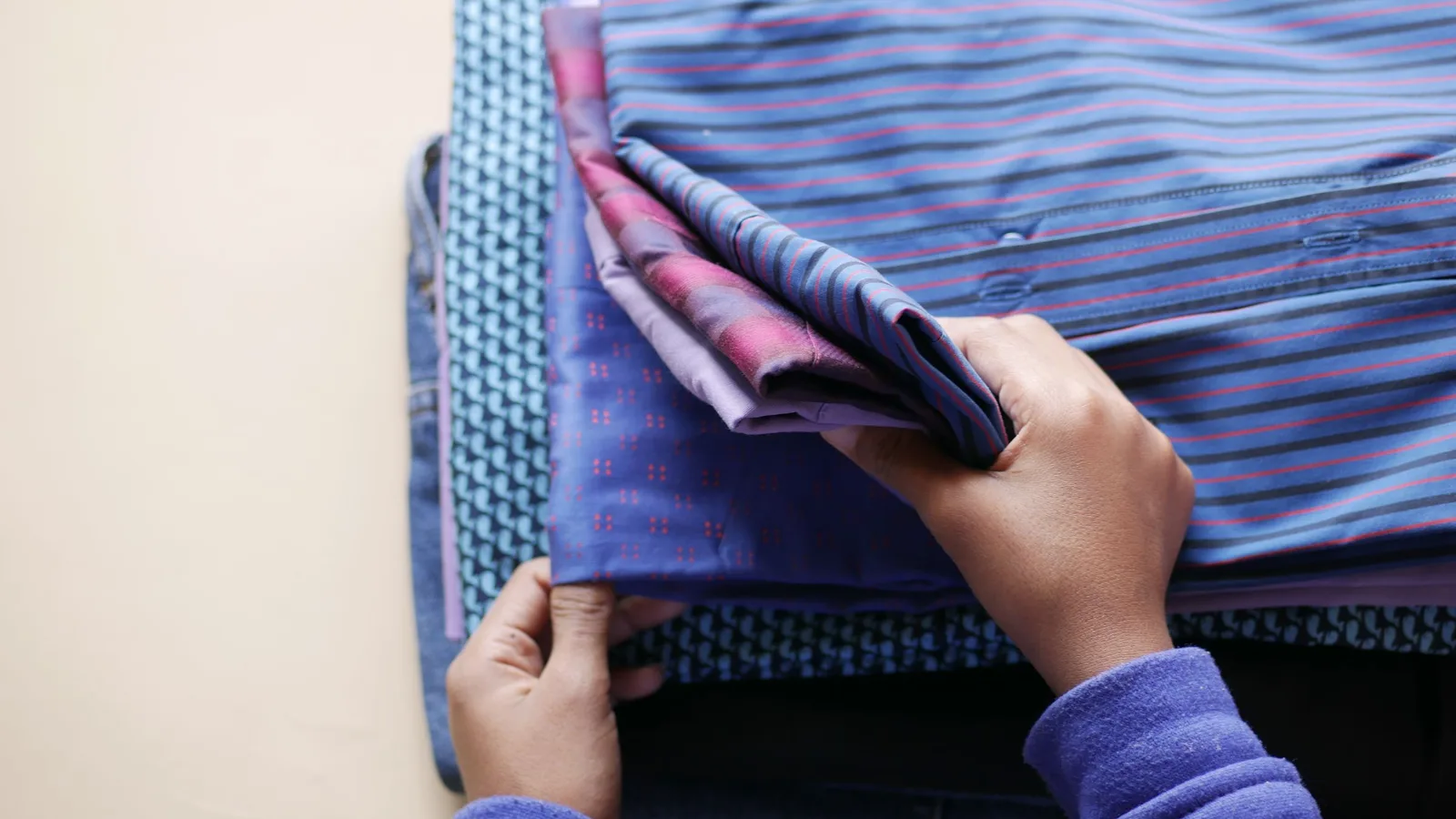
How tall should a folded packet be for your drawer?
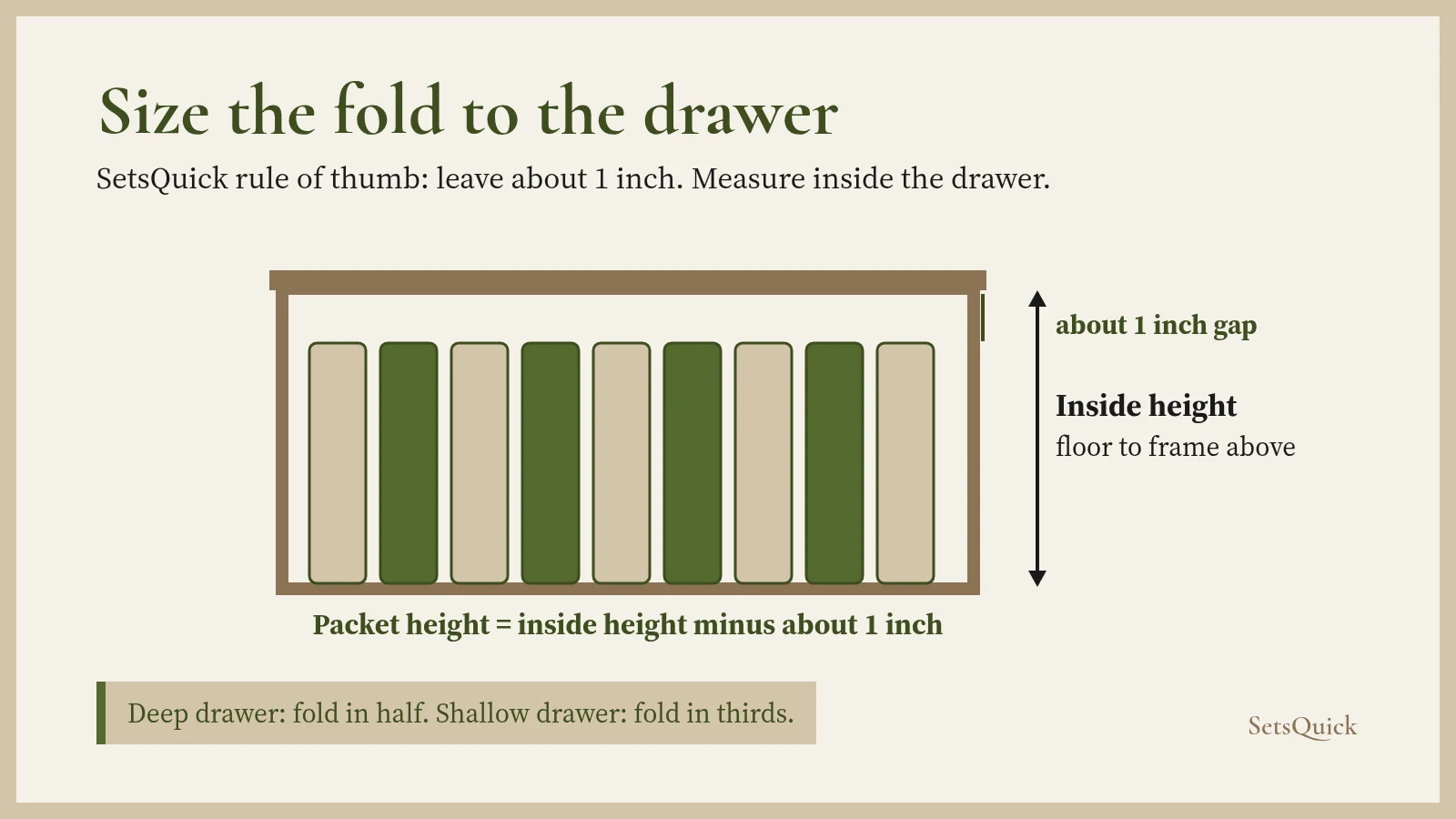
For an initial trial, a packet about 1 inch (2.5 cm) below the usable drawer height may be convenient. This is an untested SetsQuick planning example, not a KonMari specification or a required clearance. Check your actual opening, fabric and drawer movement, then adjust; a smaller or larger gap may suit your drawer better.
Measuring takes about two minutes per dresser, and it starts when you open each drawer and stand a ruler or tape measure inside it. Write down the height from the drawer floor to the frame above, not the height of the drawer front.
- Measure the inside height: check both the front and the back of the drawer.
- Try about 1 inch (2.5 cm) of clearance initially: this number is your target packet height.
- Fold one test item: stand it next to the ruler and compare.
- Adjust the fold count: use halves for deep drawers and thirds for shallow ones.
- Label the number inside: a strip of tape keeps the target visible.
Keep the numbers on a sticky note while you fold the first batch. Having the target height in front of you makes the refold faster and stops you from guessing drawer by drawer.
For illustration only, a 5-inch (12.7 cm) drawer and a 9-inch (22.9 cm) drawer offer different usable heights. Try halves or thirds with one garment, rather than assuming either fold will work from drawer height alone.
Width matters too, though less, since most tops fold to a packet about as wide as your hand. Running the packets from front to back, like files in a cabinet, lets you see every item at a glance.
Why do folded clothes fall over in the drawer?
Rows fall over for three reasons, and they often happen together. The packets are too short, the fabric is too soft to hold a crease, or the drawer is so loose that nothing supports the row.
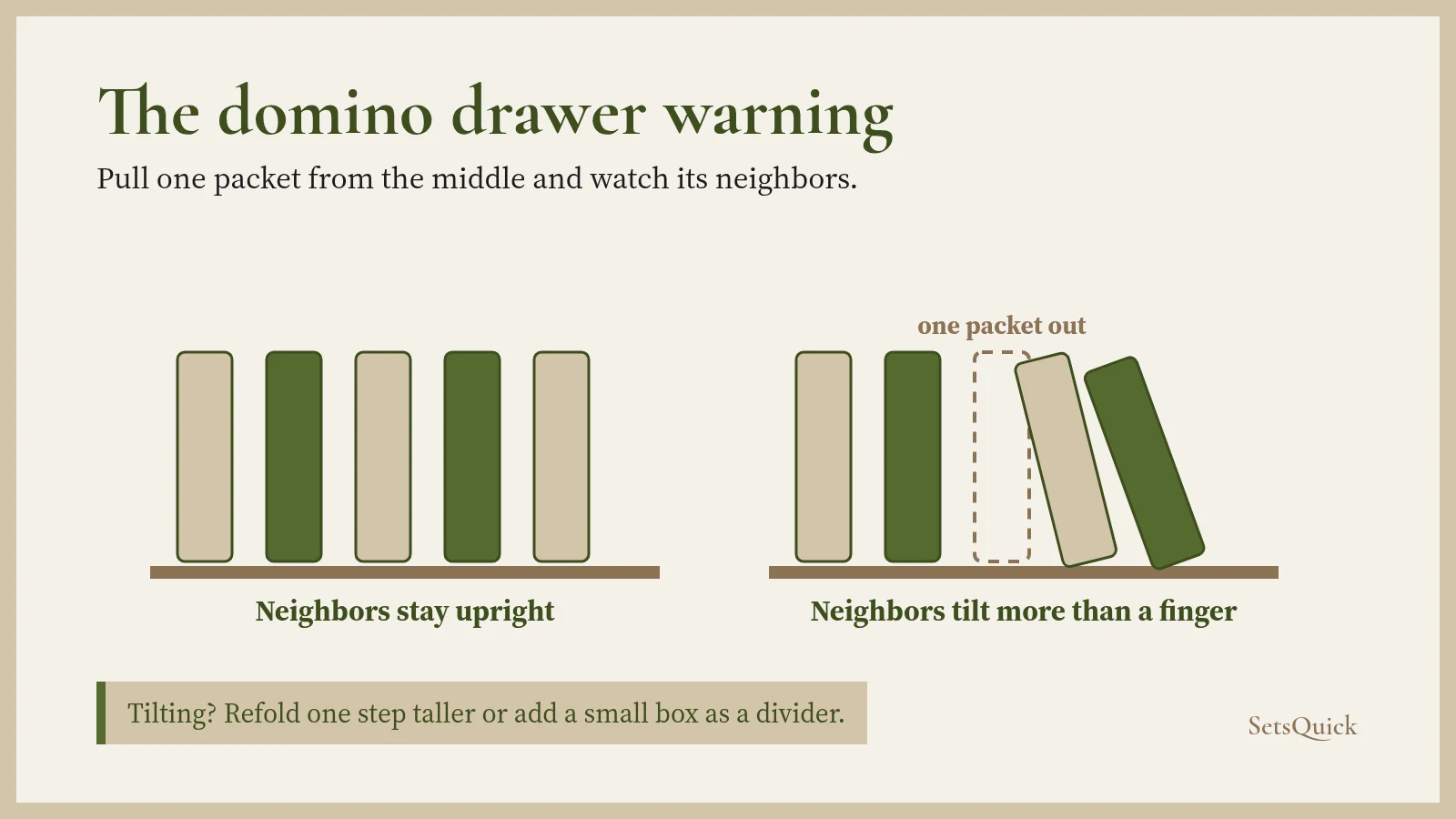
We call this the domino drawer. It looks tidy on day one, then one shirt comes out, the row leans, and by Friday the drawer is a pile again. People blame the method, but the real cause is usually a sizing problem.
Remove one item from a row and see whether its neighbors remain easy to reach and return. Leaning can suggest that a divider or a different fold would help; a finger-width tilt is not a diagnostic threshold.
Fix the tilt the same day. Refold that row one step taller, add a small box as a divider, or move the row to a shallower drawer. Waiting a week only lets the lean spread across the whole drawer.
A leaning row also hides clothes. Items at the bottom of a slumped pile get forgotten, then bought again, which is how a tidy dresser quietly fills up with duplicates of the same black tee.
Try standing one folded item briefly, then removing and replacing it in the row. This is a convenience check, not a validated three-second test. If the fabric slumps or creases awkwardly, try a loose roll, a supportive box, flat storage or an appropriate hanger, following its care instructions.
Which clothes should not be file folded?
Not every garment belongs on its edge. The KonMari folding FAQ itself suggests hanging clothes that look happier hung, such as soft, flowing, or tailored pieces. The spec below groups the common exceptions by fabric behavior rather than by garment name.
Match the storage method to how the fabric behaves
- Slippery fabrics: silk blouses and satin slips slide apart, so hang them or roll them loosely.
- Very thin knits: camisoles and light tanks fold small and tip, so roll them into a lined box.
- Heavy sweaters: fold once or twice into a thick packet, or store flat if a drawer is shallow.
- Structured pieces: blazers and pressed shirts keep their shape on hangers, not in drawers.
- Stretchy leggings: fold into thirds, then roll tightly so the waistband does not spring open.
- Denim and chinos: fold in half lengthwise, then in thirds; stiff cotton holds a crease well.
A small box turns a problem row into a stable one. Shoe boxes, lidless storage boxes, or drawer dividers give soft items a wall to lean on, so thin tanks and socks stay upright without heavy folding.
Measure the box the same way you measure a drawer, because its inside height sets the packet height for everything inside it.
Rolling is not failure. Many people mix rows in the same drawer, with firm tees filed on their edge and delicate pieces rolled in a box at one end. The drawer still reads at a glance, which is the real point of the method.
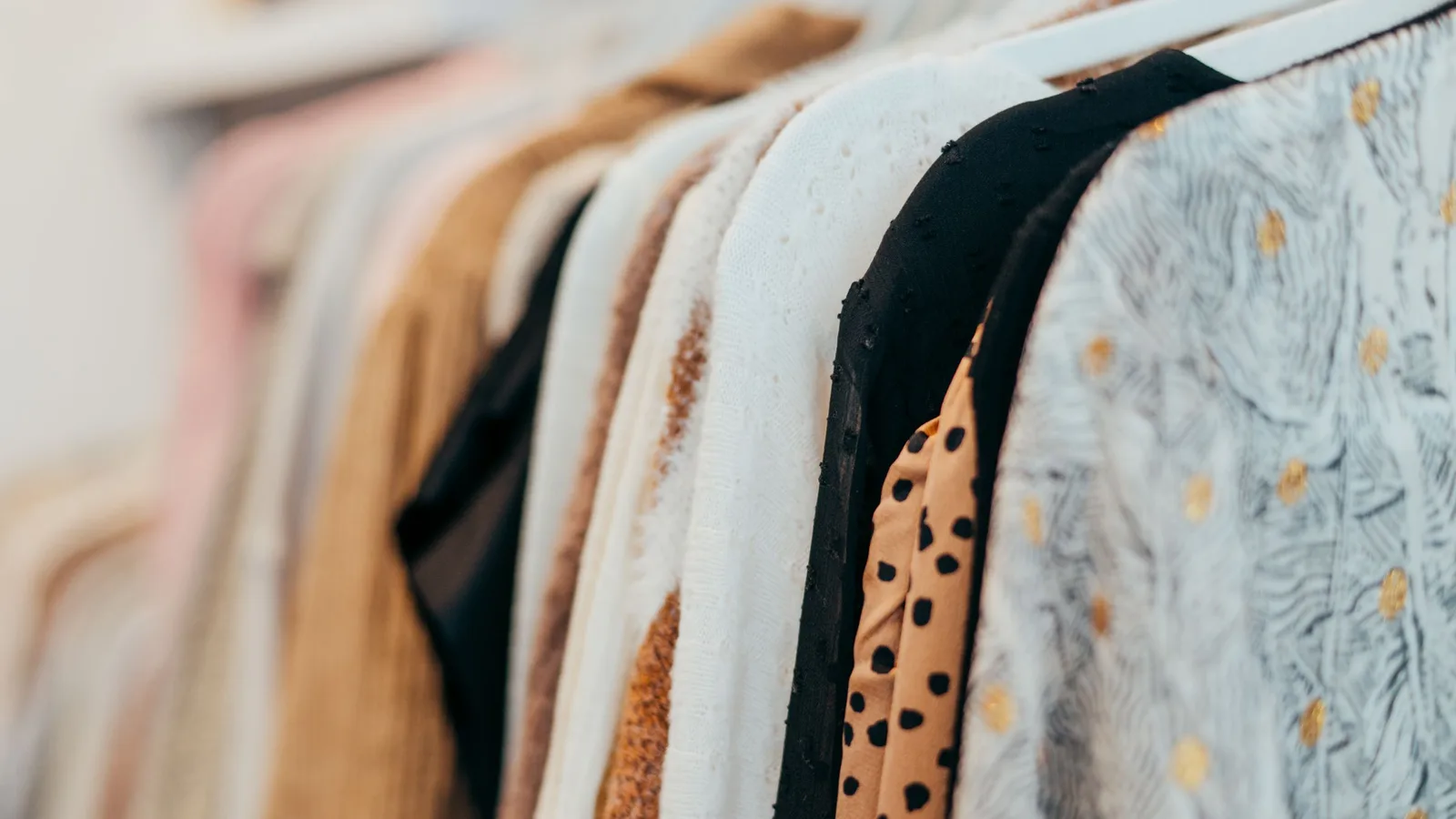
For clothes that belong on a hanger, the same care applies at the rod. Our closet organization hub covers hanging space, shelf zones, and shoe storage in more detail once the drawers are settled.
How do you fold shirts, pants, sweaters, and socks?
Each garment type needs a small change to the basic fold. The steps below assume a standard dresser drawer, so adjust the final fold using the height target you measured earlier.
Shirts and tees
Fold each side to the center, tuck the sleeves along the edges, and fold lengthwise with a small gap at the top. Then fold into halves or thirds until the packet reaches your target height. Long sleeves simply fold down along the body before the lengthwise fold.
Pants and jeans
Fold the pants in half so one leg lies on top of the other. Tuck the crotch triangle in to make a clean rectangle, then fold into halves or thirds. Heavy denim usually stands well, while thin trousers may need a divider beside them.
Sweaters and knits
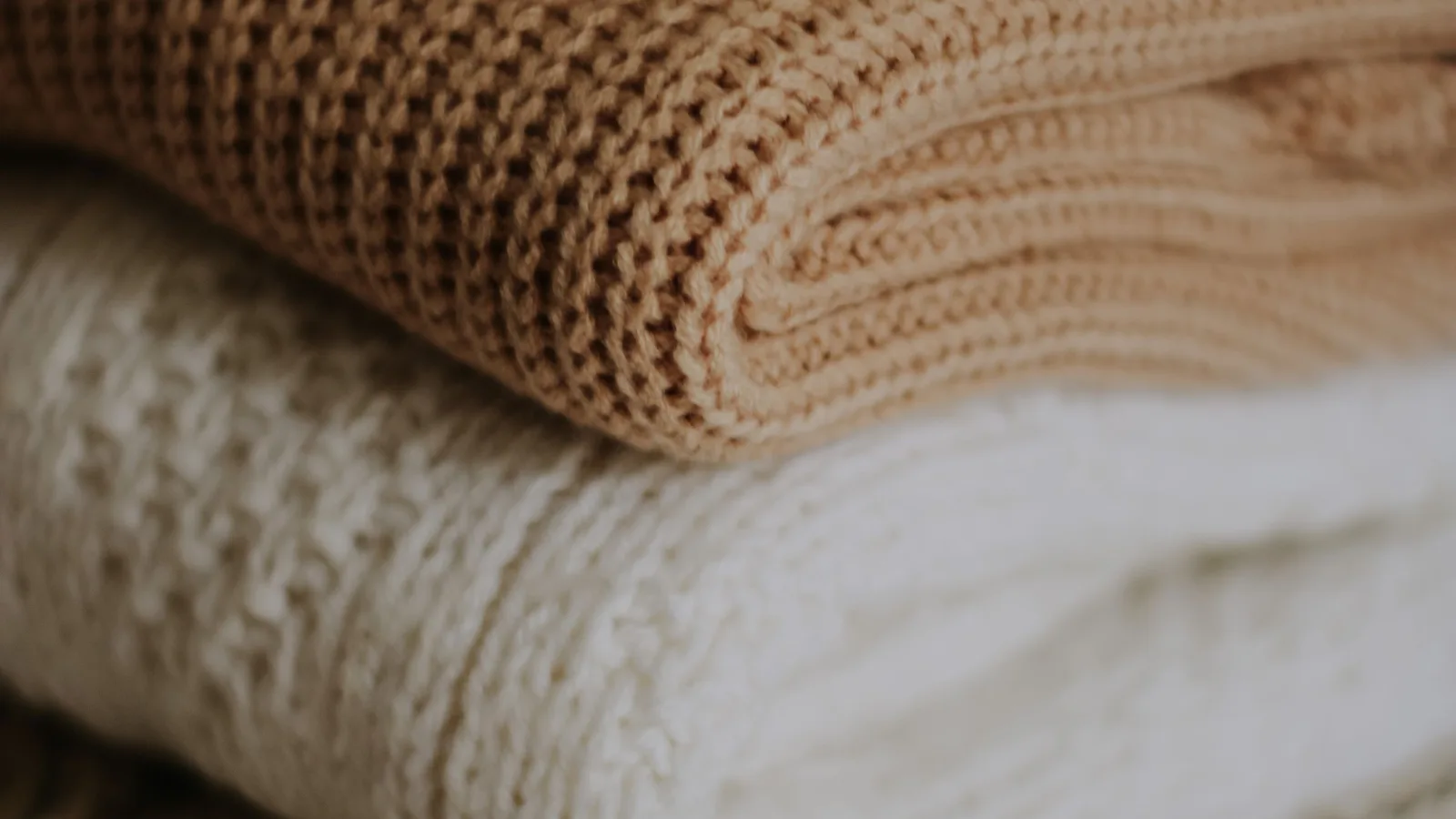
Fold sweaters loosely, because tight creases can stretch the fibers. Most thick knits fold only once or twice, so they may be too tall for a shallow drawer. In that case, store them flat on a shelf or in a deep bin instead.
Socks and underwear
Lay pairs flat, one on top of the other, and fold them into a small rectangle rather than balling them up. Ball-folding stretches the cuffs over time, while a small divided box keeps these small packets from sliding into one another.
How full should a drawer be when you file fold?
Leave some room. Marie Kondo has suggested filling drawers to about 90 percent, according to the KonMari folding FAQ, so there is room to see and take out items without everything springing loose.
Treat the 90 percent figure as Marie Kondo’s rule of thumb, not a measured target for every drawer. Leave enough room to remove and return an item comfortably, while using a divider if the remaining row needs support.
If a drawer is already full at the target height, the answer is usually volume, not folding.
Review clothing that is not in current use, but do not use one unworn year as a disposal deadline. Keep seasonal, occasion, changing-size, accessibility and sentimental needs in view. Get permission before moving another person’s clothes, and keep stored pieces dry, supported and safely reachable.
Quick check: stand in front of the open drawer and name every item you can see in five seconds. If you cannot, the rows are too tight, the packets are too tall, or the drawer holds more than one category.
This habit fits the broader SETS method, which sorts and edits before choosing storage. Folding comes after editing for a reason, because fewer, well-chosen clothes make every fold easier to keep.
Keeping file-folded drawers standing all season
A drawer stays upright when returning an item is as quick as dropping it on a chair. Put the most-worn category at the front of the top drawer, and give each row one clear home. Laundry day then turns into a short refold rather than a full reset.
Refold as you put away clean laundry, not on a separate day. Folding five tees to your target height takes about three minutes once your hands learn it, and doing it each laundry day stops the slow slide back into piles.
Check the drawers again at the first cold snap, when sweaters swap in, summer tees move to storage, and packet heights may need to change. A two-minute measure-and-refold keeps the new season from undoing the system you built.
Keep the routine small enough to repeat. When a row becomes awkward, adjust the fold, support or location rather than treating a fixed number of minutes each week as a guarantee that the drawer will stay tidy.
If the whole bedroom feels behind, start smaller. Our free reset checklist breaks one room into short sessions, so a single drawer can be done in the time it takes to drink a cup of coffee.
Frequently asked questions
Is the KonMari folding method worth the extra time?
For most people, yes, once the folds become routine, although the first drawer takes longest because you are learning the motions and measuring. The payoff is that you can see every item when you open the drawer, instead of digging through a stack.
Why do KonMari folds keep falling over?
A row can slump because of the fold, fabric, available support or the way items are removed and returned. Try one adjustment at a time. The suggested 1-inch (2.5 cm) planning gap is not a KonMari requirement or a guarantee that packets will stand.
Should you fold or roll clothes in a drawer?
Fold firm fabrics such as cotton tees, denim, and heavier knits, because they hold a crease and stand on their edges. Roll thin, stretchy, or slippery pieces that slump after two tries, and remember that mixing both styles in one drawer is fine if each row stays visible.
Can you file fold clothes on open shelves?
A supportive bin may make a row easier to use on an open shelf. Check that the bin is stable and safely reachable, and adjust the fold to the actual usable opening rather than treating 1 inch (2.5 cm) of clearance as a universal rule.
How do you fold sweaters so they do not stretch?
Fold sweaters loosely and avoid hanging heavy knits, which can pull the shoulders out of shape. Most thick sweaters need only one or two folds. If the packet is taller than the drawer, store the sweaters flat on a shelf or in a deep bin instead.
Written by the SetsQuick Team. First published .
© SetsQuick. This article and its images may not be copied or republished without permission. To report reuse, see our DMCA page.
Was this guide helpful?
Save it for later or send it to someone