
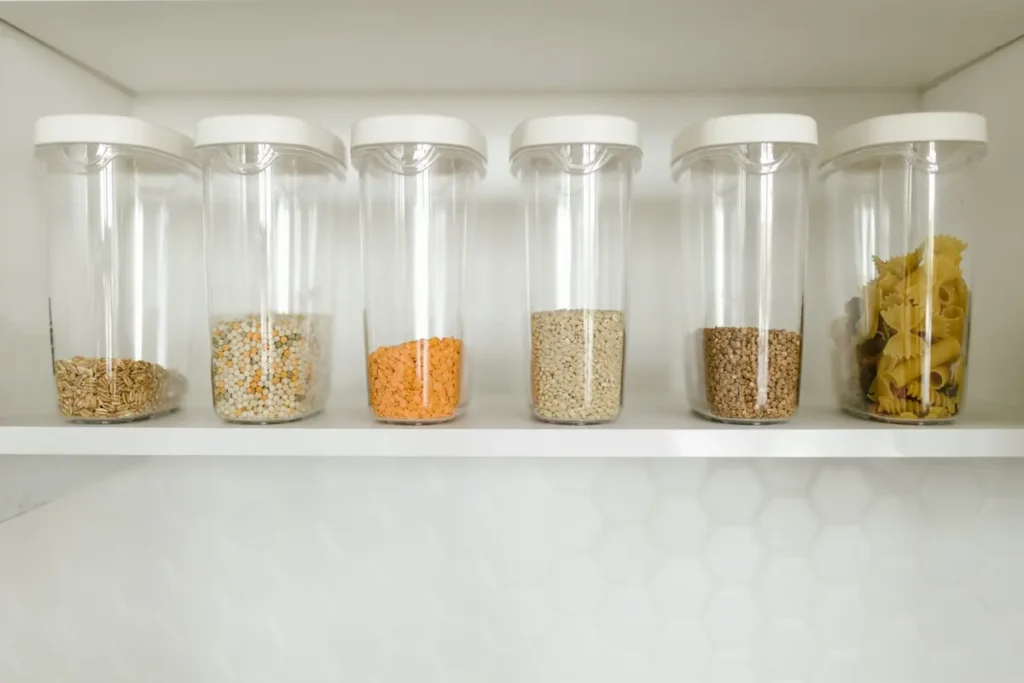
For OXO POP vs Rubbermaid Brilliance, compare the exact pantry model, usable access and its care instructions—not by a universal brand winner. OXO’s cited POP set uses a push-button seal; Rubbermaid’s cited Brilliance Pantry model uses secure latches. Choose only after the individual container, opening routine and filled weight work on your shelf.
The three checks are model identity, usable shelf and lid access, and care plus a complete purchase plan. These are planning checks, not a comparative seal, opening-force or food-preservation test.
- Consider the cited OXO POP design if you prefer its top-button routine and can reach, remove and return the lid.
- Consider the cited Rubbermaid Brilliance Pantry model if you prefer its latch routine and can reach the latches and remove the lid.
- Measure usable shelf height, depth, and hand clearance before choosing sizes.
- Compare the pantry lines only. Do not mix claims from meal-prep containers.
OXO POP vs Rubbermaid Brilliance: what differs?
Start with model identity. The sources checked here are the OXO Good Grips 20-Piece POP set, SKU 11236600, and the Rubbermaid Brilliance Pantry 16-cup container, model 1994228. They illustrate different lid routines, not equal-sized shopping baskets or a test of every product carrying either brand name.
For the cited OXO set, the button engages the seal and doubles as a handle for the lid; OXO says not to carry the container by its lid. Rubbermaid describes the cited pantry model as having tight seals and secure latches. Your usable space must accommodate releasing, removing and returning the lid—not merely touching the button or seeing the latches.
A paper footprint can flag an obvious shelf obstruction before you buy. It cannot establish lid force, grip comfort, usable capacity or sealing performance. Check the actual individual model and its instructions before committing to a set, especially if you need to support the container or remove it from the shelf to open it.
| Feature | OXO POP | Rubbermaid Brilliance Pantry |
|---|---|---|
| Lid mechanism | Top push button operates the seal | Two side latches on the lid |
| Closed-state cue | Check the instructed button position; not proof of seal performance | Check the instructed latch closure; not proof of seal performance |
| Hand space needed | Access to the button plus space to remove and return the lid | Access to the latches plus space to remove and return the lid |
| Care for the sources checked | 20-piece POP set, SKU 11236600: top-rack dishwasher safe | 16-cup pantry container, model 1994228: dishwasher and freezer safe; not microwave safe |
| Choose it when | You prefer a top button and can comfortably reach it | You want a visible closed state and have room to reach both sides |
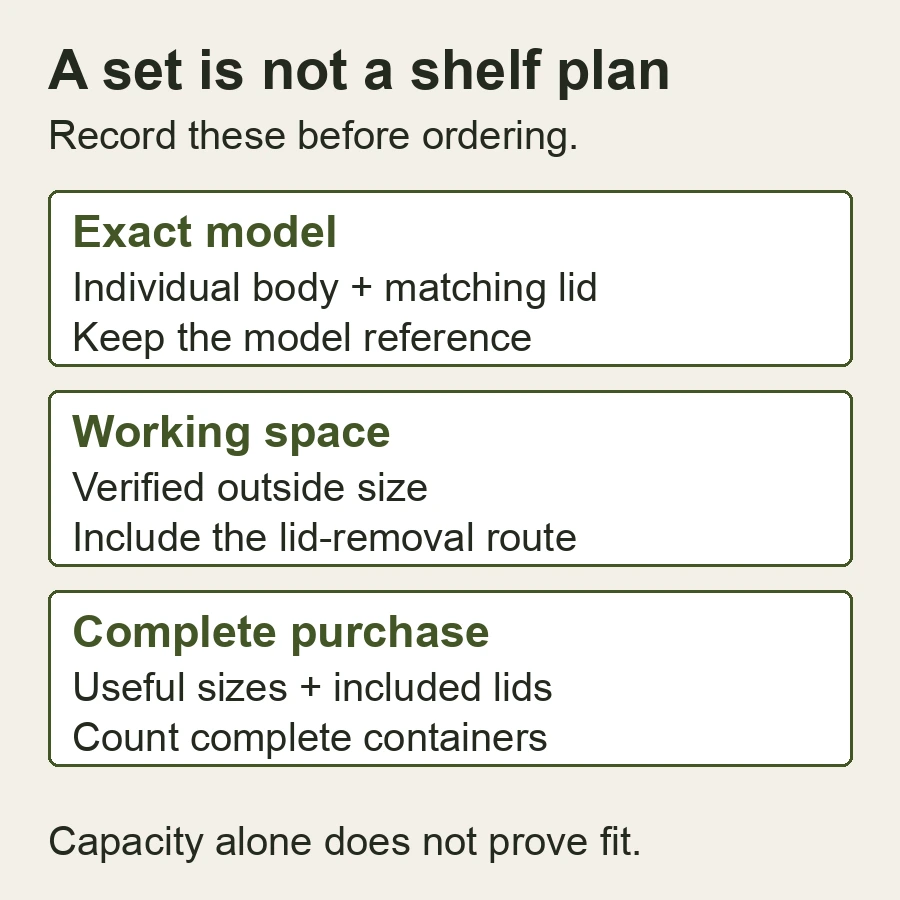
The OXO source is a mixed-size set, while the Rubbermaid source is one pantry model. A set-level dimensions field is not an individual canister footprint. The Rubbermaid page lists a dimensions string without units in the text retrieved here, so we do not convert it or use it as a verified shelf measurement. Obtain the exact individual model’s labeled external dimensions and orientation before laying out a shelf; capacity alone is not a dimension.
Both bodies are clear. For the separate question of light exposure and seeing contents, use our clear vs opaque pantry container guide. A lid mechanism does not decide which food needs light protection.
How can you check usable access before buying?
Record the food you intend to store and whether it will remain in its original package or be decanted. For a package kept intact, measure that package and the container opening. For decanted food, check the intended amount against the model’s usable capacity and fill line; the outside shape of a bag does not prove its contents will fit.
Mark the proposed, verified container footprint on the pantry shelf with removable tape suitable for the surface. Check the full door opening, hinges and neighboring items. Plan how you will lift the filled container and remove its lid; use both hands when needed rather than treating one-handed handling as a requirement.
Now copy the lid motion without buying anything. Press the center of a sheet of cardboard to represent the OXO button. Touch both side edges to represent the Rubbermaid latches. This can flag a blocked reach, but cardboard does not reproduce a real lid’s opening force, seal or usability. Check the actual container before committing to a set.
Finally, check the planned stack from the side. A tall stack that barely fits when empty may become awkward when filled. Leave enough room to lift the top unit without scraping the shelf above. If it does not, choose shorter bodies or keep the containers in one row.
This is a planning exercise, not a timed performance claim. It can show why a bundle is poor value for your particular shelf: some included sizes may not serve the foods you need to store. Count useful containers and all required matching lids, rather than treating a larger advertised piece count as equivalent usable capacity.
How should you measure the pantry shelf first?
Record usable shelf height, depth and width in the same units as the product drawing. Measure clear height from the shelf surface to the shelf above. Measure usable depth from the front edge to the back wall, stopping before hinges, trim, or a door rail. Measure the uninterrupted width where a full row can stand.
Then check the whole opening routine. Allow space to release the mechanism, lift off the lid, reach or pour the food and return the matching lid. A container may fit as a closed rectangle but still be awkward to use. Plan a safe place to set it down if you need to remove it from the shelf.
Measure for the foods and quantities you actually bring home, including any occasional-use stock you still need. Do not design around an almost empty shelf or assume that a larger nominal capacity solves a blocked opening. Put heavier filled containers where you can handle them safely.
What is different about the lids and seals?
The lid mechanism is one practical difference to check, not evidence that either brand performs better. OXO describes its current POP design as button operated, with a push button that engages the airtight seal, and tells owners not to carry POP containers by the lid. The button should be used to open and close the seal, not as a handle for carrying the filled container.
Rubbermaid’s 16-cup pantry model page describes tight seals and secure latches. That wording is not a measured comparison with OXO’s airtight claim. The visible latch state can help you check that you have completed the closure routine, but it does not prove the seal is intact or that the food will last longer. We have not measured closing mistakes or seal performance.
Do not turn either mechanism into a food-freshness promise. Follow the actual food’s storage directions and the container’s care instructions. If a lid, latch, rim or seal is damaged or does not work as instructed, do not force the mechanism or improvise a repair. Ask the manufacturer about the correct model-specific next step.
Which shape uses pantry space better?
Compare individual sizes serving the same storage job. A mixed-size set is not a like-for-like rival to one large container, and a nominal volume does not show the working space inside the opening. Use actual external dimensions to plan rows and the manufacturer’s stacking instructions to plan stacks.
Use stacking arrangements permitted for the actual models. Do not assume that similar-looking lids, matching widths or two different brands make a compatible stack. Keep containers in an accessible single row when you cannot confirm the arrangement or safely lift the filled upper container.
The named failure is the back-row trap. Its early warning is a front container that leaves less than a comfortable hand path to the item behind it. If you must move the front row every time, use one accessible row, a pull-out tray, or stackable pantry bins for a rental kitchen instead.
How do you choose sizes for cereal, flour, and rice?
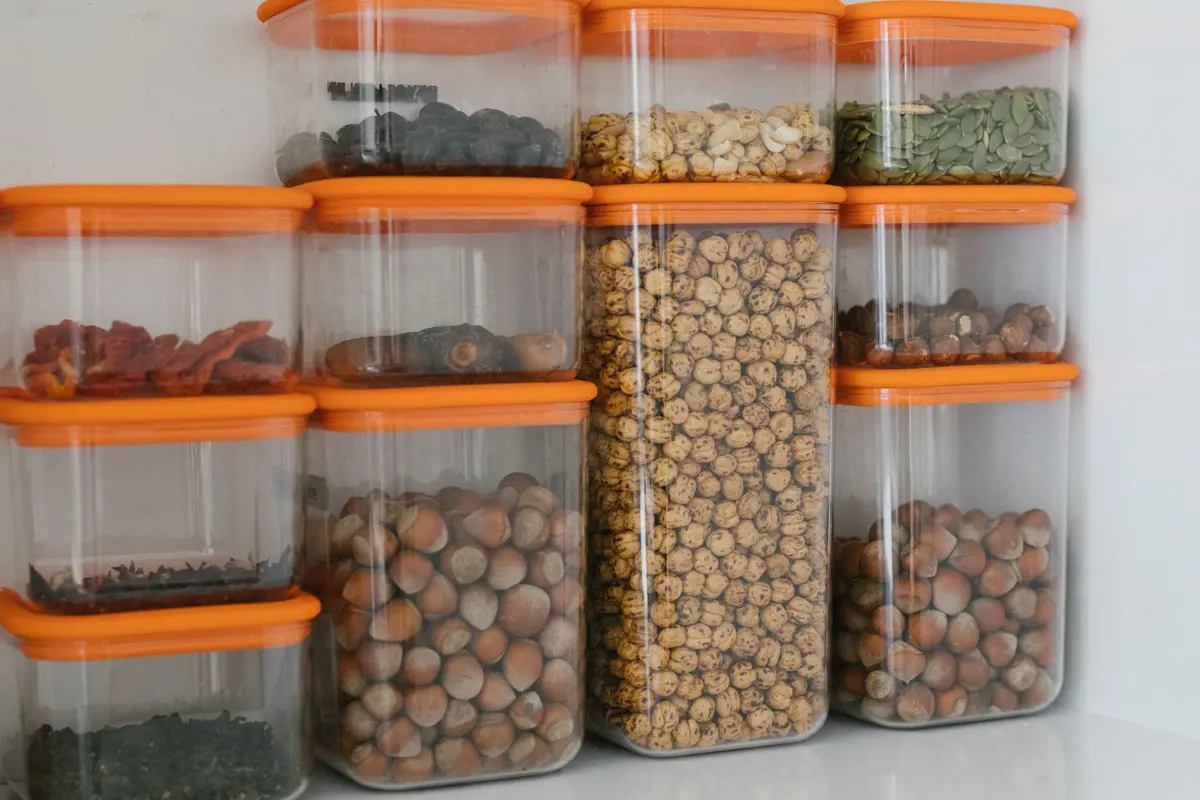
Start with the amount of food and how you use it, not advertised capacity alone. Check the model’s fill line, opening and any working room needed for your scoop or pouring motion. An unopened bag’s external measurements do not establish the volume of its decanted contents. If the package stays inside the container, both the opening and usable interior must accept the actual package.
For cereal, check the filled weight and pouring routine; for flour, check the actual scoop and opening; for rice or oats, check retrieval without tipping a container awkwardly. These are use-specific questions, not a claim that a named capacity always fits a standard bag. Try an appropriate individual size before buying a full family.
If you already own a mixed set, sort the pantry before replacing it. The pantry container set checklist helps you count real categories first. Keep the food’s original identity, date wording, lot, allergen, storage and preparation information with the corresponding food rather than relying on a clear wall to supply it.
Are the pantry lines dishwasher or microwave safe?
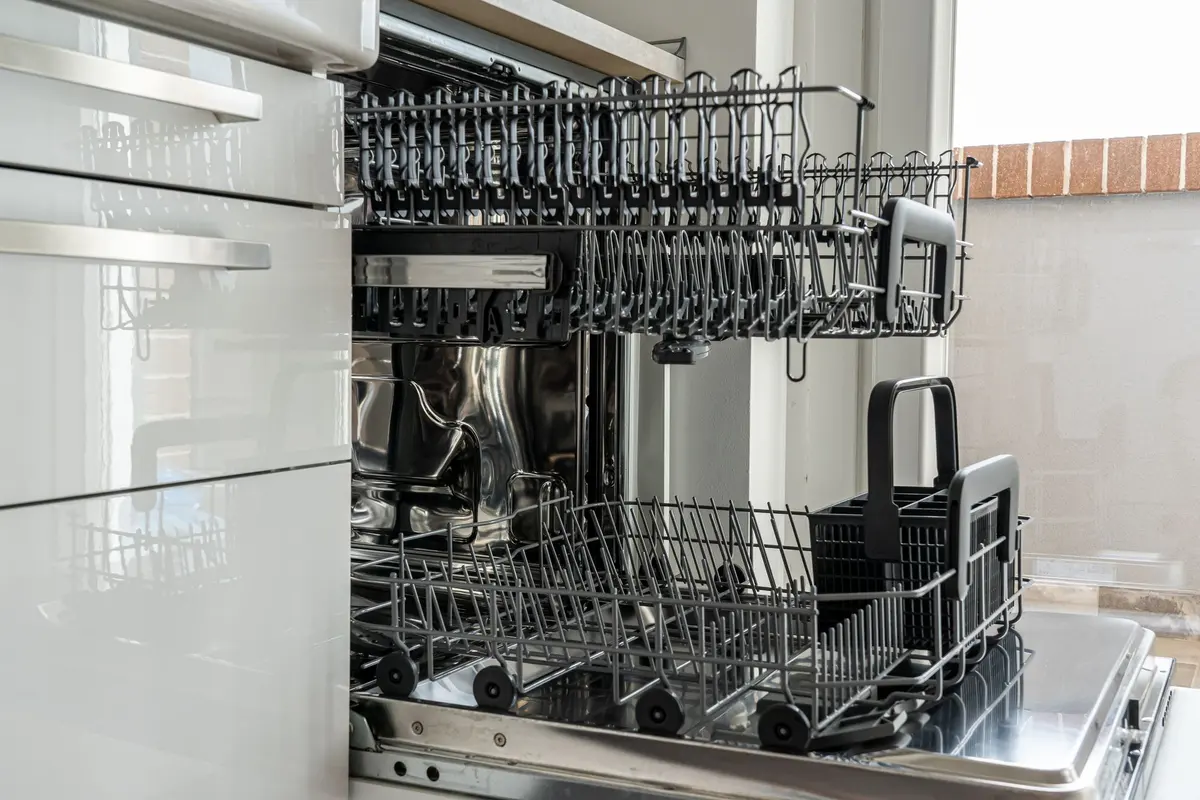
For the OXO 20-piece POP set (SKU 11236600), the manufacturer’s Features section specifies top-rack dishwasher-safe care. For the Rubbermaid Brilliance Pantry 16-cup container (model 1994228), the specification lists dishwasher safe: yes, freezer safe: yes, and microwave safe: no. Do not apply these details to every older model, lid or meal-prep product.
Check the exact model page and care marks that came with your container before using heat. Do not transfer microwave claims from a similar-looking line. Separate lids and bodies for washing according to the current manufacturer directions, and let every sealing channel dry before reassembly.
Cleaning convenience only helps if every part can return to one home. Store lids directly above or beside their matching bodies. If loose lids are already taking over a drawer, use the same pairing rule from our guide to organizing food-storage lids in a deep drawer.
What should you buy first?
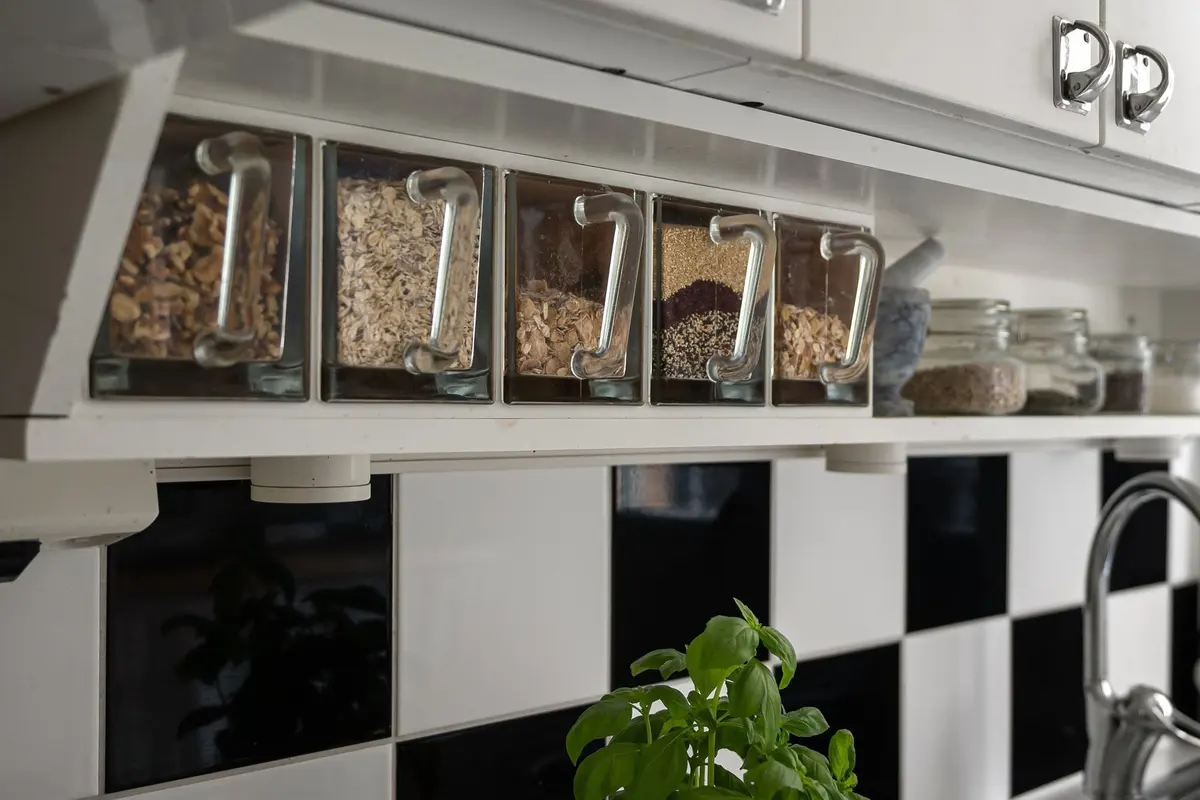
Start with one problem food, not the largest bundle. Observe a suitable individual container during normal use: lid access, filled weight, scoop room, care and whether everyone using it can complete the closing routine. An organization trial does not establish food shelf life, seal performance or long-term durability.
- Choose OXO POP: You want a top-button routine, have clear hand space above the lid, and mainly store dry pantry food.
- Choose Rubbermaid Brilliance Pantry: You prefer side latches, want a visible closed state, and have room to reach both sides.
- Choose neither yet: Your shelf depth creates a hidden back row, or your package and scoop do not fit the available size.
- Keep your current containers: They seal, fit, and stay easy to use. A matching appearance is not a functional upgrade.
Expand only into sizes that solve the storage jobs you have recorded. Keep complete compatible body-and-lid combinations and avoid adding unused sizes merely to create a matching shelf. There is no universal piece count or number of grocery trips that proves either family is the better choice.
For a broader reset, use the Kitchen and Pantry hub to solve shelf access before adding more containers. The best system is the one that lets you see, reach, refill, and close every daily item without rearranging the whole cabinet.
Frequently asked questions
Is OXO POP more airtight than Rubbermaid Brilliance?
The sources checked do not establish a comparative winner. OXO describes its cited POP set as airtight; Rubbermaid describes the cited pantry model as having tight seals and secure latches. Those descriptions are not a head-to-head seal test. Follow each model’s closure and care instructions, and do not force a damaged part.
Which is easier to open with one hand?
OXO POP uses a top button; the cited Rubbermaid pantry model uses side latches. Those mechanisms do not establish which is easier for your hand. Try the actual lid at your shelf height and check whether you need to support or move the container. We have not performed a comparative opening-force or one-handed-use test.
Can you mix OXO and Rubbermaid containers?
You can use different containers in separate shelf positions, but do not assume cross-brand lids or stacks are compatible. Keep the correct lid with each body and follow the actual models’ stacking directions. If you cannot confirm a stack or lift its filled upper container safely, use a single accessible row.
Do clear containers make food last longer?
Clear walls help you check quantity; they do not establish food condition or shelf life. Suitability depends on the food, closure, storage environment and handling. Keep light-sensitive foods where their own storage instructions recommend. Follow the actual food’s directions rather than using visibility as proof that it is suitable to eat.
How many containers should you buy first?
Start with the smallest purchase that solves a named storage problem. Confirm the exact model, usable capacity, opening routine and care requirements before expanding. Check what each set includes; an advertised piece count is not necessarily the number of complete containers you will use.
Sources
Manufacturer pages checked November 1, 2026: OXO SKU 11236600 and Rubbermaid model 1994228. These sources are not a size-matched price comparison, and we did not perform a seal, durability, capacity or opening-force test. Follow the instructions and care marks supplied with your actual model.
- Push-button airtight seal, top-rack dishwasher safe, do not carry by the lid: OXO POP 20-Piece Container Set
- Model-specific tight seals and secure latches: the Rubbermaid 16-cup source below; no cross-brand performance ranking is implied.
- Model 1994228: dishwasher and freezer safe; microwave safe: no: Rubbermaid Brilliance Pantry 16-Cup Container
Written by the SetsQuick Team. First published · Last updated .
© SetsQuick. This article and its images may not be copied or republished without permission. To report reuse, see our DMCA page.
Was this guide helpful?
Save it for later or send it to someone