
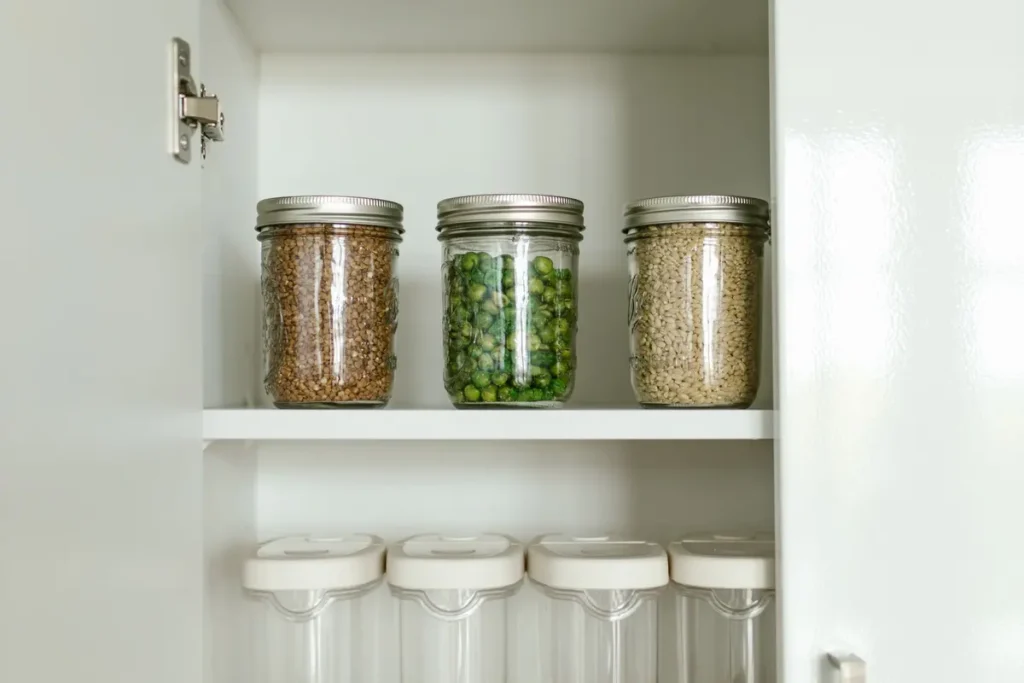
Choose clear vs opaque pantry containers by checking the food’s storage directions, the body and lid separately, and the information you need to find and use the food. Clear walls show contents; opaque walls block light through the body. Neither replaces a suitable location, a suitable closure, or the original package information.
What is an opaque container?
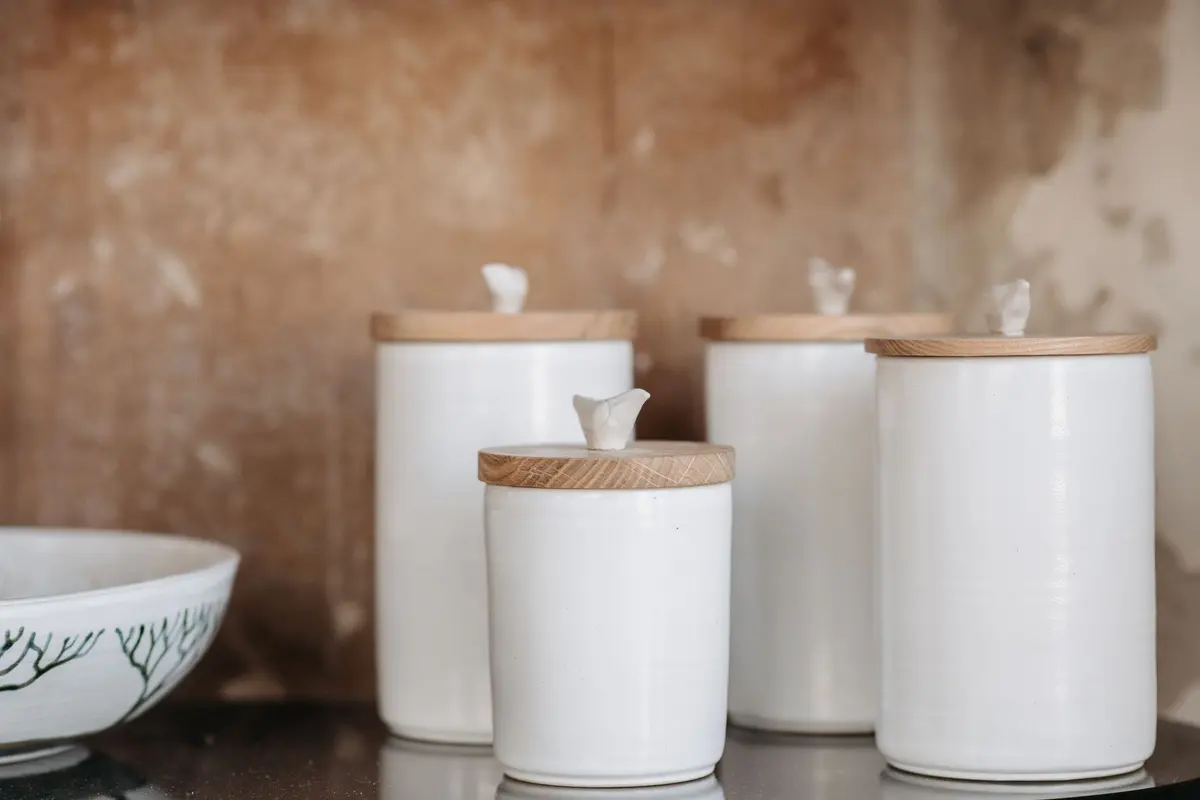
An opaque container has a body that prevents light from passing through, so you cannot see its contents through that body. Cambridge’s definition of opaque distinguishes it from transparent or translucent material. A solid-sided canister can be opaque; a frosted container that transmits light is not necessarily opaque. This describes visibility, not the container’s seal or suitability for food.
Is an opaque container also airtight?
Not necessarily. An opaque airtight container needs both a light-blocking body and a closure designed for the intended storage use. A solid wall does not establish how a lid seals; a clear lid can also admit light into an otherwise opaque body. Check the exact product’s stated use, closure and care instructions rather than judging by color, finish or material alone.
Food suitability is another separate check. NSF’s food storage container guidance emphasizes choosing appropriate containers and following their cleaning instructions. Do not assume a decorative jar is intended for food or that a packaging container is designed for repeated reuse.
- Use clear containers for quick inventory checks inside a closed pantry or cabinet.
- Use opaque containers when the food’s guidance calls for light protection; move food away from unsuitable heat or direct sun.
- Label both types with the exact food name and retain the original date wording, lot and storage information.
- Use a mixed system when different foods and storage locations need different solutions.
Which type should you choose?
There is no universal winner. Clear bodies help when seeing the contents makes stock easier to manage. Opaque bodies help when light protection is part of the food’s storage guidance or a labeled, visually quieter shelf is useful. Neither choice makes an unsuitable shelf suitable. Move food out of heat or strong direct sun rather than relying on an opaque wall as a heat shield.
Start with the shelf. A clear container inside a closed cabinet spends most of its time in darkness, so it can provide visibility when the door opens without staying exposed all day. An opaque canister on a bright counter blocks the view, but it still needs a suitable seal and a location away from heat.
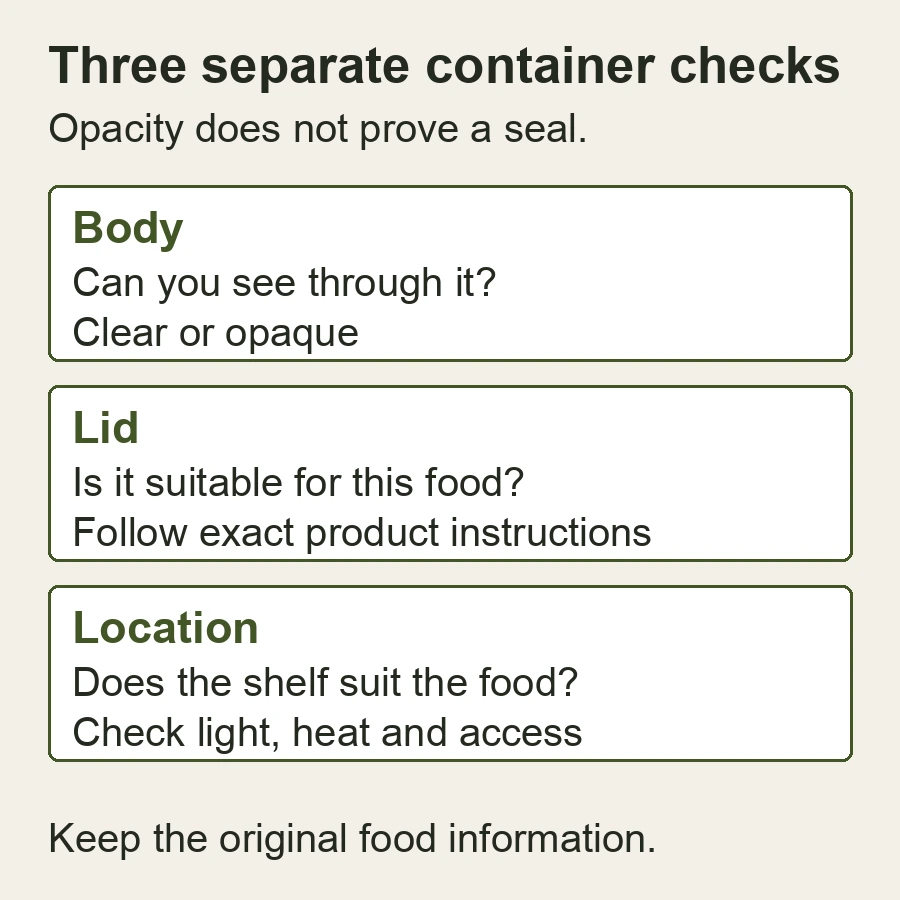
Use three checks in order: storage location and visibility, container and lid suitability, then identity and access. If both options meet the food’s requirements and work in your space, choose the one you can identify, retrieve and return without losing its package information.
| Factor | Clear containers | Opaque containers |
|---|---|---|
| Main strength | See quantity and low stock at a glance | Blocks light and reduces visual noise |
| Best location | Inside a closed pantry or cabinet | Where food-specific directions call for light protection; still keep away from heat and direct sun |
| Best for | Frequently used staples like cereal, rice, pasta and snacks | Foods whose storage directions call for darkness, such as coffee |
| Labeling | Food name and original package information; keep the fill level visible | Readable front label, package information and an optional stock reminder |
| Common failure | Pale ingredients that look alike without a label | Topping up old food because the level is hidden |
How can you make the three checks before buying?
Choose one food that repeatedly runs out or gets lost. Set its current package on the shelf and stand where you normally make a grocery list. If you can identify the item and remaining amount without moving anything, a different container may not solve a real problem there.
Check 1: location and visibility. Read the food’s storage directions and consider the shelf’s light and heat exposure. A closed cabinet may already reduce light exposure. If the shelf gets strong direct sun or becomes too warm for the food, change the location; do not treat an opaque container as permission to leave it there.
For a visibility-only planning exercise, hold a sheet of paper in front of the current package without covering important information permanently. Can you still identify the food and know when to check stock? Try a temporary front label if needed. This does not simulate a container’s light protection, seal or preservation performance.
Check 2: container and lid suitability. Confirm the exact container is intended for the food and conditions, that its matching lid closes as instructed, and that you can follow its care directions. A food that needs refrigeration does not become pantry-stable because the container is opaque or airtight. Plan where the original package information will remain readable before decanting.
Check 3: identity and access. From your normal approach, find the food name and package information. Check that you can safely lift the expected filled weight, open the lid, use your scoop and return the container. Use both hands where needed; there is no requirement to lift a full container one-handed while holding something else.
These are planning checks, not a timed challenge or a food-preservation test. They may show that visibility is not the real problem. Sometimes a more accessible shelf, less backstock or one visible row is more useful than buying a different container.
When do clear containers make pantry life easier?
Clear containers reduce the effort of checking cereal, rice, pasta, snacks, and baking staples. You can see a low level before writing a grocery list. You can also spot duplicate open packages. Keep their information separate rather than mixing batches and losing track of their dates.
That visibility is most useful for food used often. The system should still be easy to read when you are tired and dinner is already late. If seeing the contents prevents a second open bag or an unnecessary purchase, transparency has earned its place.
Clear walls do not replace labels. Flour, powdered sugar, starch and other pale ingredients can look similar. Add the exact food name and copy the package date with its wording, rather than turning it into a new expiry claim. Retain readable allergen, storage and preparation information, plus the lot or batch identifier, with the correct food.
When is an opaque pantry container the better choice?
Opaque storage can help when light is a known concern for the specific food. Coffee is one example: the National Coffee Association advises opaque, airtight storage in a dark, cool location and warns against areas that get strong afternoon sun because they can become too warm. Its advice is not to leave an opaque canister in the sun.
Do not turn that example into a rule for every ingredient. Read the storage directions for the actual food. Some products are fine in a clear container inside a dark cabinet. Others are better left in protective original packaging placed inside a larger bin.
Opaque containers can also calm a visually busy open shelf. That benefit is organizational, not proof of better preservation. A calm appearance is useful only if household members can still identify contents and return them to the right place.
What information disappears when you decant food?
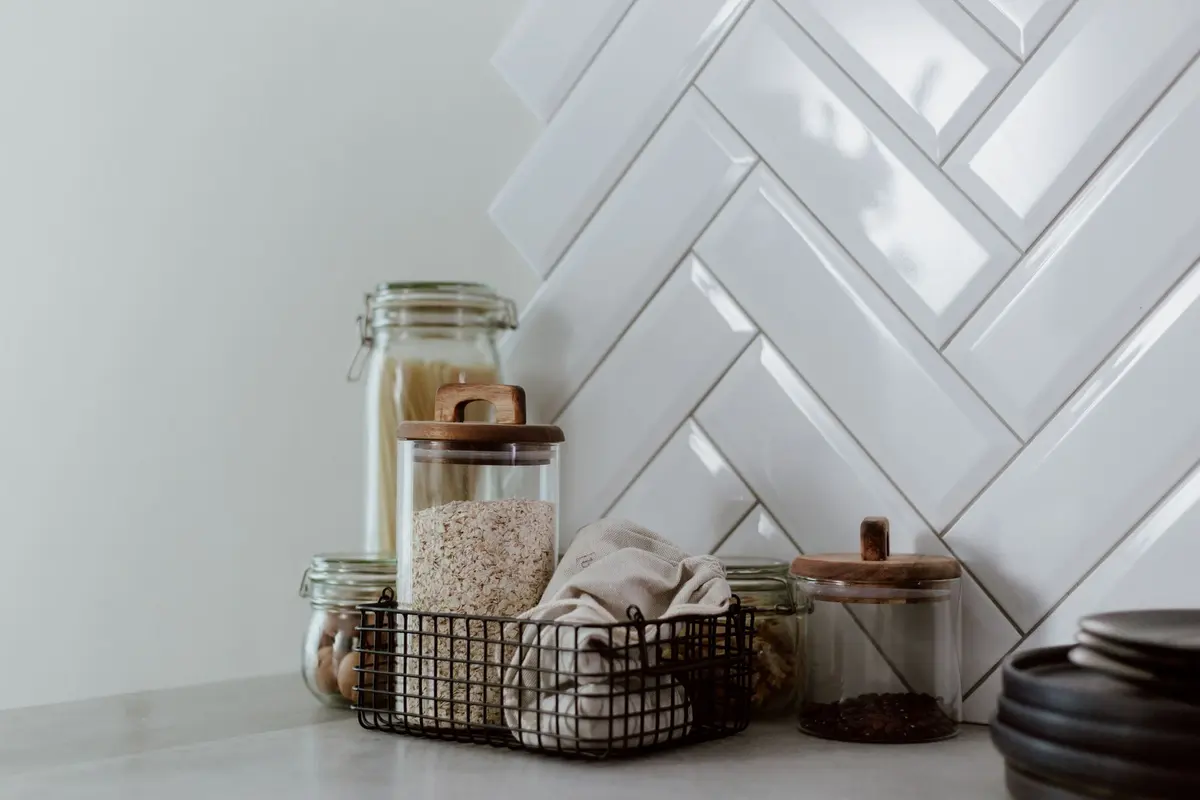
The package may carry a food name, date, lot information, preparation directions, nutrition details, and allergen warnings. Moving the food can separate it from all of that. Transparency shows the ingredient, but it does not tell you which bag was poured first or how long the rice should cook.
A mystery refill is a warning that identity has been lost. It can happen when a clear jar looks obvious or an opaque canister is topped up without checking the remaining food. Stop adding new food to an unidentified remainder. Do not assume it is suitable to eat just because it is older; use its actual information and condition, and seek appropriate food-safety guidance when uncertain.
Keep the original package information or a complete, readable copy with the corresponding food. A clean panel in a nearby information pocket can preserve the date wording, lot, allergens and preparation directions. Keep separate batches identifiable rather than merging them into one date label.
How should you label clear and opaque containers?
For clear containers, place a small front label where it does not hide the fill level. Include the exact food name and original date wording. If the same container rotates between foods, use a removable label and clean away the old writing before refilling.
For opaque containers, use a readable front label and, if helpful, an external low-stock reminder updated after checking the contents. A full, half or low marker is a reminder, not a measurement or proof of freshness. Use only label materials compatible with the container’s instructions, outside the food-contact area; do not assume every surface accepts dry-erase ink or magnets.
The label should face the normal approach path. A beautiful label on the lid is not useful when the container sits below eye level. Both types fail when the information is visible only after you lift, rotate, or unstack the container.
Can a hybrid pantry system work better?
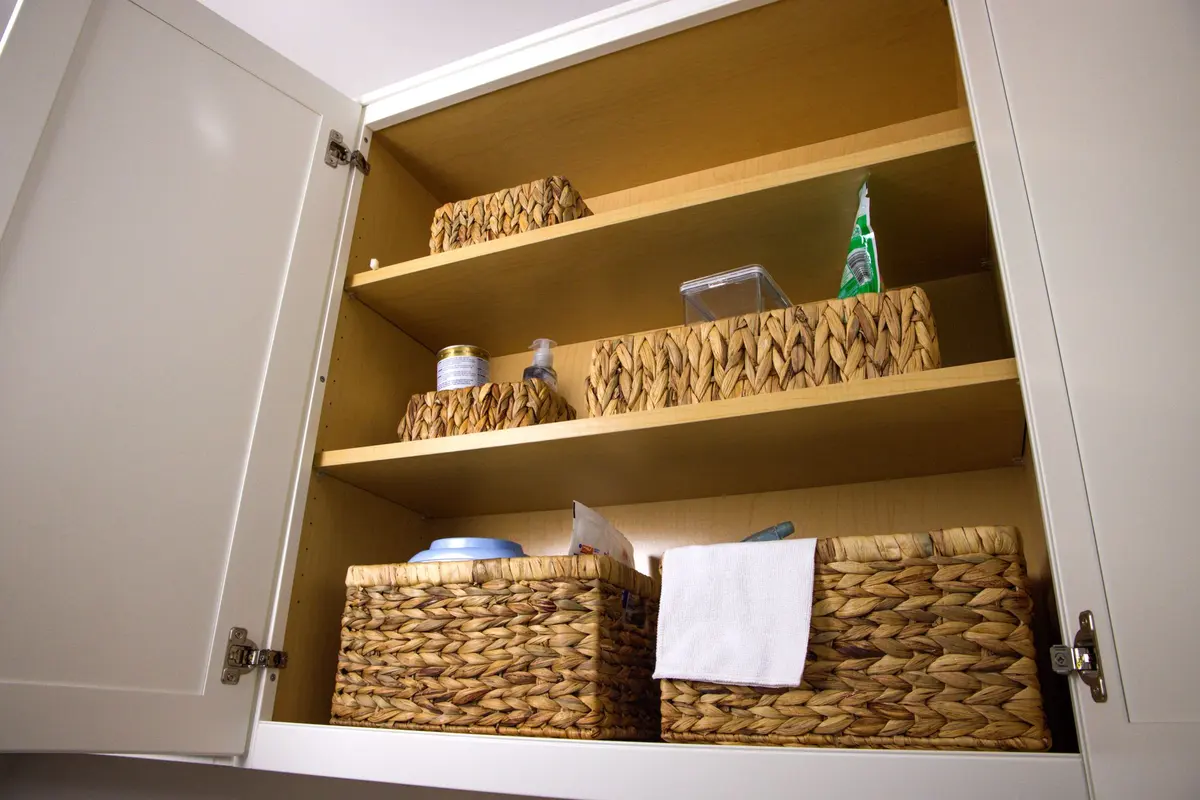
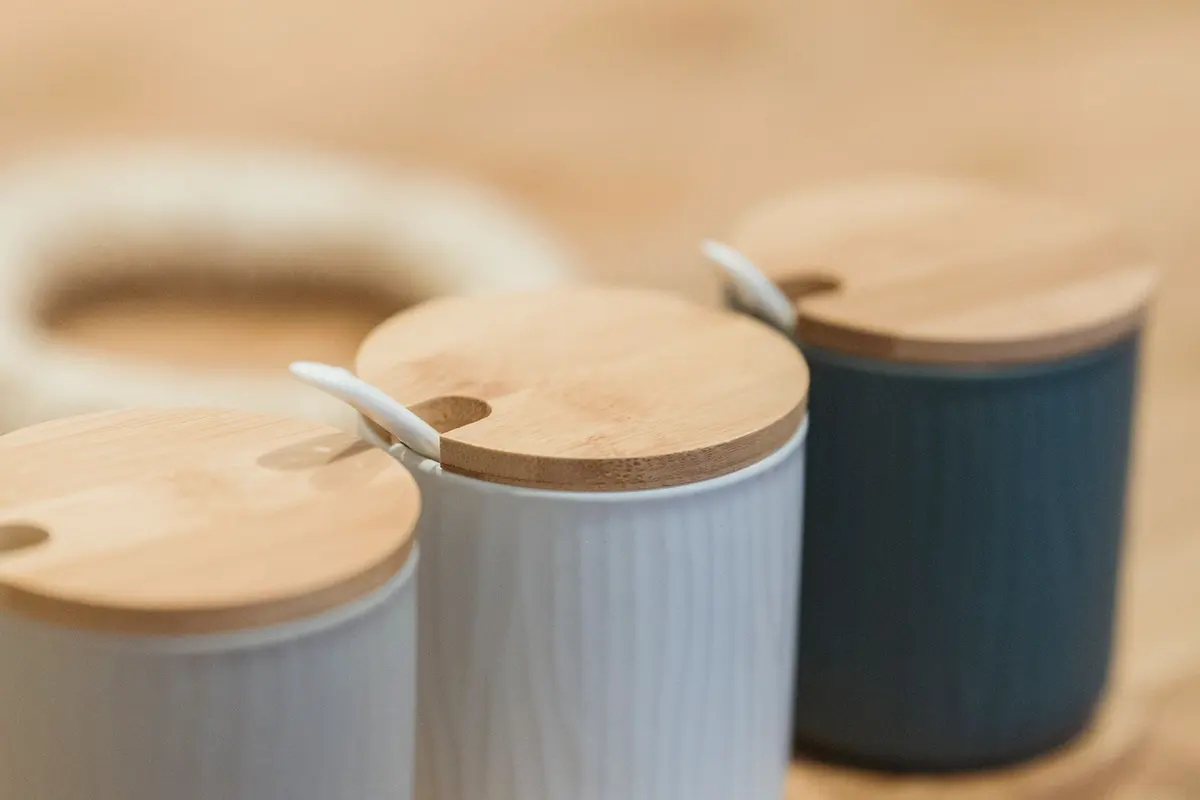
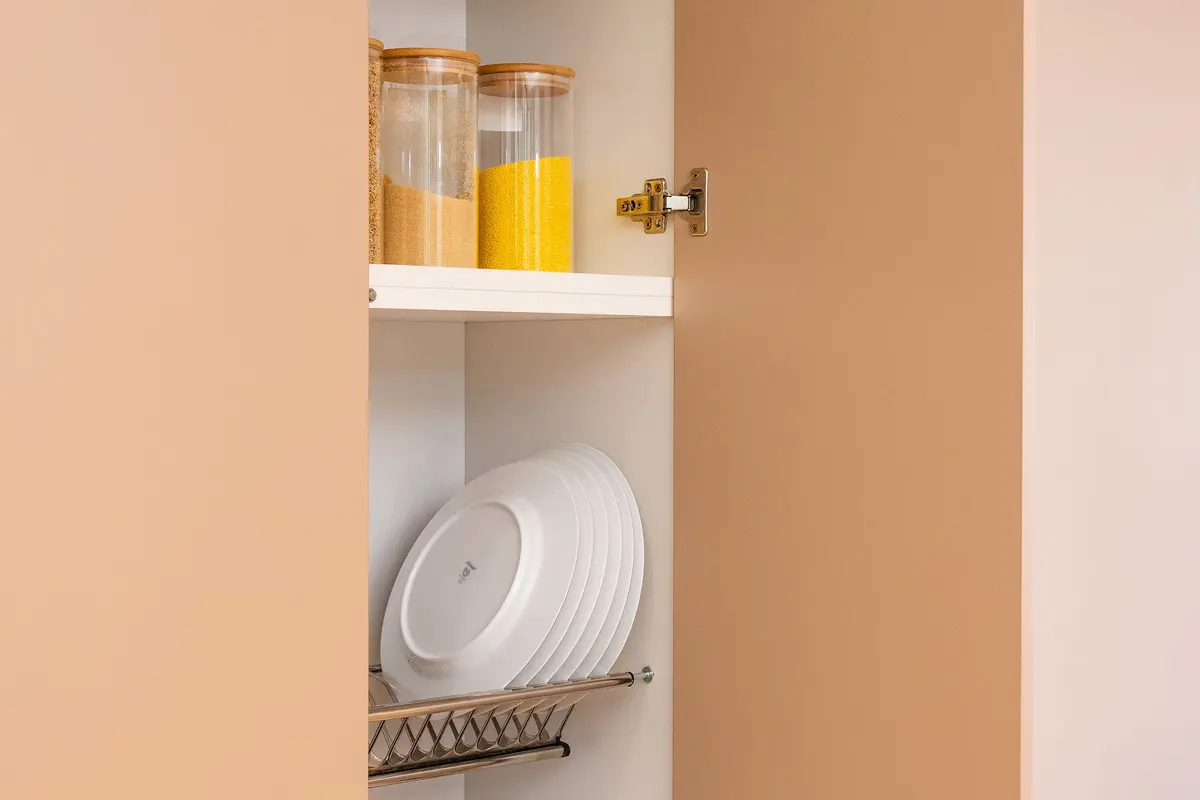
A hybrid setup can be more practical than replacing everything with one type. Use clear containers inside closed cabinets for frequent staples. Use opaque canisters for foods whose directions call for protection from light. Keep packaged backstock in labeled baskets rather than decanting every unopened item.
Separate daily stock from backstock. Choose locations you can reach and handle safely with the actual filled weight; do not place heavy containers high simply to make them visible. Keep backstock identified, check its package information before use, and avoid mixing an older remainder with a new batch.
If deep shelves hide the back row, containers alone will not solve the problem. Use a single row or a pull-out bin. Our guide to stackable pantry bins for a rental kitchen explains how to keep a removable system visible without permanent changes.
What should you record for one food?
Copy these prompts onto paper for one food you already buy. This is a planning exercise, not a preservation test. Keep the package wording and do not infer shelf life or safety from the container color.
| Record | Your note |
|---|---|
| Food and current package | Name: ______; package size: ______ |
| Storage directions | Copy the actual package directions: ______ |
| Shelf and access | Location/light: ______; can I see and reach it? ______ |
| Existing container | Body and lid: ______; what problem needs solving? ______ |
| Information to retain | Package date, lot, preparation directions and allergen information: ______ |
| Smallest useful change | Keep as is / move the package / add a label / try one different container: ______ |
If a different lid routine is the problem rather than visibility, compare the model-specific mechanisms in our OXO POP vs Rubbermaid Brilliance guide. Neither brand choice replaces the food’s own storage directions.
What should you buy first?
Do not replace the whole pantry at once. Choose one problem category and try one suitable container during normal use. Note whether its lid, cleaning routine, label and shelf access solve the problem. This can inform organization, but it does not establish shelf life or prove the food is being preserved safely.
- Choose clear: The food is used often, the shelf stays dark when closed, and seeing quantity prevents duplicate purchases.
- Choose opaque: Food-specific guidance calls for light protection, or a labeled, visually quieter shelf helps you manage stock. The location must still suit the food.
- Keep original packaging: Directions, allergen details, or protective packaging matter more than matching containers.
- Choose a basket: You need to group unopened backstock without losing package information.
Measure shelf height, width, and depth before ordering. Include room to remove the lid and fit your usual scoop. The pantry container set checklist helps you count real categories before deciding how many bodies and lids you need.
Buying containers before sorting is why it did not last. Sort first, then choose the visibility and storage features each category needs. Keep any container that already seals, fits, and communicates what is inside. A mixed shelf can be a successful shelf.
For more shelf-first systems, visit the Kitchen and Pantry hub.
Frequently asked questions
Do opaque containers keep every food fresher?
No. Opaque walls reduce light exposure, but freshness also depends on the food, seal, temperature, moisture, and handling. Follow the product’s storage directions. A clear airtight container in a cool closed cabinet may be more suitable than an opaque container with a poor lid.
Are clear containers worth it for a small pantry?
They can be when visibility prevents duplicates and the footprints fit the shelf. Test one category first. If decanting creates leftover bags, extra cleaning, or lost instructions, keep the original package inside a clear bin instead of transferring every food.
Should clear pantry containers still have labels?
Yes. Similar ingredients can be hard to distinguish, and clear walls do not show a date or cooking directions. Label the exact food and preserve the package date with its wording. Keep the corresponding lot, allergen, storage and preparation information readable.
Can clear containers protect coffee from light?
A clear container does not block light through its body. A dark closed cabinet reduces exposure, but the National Coffee Association recommends opaque airtight storage in a dark, cool location for coffee. It also warns against strong afternoon sun because the area can become too warm. That is coffee-specific guidance, not a rule for all dry goods.
How do you organize opaque pantry containers?
Use front-facing labels, a visible date, and a simple fill marker. Keep one category in each container and avoid topping up old food with new food. If lids become separated, the same pairing method used for organizing food-storage lids can keep matching parts together.
Sources
Sources checked November 1, 2026. Cambridge supports the definition of opaque; NSF covers container suitability and care; the National Coffee Association advice is specific to coffee. The three checks and worksheet are editorial planning aids, not food-preservation tests or shelf-life promises.
- Meaning of opaque: Cambridge Dictionary
- Container suitability and cleaning: NSF: Food Storage Containers
- Opaque, airtight, dark and cool coffee storage: National Coffee Association: Storage and shelf life
Written by the SetsQuick Team. First published · Last updated .
© SetsQuick. This article and its images may not be copied or republished without permission. To report reuse, see our DMCA page.
Was this guide helpful?
Save it for later or send it to someone