
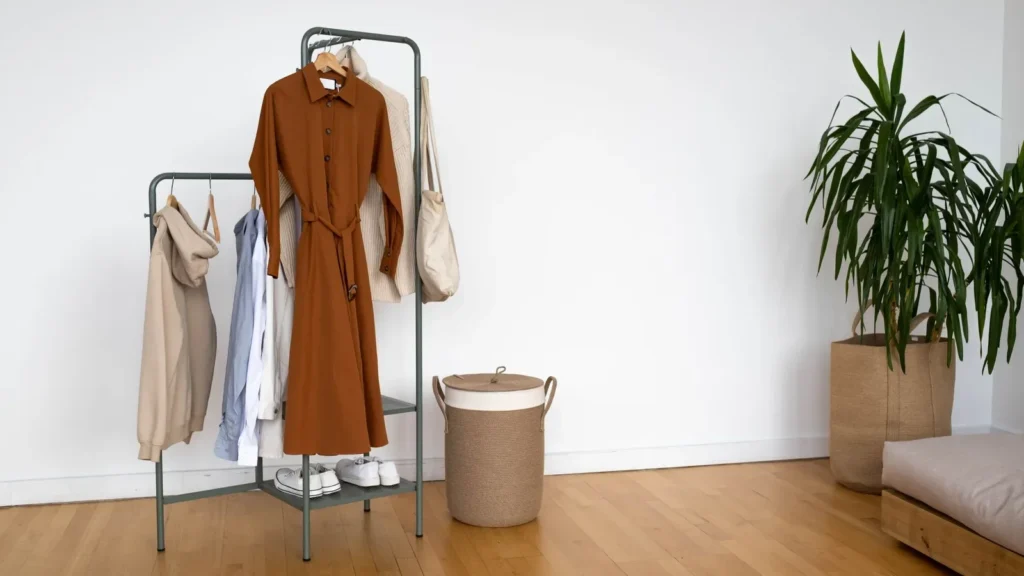
An apartment without a closet may need additional storage, but first identify the jobs it must do and what space is genuinely available. These small apartment storage ideas for a home with no closet start with those jobs. That way, every rack, shelf, and bin you add has one clear task.
First identify the space and storage you actually have; some rooms may need another solution.
Key takeawaysReplace the four jobs a closet does
- Hanging: a garment rack or wardrobe sized to what you actually hang.
- Folding: a dresser, cube shelf, or bins for knits, jeans, and basics.
- Shoes and bags: one landing zone near the door, not scattered piles.
- Bulky and off-season: accessible lower storage or manufacturer-permitted under-bed space; only light items on suitable high shelves.
Some apartments have little or no closet space, so clothes, coats and shoes may need other homes.
The usual advice is a list of products, from ottomans to over-door racks. Each one can help, yet buying them one at a time rarely solves the problem, because nobody decided what each piece is supposed to hold.
This guide treats the missing closet as a set of jobs, so you will size a hanging zone and pick a place for folded clothes. Then you will build a landing spot for shoes and bags and find hidden space for bulky things.
How do you start without a closet?
They start with a count, not a purchase. Sort a manageable amount of what a closet would normally hold into four groups, so you can estimate the space each needs. Take breaks or use multiple sessions as needed.
- Sort a manageable section: identify shirts, dresses, jackets and coats without emptying more than you can put back safely.
- Gather folded items: knits, jeans, T-shirts, and loungewear.
- Collect shoes and bags: include the ones by the door.
- List bulky items: suitcases, spare bedding, and off-season gear.
- Edit by choice: keep necessary, seasonal and meaningful items; get permission before changing another person’s belongings.
- Note the biggest group: plan enough appropriate space for it alongside access and safety needs.
The count may reveal which group needs more room. It does not tell you in advance that hanging clothes are the smallest group or that buying furniture is necessary.
Reviewing belongings during the count can clarify what storage is needed. The SETS method builds that sort-and-edit step in before any storage is chosen.
How do you size a garment rack or wardrobe?
Measure the clothes before you measure the room. Measure manageable sections of the clothes you intend to hang, then add their widths as a starting estimate. Check the estimate against the actual hangers and arrangement you plan to use.
Allow enough usable rail space for the actual hangers and garments to move without crowding. Measure the available floor space and access too; rail length alone does not establish safe loading.
Measure the longest piece from hanger hook to hem and check that the rail height and clearance accommodate it. Check reach as well, especially with a two-tier rack.
Check the full setup
Compare the rack or wardrobe’s usable dimensions and documented weight limits with your garments. Follow all assembly, placement and anchoring instructions, and check lease or building rules before installation. If required anchoring is not possible, choose a different suitable product rather than skipping it.
Choose between open and closed storage next, because an open garment rack leaves its contents on display; ease of moving depends on the model and any anchoring requirements. A wardrobe or suitable fabric cover can conceal clothes and reduce dust exposure; allow ventilation and follow garment and storage instructions rather than sealing damp items away.
Follow each garment’s care guidance. Heavy knits or fragile shoulders may stretch when hung. The Canadian Conservation Institute’s textile guidance explains these support risks in a conservation context; it is not a trial of consumer garment racks.
Where do folded clothes go without a closet?

A dresser is one option for folded clothes, provided its drawers can open without blocking circulation. Follow the furniture instructions, including anti-tip anchoring. The CPSC’s Anchor It guidance explains why top-heavy furniture needs securing. A tall, narrow piece is not automatically the safest or most efficient choice.
A cube shelf with fabric bins is another option if it fits and can be installed according to its instructions, including any required anchoring. Arrange categories in the bins as useful and label them if that helps.
File folding helps in both cases. Standing packets on their edge lets you see every item at once, which may make items easier to find.
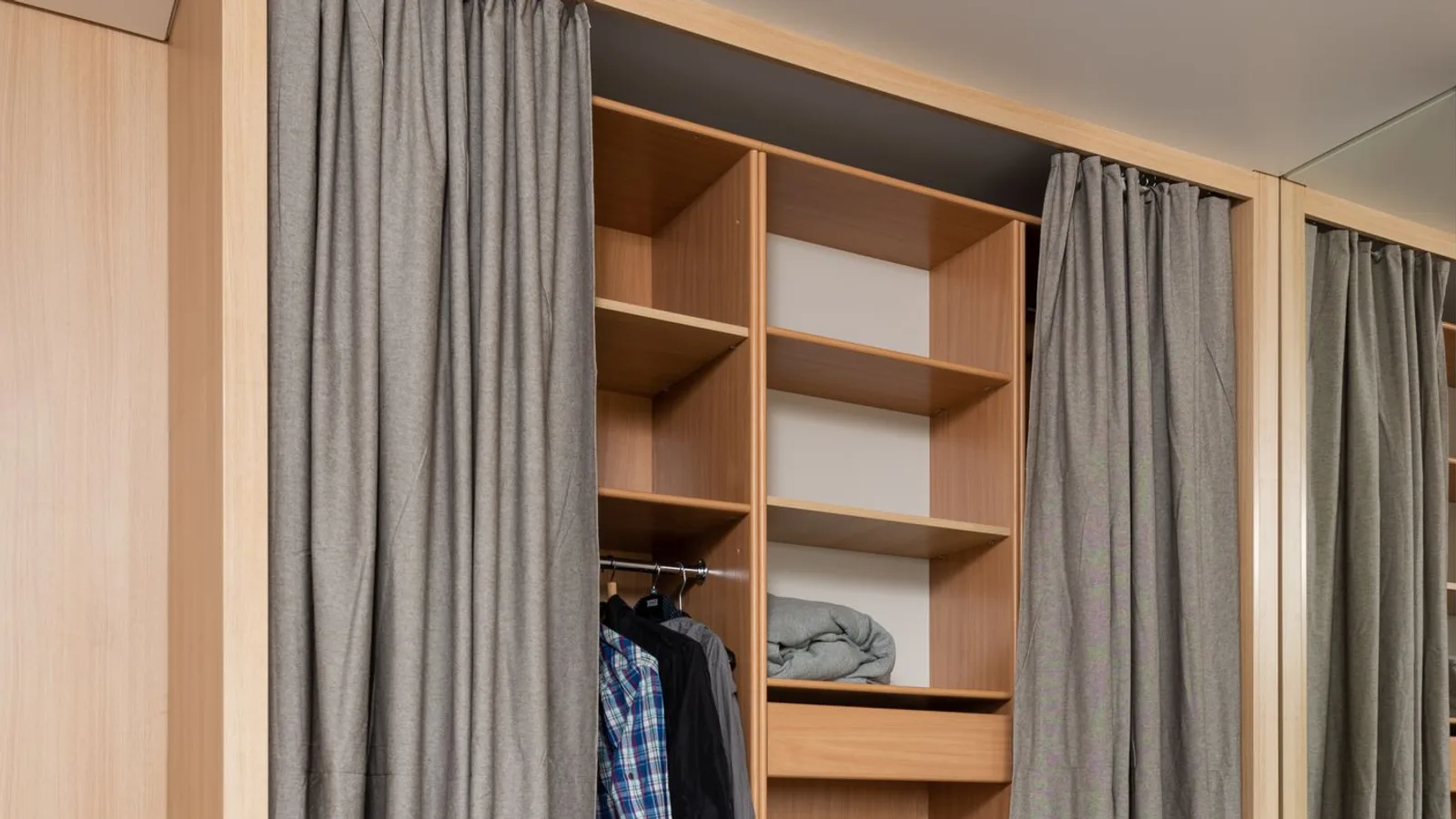
Keep folded storage close to the hanging zone. A screen or properly installed curtain may hide both zones, but must not obstruct exits, heaters, ventilation or sprinklers. Follow hardware instructions and obtain permission for ceiling or wall work; do not improvise supports.
Keeping related clothing nearby may reduce trips if the arrangement fits the room and its users.
How do you handle shoes, bags, and coats at the door?
If space permits, designate a landing zone for shoes, bags and coats near the entrance. Otherwise, use an accessible spot elsewhere that leaves circulation and exits clear.
Wall hooks, a shoe rack or a key tray may help if they fit safely. Follow the product’s mounting and load instructions and obtain permission where needed. An over-door organizer is an option only when its instructions allow the door and load, and the door still closes and opens fully. Keep escape routes clear and doors operable; see the NFPA’s escape-planning guidance. Our comparison of an over-door shoe organizer versus a shoe rack compares the two options.
Agree on a shared arrangement that fits each person’s needs and the available space; individual hooks or shoe spots are optional.
Match the contents to daily needs and available space without obstructing an exit. Find an agreed, accessible location for other items.

A boot tray earns its spot in winter, since wet boots and umbrellas drip onto the floor otherwise. Choose a tray suited to the floor and empty collected water promptly. Let footwear dry according to its care instructions; overnight drying is not guaranteed.
Where does bulky and off-season storage go?
If the bed manufacturer permits storage underneath and the space is clean, dry and accessible, low bins or bags may hold dry off-season clothes or bedding. Follow bed and textile instructions, preserve required airflow and do not block access or escape routes. A bed with built-in drawers is another option if they open safely in the available space.
Keep suitcases and heavy boxes at an accessible lower level, not above a doorway or on top of a wardrobe. Consider only light items on high shelves whose documented mounting and load limits are suitable. Keep exits and services clear, and never stand on furniture to reach storage.
High shelves still require a safe load, secure installation and comfortable retrieval; choose a lower location when any of these is uncertain.
Furniture with hidden storage fills the gaps. If choosing a lift-top ottoman or bench, follow its instructions for lid support, child access, load and use; it is not child play space. Use it only where it leaves circulation and doorways clear. A coffee table with drawers may add storage without extra floor area if it replaces a table already in the room.
If existing storage cannot hold the bulky items safely, compare the usable capacity and access of a suitable piece before buying.
Why do open racks turn messy, and how do you stop it?
A rack can become hard to use when garments accumulate beyond its usable space. Clothes draped across it can be a prompt to review the setup, but do not by themselves establish whether the rack is overloaded.
Ask whether the issue is capacity, reach, time or garment support. Follow the rack’s documented load, placement and configuration limits rather than treating appearance as a safety test.
Keep a small stock of empty hangers at one end. When a new piece arrives, it takes one of those hangers, and when spare hangers run out, review the space and current needs. One-in, one-out is optional, not a reason to discard necessary items or someone else’s belongings.
When useful, straighten the rack and return items to their zones. Review unworn items without a compulsory deadline: seasonal clothing, uniforms, fit changes and personal significance may justify keeping them.
Four jobs, recorded separately
List hanging garments, folded items, daily shoes and bags, and bulky belongings. Record a usable location and actual space for each group. Keep heavy or bulky loads at an accessible lower level; only light items belong on suitable high shelves.
Put the whole plan together
Assigning each group an accessible place can help. A sized rack or wardrobe may hold hanging clothes, with folded items in a dresser or bins. Shoes can go in a landing zone or another accessible spot; bulky items may use lower storage or permitted under-bed space. Check installation and load requirements for each product.
For more ideas that suit tight rooms, visit our small spaces hub or the closet organization hub, which covers hanging space and shelf zones in more depth. Measure the available floor and wall space, along with access and door clearance, before choosing a setup.
If the apartment feels behind, begin with one zone. The free reset checklist suggests breaking the work into short sessions. Start with one manageable zone and adjust the pace to your circumstances.
Working in small sessions can be more manageable than waiting for a completely free weekend. Pick the zone that annoys you most each morning and start there, even if it is not the biggest.
These small apartment storage ideas for a home with no closet all share one principle. Give each group a suitable home, leave enough room to access it and stay within documented load limits; the available space may be easier to use. If essential belongings still do not fit, acknowledge the capacity shortage rather than blaming the routine.
When you bring something new home, decide which of the four zones can accommodate it. This habit may make the system easier to maintain, although needs and available space can change.
Frequently asked questions
How do you store clothes in an apartment with no closet?
Separate hanging, folded items, shoes and bulky storage, then match each to available space. A rack, dresser or bins may help if they fit and their installation and load requirements can be met. Keep exits clear; use under-bed storage only where the bed instructions permit it.
Is a garment rack or a wardrobe better for a studio?
Compare the actual models, usable capacity, mounting or anti-tip requirements, price and access. An open rack displays clothes; a suitable cover or wardrobe may reduce dust exposure but does not prevent moisture problems. Neither type is automatically cheaper, lighter or easier to move.
How long should a clothing rack be?
Measure the space your clothes occupy and allow enough room for actual hangers to move. Check garment length, usable dimensions, reach, documented load and installation requirements before choosing a rack.
Where do you put coats without a coat closet?
Hooks near the door are one option if there is room and mounting instructions and permissions allow them. A suitable rack may also work; permitted under-bed storage may suit off-season coats. Use an over-door rail only if its instructions permit the exact door, load and installation; keep the door operable and the exit clear.
How do you keep an open clothing rack from looking messy?
Group items in a way that helps you find them and review reach and usable space when the rack gets crowded. Follow its documented load and configuration limits. Matching or spare hangers are optional; they are not a capacity test.
Written by the SetsQuick Team. First published .
© SetsQuick. This article and its images may not be copied or republished without permission. To report reuse, see our DMCA page.
Was this guide helpful?
Save it for later or send it to someone