
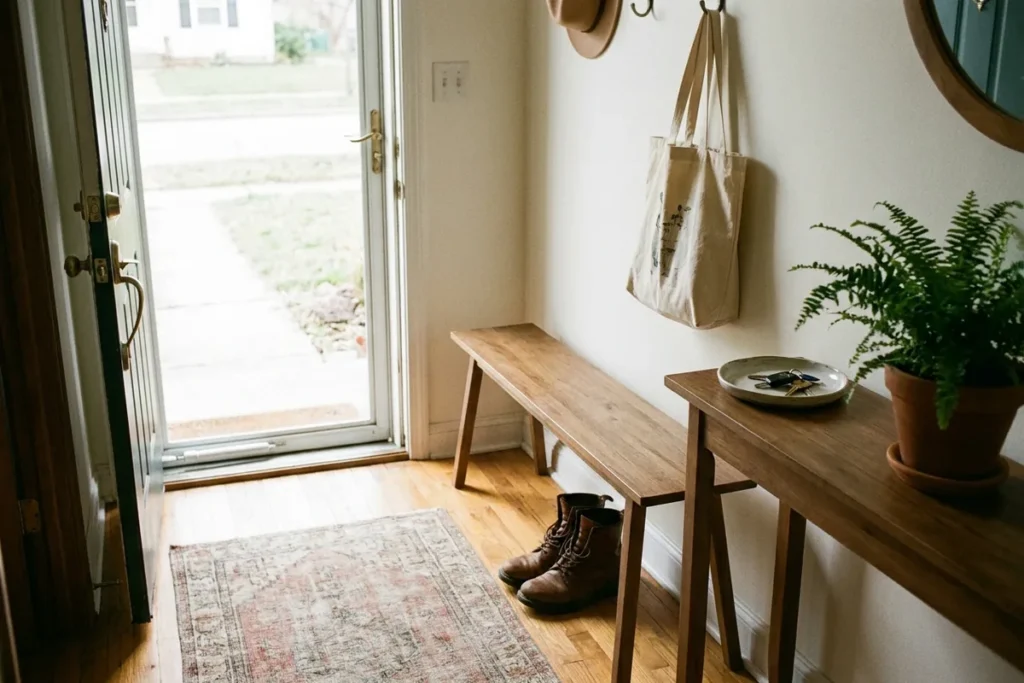
A feng shui declutter focuses on flow: how easily people, light, and air move through a room. Instead of only counting items, it asks what blocks a doorway, crowds a view, or drains attention. Clearing those spots first makes a small home feel calmer, brighter, and much easier to live in.
Clear the paths and the views first, and the room starts to breathe.
Key takeawaysFour feng shui ideas that help any declutter
- Start at the front door: the entry sets the tone for the whole home.
- Open the pathways: nothing should block a door, a walkway, or a window.
- Keep what you love in view: visible surfaces hold only meaningful, useful items.
- Close what you store: hidden storage keeps visual noise low.
Feng shui is a traditional Chinese practice concerning the arrangement of places and objects in relation to qi, often written chi. Britannica’s account of feng shui describes its cultural and philosophical background. References to energy in this guide describe that tradition or practitioners’ beliefs, not a scientifically established mechanism or a health claim.
You do not need to adopt the full philosophy to use its decluttering ideas. Many of its principles overlap with practical organizing advice, such as clear walkways, good light, and fewer distractions.
This guide treats feng shui as a helpful lens rather than a set of strict rules. It explains the core ideas, then shows how to apply them room by room in a small home.
Each step follows the SetsQuick method, Sort, Edit, Type, Store. The goal is a home that feels open and restful, where every item has a reason to be there.
What does feng shui say about clutter?
In feng shui, clutter is seen as stuck energy. Piles, crowded corners, and blocked doors are described as places where chi slows down, which practitioners link to feeling stuck or drained.
Whether or not you believe in energy flow, the practical effect is easy to notice. Crowded rooms are harder to clean, harder to move through, and often feel more stressful than open ones.
Feng shui pays special attention to entrances. The front door is called the mouth of chi, so a clear, welcoming entry is considered one of the most important places to keep tidy.
Pathways matter as well. Furniture and objects that block a natural walking route are viewed as obstacles, both for energy and for the people who live in the home.
Hidden clutter counts too. Closets, drawers, and the space under the bed are part of the home, and feng shui encourages keeping them orderly rather than using them as dumping grounds.
Finally, feng shui values intention. Items you love, use, and feel good about are welcome, while broken, unwanted, or guilt inducing objects are encouraged to leave the home.
How do you start a feng shui declutter?
Begin with your mindset. Think about how you want the home to feel, whether calm, energized, or welcoming, and use that feeling as a guide for each decision.
Gather simple supplies before starting. You need bags for trash and donations, a box for items that belong elsewhere, a cleaning cloth, and enough time to finish one area completely.
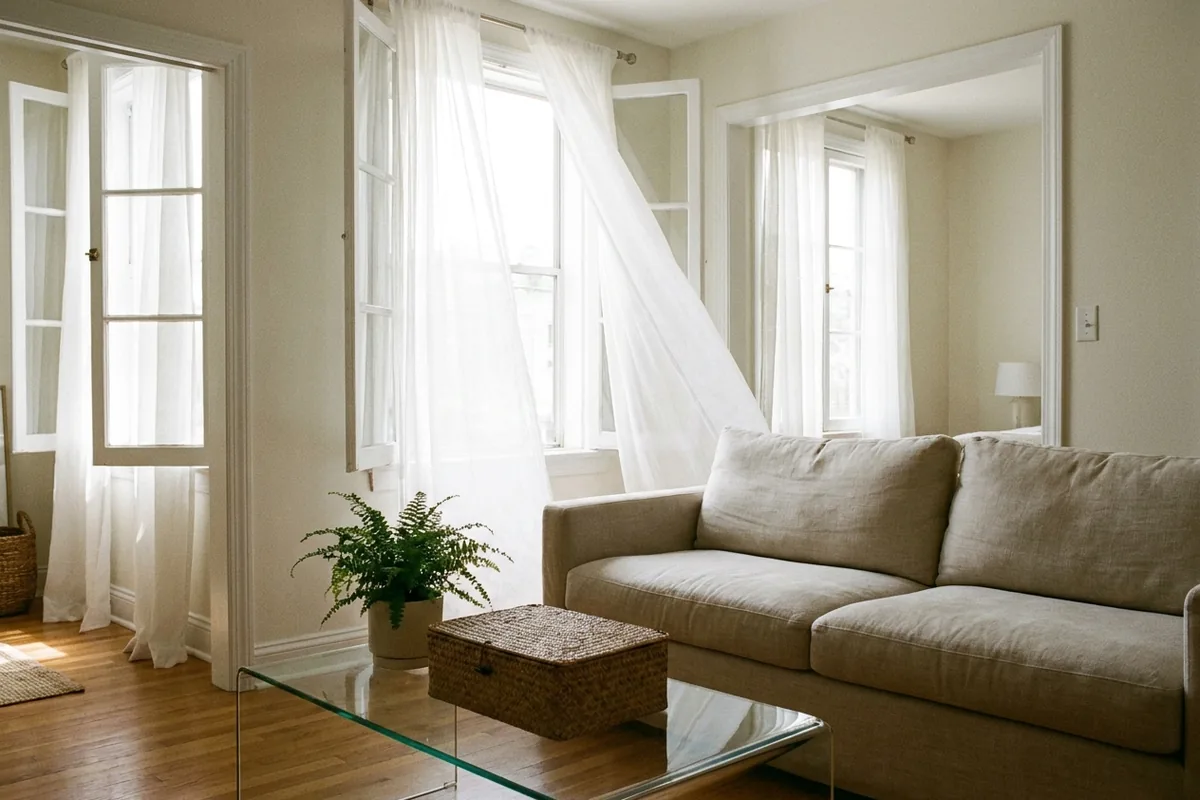
Open windows and let in fresh air and light. Many feng shui practitioners recommend this step, and on a practical level, bright light makes it easier to see dust and judge condition.
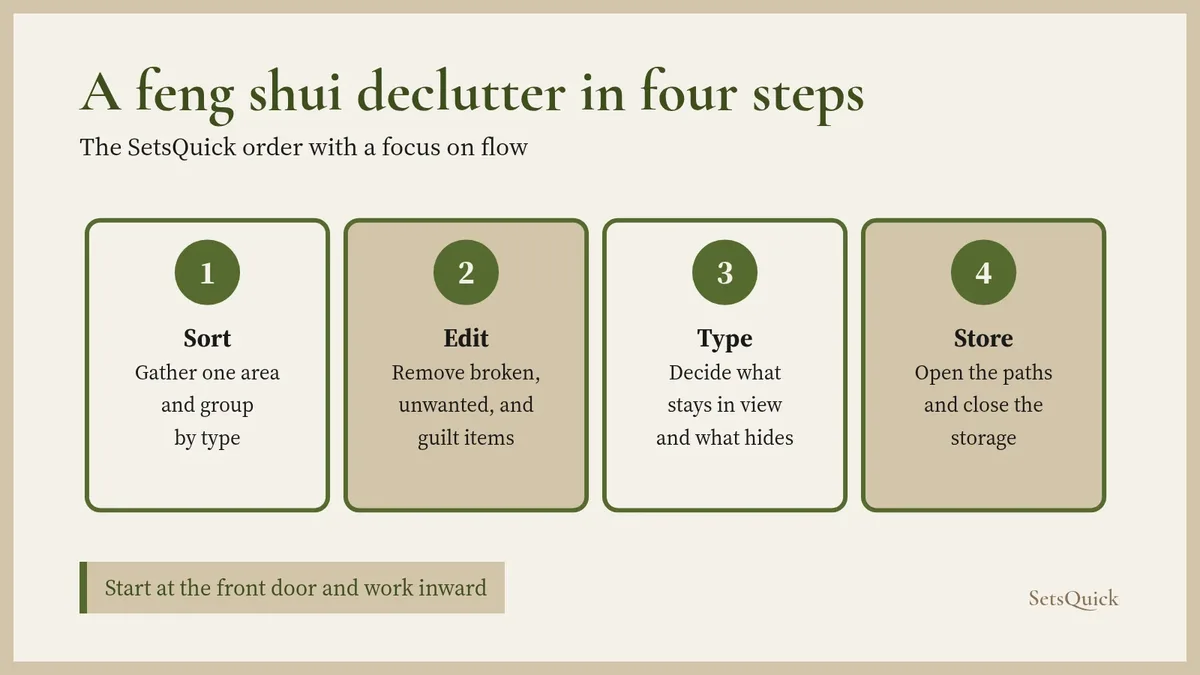
Start at the front door. Clear shoes, bags, mail, and anything else that piles up near the entry, so the first thing you see when you come home is open and welcoming.
Work through the home in a clear order. Move from the entry to the main living areas, then the kitchen, bedrooms, and bathrooms, finishing each space before starting the next one.
Pace yourself and keep the process short and steady. A little progress every day adds up quickly. A feng shui declutter works best in focused sessions, so plan an hour or two at a time rather than an exhausting full day.
The steps below apply the SetsQuick method with a feng shui focus.
- Sort: gather items from one area and group them by type.
- Edit: remove broken, unwanted, and guilt inducing items.
- Type: decide which items stay in view and which get stored.
- Store: keep pathways open and close storage to reduce visual noise.
After each area, take donations and trash out of the room. Leaving bags in a hallway blocks the very pathways you just worked to clear.
Which items should go first?
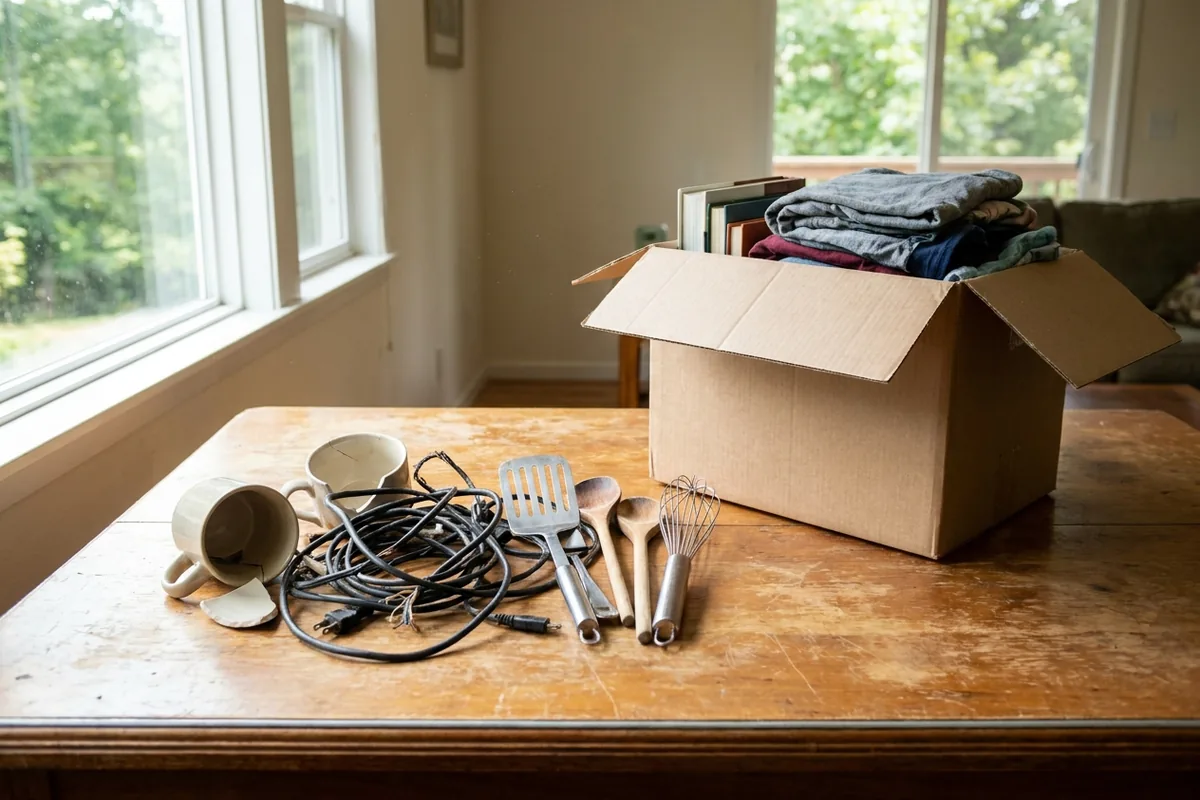
Broken items are an easy place to start. Feng shui associates broken objects with neglect, and practically speaking, items that do not work only take up space and add frustration.
Repair what is worth fixing, then let go of the rest. Set a deadline for repairs, and if an item stays broken past that date, recycle it or dispose of it responsibly.
Next, look at items you feel obligated to keep. Unwanted gifts, inherited pieces you do not like, and purchases you regret can carry guilt, and feng shui encourages releasing them.
Duplicates are another simple category. Extra kitchen tools, spare cords, and redundant decor pieces take up room without adding value, so keep the best one and donate the extras.
Expired products deserve attention too. Old medicines, cosmetics, cleaning products, and pantry items should be checked against their labels and removed when past their dates.
Paper clutter often hides in plain sight. Old magazines, outdated manuals, and unneeded receipts can be recycled, while important documents get filed in a single, organized location.
Treat sentimental items with care. Feng shui does not require giving up meaningful pieces, but it suggests keeping a curated few in view rather than storing boxes you never open.
How do you apply feng shui to each room?
The entry should feel open and welcoming. Keep only daily shoes and bags near the door, add a hook or a small tray for keys, and make sure the door opens fully.
The living room benefits from clear seating and open walkways. Remove extra furniture that blocks movement, clear coffee tables, and keep remote controls and chargers in a closed basket.
The kitchen is linked to nourishment in feng shui. Clear countertops of rarely used appliances, keep the stove clean and working, and edit the pantry so food stays fresh and visible.
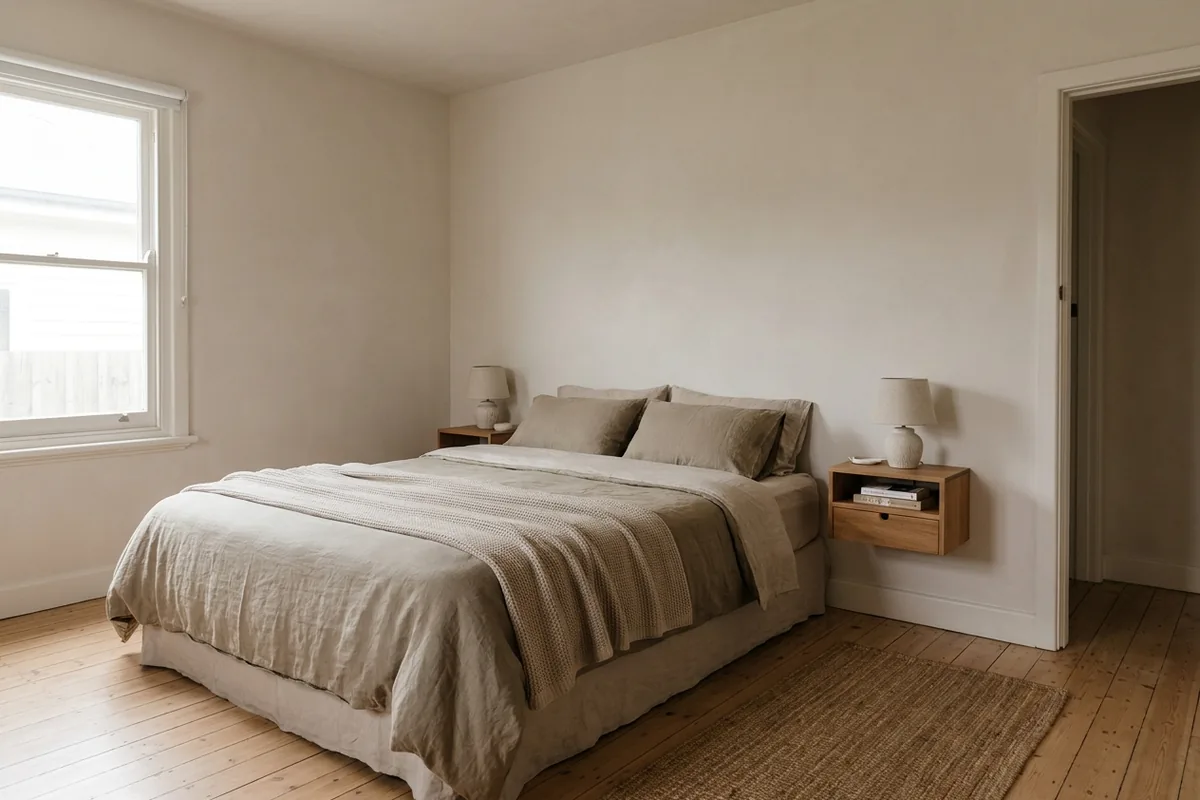
Bedrooms are meant for rest. Keep the space under the bed clear or neatly stored, limit electronics near the bed, and remove work materials so the room feels like a retreat. For a practical order of work, follow the bedroom decluttering guide from surfaces to the closet.
Bathrooms should feel clean and fresh. Clear the counter, store toiletries in closed cabinets, and remove expired products, keeping only what you use regularly.
Home offices benefit from a clear desk. Keep only current projects in view, file papers away, and position the desk so you can see the door if the layout allows. Use office drawer organization to give daily tools, current projects, and backup supplies separate places.
Closets deserve the same attention as open rooms. Remove clothes that no longer fit, keep the floor clear, and leave a little space between hangers, so the closet door opens and closes easily.
Dining areas should invite people to gather. Clear the table of mail and projects, keep chairs free of bags and coats, and leave the surface open except for a simple centerpiece.
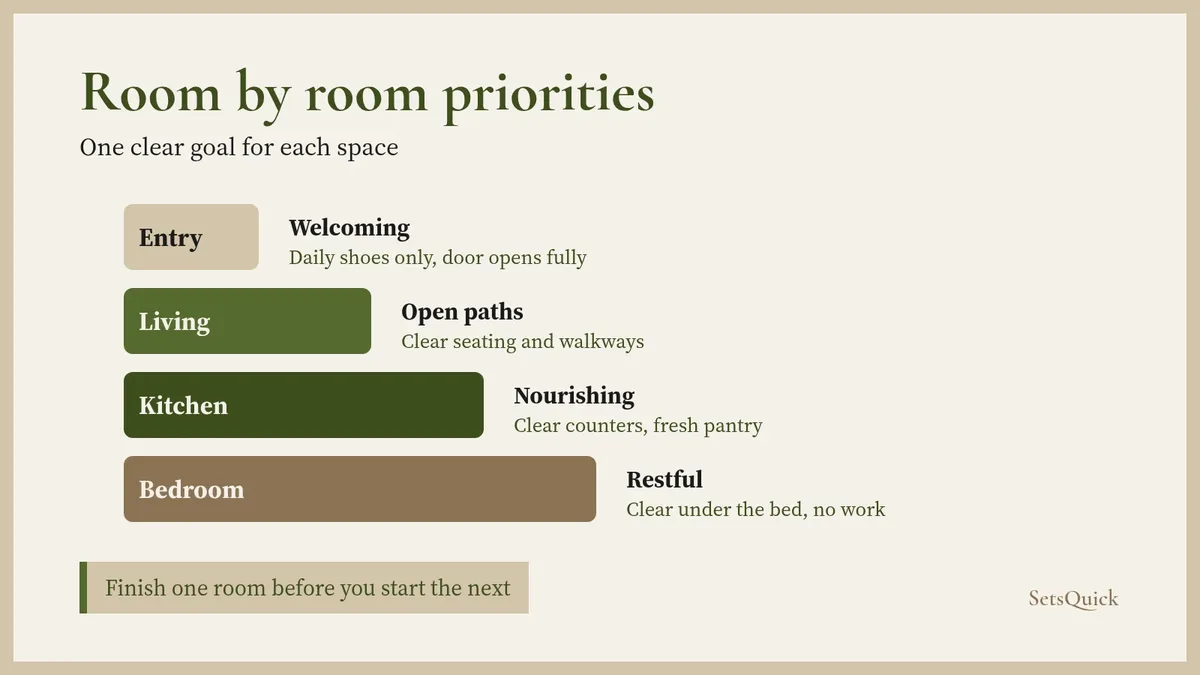
A room by room feng shui declutter keeps the job manageable. Each finished room becomes a calm space you can enjoy while you work on the next one.
What is the commanding position in feng shui?
The commanding position is a key idea in feng shui furniture placement. It suggests placing major furniture, such as a bed, desk, or sofa, where you can see the door without being directly in line with it.
The thinking behind it is comfort and awareness. People often feel more relaxed when they can see who enters a room, and this placement avoids having your back to the doorway.
For beds, the commanding position usually means placing the bed diagonally across from the door, with a solid wall behind the headboard for a sense of support.
For desks, it means facing the room rather than a wall, with the door in view. In a small space, a mirror can help you see the door if moving the desk is not possible.
Decluttering often makes these changes easier. Once extra furniture and piles are gone, you have more freedom to move the bed or desk into a better position.
Mirrors deserve thoughtful placement too. Feng shui suggests avoiding a mirror directly facing the bed, and many people simply find the reflection distracting at night.
Do not force a layout that does not fit the room. Safety and function come first, so keep walkways clear, avoid blocking windows or vents, and anchor tall furniture to the wall.
How do you keep a home clear the feng shui way?
A short daily reset can keep walkways and surfaces usable. In feng shui, practitioners may describe this as supporting the flow of qi; here the practical task is simply to return items to their homes and keep the entrance clear.
Let things in mindfully. Before buying something new, ask where it will live and what it replaces, so the home does not slowly refill with items that lack a clear purpose.
Use a one in, one out rule. When a new item enters the home, choose an older one to donate, keeping the total amount of belongings steady over time.
Clean regularly as part of the routine. Feng shui links cleanliness with fresh energy, and practically, dust and grime make even an organized room feel neglected.
Review each room seasonally. Swap seasonal items, check closets and drawers, and remove anything that no longer fits your life, so small piles never return.
A steady feng shui declutter habit makes the home easier to maintain. Small daily choices protect the open, calm feeling you created during the first big session.
What feng shui declutter mistakes should you avoid?
Moving clutter instead of removing it is the most common mistake. Shifting piles into closets or under the bed only hides the problem, and feng shui considers hidden clutter just as important.
Buying organizers before editing is another trap. Bins and baskets cannot fix too many items, so finish removing what you do not need before purchasing any storage.
Rushing sentimental decisions can lead to regret. Give meaningful items extra time, and remember that keeping a few treasured pieces is fully in line with the practice.
Following rules too rigidly can backfire. Feng shui offers guidance, not strict laws, so adapt its ideas to your space, your budget, and how your household actually lives.
Finally, avoid making the process a one time event. Clutter returns without habits, so pair the big cleanup with simple daily and seasonal routines that keep the home clear.
For more systems in tight spaces, browse the whole home guides and the small space guides, or start with the free reset checklist.
Frequently asked questions
What does feng shui say about clutter?
Feng shui practitioners may describe clutter as obstructing qi. That is a traditional interpretation, not proof of a measurable energy effect. The organizing suggestions here are practical options for access, cleaning and personal preference, not a treatment or a guarantee of wellbeing.
Where should you start a feng shui declutter?
Start at the front door. Feng shui calls the entry the mouth of chi, so clearing shoes, bags, and mail from this area is considered a priority. After the entry, move through the main living areas, the kitchen, bedrooms, and bathrooms, finishing each room completely.
What items are bad feng shui to keep?
Broken items, unwanted gifts, and objects that bring up guilt or bad memories are often seen as poor choices to keep. Expired products and excess duplicates also add clutter. Feng shui encourages keeping items you love and use, and releasing the rest through donation or recycling.
Does clutter under the bed matter in feng shui?
Many practitioners believe it does, since the bed is linked to rest and the space beneath it is part of the room. If you need under bed storage, keep it neat, use closed containers, and store soft items like linens rather than old paperwork or broken objects.
How often should you declutter for good feng shui?
A quick daily reset keeps surfaces and the entry clear, and a seasonal review keeps closets and drawers in order. Many people also do a larger declutter before the new year or a major life change, using the moment as a fresh start for the home.
Written by the SetsQuick Team. First published · Last updated .
© SetsQuick. This article and its images may not be copied or republished without permission. To report reuse, see our DMCA page.
Was this guide helpful?
Save it for later or send it to someone