
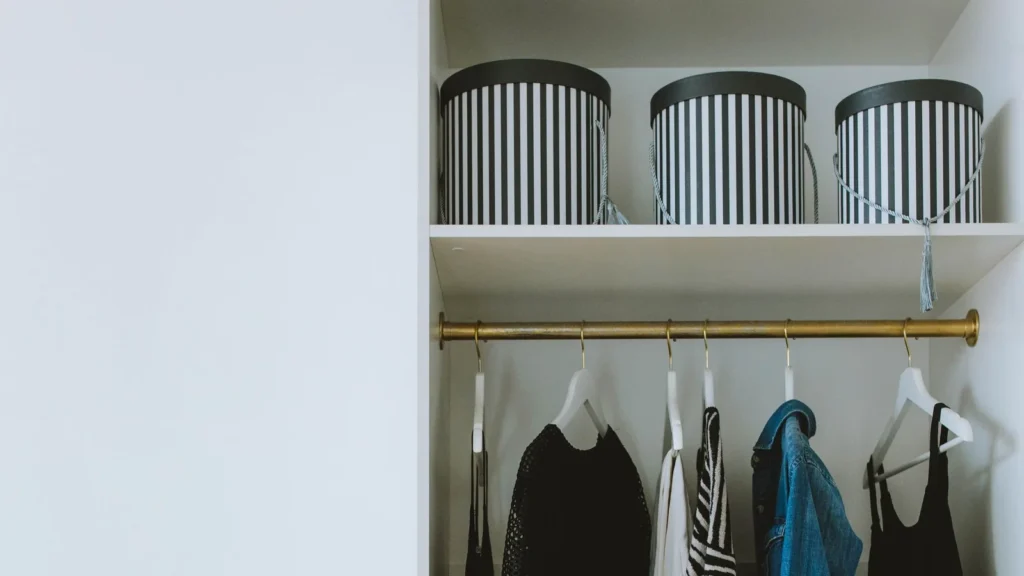
Wondering how to maximize closet space in a small bedroom? Start by measuring before buying organizers. Some closets have usable space to uncover; others are genuinely short of capacity. Your measurements can help you decide what, if anything, will fit.
Measure the usable space before deciding that more storage is the answer.
Key takeawaysMeasurements to consider before you buy
- Rod height and length: check these alongside garment lengths, reach and the system’s requirements.
- Space above the top shelf: many closets leave a tall band of air up there.
- Floor under the shortest clothes: check its usable height, width and depth.
- Side walls and corners: check the opening, reach and mounting requirements before choosing a hook or shelf.
- Door clearance: measure the gap between the closed door and the shelf edge.
Some closet zones are awkward to reach or do not match the clothes stored there. Measure what is usable before deciding whether to reduce contents, rearrange them or add storage.
Double rods, slim hangers and door organizers can help, but each idea fits some closets and not others. Buying them without measurements can leave you with a second rod that blocks long coats.
This guide works the other way around: measure five possible storage zones, compare their usable space and access, and choose a change that fits your needs before buying anything.
A seasonal wardrobe change can be a useful reminder to measure, but choose a time that fits your household and climate.
How to maximize closet space in a small bedroom, starting with a tape measure
Begin with a notepad, a tape measure, and enough time to work at your own pace. A phone camera helps too, since a photo of the open closet is a quick base for your sketch.
Write every number down, because you will compare them later, and a sketch of the closet from the front makes it much easier to see where the empty zones are.
- Measure the inside width: run the tape along the back wall at rod height.
- Measure the depth: measure from the back wall to the closed door or nearest obstruction, and note any narrower points.
- Note the rod height: measure from the floor to the top of the rod.
- Note the shelf height: measure from the floor to the top of the shelf.
- Measure to the ceiling: this shows how much air sits above the shelf.
- Measure the door opening: a narrow opening hides corners behind the frame.
Next, group the clothes using their usual hangers. Measure from the top of the rod to the lowest hem in your short-hang group, such as shirts and folded pants, then to the lowest hem of your long-hang group, such as dresses and coats. Use those lengths when comparing the available space.
These measurements help you assess what can fit. The area below short clothes may offer useful space, but check its width, depth, access and any obstructions before choosing storage.
Finally, open and close the door slowly and watch where it swings. Check the actual swing of hinged doors and the openings available at each sliding-panel position. Overlapping panels can limit simultaneous access; the actual arrangement determines how much is exposed.

Which areas might offer useful space in a small closet?
Once the numbers are on paper, compare the possible zones. Their size and usefulness vary with the closet layout, door, reach and what you need to store.
Five potential zones and ideas to check
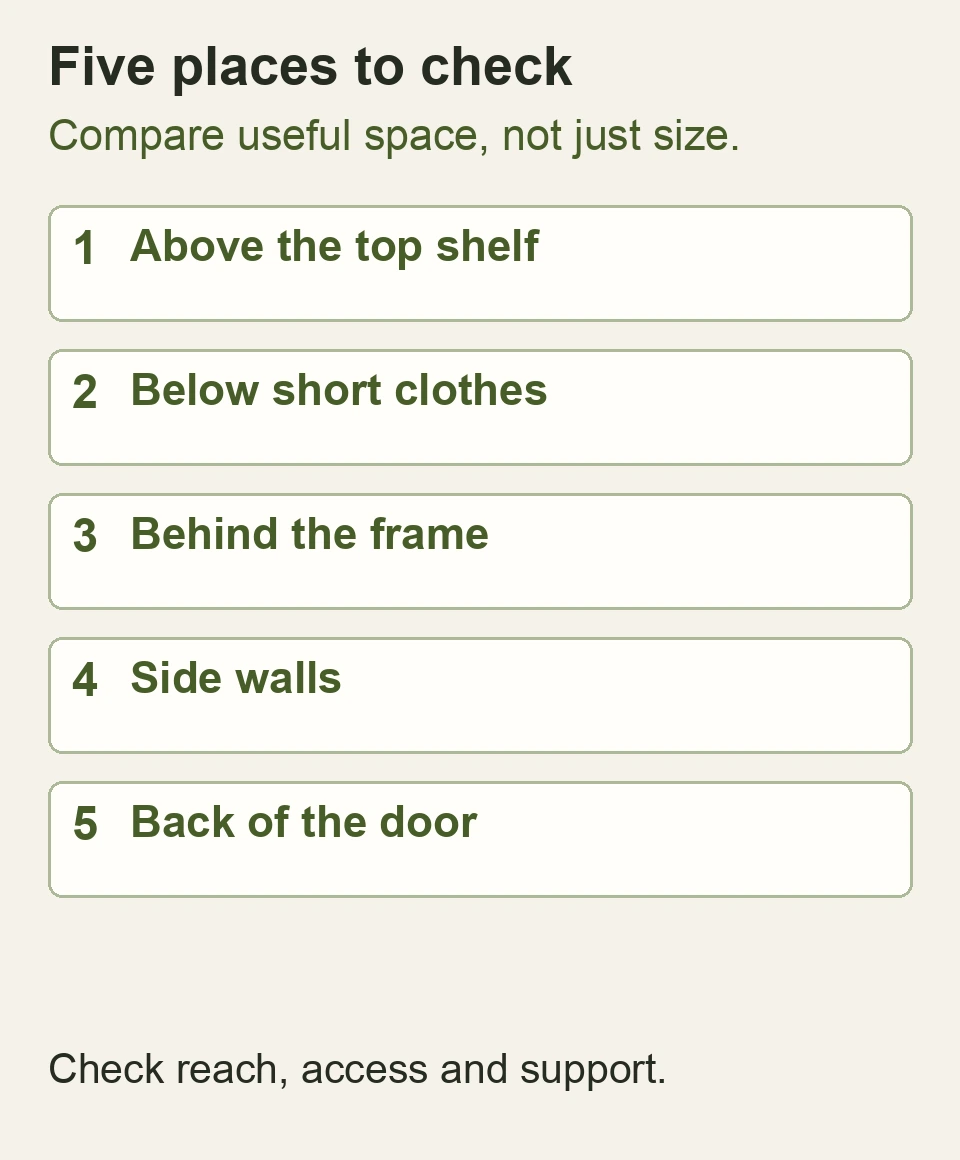
- Above the top shelf: a second shelf, lidded bins with handles, or off-season storage.
- Floor under short clothes: a low shelf, a shoe rack, or a small drawer unit.
- Corners behind the frame: hooks, a narrow shelf, or a corner rod for bags.
- Side walls: slim hooks for belts and scarves, or a shallow shelf for folded items.
- Door back: an over-door organizer if the door is suitable and clears the shelves when closed.
Compare each zone by usable dimensions, reach, safe support and the items you need to store. A larger space is not automatically the most useful if it is hard to access or cannot support the intended load.
Write the usable height, width and depth of each zone on your sketch. Note openings and obstructions too, then compare the options against your priorities.
Do not try to fill all five at once. Each added organizer brings its own clutter risk. A closet with every surface covered in hooks and baskets can feel more crowded than one that simply used two zones well. Before adding a shelf, check its supports, fasteners, wall suitability and load instructions. For a drawer unit or other furniture, follow its anchoring directions; the U.S. Consumer Product Safety Commission advises following the specific anti-tip device and manufacturer instructions. Obtain any required permission before mounting.
How much space is above the top shelf?
If your closet has a shelf above the rod, measure the space between it and the ceiling. Depending on the available opening, reach and support, it might accommodate a suitable container or another shelf.
Reach, support and the removal route matter as well as space. If overhead storage is suitable for you and the shelf, light, infrequently used items may be an option. Keep heavy items lower and frequently used items within comfortable reach.
A handle can make a light bin easier to grip, but it does not make overhead storage safe by itself. Do not pull a loaded bin toward your face or lift beyond your ability. Keep heavy items low, use properly rated access equipment, and follow the bin, shelf and step-stool instructions.
Check the usable opening, lifting route and any shelf lip before choosing a bin. A small gap alone does not guarantee that a bin can tilt out. Try an empty existing container or a clearly labeled size mock-up for access planning only; neither certifies loading or shelf safety.
If you use a step stool, choose suitable access equipment and follow its instructions; keep it where it will not obstruct access. If you cannot safely reach a shelf, choose another location or ask for help.
When does a double rod actually help?
A second rod may help when measured garment lengths leave usable space and both rods are reachable. There is no single correct height, because the right positions depend on the length of your own clothes and the height of your closet. Use the hang lengths you measured: place the lower rod so its garments clear the floor and any storage below, and the upper rod so its garments clear the lower rod and anything hanging from it. Before you install anything, check that the upper rod is still within easy reach. For dresses and long coats, keep a single-rod section high enough that your longest piece hangs free of the floor.
Count short and long garments, then sketch a layout that fits both and remains within comfortable reach. There is no universal garment-count cutoff for choosing a second rod. Check the exact system’s mounting, support and load instructions before installation.
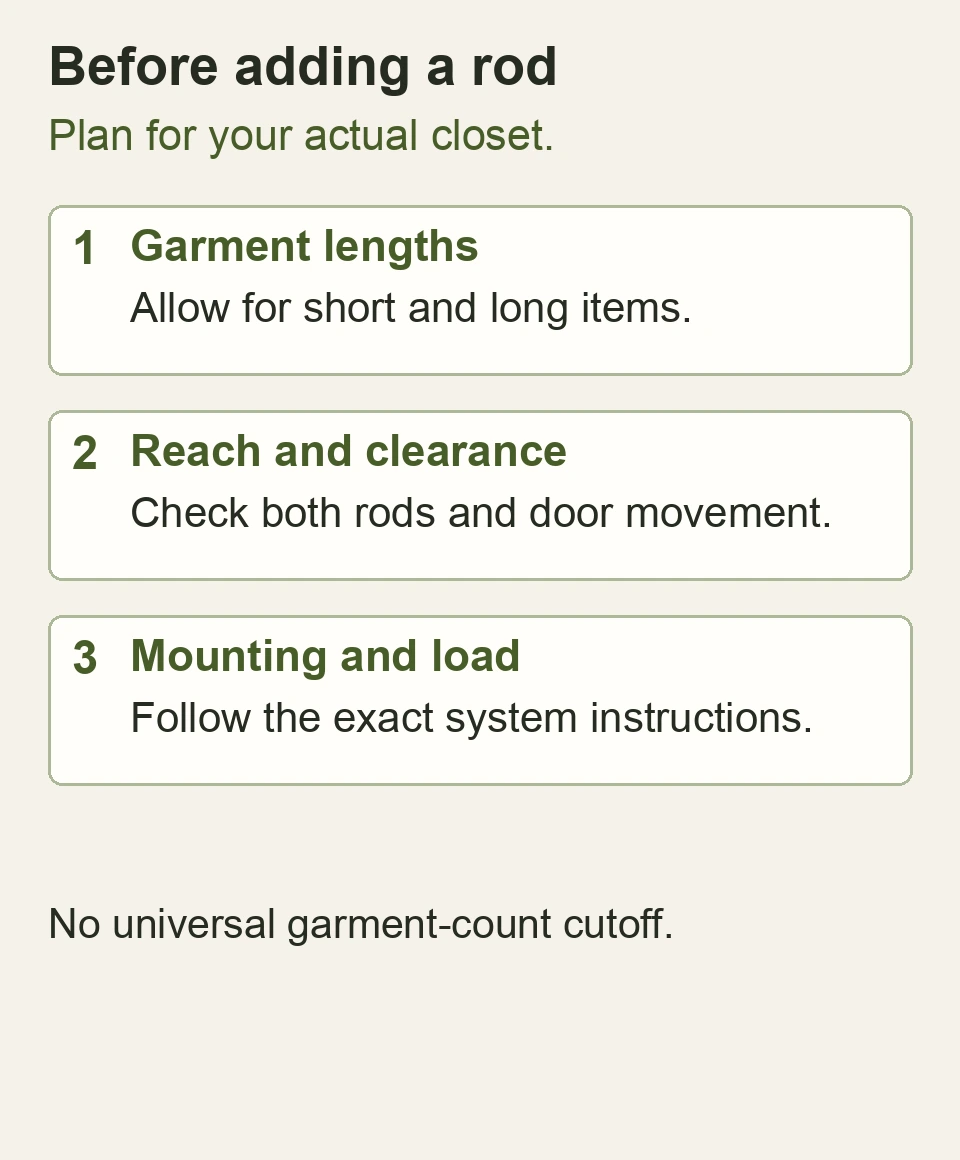
If a second rod would obstruct long garments or be difficult to reach, keep a single-rod section or consider suitable lower storage instead. Preserve clear access rather than maximizing the number of rails.
One problem to avoid is a rod that nobody can reach comfortably. If everyday clothes stay on the lower rod, check whether the upper space is genuinely useful before filling it.
Keep everyday garments at an accessible height rather than moving them upward just to fill space. A shelf or alternative layout may help only if it can be reached and supported safely.
How do you use corners, side walls, and the door?
Corners and walls hold small items, which is exactly why they matter in a small closet. Belts, bags, scarves, and hats often take up shelf space they do not need, and moving them to a wall frees a shelf for folded clothes.
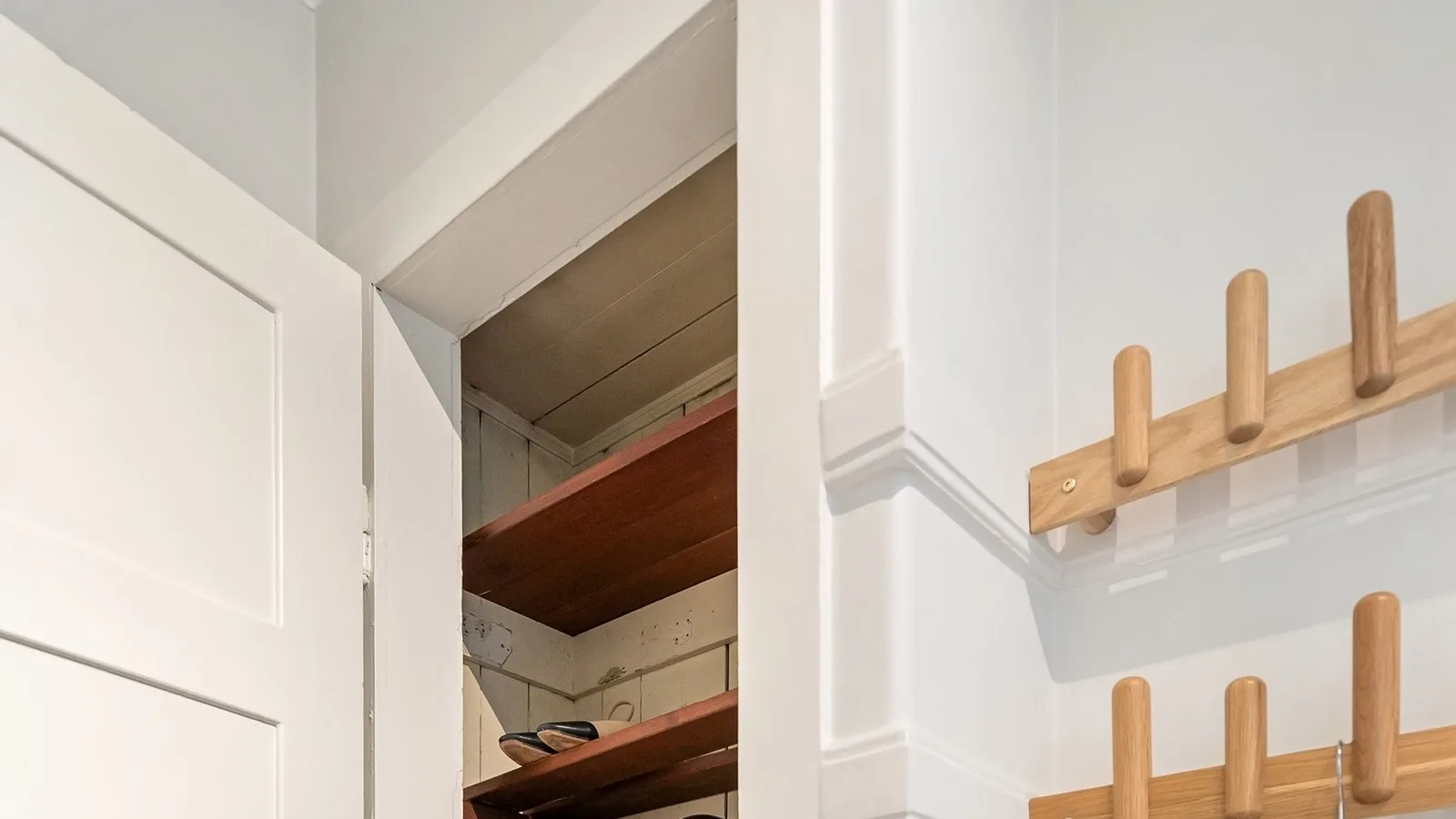
Look behind the door frame first. A narrow opening may leave wall space hidden behind the frame. Hooks or a slim shelf may work there if the space remains reachable and the wall and mounting method suit the intended load.
Shallow storage can make side walls useful. Check that any shelf or hooks fit the available depth, do not block the rod or door, and can be mounted and loaded according to their instructions.
For the door, measure the gap between the closed door and the nearest shelf edge. An over-door organizer also needs a suitable door, working hinges, safe clearance and compliance with its load and installation instructions. Our comparison of an over-door shoe organizer versus a shoe rack covers the tradeoffs in more detail.
How do you keep a small closet from filling up again?
When a zone is full, pause and review what needs to fit there. A one-in, one-out rule is optional, not a requirement; allow for seasonal changes, necessary replacements and the needs of everyone sharing the space.
If it suits your household, counting hangers can help you notice when the rod is full.
The SETS method for home organization builds that habit by sorting and editing before storing. In a closet, review what is currently needed before adding an organizer. An unworn year is not a disposal deadline; consider seasonal, occasion, changing-size and sentimental needs, and get permission before changing someone else’s belongings.
Choose a review schedule that fits your household. A seasonal change can prompt you to check each zone and keep frequently used items within comfortable reach.
For a broader plan that covers hanging space, shelf zones, and shoes, visit our closet organization hub. If the whole room feels behind, the free reset checklist breaks it into short sessions you can work through at your own pace.
To make a small closet more useful, measure the available space, compare access and support, then try one appropriate change at a time. The result depends on the closet and what you need it to hold.
Frequently asked questions
Where should I start adding storage to a small closet?
Measure possible areas, including above the top shelf and below short clothes. If the space, reach and support are suitable, a low shoe rack or an existing light container may help; check access before adding anything.
Is a double rod worth it in a small closet?
A second rod may help when measured garment lengths leave usable space below and both rods remain reachable. There is no universal garment-count cutoff. Keep enough long-hang space and follow the exact system’s installation and load instructions.
How high should the top closet shelf be?
There is no single shelf height that suits everyone. Check the items, the available opening and your comfortable reach. A new shelf needs suitable supports and fasteners and must follow its installation and load instructions.
Can renters add storage to a small closet?
Removable does not automatically mean suitable or permitted. Check the lease, surface, door and exact product instructions; tension rods and freestanding units still have support and load limits. Ask for permission where needed, and secure furniture as its manufacturer requires.
How do you store shoes in a small bedroom closet?
A low shoe rack may fit below short clothes, or an over-door organizer may suit a compatible door. Check actual dimensions, clearance and product instructions. Keep frequently used pairs within reach; use higher storage only if access and support are safe.
Written by the SetsQuick Team. First published .
© SetsQuick. This article and its images may not be copied or republished without permission. To report reuse, see our DMCA page.
Was this guide helpful?
Save it for later or send it to someone