
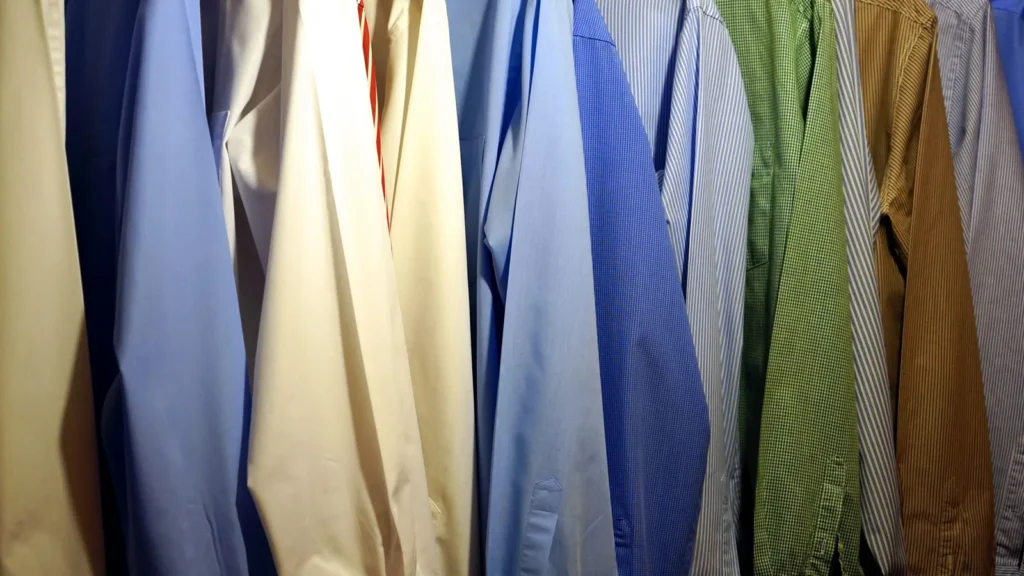
You hung a clean shirt, and a day later it had creases and a bump on each shoulder. Choosing hangers for wrinkle-free clothes starts with the fabric and the garment shape, not with one hanger type for everything. This guide compares hanger support for different garments and offers practical checks for spacing on the rod.
Key takeawaysDecide these before you replace any hangers
- Match the actual support to the garment and its care instructions; fabric names or a velvet, wood or padded finish do not establish universal suitability.
- Compare the actual supported shoulder area, garment construction and hanger shape; a seam is a reference where relevant, not a universal sizing formula.
- Leave enough room to remove a garment without pressing its neighbors; a finger width is only a starting point, not a tested spacing rule.
- Replace hangers one category at a time, starting with the clothes that crease the most.
What actually causes wrinkles on hanging clothes?
Crowding can press fabric into folds. Hanger shape, garment construction, moisture and care instructions also matter. This guide does not establish which cause accounts for most wrinkles, and no hanger can promise crease-free clothes.
An unsuitable shape can concentrate pressure or fail to support the garment as intended. Assess the actual item rather than assuming every thin wire hanger produces the same shoulder mark. Follow the garment’s care directions if pulling or impressions appear.
Slipping can also cause creases. A silky blouse or wide neckline may slide off a smooth hanger or shift to one side. Check whether the actual garment stays supported without pulling or bunching.
Follow each garment’s drying instructions before putting it away. For suitable pieces, allow any remaining moisture to dry before storage; do not assume a hanger can solve a care problem.
Suitable support, enough room for the actual garments, and appropriate drying are useful checks. None guarantees wrinkle-free storage.
How do you check that a hanger fits the garment?
You can compare a hanger with the garment at home before replacing a whole set.
Identify the garment’s construction and care needs before choosing a hanger width. Where shoulder seams are a useful reference, compare them with the support area without forcing the fabric. Strap layouts, unusual cuts and different materials can require a different assessment.
Check how the actual item rests on the proposed support. Do not use a universal rule that every hanger must end just inside a shoulder seam. Pulling, slipping, impressions or an unsupported area are reasons to reconsider the combination in line with the garment’s directions.
Compare the depth and shape of the support as well as its width. Some structured garments need broader shaped contact; other clothing may need a different support or flat storage. A shirt, blouse or coat category alone does not establish the correct profile for every item.
Keep suitable existing sizes where they work. There is no verified two-width combination for an entire wardrobe in this guide; check the actual garments that need a different support before buying a second size or a bulk pack.
Place and remove the garment without forcing its neckline, straps or fastenings. A tall hook, notch or grip surface does not guarantee protection or prevent slipping. Compare the actual garment and product, and do not treat hook geometry as permission to hang a knit whose care calls for flat storage.
Which hangers for wrinkle free clothes suit each fabric?
There is no single best hanger: fabrics, garment construction and care needs vary. The list below describes common hanger types, garments they may suit and what to check before making a change.
Hanger types matched to fabric
- Shaped wooden hanger. Possible use: some structured jackets and coats suitable for hanging. Why: a suitably shaped, broad support can help distribute contact. Check the actual garment, hanger shape and stated weight limit; wider hangers also take space on the rod.
- Padded hanger. Possible use: sound lightweight blouses that are suitable for hanging; store fragile or stretchy knits flat when their weight could distort them. Why: suitable padding can spread contact; it does not guarantee that marks or stretching will be prevented. Padding can flatten over time and lose its shape.
- Slim velvet hanger. Compare the exact shoulder shape, width, surface and permitted load with the actual garment. A flocked surface does not establish universal grip, garment protection or loaded-space savings.
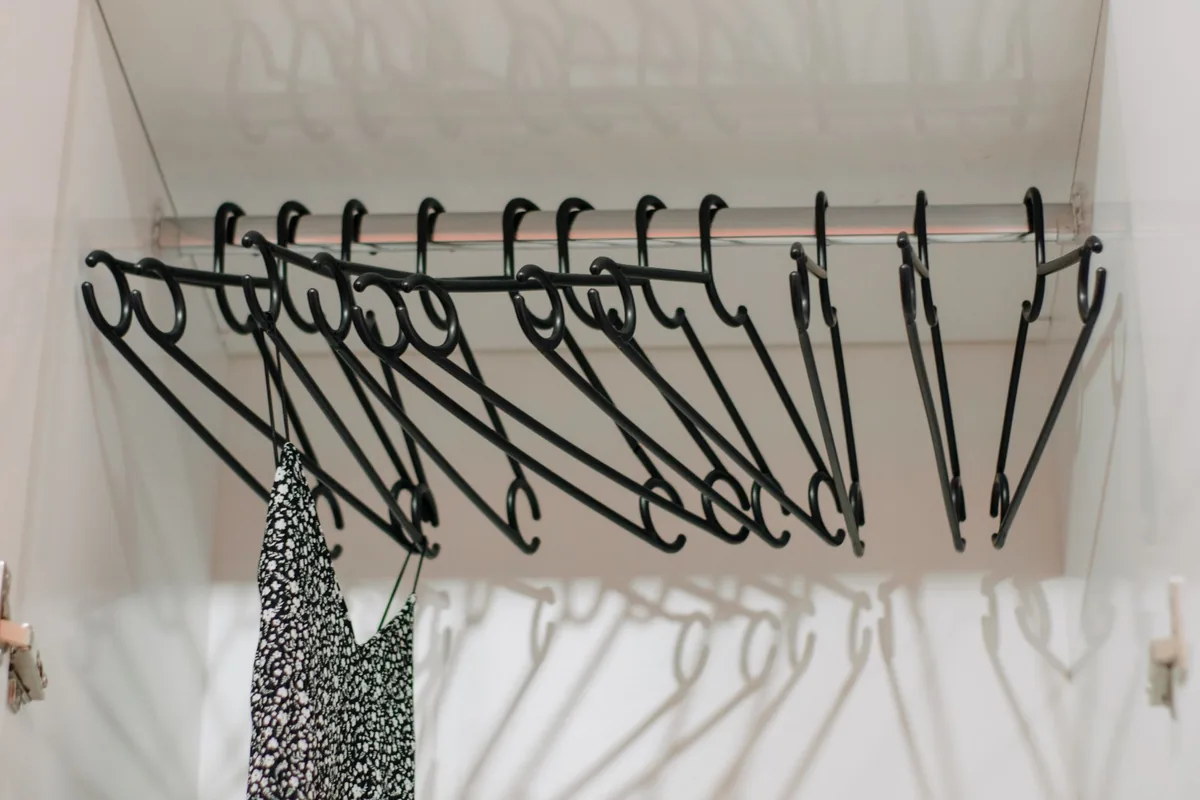
- Plastic tubular hanger. Possible use: some lightweight tops suitable for hanging. Check the size and shape against the garment; a smooth surface may allow certain fabrics to slip.
- Clip or bar trouser hanger. Possible use: suitable trousers or skirts. Clips hold a waistband, while a bar supports a fold. Check the garment’s care instructions and whether clips or a fold leave marks.
- Wire hanger. Check the actual surface, shape, intended use and garment-care requirements. Do not assume a wire hanger is suitable for drying simply because it is used for short-term transport.
Start with a hanger that suits one garment category, and inspect the support before replacing the whole set. Use broader shaped support for suitable structured jackets; choose flat storage for pieces that stretch under their own weight.
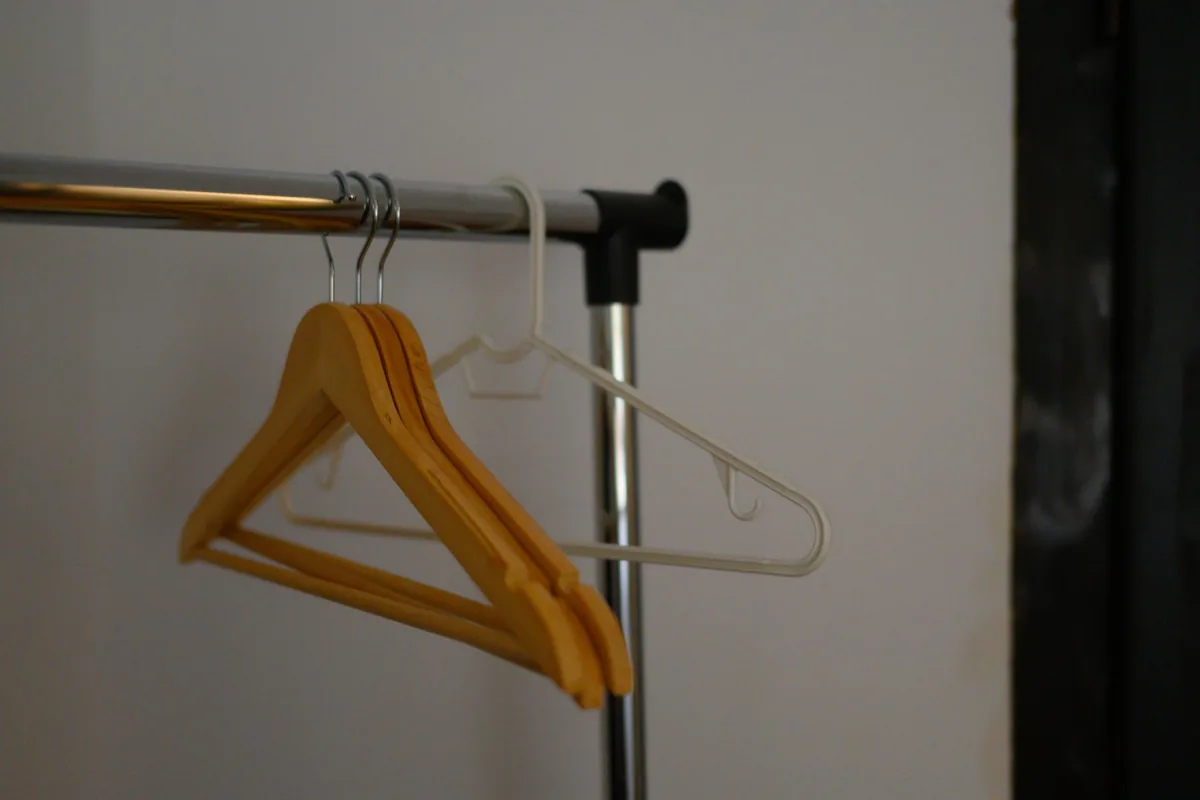
A supportive padded hanger can suit some lightweight blouses, but padding does not make every garment suitable for hanging. The Canadian Conservation Institute’s textile-care guidance advises against hanging fragile and knitted garments in its conservation context. For everyday clothes, follow the care label and use flat support when hanging pulls the fabric out of shape.
For trousers that can be hung, compare a bar with a clip hanger at the waistband. Either arrangement can leave a mark on some fabrics, so check the actual piece and follow its care instructions.
How much space should clothes have on the rod?
Try leaving enough room for each garment to hang without being compressed by its neighbors. A finger-width gap is an informal starting point; bulky coats and delicate pieces may need more space.
Record the usable section and the actual garments on their current supports, then check normal removal and return. Dividing rod length by a hanger count does not establish garment clearance, wrinkle prevention or permitted load. Check the installed system’s requirements separately.
A thinner empty hanger may change spacing, but the loaded garment and access route still matter. For a practical comparison, use the same actual items in the same usable section; see our slim-hanger fit checks. Do not assume that changing everyday tops to slim hangers saves a predictable amount of space or prevents more wrinkles than other changes.
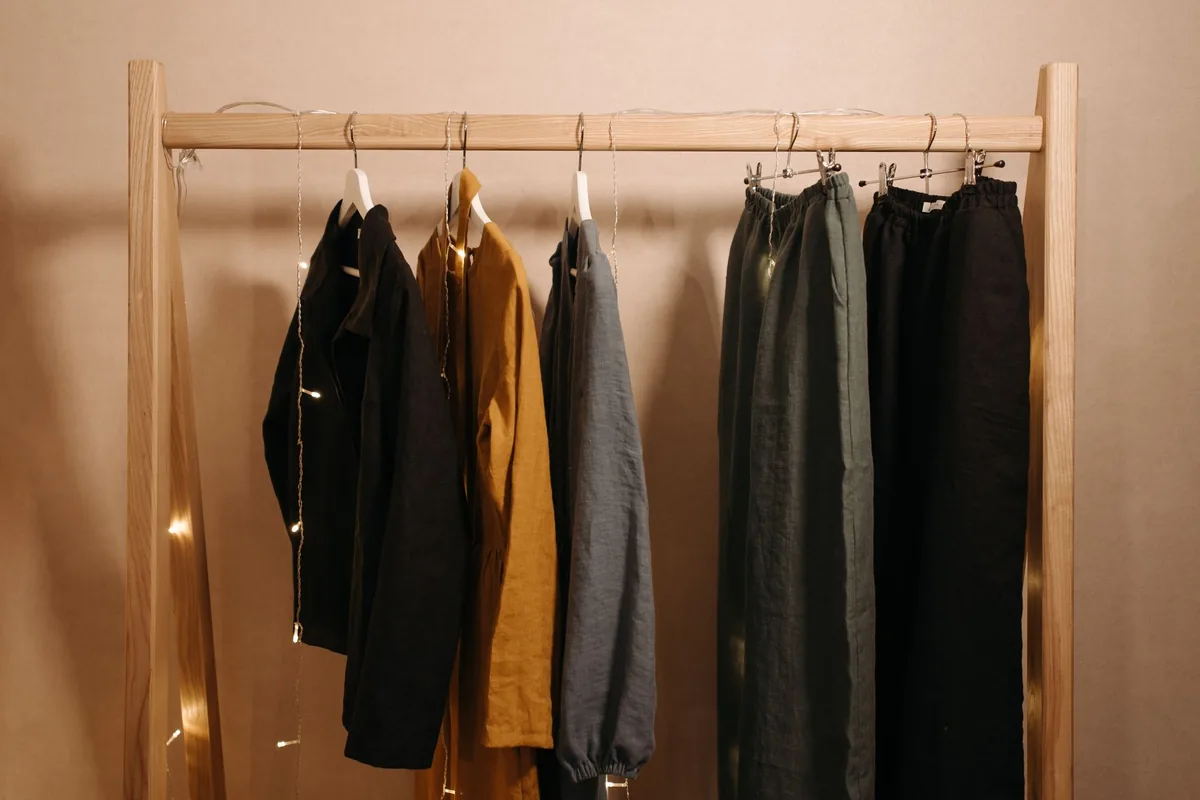
If the rod is crowded, consider moving suitable seasonal pieces to another location that meets their care needs or deciding which items you no longer wish to keep. Check access with the clothes that remain; extra space does not guarantee smooth fabric.
Grouping clothes by length may make space beneath shorter items easier to use. Check the actual hem length, clearance and access before adding a shelf or shoes; grouping alone does not prevent creases.
What goes wrong with hangers?
An unsuitable hanger can leave shoulder impressions or put stress on a garment. How readily a mark relaxes depends on the fabric and construction; do not assume it is permanent or try a treatment that conflicts with the care label.
Check how a garment sits after you first use a different hanger. If you notice pulling or impressions, change the support or store it flat as appropriate. Check periodically; no observation interval in this guide establishes a damage threshold.
If hooks catch or clothes are difficult to retrieve, check the actual supports, access and arrangement. Matching hangers do not make different garments the same width or length, and a mixed set may be necessary for appropriate support. Appearance alone is not a wrinkle-prevention rule.
For a heavy coat, confirm the exact hanger’s intended use, shape and load as well as the garment’s care directions. Slim appearance or a velvet surface does not establish whether a hook will bend or a coat will sag. Keep suitable existing support rather than replacing it solely for a uniform look.
If the rod bows, shifts or no longer functions as instructed, stop using the affected arrangement and obtain an assessment from the manufacturer or a qualified installer. Do not improvise a repair or treat a reduced load as proof that the cause has been resolved; use only a support approved for the actual system and installation.
Should some clothes be folded instead of hung?
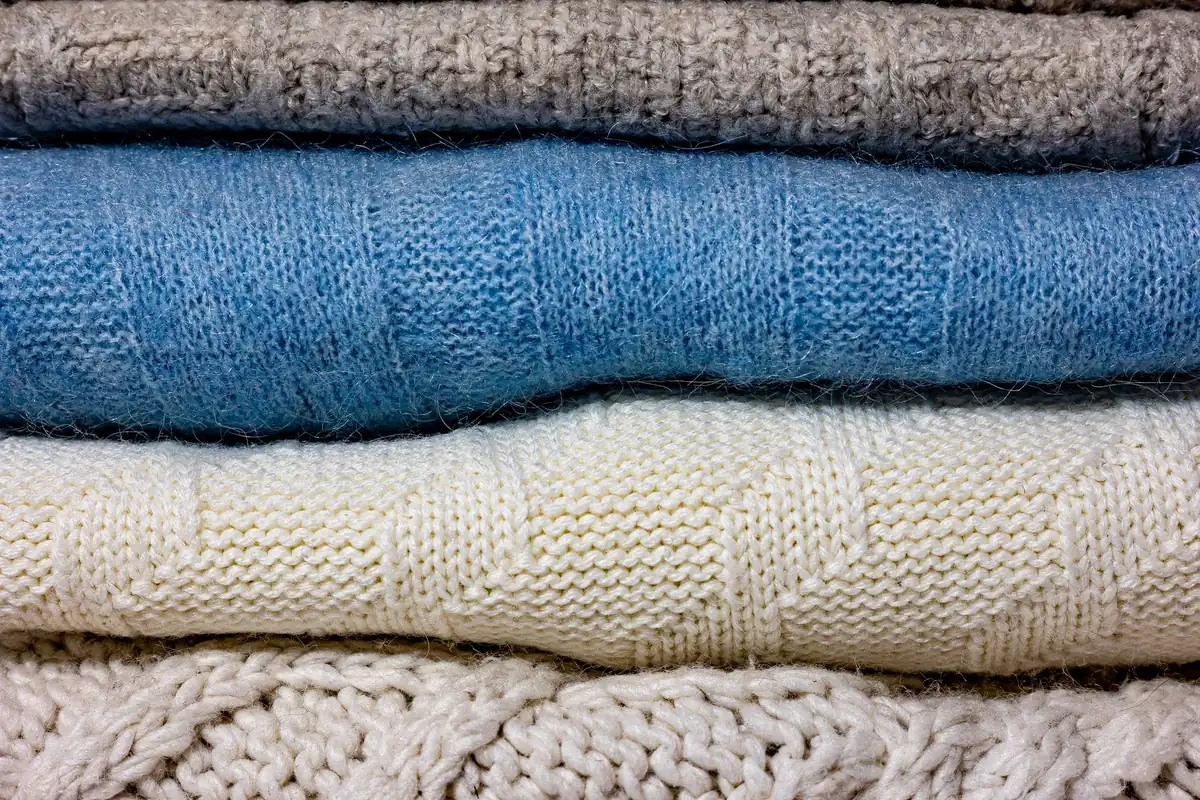
Yes, some. Heavy or fragile knits can distort under their own weight when hung. Flat or gently folded storage may be more suitable, depending on the garment and its care directions.
Follow the storage directions for the actual fabric and garment. Folding a knit over a hanger bar is not a universal workaround for an item that should be stored flat; it may still put weight or pressure on unsuitable areas. Woolmark recommends gently folding knitted wool garments and storing them in drawers.
Some shirts, blouses, jackets, dresses and trousers may be suitable for hanging; check the specific garment’s construction and care directions.
As a starting point, compare suitable hanging support for structured pieces with flat storage for items that may stretch. Let the actual garment and its instructions decide rather than applying a single rule to every wardrobe.
How do you switch hangers without buying too many?
Replacing every hanger at once is expensive and often unnecessary. A staged approach lets you check support and access before buying more.
- Count your hangers by type and note which garments crease the most.
- Set aside clothes you choose not to keep, so you are not buying hangers for them.
- Where shoulder width is a useful reference, compare it with the support area of the hanger.
- Consider a replacement only for an identified garment need, after checking the exact product’s shape, width, surface and permitted use.
- Keep or consider suitable shaped supports for the structured garments that need them.
- Use suitable supportive hangers only for garments that can be hung; keep fragile or stretchy knits flat when appropriate.
- Leave usable removal and return space for the actual garments. Reassess support if pulling, impressions or slipping appear; a finger-width gap or a single check is not a universal protection threshold.
- Reuse, donate or recycle replaced hangers where local programs accept them.
Start with garments that are difficult to support or retrieve, then check whether the changes help before buying more.
If your closet is short on rod space, our guide to closet storage options can help. Our comparison of an over-the-door shoe organizer vs a shoe rack shows how to move shoes off the floor. That leaves more room below the rod for longer pieces.
This approach follows the SETS method, where sorting and editing come before any purchase. You can find more closet guides on the closet hub, and the free 30-Day Home Reset walks through the whole home one space at a time.
Check garments periodically after a change in support. An observation cannot establish long-term garment protection, load capacity or wrinkle prevention. Keep following the actual garment and hanger instructions, and change an unsuitable combination when a problem appears.
Frequently asked questions
What hangers prevent wrinkles the best?
No hanger prevents all wrinkles. Match the support to the garment and its care instructions, leave room for removal, and store fragile or heavy knits flat where appropriate. Try one item before replacing an entire set.
Are velvet hangers good for clothes?
A flocked hanger may suit some garments, but compare the exact product’s shape, width, surface and permitted load with the clothing’s care needs. Velvet does not guarantee grip or space savings, and a thin-looking hook does not establish a failure rate. Different garments may need different suitable supports.
How do you stop hangers from leaving shoulder bumps?
Try suitable rounded support for garments that can be hung, and check the care label. If impressions or pulling appear, change the support or store the item flat. Heavy and fragile knits often need flat support rather than a softer hanger alone.
Should sweaters be hung or folded?
Follow the actual garment’s storage directions. For wool, Woolmark recommends gently folding knitted garments and using shaped or padded hangers for woven wool. Do not assume that folding a sweater over a hanger bar makes hanging appropriate for every knit.
How much space should be between clothes in a closet?
Leave enough usable space to identify, remove and return the actual garments without forcing them. There is no universal finger-width gap that guarantees wrinkle prevention or usable capacity. Reconsider the arrangement and supports where needed, while keeping the installed system within its permitted load.
Written by the SetsQuick Team. First published .
© SetsQuick. This article and its images may not be copied or republished without permission. To report reuse, see our DMCA page.
Was this guide helpful?
Save it for later or send it to someone