
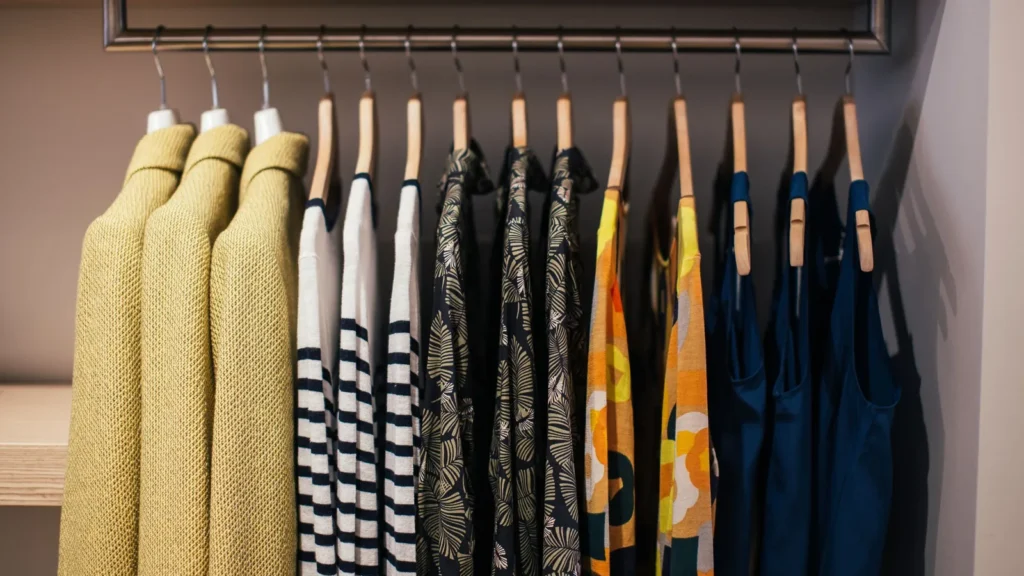
A closet rarely falls apart in one day. It slips a little each week, as clean laundry lands on the shelf and hangers tangle, until the door barely closes. These closet organization ideas turn that cycle into a simple system, built from measurements and habits rather than from a stack of new bins.
Buying containers before sorting is why it did not last.
Key takeawaysDecide these four things before you buy a closet system
- Sort first: keep, relocate, donate, and discard before measuring anything.
- Audit hang lengths: count long items versus short items on the rod.
- Set one home per category: shirts, pants, shoes, and accessories each get one zone.
- Leave breathing room: hangers should slide with one finger.
Most closet makeovers start in a store aisle, which is exactly why so many of them fail within a month. New organizers are bought for clothes that have not been sorted yet, so they end up holding items that should have left the house.
A closet that stays organized follows a different order. You sort what you own, edit it down, decide which type of storage each category needs, and only then buy the pieces that fill a real gap in the plan.
This hub walks through that order for reach-in and walk-in closets alike. Each section focuses on one decision, from hanging space to shoes, and links to our more detailed guides when a single topic deserves a deeper look.
Late October is a natural time to start because most American households are swapping summer clothes for sweaters and coats. Daylight saving time also ends in early November, so darker mornings make a clear, well-lit closet feel even more useful.
Why do closet organization ideas fail after a month?
Most closet organization ideas fail because they solve storage before they solve volume. A new shelf divider or a set of bins can only organize what is already there, and an overfull closet will overflow any system you add to it.
The second reason is a mismatch between the closet and the clothes. A kit with two rods looks efficient, but it fails quickly when the owner mostly wears long dresses or coats that drag on the floor beneath the upper rod.
The third reason is friction. When returning an item takes more effort than dropping it on a chair, the chair wins, so a lasting system makes putting things away faster than leaving them out.
Keep those three causes in mind as you plan. Every idea in this guide reduces volume, matches storage to real clothing, or removes friction, and a successful closet usually needs all three working together.
How do you start organizing a closet?
Begin with a full empty-out if you have two or three hours, or work one section at a time if you do not. Either way, the steps below follow the same order so you never buy storage for clothes that are about to leave.
- Empty one zone completely. Lay items on the bed grouped by category.
- Sort into four piles. Keep, relocate, donate, and discard.
- Try on anything uncertain. If it does not fit or feel good, let it go.
- Group the keep pile by type. Shirts, pants, dresses, knits, and outerwear.
- Measure the closet. Record width, depth, rod height, and shelf height.
- Plan zones on paper. Match each category to the space it needs.
- Buy only what fills a gap. Take measurements with you when you shop.
This order mirrors the SETS method for home organization, which moves from sort to edit to type to store. The approach works in any room, but it is especially powerful in closets, where clothing tends to accumulate quietly.
Relocate items that belong elsewhere, such as gift wrap, sports gear, or documents. Moving them out often frees an entire shelf, and those items become easier to find once they live with similar things in the right room.

How much hanging space do you actually need?
The answer depends on the length of what you hang, not on the width of the closet alone. A hang-length audit takes about ten minutes and prevents the most common closet mistake, which is installing double rods for a wardrobe full of long pieces.
Count the items you plan to hang and sort them into two groups. Short items include shirts, jackets, folded pants, and skirts, while long items include dresses, long coats, and pants hung at full length.
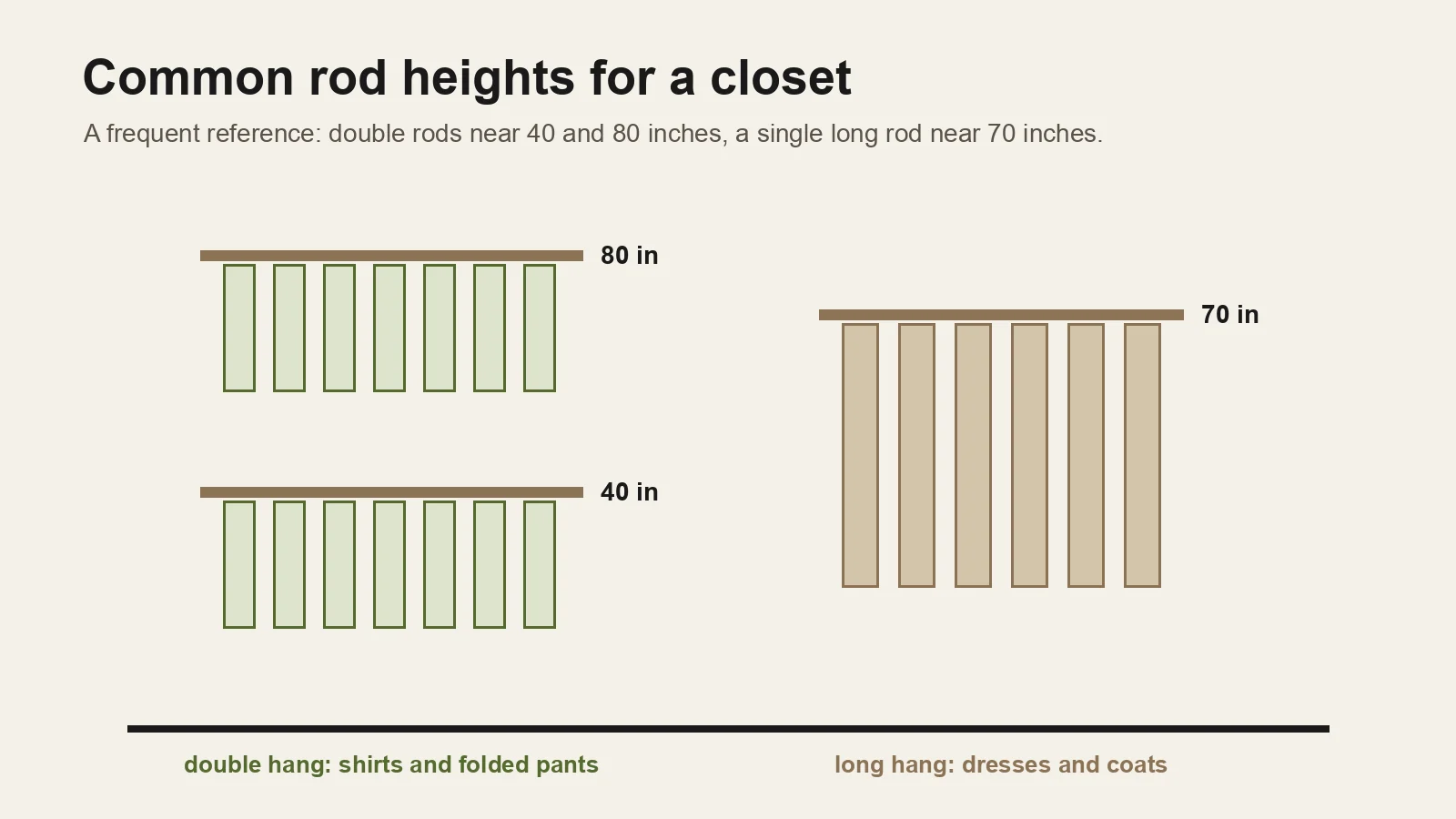
Choose rod heights from your longest garments, required clearance and comfortable reach. Figures such as 40/80 inches for double hanging or 70 inches for long hanging are examples to investigate, not universal installation heights. Follow the exact system’s spacing, fixing and load instructions before installing.
Do not assume a 15/85 percent split between long and double hanging suits your wardrobe. Count and measure the clothes you actually keep, allow usable hand space, and plan accessible zones for the people sharing the closet.
Use your measured long- and short-hanging groups to compare layouts. A one-in-five cutoff is only a planning prompt, not a validated rule. Check whether each garment clears the floor or shelf and whether every user can retrieve it comfortably before committing to another rod.
Which closet organization ideas fit your closet type?
Different closets need different solutions, so match the idea to your space rather than copying a layout from a large walk-in. The list below pairs common closet types with the ideas that usually help most.
Choose ideas by closet type, then measure before you buy
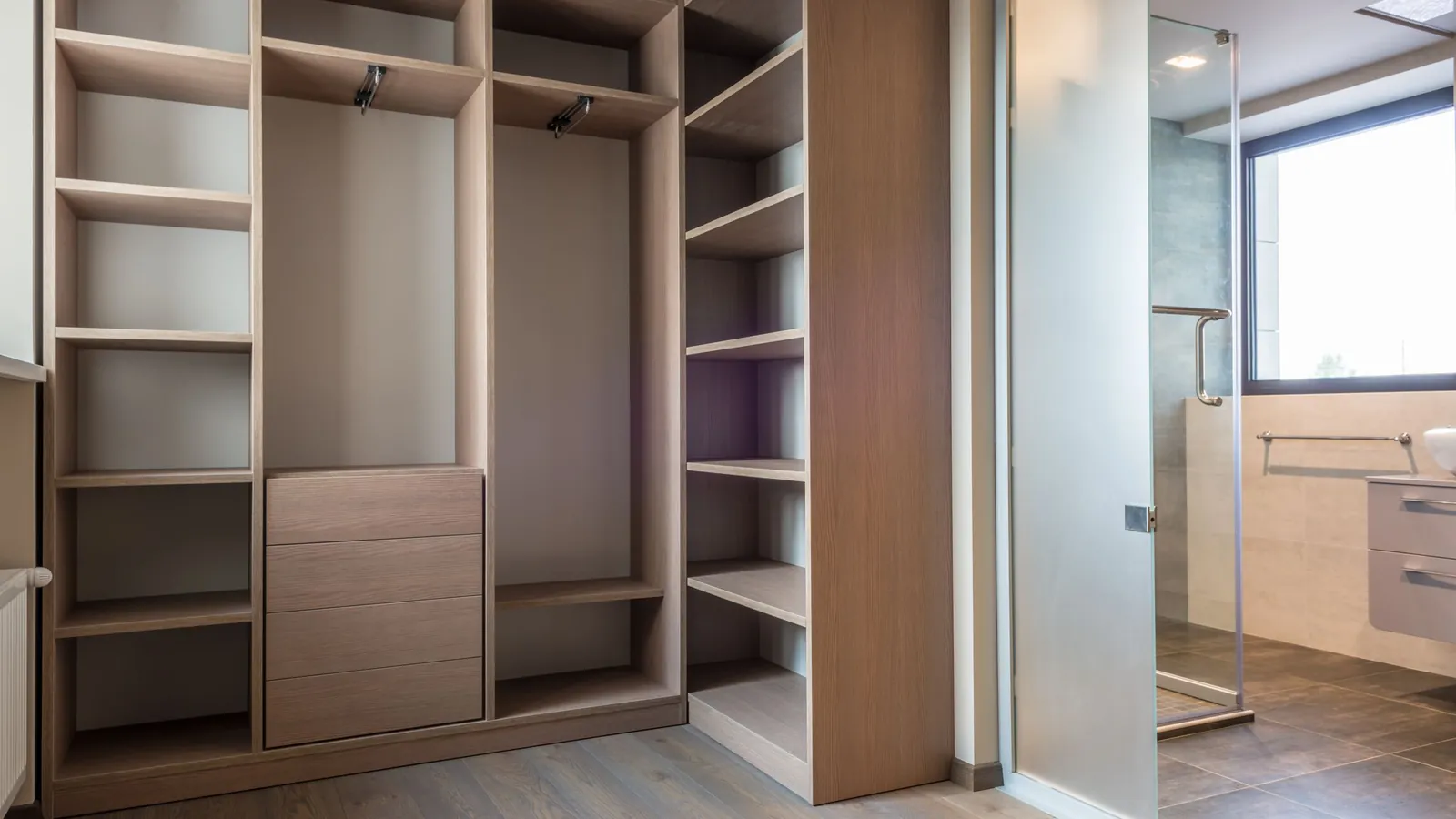
- Reach-in closet: choose the long- and short-hanging sections from your own garment measurements, accessible reach and the system’s approved layout; do not add a rod without checking fixings and load limits.
- Walk-in closet. Place long hang on one wall, double hang on another, and shelves or drawers on the third.
- Small bedroom closet. Keep suitable garment supports. Check storage fit, installation, load and access; matching slim hangers are optional.
- Kids closet. Install adjustable rods low enough for children to reach, then raise them as they grow.
- Coat or entry closet. Keep hooks for daily coats and bags, and store off-season outerwear elsewhere.
Top shelves are often deeper than they need to be, and closet planning guides commonly suggest a depth of about 14 to 16 inches. Deeper shelves tend to hide items behind others, so use shelf dividers or open bins to keep stacks upright.
Slim hangers may change spacing, but identical hangers do not make different garments the same width. Compare the actual clothing, care needs, shoulder support and usable removal space; our slim-hanger fit guide explains that check. A uniform look is optional and does not establish wrinkle prevention or extra rod load capacity.
Lighting deserves attention too, especially in deep or windowless closets. A battery LED light near the top shelf helps you see colors and find items quickly, which matters more once mornings get darker in November.
Where should shoes, bags, and accessories go?
Shoes, bags, and accessories cause more closet clutter than clothing because they come in awkward shapes. Give each category one clear home, and choose the storage by how often you use each item.
Daily shoes can sit on a low rack or the closet floor, while occasional pairs belong on a higher shelf or in labeled boxes. If floor space is tight, our comparison of an over-the-door shoe organizer versus a shoe rack explains which option suits your door and footwear.
Bags hold their shape best when stored upright on a shelf with dividers between them. Hooks work for everyday totes, but heavy bags can stretch straps over time, so reserve hooks for lighter items used daily.
Belts, scarves, and ties do well on a single multi-hook hanger or in a shallow drawer with dividers. Jewelry needs small compartments, and a shallow tray or wall-mounted organizer keeps pieces from tangling while staying easy to see.
What goes wrong with closet organization?
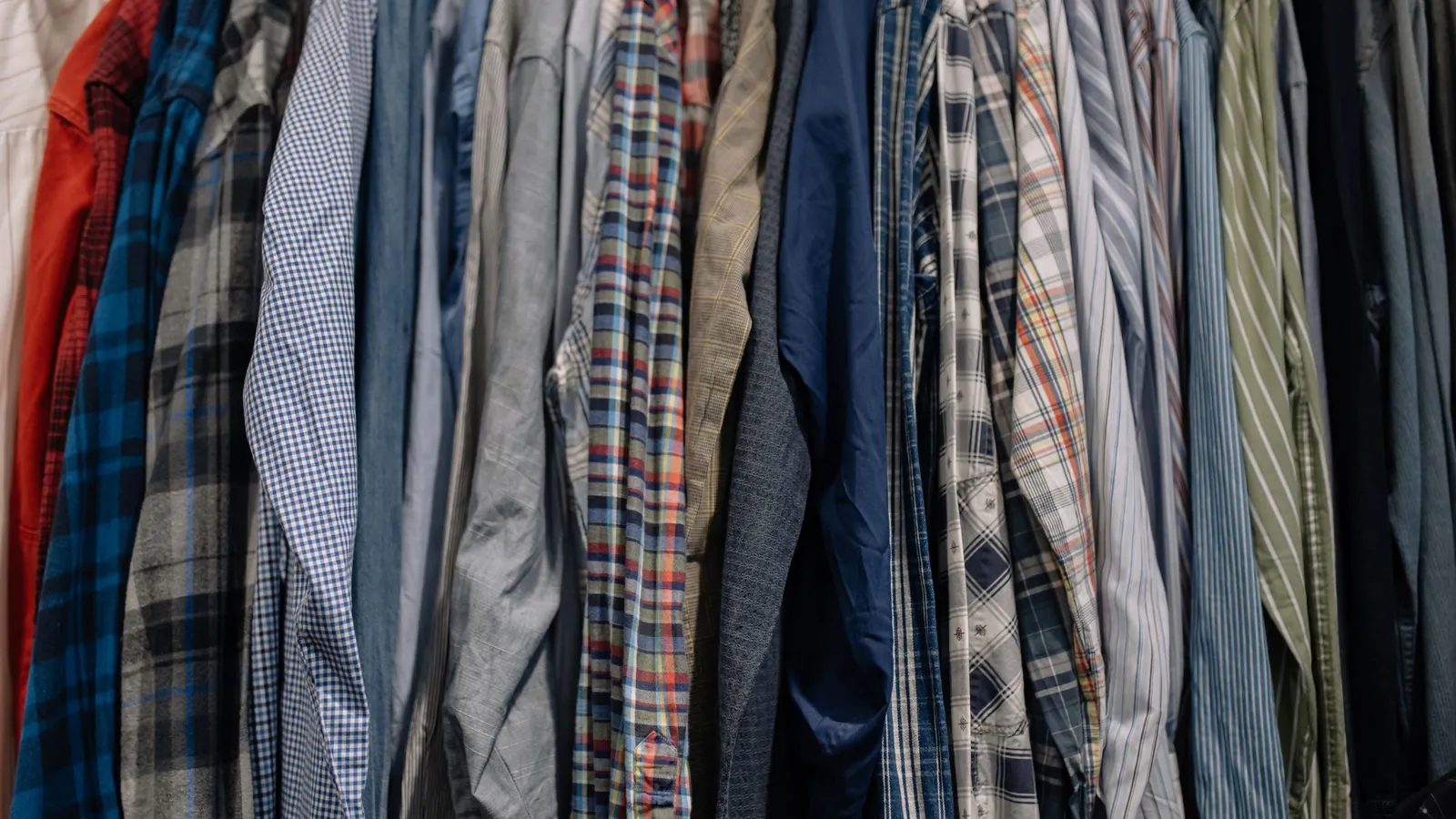
The most common failure is rod crush, and it builds gradually. Each new purchase squeezes onto the rod, hangers overlap, and clothes start to wrinkle and hide one another until finding a single shirt takes real effort.
The early warning is simple to notice. If you need two hands to pull a hanger out, the rod is too full. Garments with shoulders pressed against the back wall send the same signal.
Fix rod crush by removing a few items each time you add something new. Donating one garment for each one you buy keeps the rod at a steady level, and it also makes you think twice about purchases that duplicate what you own.
The second failure is the floor pile. Clothing worn once and not quite dirty often ends up on the floor or a chair. Give it a proper home with a hook or a small open bin inside the closet door.
The third failure is ignoring the top shelf. High shelves collect items that do not have a clear place, so label bins by category and review them each season to keep forgotten items from building up.
How do you reset a closet in five minutes?
A short reset once a week keeps small problems from growing. Choose the same time each week, such as Sunday evening, and follow these quick steps.
- Hang or fold everything from the chair or floor.
- Return shoes to their rack or shelf.
- Pull any item you avoided wearing this week.
- Straighten one shelf or bin that looks crowded.
- Place donations in a bag by the door.
This small habit keeps the system working between larger seasonal edits, and it rarely takes longer than a song or two on the radio.
The reset also shows you which areas slip most often, which points to where the next small improvement belongs. If the same shelf needs straightening every week, that shelf needs a divider or fewer items.
For a whole-home version of this habit, our free home reset checklist covers each room in the same short, calm sequence. It is a helpful companion when the closet reset has become routine.
How do you keep a closet organized all year?
A closet stays organized when it has a steady system for incoming and outgoing items. Keep a donation bag or bin on the closet floor, and add anything that no longer fits or suits you as soon as you notice it.
Seasonal swaps are among the most useful closet organization ideas, so plan one twice a year, usually in spring and fall. Store off-season items in labeled bins on a high shelf or under the bed, and use the swap as a natural moment to edit what you kept.
Review your hang-length audit during each seasonal swap as well. Wardrobes change over time, and a rod layout that suited you last year may need adjusting if you now own more long coats or fewer dresses.
Clean off-season clothes before storing them, since small stains can set over several months and become harder to remove. Fold knits instead of hanging them, because heavy sweaters can stretch at the shoulders when they hang for a whole season.
Label each storage bin with its contents and the season, then place the bins where you can reach them without moving furniture. A clear label saves you from opening every bin when the first cold morning arrives and you need a warm layer quickly.

Finally, keep the closet easy to use for everyone who shares it. Clear zones, broad labels, and enough breathing room on the rod make it simple to return items. Our closet organization guides cover specific problems such as hangers and small bedroom closets.
Frequently asked questions
What is the first step in organizing a closet?
The first step is sorting, not shopping. Empty one section, group items by category, and decide what to keep, relocate, donate, or discard. Measuring and buying storage come later, once you know exactly what remains and how much space each category really needs.
How high should closet rods be?
There is no single rod height that suits every closet or user. Measure the garments and comfortable reach, then check the exact system’s clearance, bracket spacing, wall fixings and rod/shelf load limits. Anchor storage furniture as its manufacturer instructs; CPSC Anchor It guidance explains why furniture restraint matters.
How do you organize a closet with no shelves?
Add a freestanding shelf unit, hanging fabric shelves, or stackable bins on the closet floor. Use the door for shoes or accessories if it has clearance. Sorting first matters even more here, since a closet without shelves has less flexible space for extras.
How do you keep a shared closet organized?
Divide the rod and shelves into clear personal zones, and use matching hangers so each side stays tidy. Label shared bins broadly, keep a donation bag handy, and agree on a short weekly reset so neither person carries the whole job alone.
Are matching hangers worth it?
Keep suitable existing hangers. A matching slim set is optional, not a universal improvement: garments still need appropriate care, support and usable removal space. Compare a specific replacement with the actual garments before buying more; changing hangers does not increase the installed rod’s permitted load.
Related hanger-fit guide
For garment-support and loaded-spacing checks, see our slim-hanger fit guide. Keep the actual product instructions and garment-care directions with your storage plan.
Written by the SetsQuick Team. First published · Last updated .
© SetsQuick. This article and its images may not be copied or republished without permission. To report reuse, see our DMCA page.
Was this guide helpful?
Save it for later or send it to someone